14 Razor-Cut Long Layer Hairstyles for Soft Texture and Movement
Razor-cut long layers bring softness and movement to lengthy hair, creating feathered edges, flowing texture, and a lighter finish without sacrificing overall length.
Unlike blunt scissor layering, razor cutting can create tapered ends and more fluid transitions when used appropriately for the hair’s texture and density. The technique is especially useful when a long haircut needs movement around the face, through the mid-lengths, or near the perimeter without creating obvious heavy steps.
The best version depends on hair density, natural texture, and how much softness you want through the ends. Thick hair can often support stronger weight removal, while finer hair generally benefits from more restraint so the perimeter does not become too wispy. Blowouts, waves, and natural texture all reveal razor-cut movement in different ways.
Quick List
- Classic Razor Cut Long Layers Hairstyle
- Face Framing Razor Cut Long Layers Hairstyle
- Wavy Razor Cut Long Layers Hairstyle
- Soft Blowout Razor Cut Long Layers Hairstyle
- Razor Cut Long Layers With Curtain Bangs Hairstyle
- Razor Cut Long Layers With Wispy Fringe Hairstyle
- Textured Razor Cut Long Layers Hairstyle
- Feathered Razor Cut Long Layers Hairstyle
- Side Parted Razor Cut Long Layers Hairstyle
- Center Parted Razor Cut Long Layers Hairstyle
- Razor Cut Long Layers For Thick Hair Hairstyle
- Razor Cut Long Layers For Fine Hair Hairstyle
- U Shaped Razor Cut Long Layers Hairstyle
- Polished Razor Cut Long Layers Hairstyle
1. Classic Razor Cut Long Layers Hairstyle
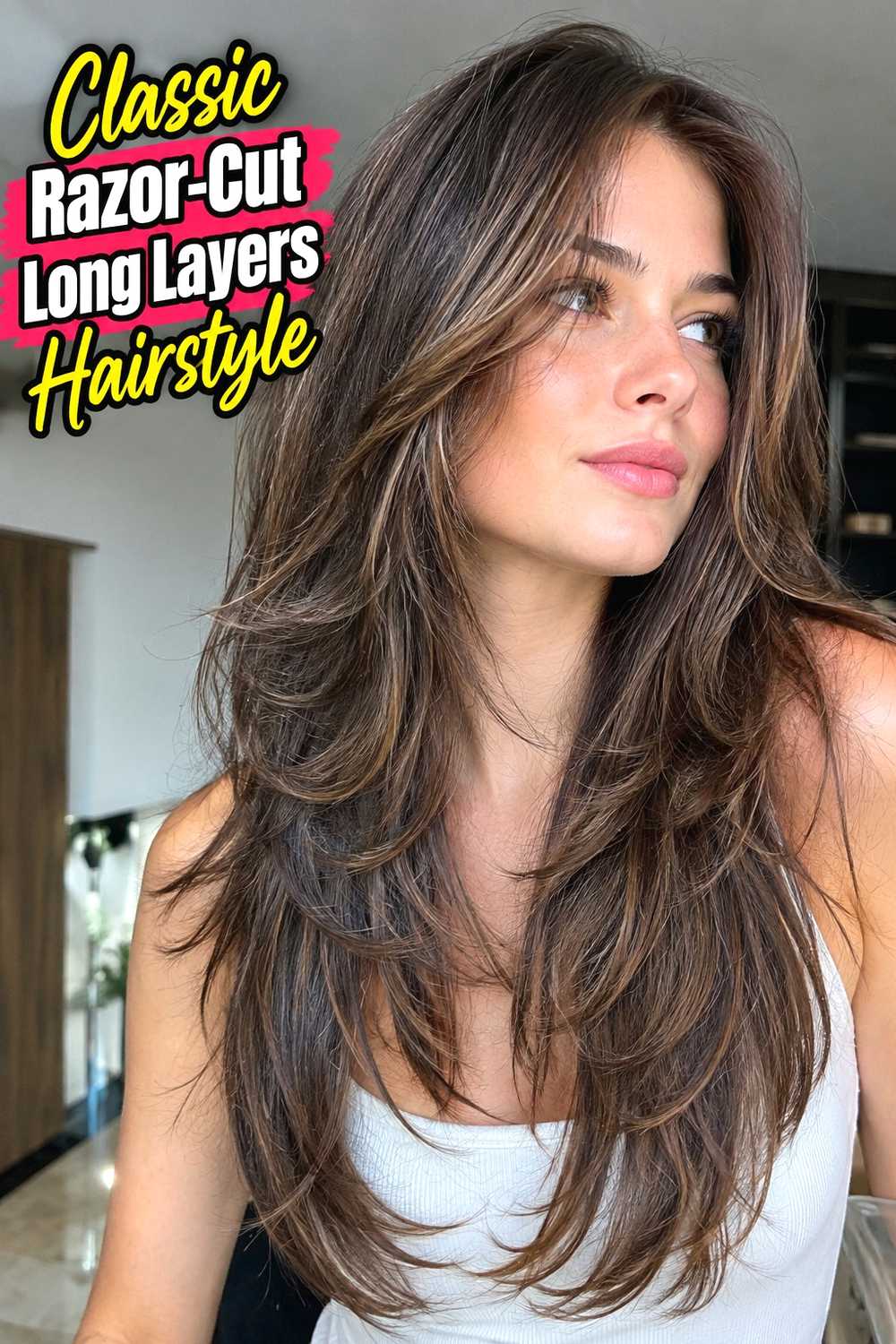
The Classic Razor-Cut Long Layers Hairstyle keeps plenty of overall length while softening the transition between shorter and longer sections. Instead of looking sharply stepped, the layers taper into one another, creating a flowing surface with lighter ends and natural movement. The perimeter should still retain enough density to look substantial, especially if the hair is long and straight. This version can be styled smooth to show the tapered finish or with loose bends that make the layers separate more visibly. It is a useful option for hair that feels heavy through the mid-lengths but does not need a dramatic change in shape. The key is controlled softness rather than excessive thinning through every section.
Styling Notes
Use a large round brush to create gentle bends through the mid-lengths, letting the tapered ends move freely rather than curling them tightly.
Best For
Medium to thick straight or softly wavy hair usually supports the fluid layered shape particularly well.
2. Face Framing Razor Cut Long Layers Hairstyle
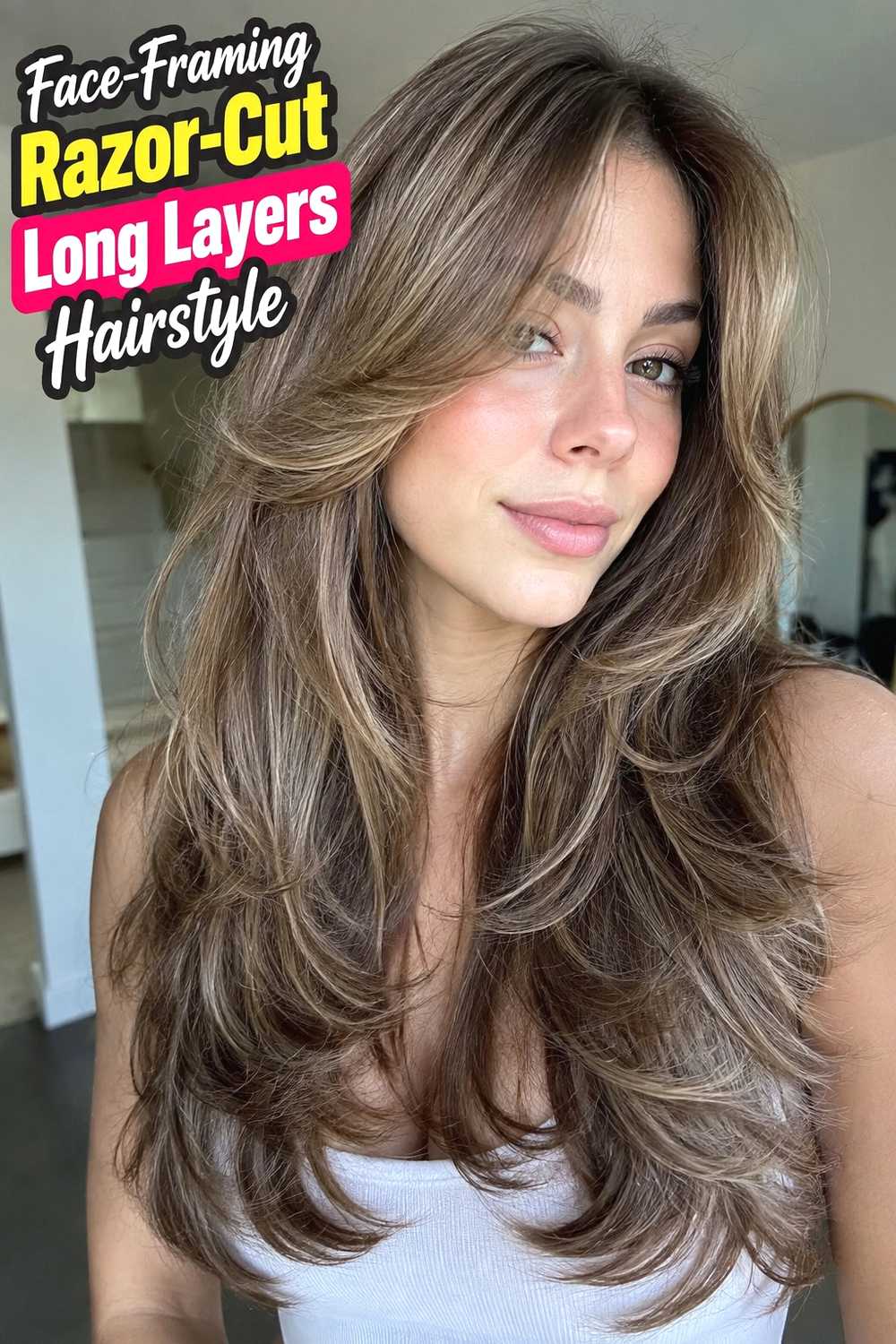
The Face-Framing Razor-Cut Long Layers Hairstyle places the most noticeable softness around the front while leaving the back longer and fuller. Tapered sections can begin near the cheekbones, jaw, or collarbones and blend gradually into the main length, creating a smooth cascade rather than blunt shelves. Razor work can make these front pieces especially light and mobile, so styling them away from the face gives the haircut a flowing finish. The back should retain enough density to prevent the overall cut from appearing over-thinned. This version works well for anyone who wants visible movement near the face without adding strong layering throughout the entire head, and it transitions easily into ponytails or half-up styling.
Styling Notes
Direct the front pieces away from the face with a round brush, using light tension so the tapered ends remain soft and flexible.
Why It Works
Concentrating the razor-cut detail at the front creates visible movement while preserving fullness through the longer back sections.
3. Wavy Razor Cut Long Layers Hairstyle
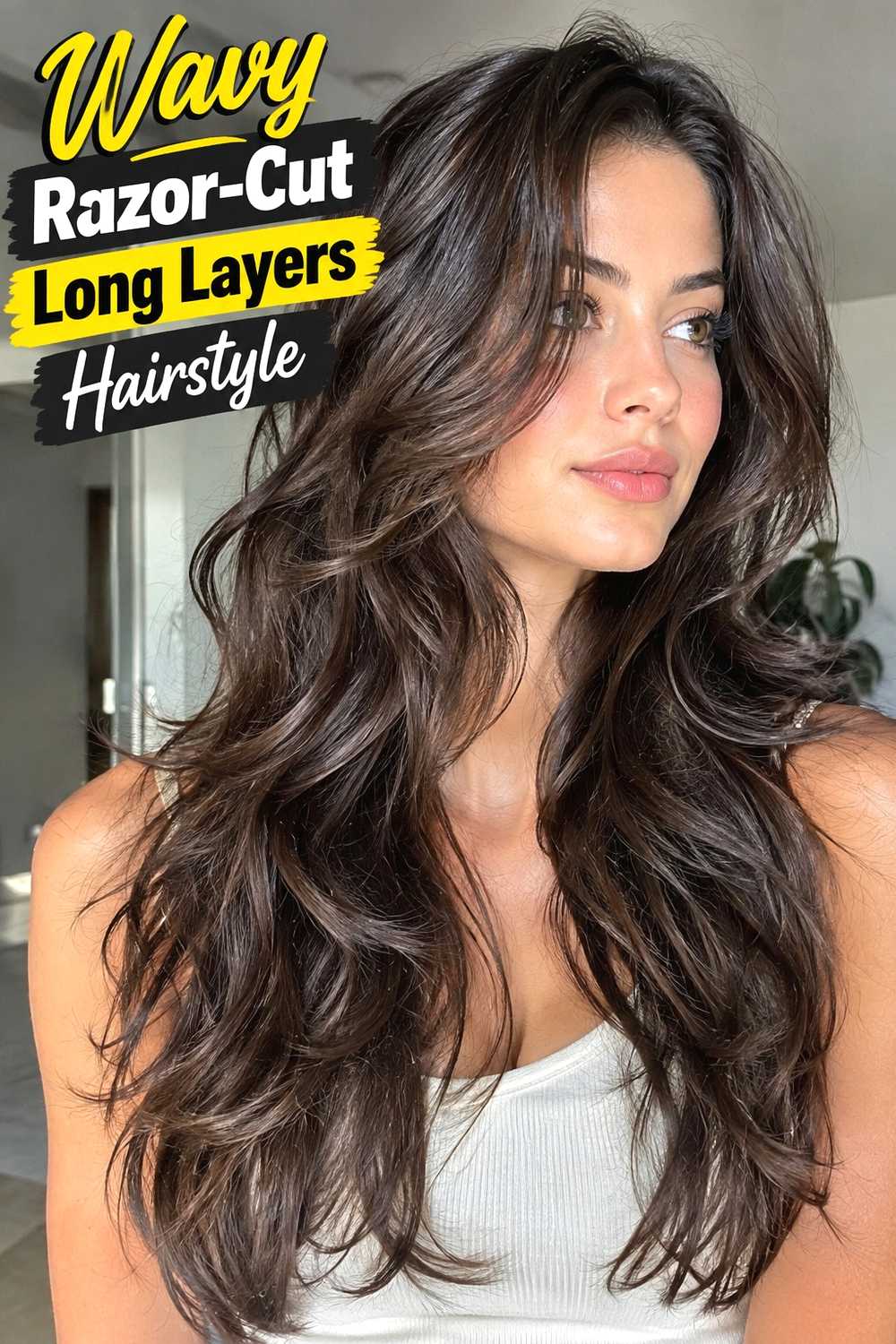
The Wavy Razor-Cut Long Layers Hairstyle uses loose bends to highlight the tapered movement created through the cut. Because the layers are softened rather than sharply disconnected, waves can form at different levels and blend naturally into one another. The result feels fluid instead of heavily structured, especially when some sections bend more strongly than others. Naturally wavy hair can show this effect with minimal styling, while straighter hair can achieve it with loose iron bends. The perimeter should still remain substantial enough to give the long haircut a strong foundation. Leaving selected ends less curled keeps the finish modern and allows the razor-softened edges to remain visible rather than disappearing into a uniform curl pattern.
Hair Type & Length
Softly wavy medium-to-long hair often displays the tapered layer transitions especially well.
Pro Tip
Alternate wave direction and leave a few ends straighter so the haircut retains an easy, natural texture.
4. Soft Blowout Razor Cut Long Layers Hairstyle
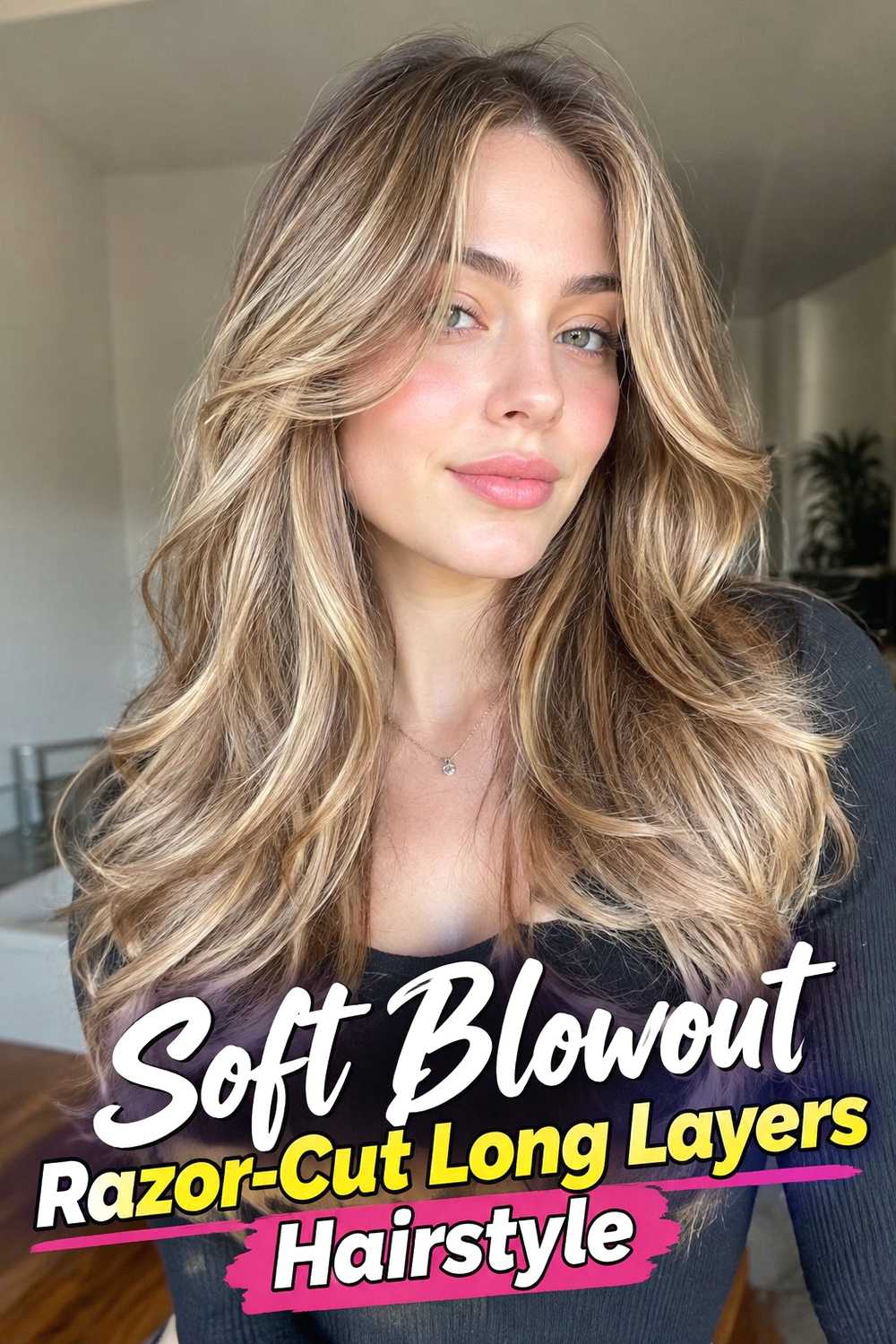
The Soft Blowout Razor-Cut Long Layers Hairstyle turns tapered layering into broad, flowing movement. A round brush lifts the upper sections, sweeps the face-framing pieces outward, and encourages the lighter ends to separate naturally through the lengths. Because razor-cut layers can create softness at the edges, the blowout should remain flexible rather than highly set. The strongest version combines subtle root lift with broad bends and visible strand detail, giving long hair body without making it look overly curled. This finish can be especially helpful when the hair is dense enough to feel heavy, since the layered structure gives the blowout more room to expand while a substantial perimeter maintains the feeling of long, full hair.
Styling Notes
Work with large brush sections and allow each one to cool before loosening the movement gently with your fingers.
Best For
Medium and thick hair usually holds this broad, layered blowout particularly well.
5. Razor Cut Long Layers With Curtain Bangs Hairstyle
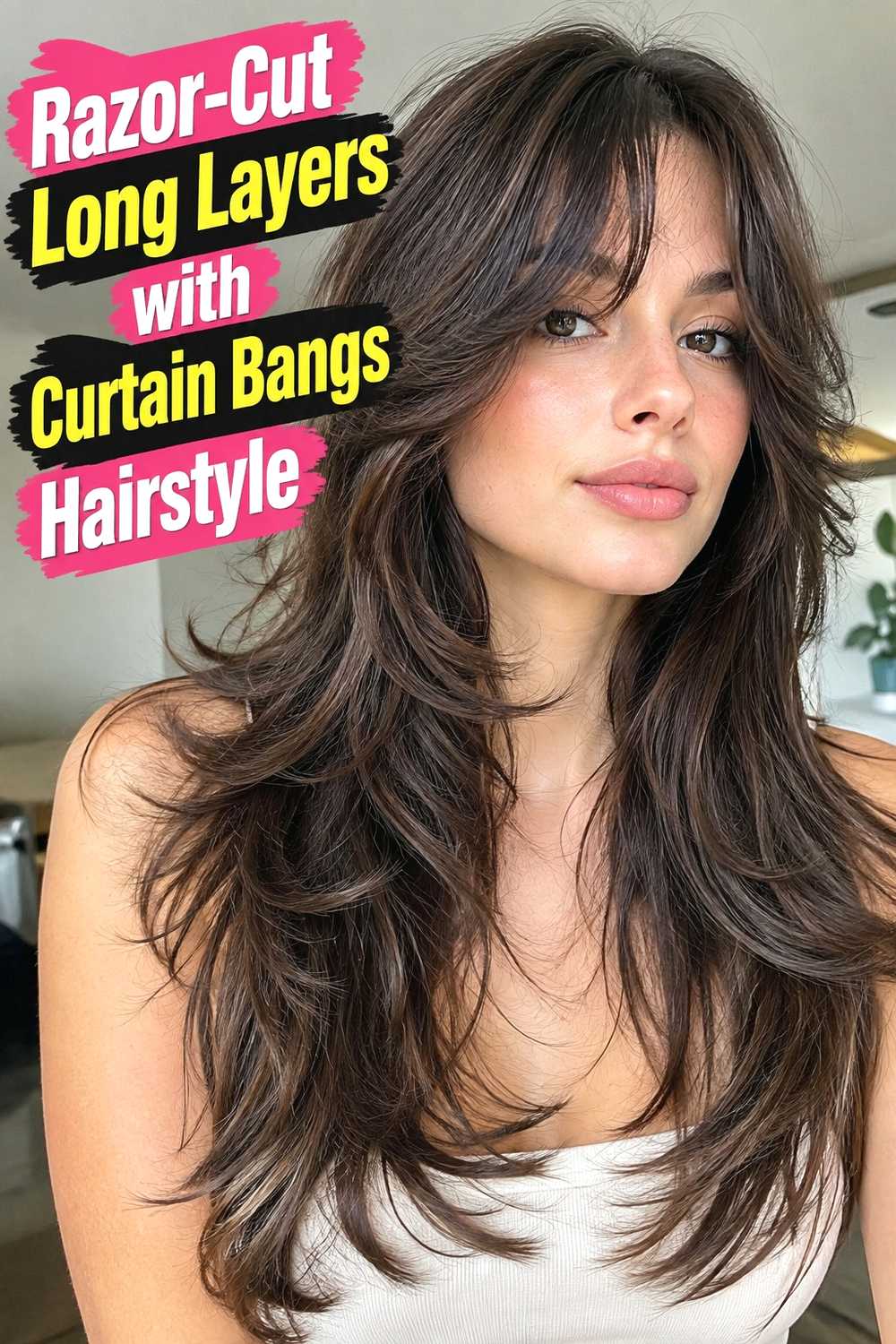
The Razor-Cut Long Layers with Curtain Bangs Hairstyle connects airy front pieces to the rest of the haircut through soft, tapered transitions. Curtain bangs can open through the center and lengthen toward the cheekbones, where they blend into longer face-framing layers. Using a razor carefully through those connections creates a lighter edge that moves easily during styling. The main lengths can remain fuller, preventing the entire haircut from becoming too feathery. A blowout emphasizes the design beautifully because the fringe and front layers can sweep outward while the rest of the hair falls into broader curves. This version adds a noticeable change around the face without requiring a dense or short fringe.
Styling Notes
Dry the bangs forward first, then part them and sweep each side outward with a medium round brush.
Wear & Maintenance
Curtain bangs may need reshaping more frequently than the long layers to maintain their opening and blend.
6. Razor Cut Long Layers With Wispy Fringe Hairstyle
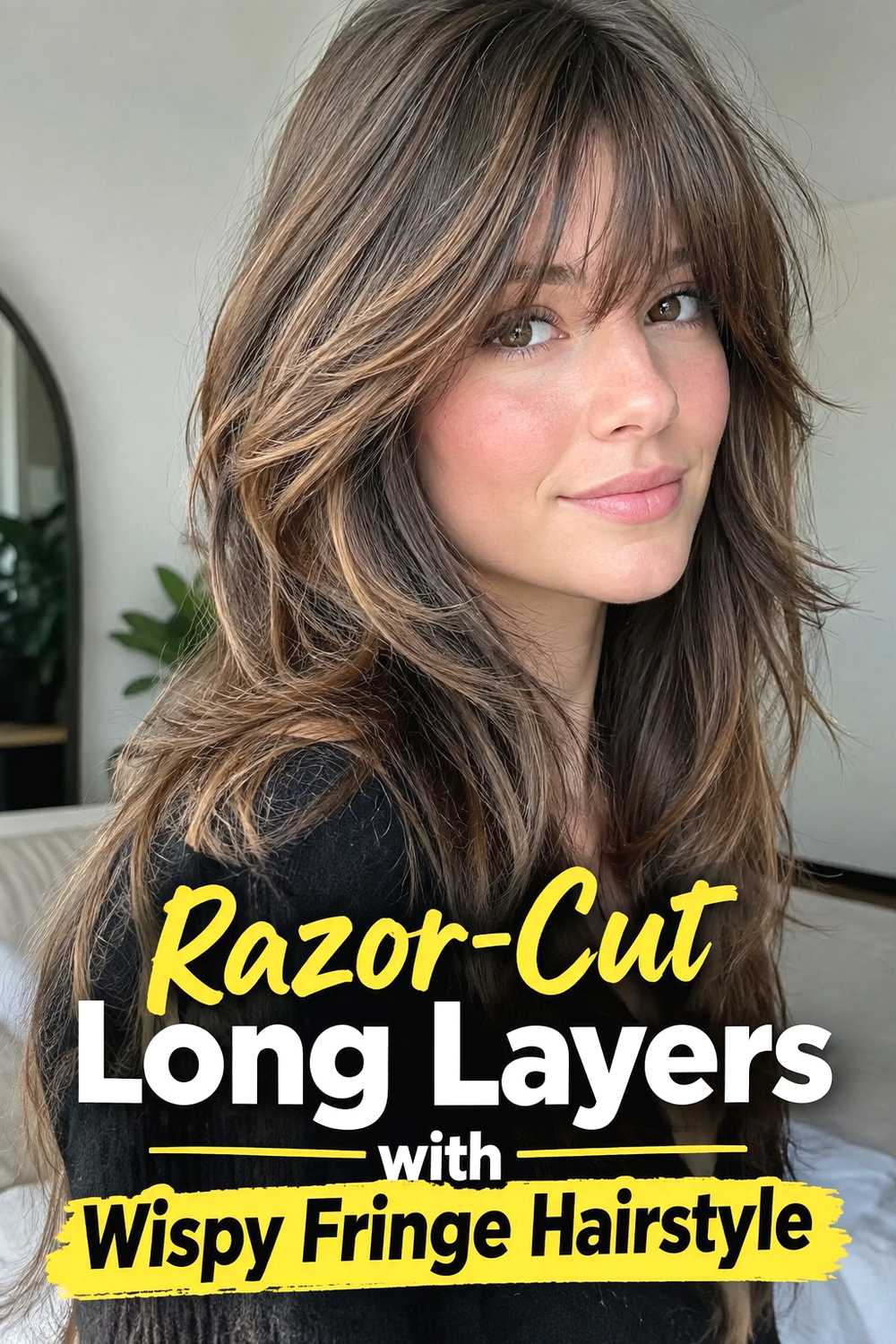
The Razor-Cut Long Layers with Wispy Fringe Hairstyle pairs soft, tapered lengths with a fine, separated bang. The fringe is intentionally light, allowing some forehead to remain visible, while the razor-cut layers through the sides create enough movement to connect the front to the rest of the haircut. Keeping the main perimeter substantial is important because both the fringe and tapered layers already introduce visual softness. This style works especially well with a smooth blowout or gentle waves, where the fine ends can move naturally without appearing overly thin. Styling products should remain lightweight around the fringe so the separated pieces stay airy instead of clumping into heavier sections across the forehead.
Best For
Fine to medium-density fringe sections create the softest effect, while the main lengths can carry more density.
Pro Tip
Use only residual styling product on the fringe after applying it through the longer sections.
7. Textured Razor Cut Long Layers Hairstyle
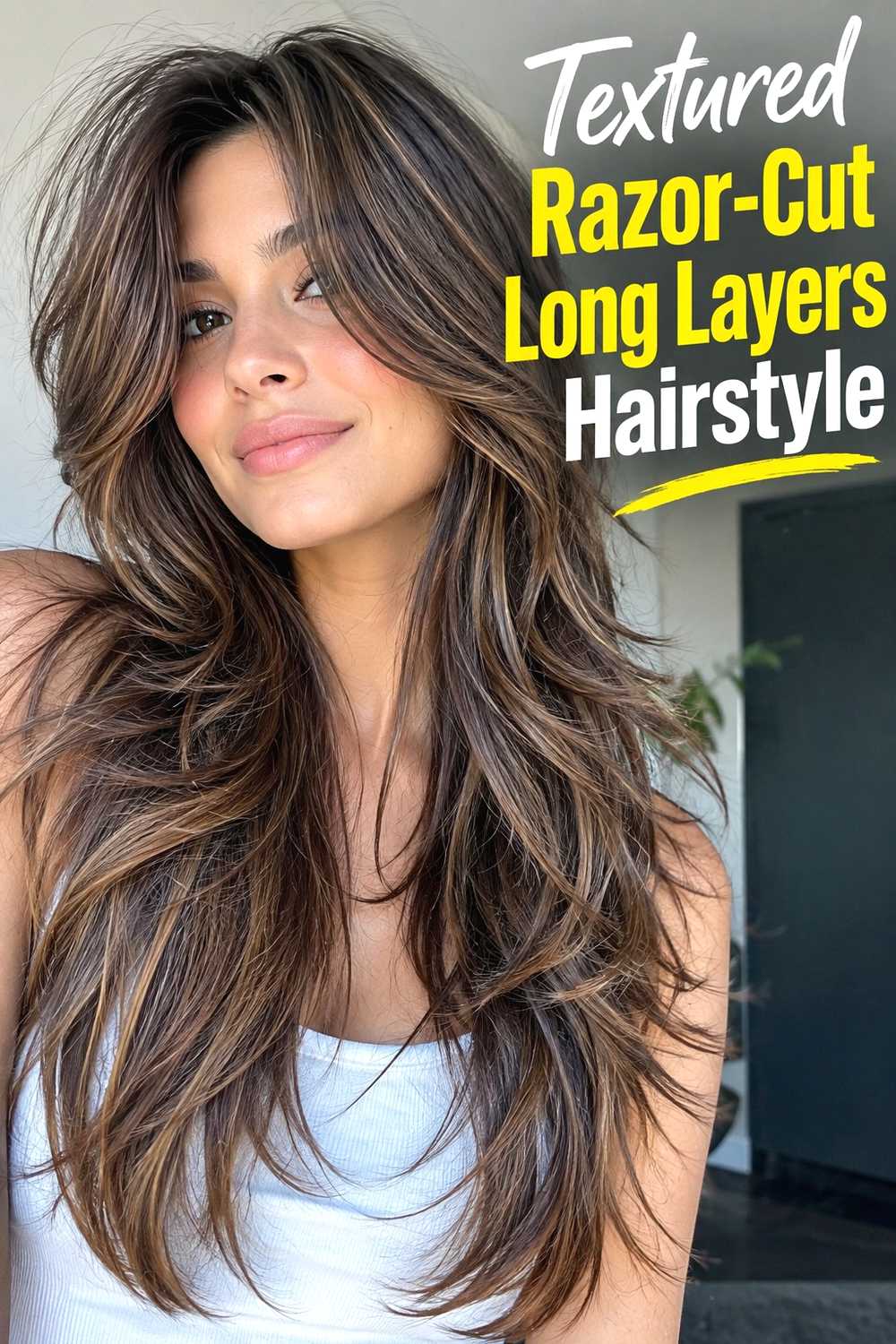
The Textured Razor-Cut Long Layers Hairstyle embraces visible separation and irregular movement through the surface. Tapered ends make it easier for individual pieces to shift independently, creating a relaxed finish that works particularly well on hair with a natural bend. Rather than relying on heavy layering from root to tip, the texture can concentrate through the mid-lengths and ends while the overall silhouette stays long and substantial. A small amount of lightweight styling product helps define sections without making the hair dry or overly matte. The goal is touchable texture with enough natural shine to keep the haircut healthy-looking. This version is especially appealing if you prefer a less polished finish than a traditional blowout.
Styling Notes
Work a light texture cream or spray through the mid-lengths, then twist or scrunch selected pieces rather than the entire head.
Why It Works
The tapered edges create natural separation while the long perimeter keeps the overall style cohesive and full.
8. Feathered Razor Cut Long Layers Hairstyle
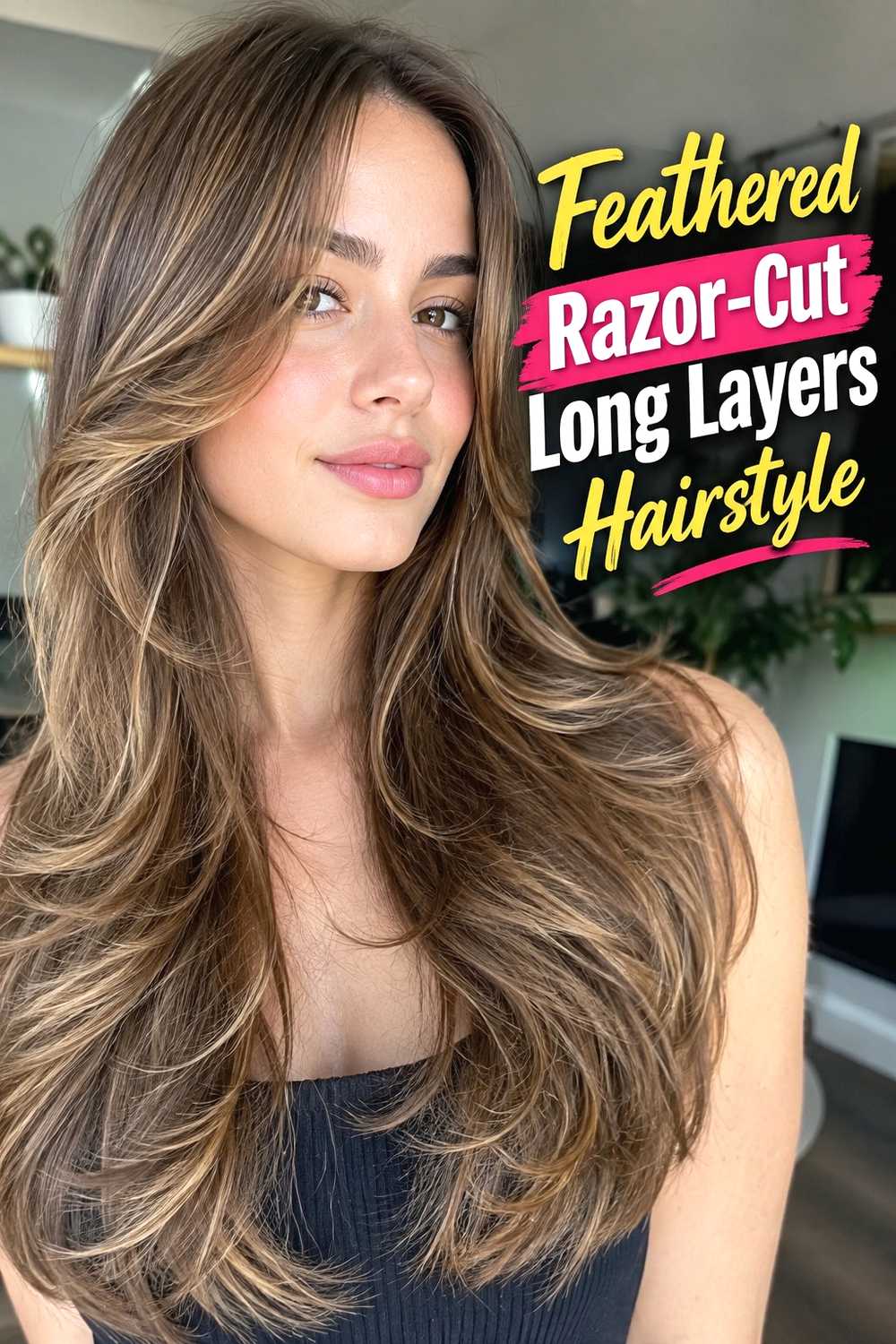
The Feathered Razor-Cut Long Layers Hairstyle emphasizes outward movement through the sides and front. Razor-softened pieces can sweep away from the face in overlapping sections, creating an airy, feathered effect without requiring extreme short layers at the crown. The back stays longer and more substantial, which balances the lighter movement around the upper lengths. A round-brush blowout shows the feathered detail most clearly, especially when the front sections are directed outward at slightly different angles. Keeping the ends flexible rather than over-curled makes the finish feel current. This version works well for hair with enough density to support tapered movement while still maintaining a strong, healthy-looking lower perimeter.
Styling Notes
Use a medium round brush to sweep front and side layers outward while keeping the back sections softer and less exaggerated.
Best For
Medium to thick hair generally provides enough density for visible feathering without leaving the ends sparse.
9. Side Parted Razor Cut Long Layers Hairstyle
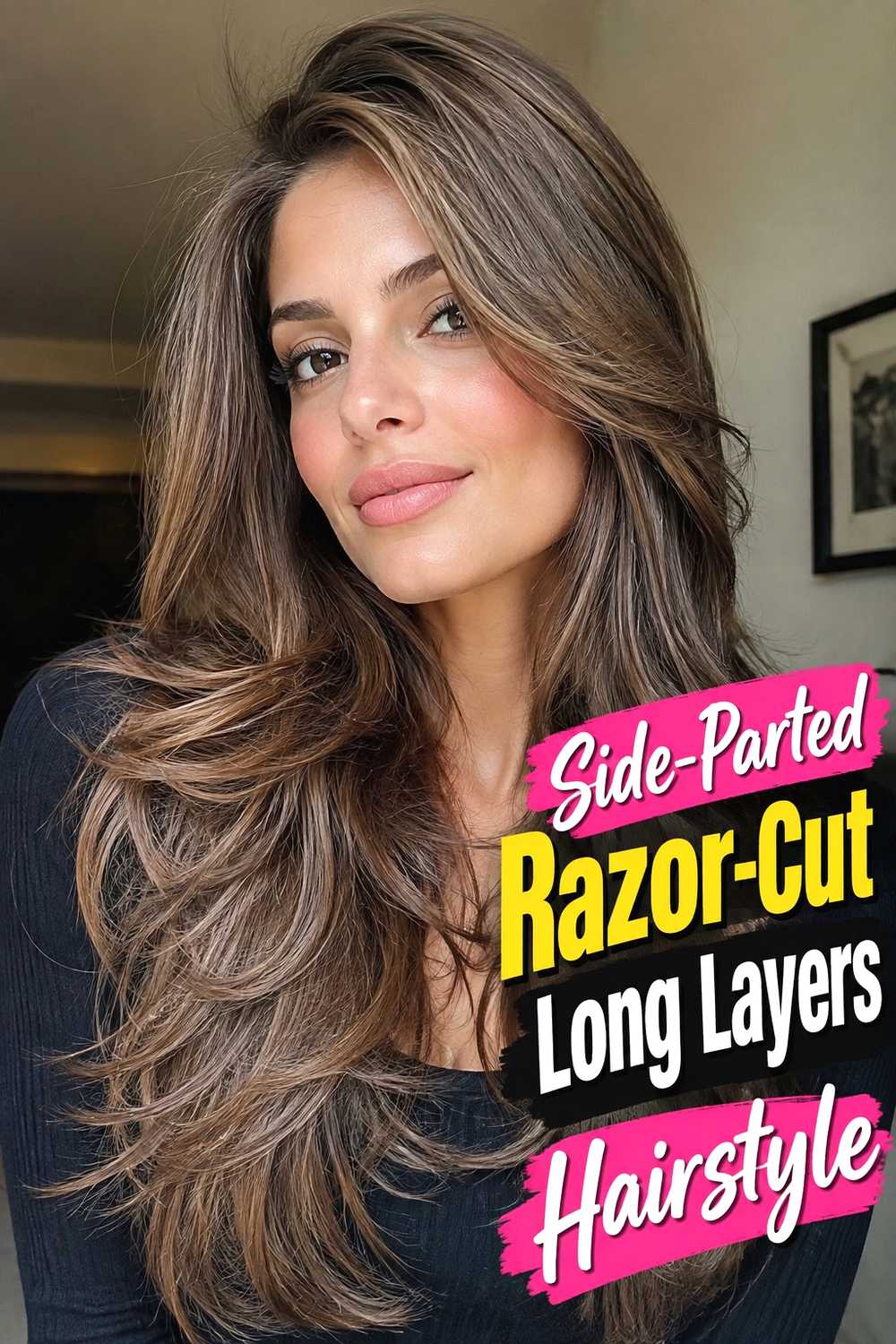
The Side-Parted Razor-Cut Long Layers Hairstyle creates extra direction and root lift by shifting the hair away from the center. The fuller side allows tapered layers to fall in broad, sweeping sections, making the razor-cut movement more noticeable around the face and shoulders. The opposite side can sit closer to the head or tuck behind the ear for contrast. Because the ends are softened, the style feels fluid rather than sharply asymmetrical. A side part also works well with a blowout or loose waves, offering an easy way to change the silhouette without altering the haircut itself. The longer perimeter keeps the look balanced and prevents the layered movement from becoming overly wispy.
Styling Notes
Dry the roots opposite the intended part before flipping the hair into position for natural lift.
Why It Works
The directional part exaggerates movement through the tapered layers without requiring additional short sections.
10. Center Parted Razor Cut Long Layers Hairstyle
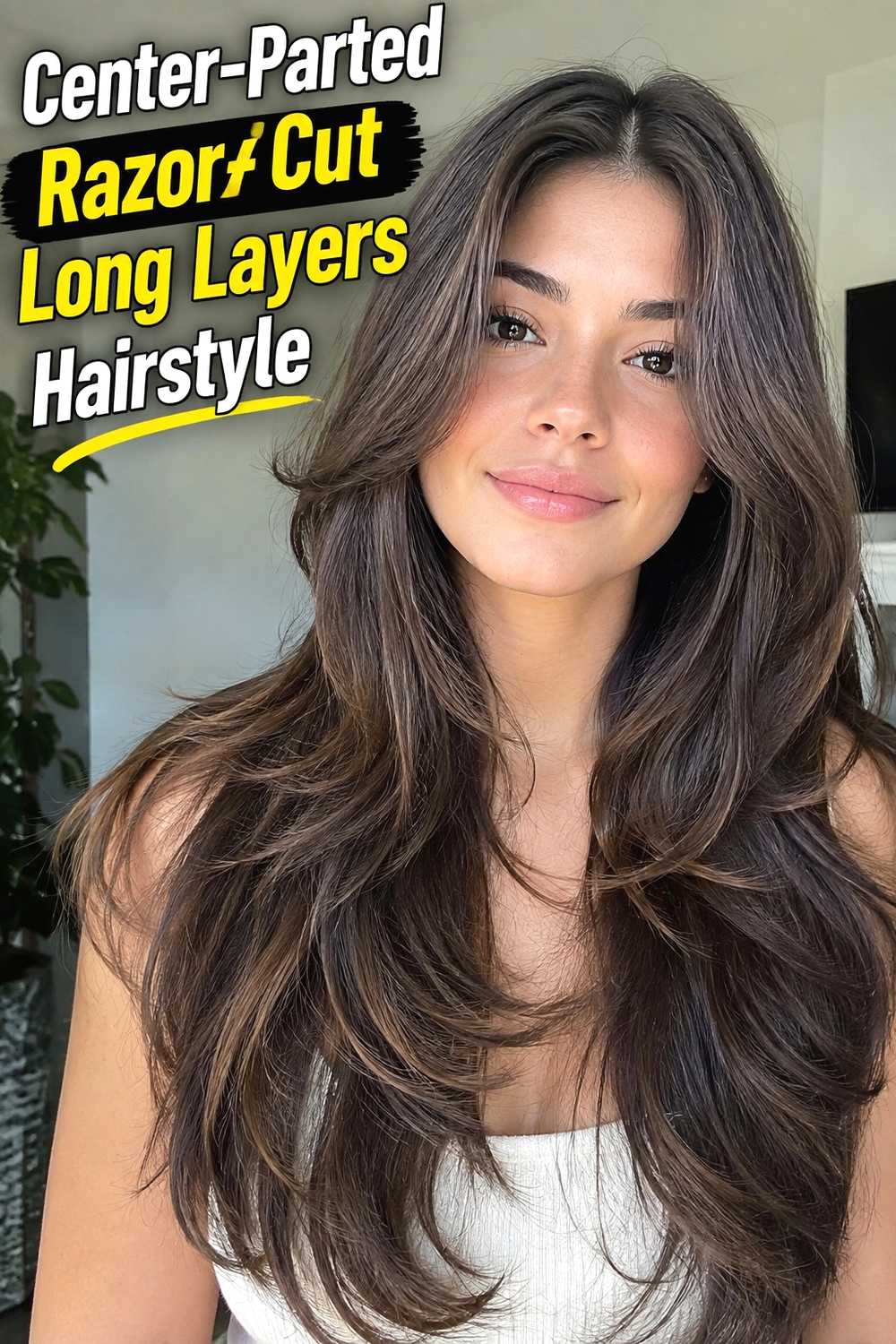
The Center-Parted Razor-Cut Long Layers Hairstyle gives the haircut a balanced, symmetrical frame while allowing the softened layers to move evenly on both sides. Front pieces can begin around the cheekbones or jaw and flow gradually into the longer lengths, creating a mirrored effect when styled away from the face. The center part also makes the long perimeter especially visible, so preserving density through the ends is important. A smooth blowout highlights the tapered edges, while loose waves add more separation. Because razor cutting creates softness rather than blunt steps, both sides can move naturally without making the haircut look overly structured. Gentle root lift keeps the center from appearing flat.
Styling Notes
Lift lightly along the part line and direct the front sections outward in broad bends rather than tight curls.
Wear & Maintenance
Periodic reshaping keeps the face-framing pieces balanced as they grow toward the longer perimeter.
11. Razor Cut Long Layers For Thick Hair Hairstyle
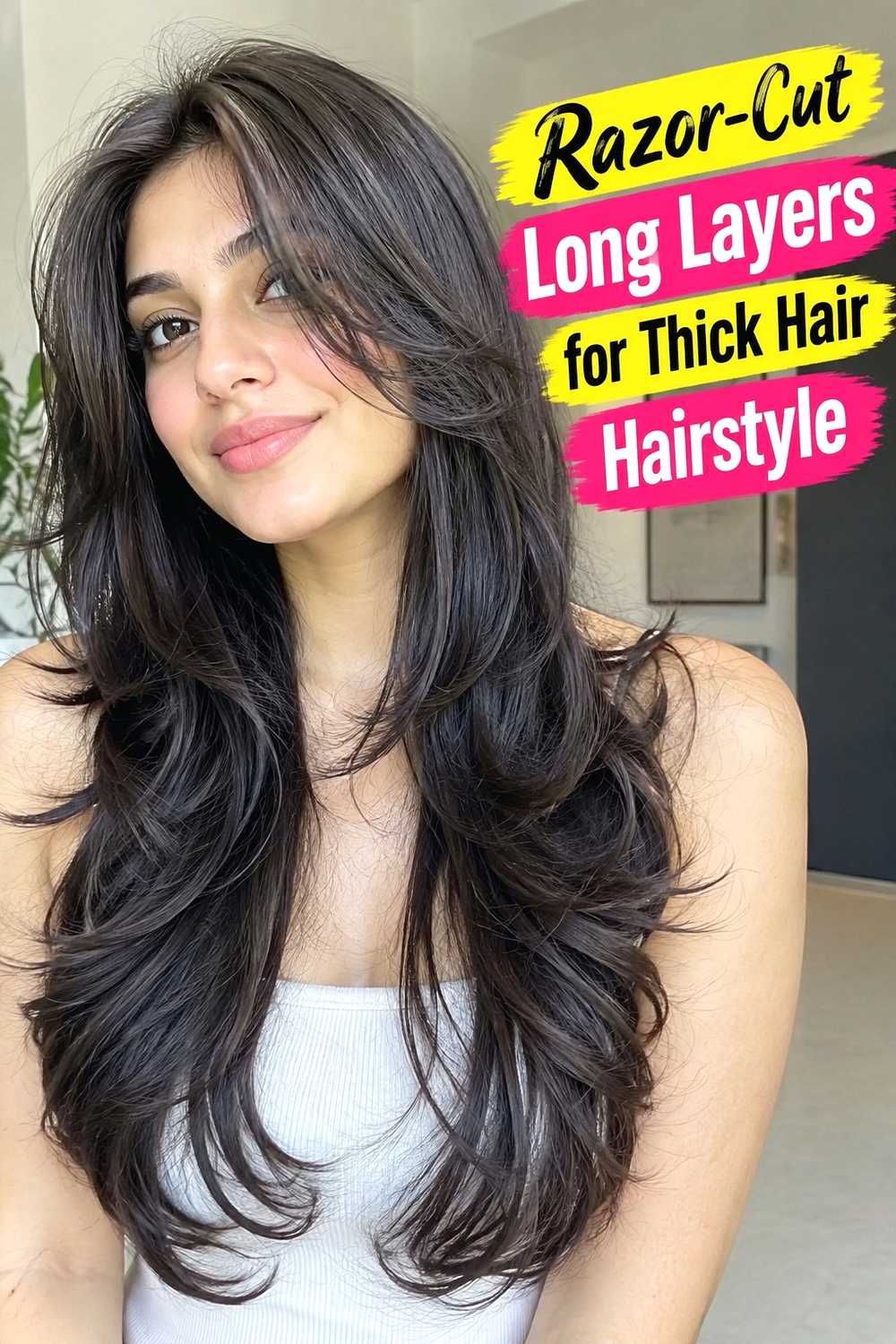
The Razor-Cut Long Layers for Thick Hair Hairstyle uses tapered sections strategically to reduce heaviness and create movement through dense lengths. Rather than aggressively thinning the entire perimeter, weight can be removed through selected interior and surface areas so the hair falls more freely while still looking substantial. The razor-softened edges help dense sections blend into one another instead of forming bulky shelves. This version works especially well when thick hair tends to expand through the middle or feel difficult to style into waves and blowouts. The key is maintaining enough fullness at the ends so the haircut looks healthy and balanced. Styling can range from natural texture to a voluminous, polished finish.
Hair Type & Length
Dense, heavy long hair can benefit from stronger razor-softened shaping when it is carefully distributed through the cut.
Pro Tip
Preserve a substantial perimeter instead of removing weight from every end if fullness is a priority.
12. Razor Cut Long Layers For Fine Hair Hairstyle
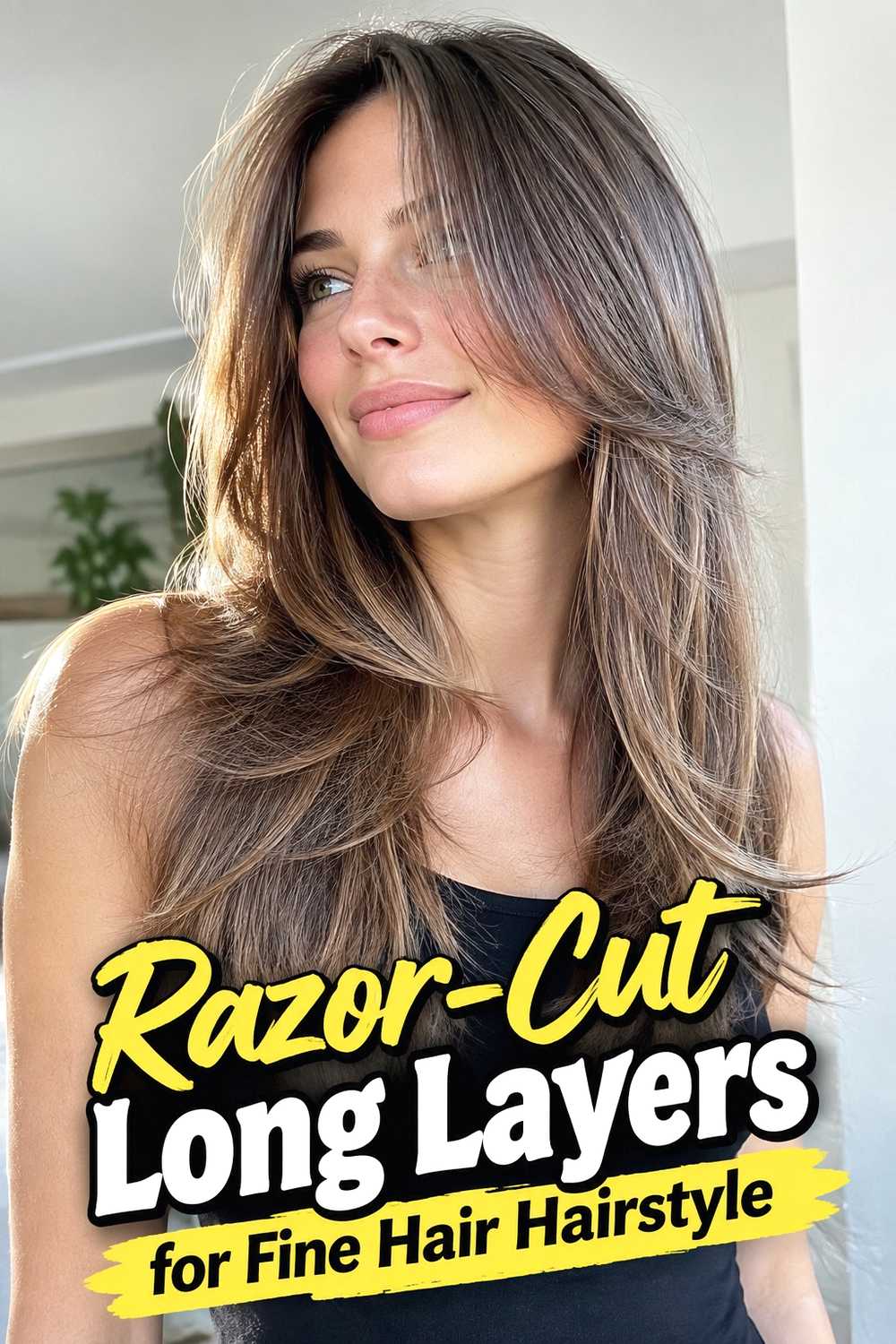
The Razor-Cut Long Layers for Fine Hair Hairstyle takes a much lighter approach, using restrained tapering to create movement without sacrificing too much density. Longer layers work best because they preserve the strength of the perimeter while still giving the mid-lengths a softer fall. Razor cutting should remain selective rather than aggressive, especially near the ends where fine hair can quickly appear sparse. A gentle blowout or loose bend can reveal the movement without requiring heavy styling products. Keeping the surface smooth and the ends visually full helps the haircut feel polished. This option is best for someone who wants a softer layered effect but still values the appearance of substantial long hair.
Styling Notes
Use lightweight root support and gentle round-brush movement, avoiding heavy creams or excessive texturizing products.
Why It Works
Minimal tapering introduces flexibility while protecting the density that fine hair needs through the perimeter.
13. U Shaped Razor Cut Long Layers Hairstyle
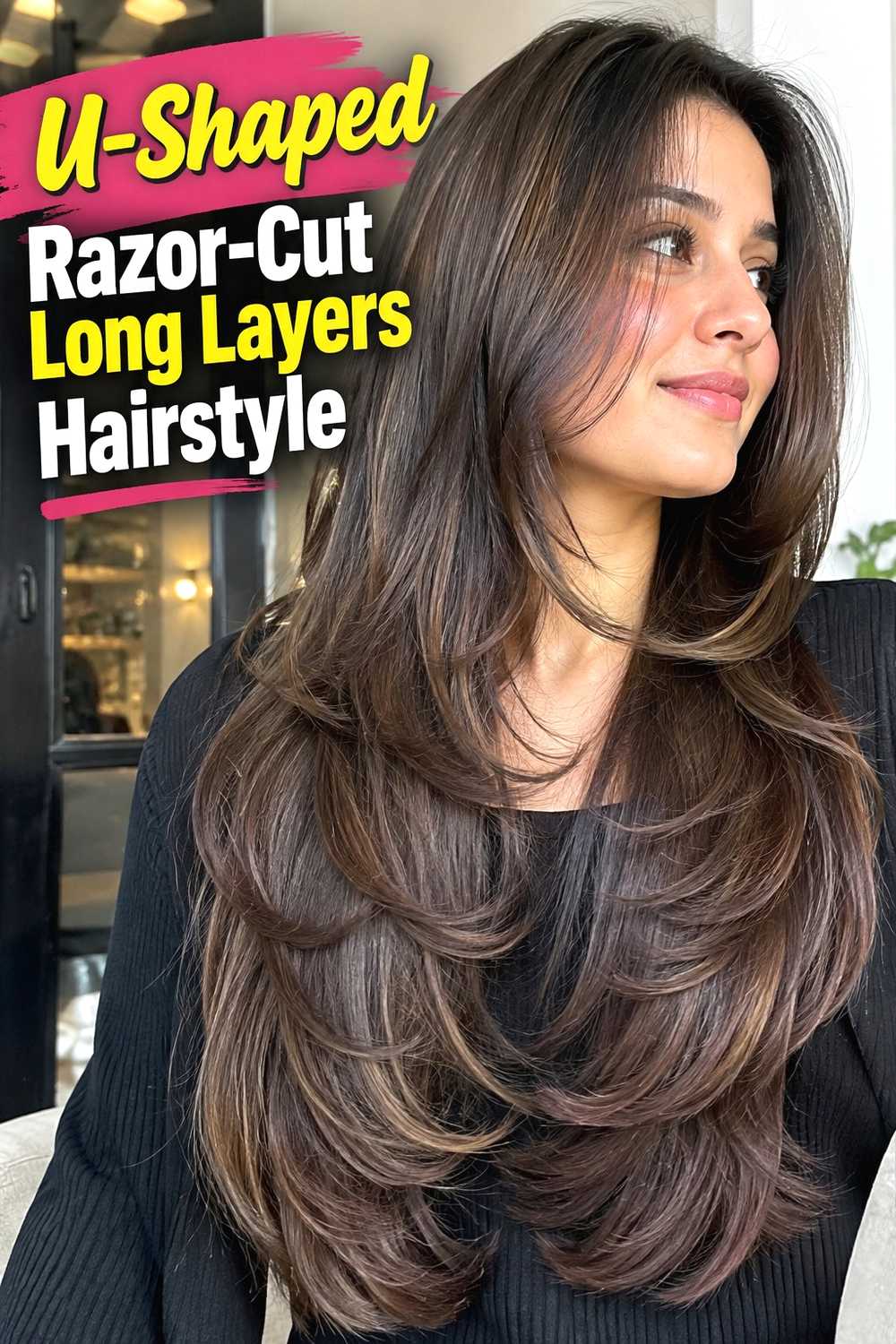
The U-Shaped Razor-Cut Long Layers Hairstyle combines a rounded back perimeter with softly tapered movement through the interior and front. The center back remains longest, while the sides rise gradually to create a gentle curve instead of a pointed V. Razor-cut layers soften the transition between different lengths, helping the silhouette feel fluid when the hair moves. Waves and blowouts can make the U shape especially attractive because the layers separate without hiding the curved perimeter. Keeping the lower edge substantial is important, since excessive tapering can weaken the outline. This version is a strong choice if you want long hair to look shaped from the back while retaining a softer, more blended finish through the sides.
Styling Notes
Style the layers with broad bends while keeping the lower perimeter smooth enough for the U-shaped outline to remain visible.
Best For
Medium to thick long hair generally provides enough density to support both the rounded perimeter and tapered layering.
14. Polished Razor Cut Long Layers Hairstyle
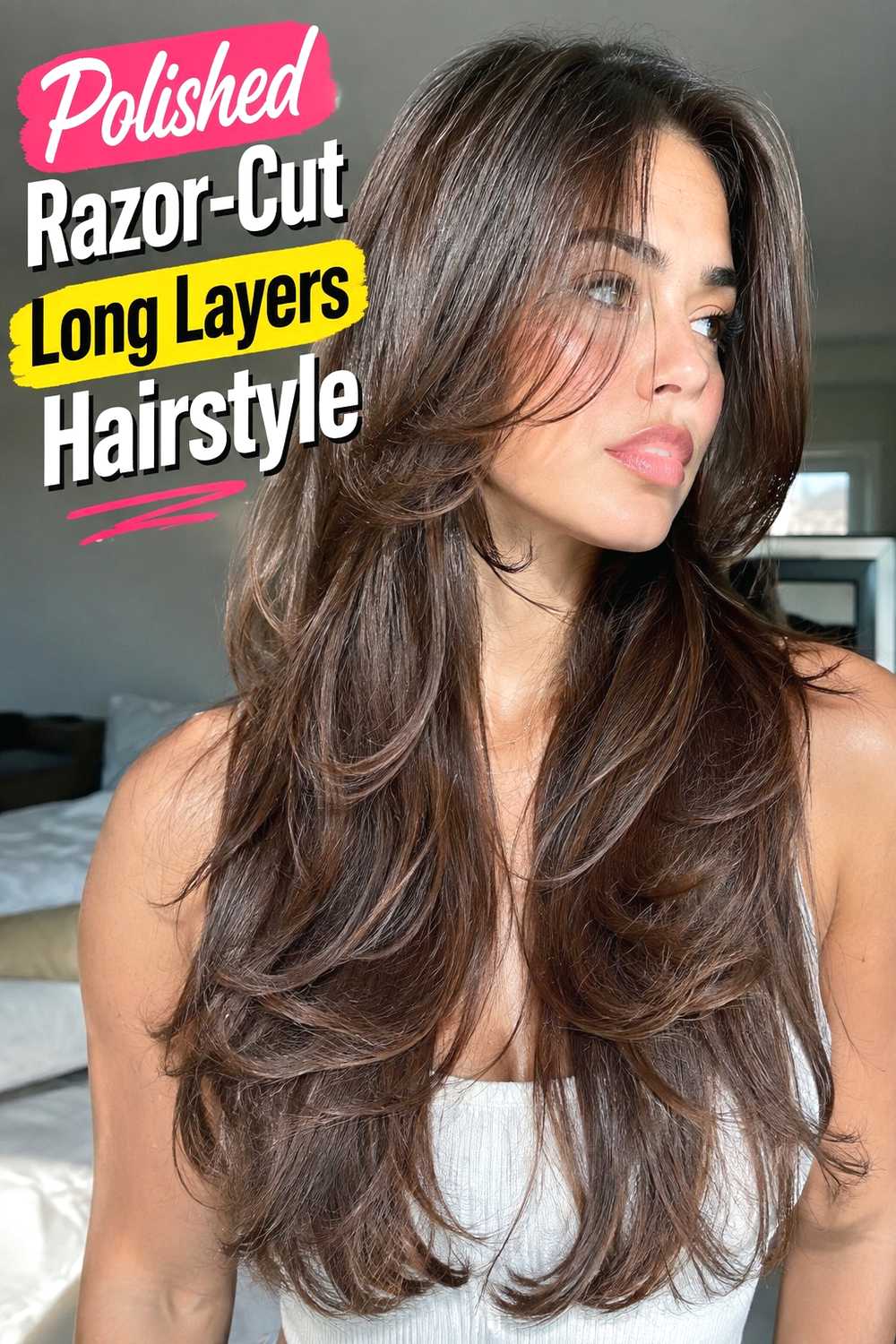
The Polished Razor-Cut Long Layers Hairstyle combines tapered softness with a controlled, refined finish. The surface remains smooth, but subtle layer transitions prevent the long lengths from appearing heavy or motionless. Front pieces can curve away from the face, while the lower sections fall into broad, flexible movement rather than obvious curls. A careful blow-dry creates most of the shape, with minimal finishing product used to control flyaways and enhance natural-looking shine. This version is useful if you like the movement of razor-cut layers but prefer a neater finish than a tousled or heavily textured style. The ends should still look substantial and healthy, allowing the softness to feel intentional rather than overly thinned.
Styling Notes
Create smoothness during blow-drying, then apply a small amount of lightweight serum through the lower lengths and ends.
Best For
Straight, softly wavy, medium, and thicker textures can all adapt well when the amount of razor work is adjusted carefully.
How to Choose the Right Look
Start with density. Thick hair can usually handle more razor-softened weight removal, especially through bulky mid-lengths. Fine hair needs greater restraint so the ends remain full and healthy-looking. If your hair already feels thin at the perimeter, longer and fewer tapered sections are generally more practical than aggressive texturizing.
Next, consider texture and styling habits. Natural waves show razor-cut movement easily, while straighter hair can reveal the layers through a blowout or loose bends. Feathered and face-framing versions create the most visible motion around the front, while sleek or polished variations keep the effect more subtle.
Fringe also changes the overall look. Curtain bangs create sweeping movement, while wispy fringe feels lighter. If you want maximum versatility, keep the front longer and focus the razor-cut detail through the sides and mid-lengths.
Final Thoughts
Razor-cut long layers can make lengthy hair feel softer, lighter, and more fluid without sacrificing its overall length. The best results balance tapered movement with enough density through the perimeter to keep the haircut looking healthy and substantial. Choose the amount of texturizing, face framing, fringe, and volume based on your natural texture and how you prefer to style your hair day to day.
FAQs
1. What are razor-cut long layers?
Razor-cut long layers are tapered sections created with a razor technique to produce softer edges, lighter movement, and less blunt transitions between different lengths.
2. Are razor-cut layers good for thick hair?
They can be very useful for thick hair because strategic tapering can reduce bulk and improve movement while preserving a substantial overall shape.
3. Can fine hair have razor-cut long layers?
Yes, but the technique should be used carefully and sparingly so the perimeter does not become too thin or wispy.
4. Do razor-cut layers work with wavy hair?
Yes. Soft waves often highlight the tapered transitions well, especially when the haircut retains enough weight through the ends.
5. How do you style razor-cut long layers?
A round-brush blowout emphasizes flowing movement, while loose waves or natural texture reveal the tapered ends. Lightweight products generally help preserve softness and separation.
Save your favorite razor-cut long layer hairstyle, share it for inspiration, and explore more long layered haircut ideas for your next salon visit.