17 Crystal Ponytail Cuff Hairstyles That Add Instant Sparkle
A crystal ponytail cuff can turn a simple tied-back style into a polished statement with sparkle, shine, and an elegant jewelry-inspired finish.
Crystal cuffs work especially well when the ponytail shape is intentional enough to frame the accessory rather than compete with it. A smooth straight pony highlights clean lines, while curls, waves, braids, and textured finishes create a softer contrast against the reflective stones.
The ideas below range from high and dramatic to low and understated, with options for different textures, lengths, occasions, and styling preferences. When choosing a look, consider where the ponytail sits, how much tension feels comfortable, and whether you want the crystal cuff to be the focal point or a finishing accent. The styling approach follows the realism, variation, and practical-wear guidance provided for this hairstyle collection.
Quick List
- Sleek High Crystal Cuff Ponytail Hairstyle
- Low Polished Crystal Cuff Ponytail Hairstyle
- Soft Wavy Crystal Cuff Ponytail Hairstyle
- Curly High Crystal Cuff Ponytail Hairstyle
- Bubble Crystal Cuff Ponytail Hairstyle
- Braided Base Crystal Cuff Ponytail Hairstyle
- Twisted Low Crystal Cuff Ponytail Hairstyle
- Half Up Crystal Cuff Ponytail Hairstyle
- Side Swept Crystal Cuff Ponytail Hairstyle
- Voluminous Crown Crystal Cuff Ponytail Hairstyle
- Center Part Crystal Cuff Ponytail Hairstyle
- Wrapped Base Crystal Cuff Ponytail Hairstyle
- Textured Mid Height Crystal Cuff Ponytail Hairstyle
- Double Braid Crystal Cuff Ponytail Hairstyle
- Loose Romantic Crystal Cuff Ponytail Hairstyle
- Coily Crystal Cuff Ponytail Hairstyle
- Minimal Straight Crystal Cuff Ponytail Hairstyle
1. Sleek High Crystal Cuff Ponytail Hairstyle
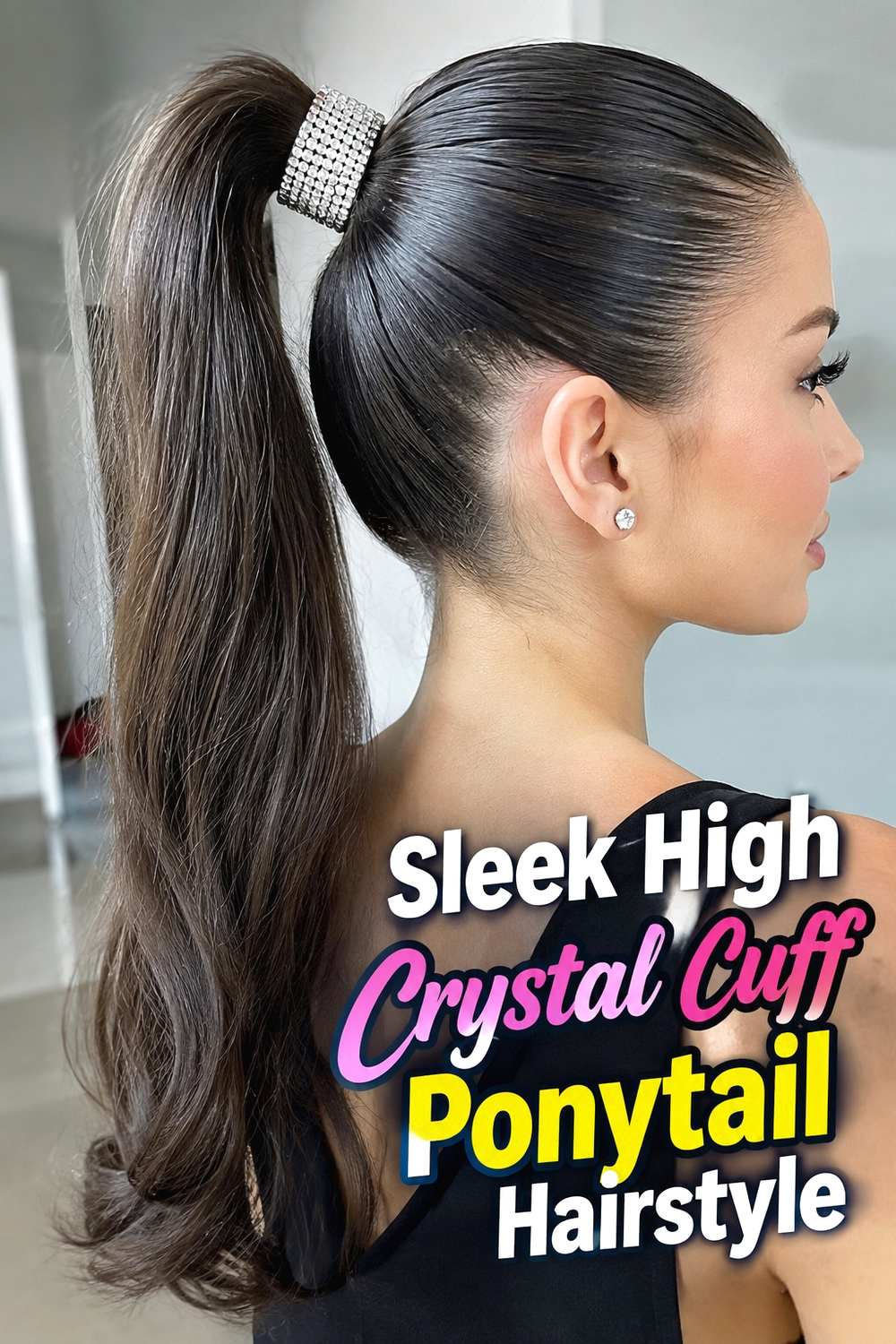
A sleek high ponytail gives a crystal cuff maximum visibility because the clean base lets every reflective detail stand out. The hair is brushed upward toward the crown and secured firmly, while the ponytail itself stays smooth, straight, and fluid. A polished finish around the hairline keeps the silhouette intentional without requiring an overly stiff appearance. This style is especially effective on medium to long hair that has enough length to create movement behind the cuff. Because high ponytails can feel tighter than lower placements, use secure but comfortable tension and make sure the cuff sits over a strong elastic rather than carrying the weight of the ponytail by itself.
Styling Notes
Smooth the surface with a brush before securing the ponytail, then attach the crystal cuff over the elastic once the base feels stable.
2. Low Polished Crystal Cuff Ponytail Hairstyle
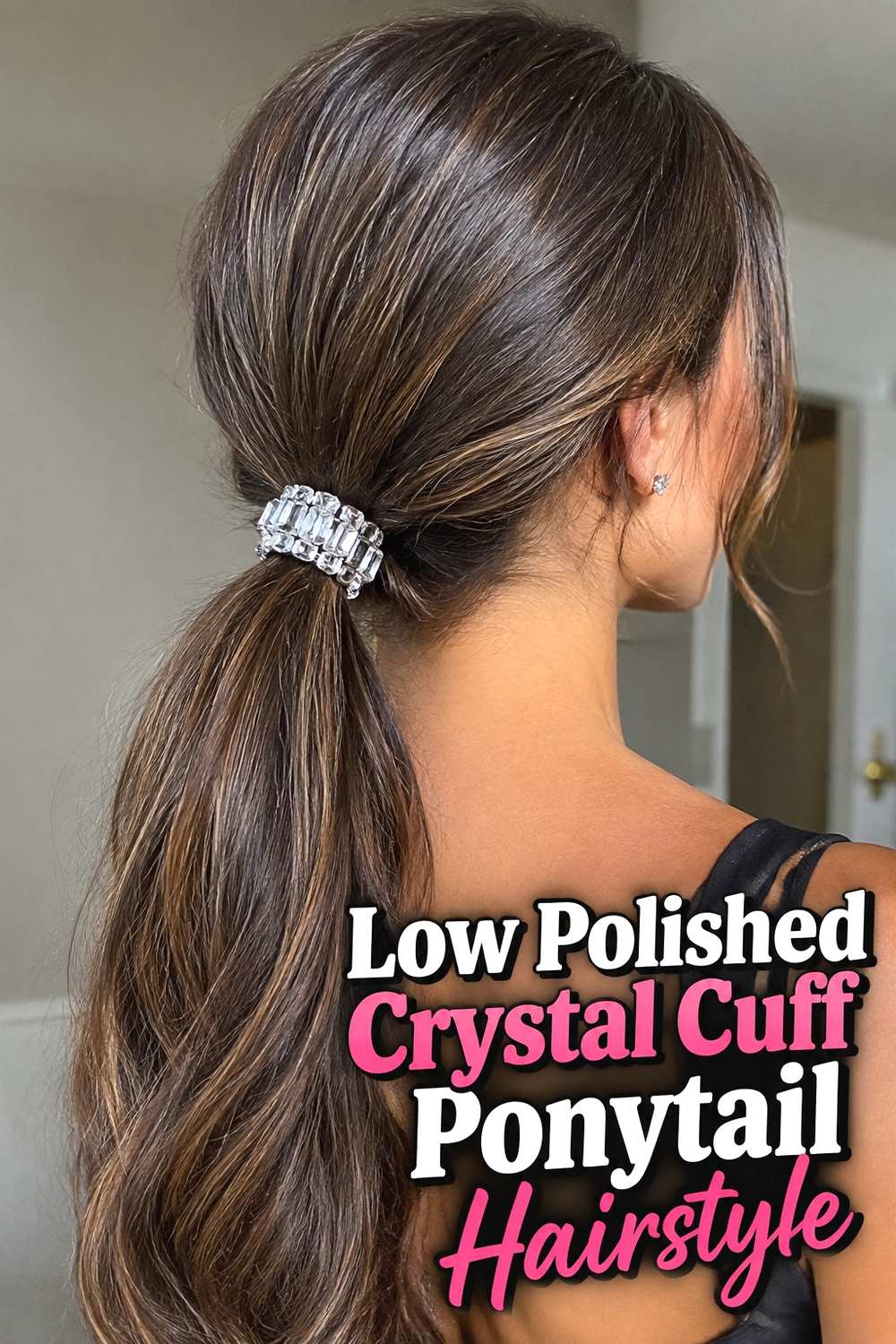
The low polished ponytail offers a quieter, sophisticated way to wear a crystal cuff. Hair is gathered close to the nape with a smooth crown and controlled sides, allowing the accessory to sit like a small piece of jewelry at the base. The lower placement makes the sparkle visible from the back and side without creating the dramatic height of a high pony. Straight or softly bent lengths both work, although a clean finish keeps the cuff looking especially refined. This style is a practical choice for dinners, formal events, office occasions, or minimalist outfits. Keep the base secure enough to prevent slipping, particularly if the cuff is heavier or wider than a standard ponytail accessory.
Best For
This look suits anyone who wants an elegant accessory moment without adding extra volume or elaborate styling to the rest of the hair.
3. Soft Wavy Crystal Cuff Ponytail Hairstyle
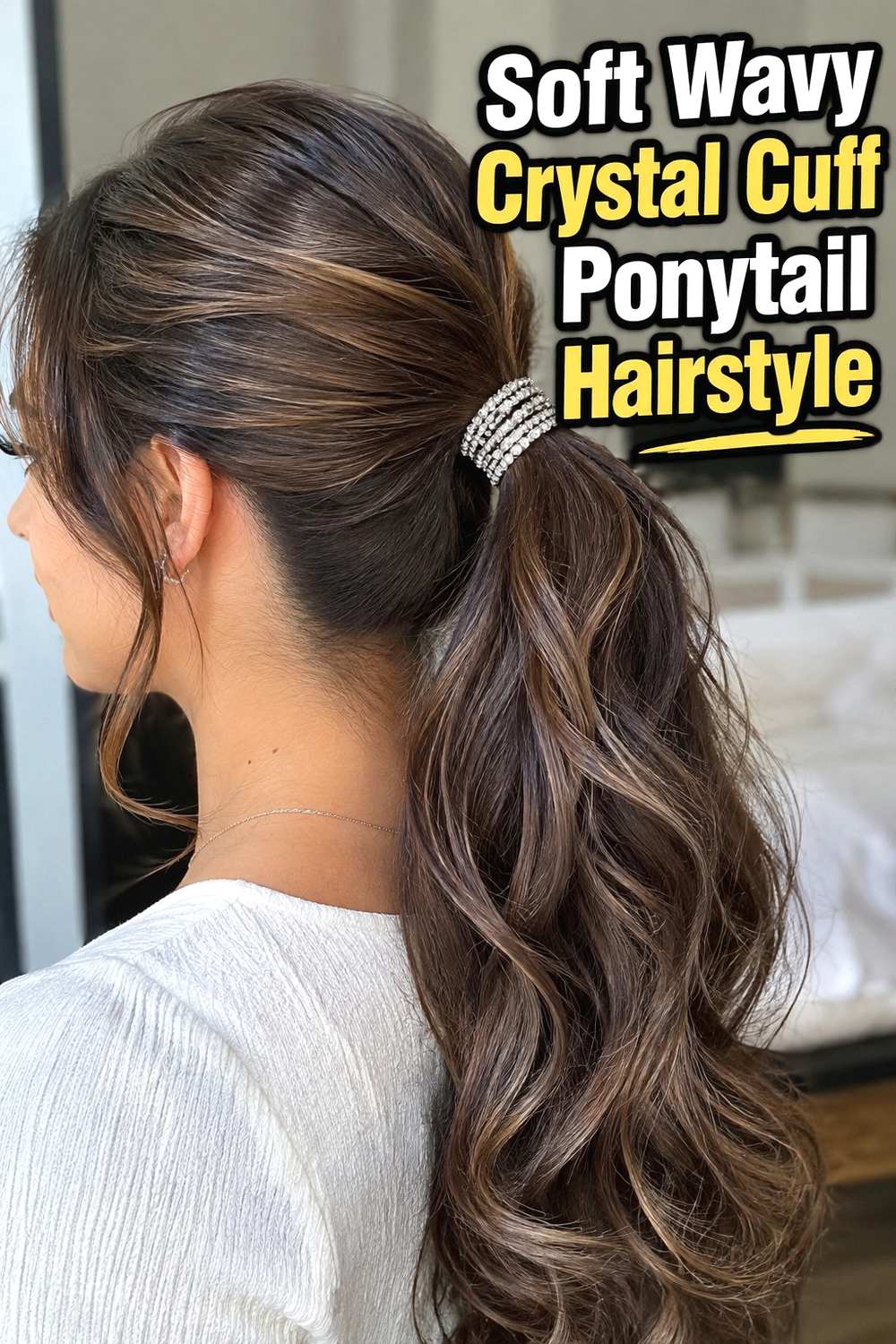
Soft waves bring movement to a crystal cuff ponytail and create a pretty contrast between loose texture and structured sparkle. The ponytail can sit at mid-height or slightly above the nape, with broad waves flowing through the lengths rather than tight curls. A little softness around the crown keeps the style relaxed, while a few natural face-framing strands can prevent the front from looking too severe. The cuff should sit neatly over the elastic so its polished surface remains visible against the textured hair. This approach is especially flattering for medium to long lengths because the waves need room to form. Curl the ponytail after securing it when you want more control over the finished shape.
Why It Works
The reflective crystals catch light between the bends of the waves, creating visual interest without requiring multiple accessories or complicated detailing.
4. Curly High Crystal Cuff Ponytail Hairstyle
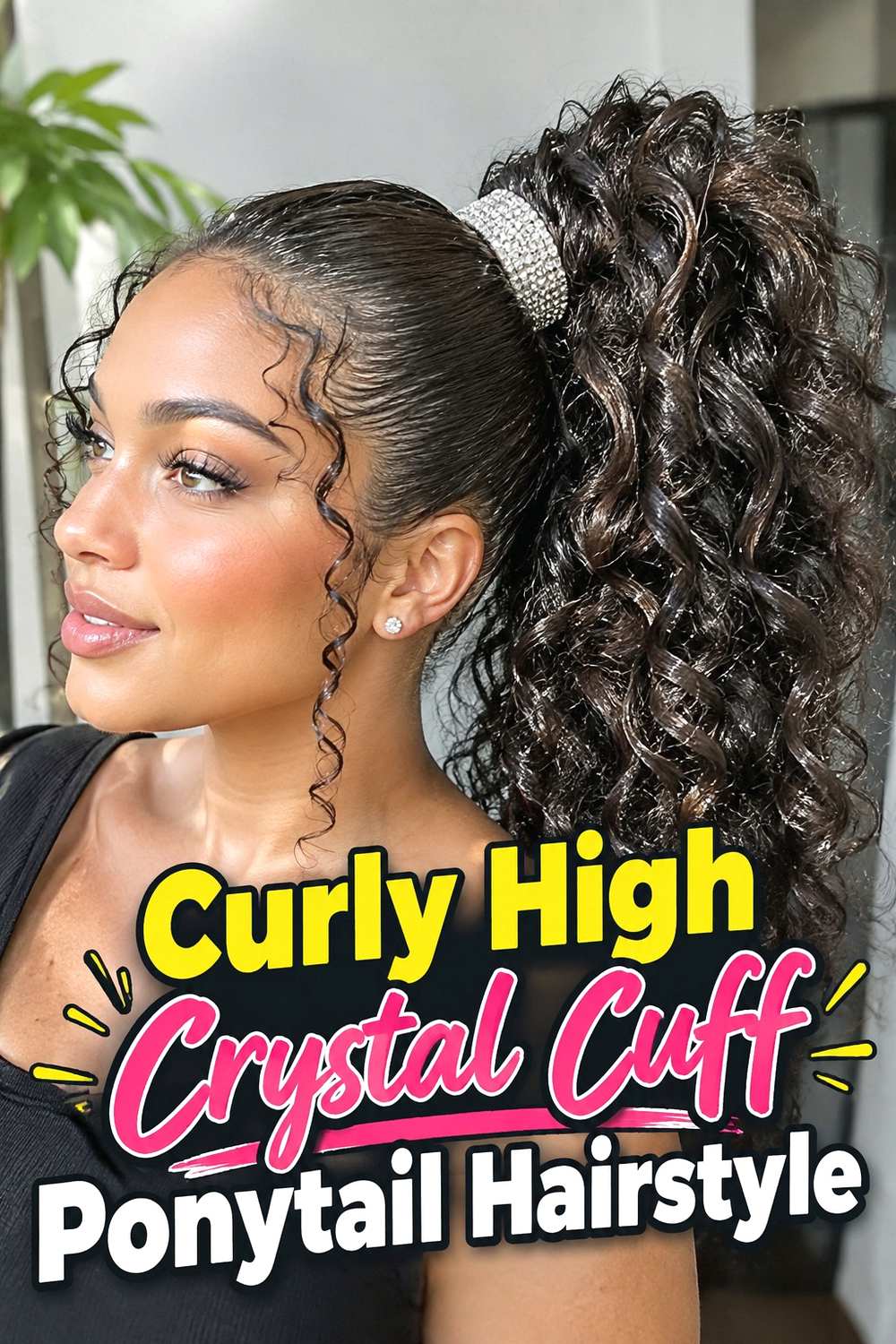
A high curly ponytail pairs natural bounce with the sharp sparkle of a crystal cuff. Instead of smoothing every strand completely flat, the base can retain a little natural texture so the finished style feels connected to the curls. The ponytail should rise from a secure point near the crown, allowing curls to fan outward and move freely behind the cuff. Defined spirals, loose curls, and mixed curl patterns can all work as long as the base is supported. Because curly ponytails can have significant volume, choose a cuff wide enough to remain visible without compressing the curl pattern. A firm elastic underneath is important so the decorative cuff is not responsible for holding the hairstyle together.
Hair Type & Length
Medium and long curly hair usually provides the easiest balance of height, volume, and secure placement, though shorter curls can work with a smaller cuff.
5. Bubble Crystal Cuff Ponytail Hairstyle
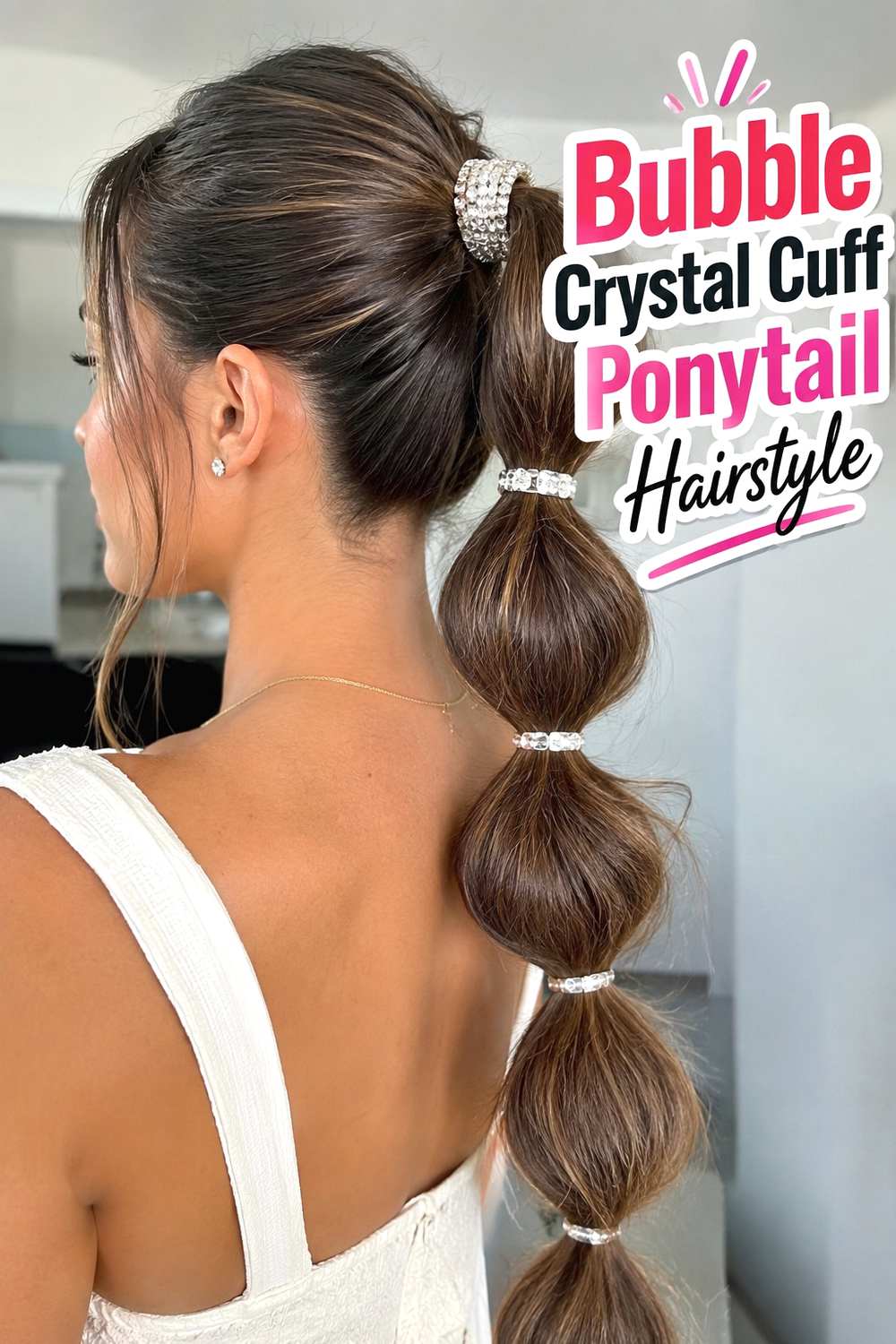
The bubble ponytail adds a playful sculptural shape while the crystal cuff gives the base a polished focal point. Start with a secure ponytail, attach the cuff over the main elastic, then place additional elastics down the length at even intervals. Gently expand each section to form rounded bubbles, keeping them soft and symmetrical rather than rigid. The cuff should remain the most decorative element, so clear or hair-colored elastics help the lower sections feel clean. This style works particularly well on long hair because extra length creates more bubbles and stronger visual rhythm. It can also make a straightforward ponytail feel more styled without braiding, although the sections should stay comfortably loose to avoid unnecessary pulling.
Pro Tip
Build and shape the bubbles only after the main ponytail feels secure; otherwise, adjusting the lower sections can loosen the crystal cuff at the base.
6. Braided Base Crystal Cuff Ponytail Hairstyle
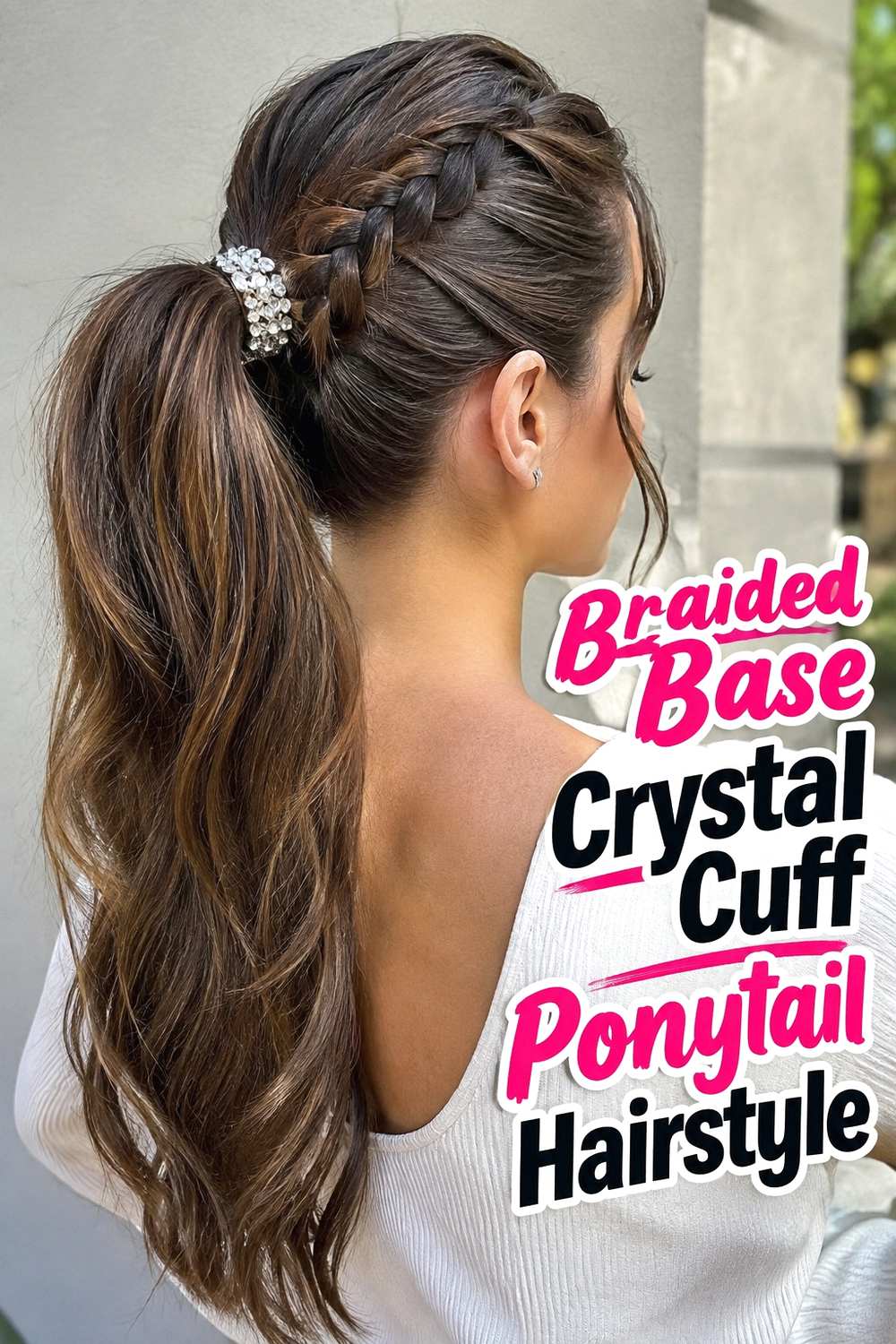
A braided base adds detail exactly where the eye naturally lands on a crystal cuff ponytail. Small braids from the front or sides travel toward the ponytail placement and meet beneath the accessory, while the remaining lengths stay loose. Keeping the braids neat but not excessively tight helps them blend naturally into the gathered hair. The crystal cuff then covers the elastic and visually connects the braided detail with the ponytail. Straight, wavy, or curly lengths can all work, making this an adaptable option for different finishes. The main challenge is keeping the braid placement balanced, so establish the final ponytail position before braiding rather than trying to redirect finished braids later.
Styling Notes
Secure the braids and loose hair together with a strong elastic first, then close the crystal cuff around the base without pinching the braided sections.
7. Twisted Low Crystal Cuff Ponytail Hairstyle
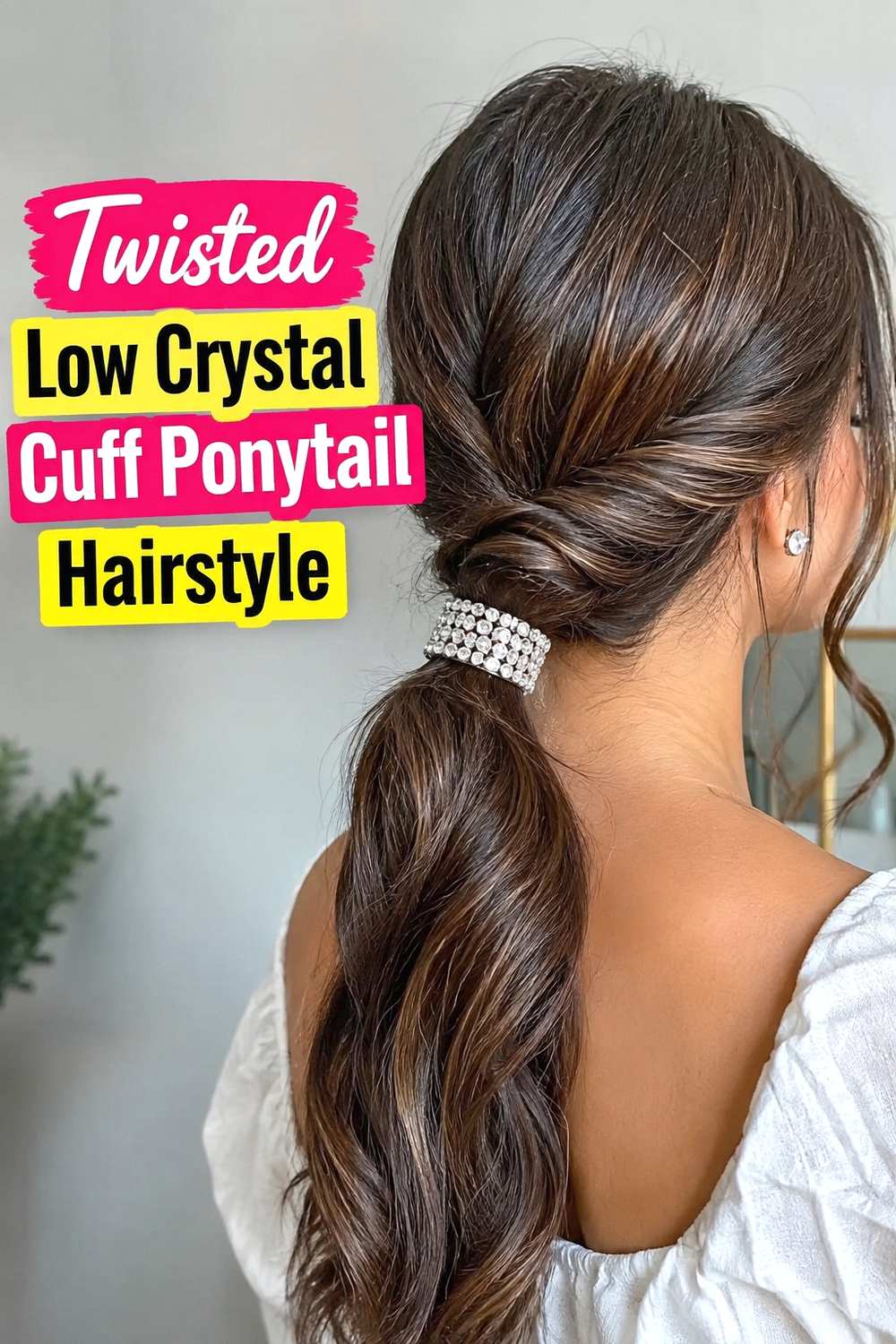
A twisted low ponytail combines a soft, dimensional crown with an elegant crystal accent at the nape. Sections from each side are gently twisted backward before joining the ponytail, creating subtle movement without the structure of a full braid. The crystal cuff sits over the meeting point and helps hide the elastic, giving the style a clean finish from behind. This look works beautifully with softly waved ends, although straight lengths create a more modern version. Because the style relies on controlled looseness, the twists should feel relaxed but still anchored with discreet pins if needed. It is particularly useful when you want an event-ready hairstyle that feels detailed without looking overly formal or heavily sprayed.
Wear & Maintenance
Check that the twists are pinned independently before adding the cuff so loosening one decorative element does not cause the entire ponytail to shift.
8. Half Up Crystal Cuff Ponytail Hairstyle
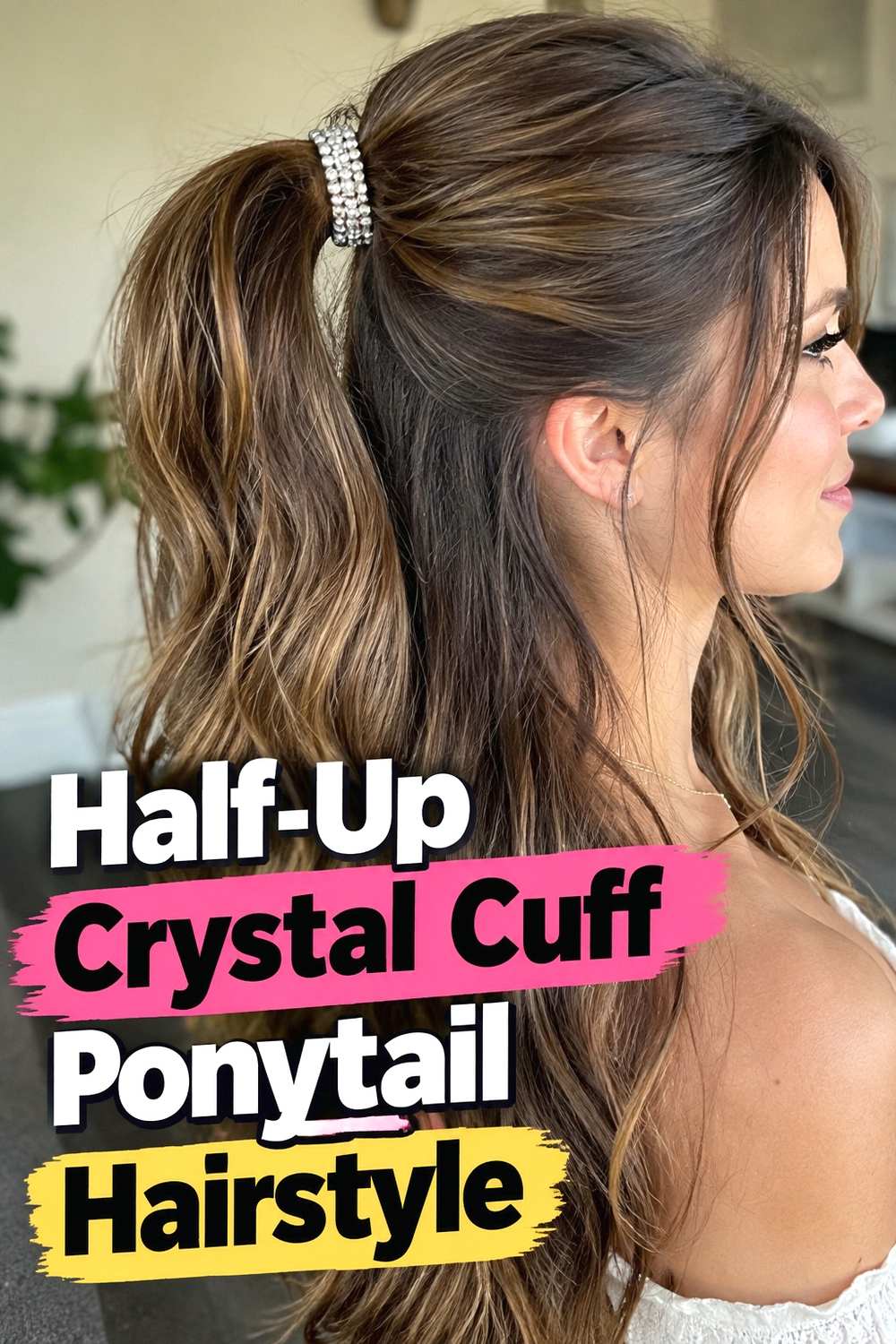
A half-up ponytail makes a crystal cuff feel lighter and more casual because the accessory sits against flowing hair rather than a fully gathered style. The upper section is pulled back from the temples or crown, secured neatly, and finished with the cuff, while the lower lengths remain loose. Straight hair creates a crisp look, whereas waves or curls make the transition between the tied and untied sections softer. This style is useful for showing length while keeping hair away from the face, and it requires less tension than many full ponytails. Choose a smaller or medium-size cuff so the accessory does not overwhelm the reduced amount of hair held at the base.
Best For
This is a versatile choice for medium to long hair when you want visible sparkle without committing to a completely tied-back hairstyle.
9. Side Swept Crystal Cuff Ponytail Hairstyle
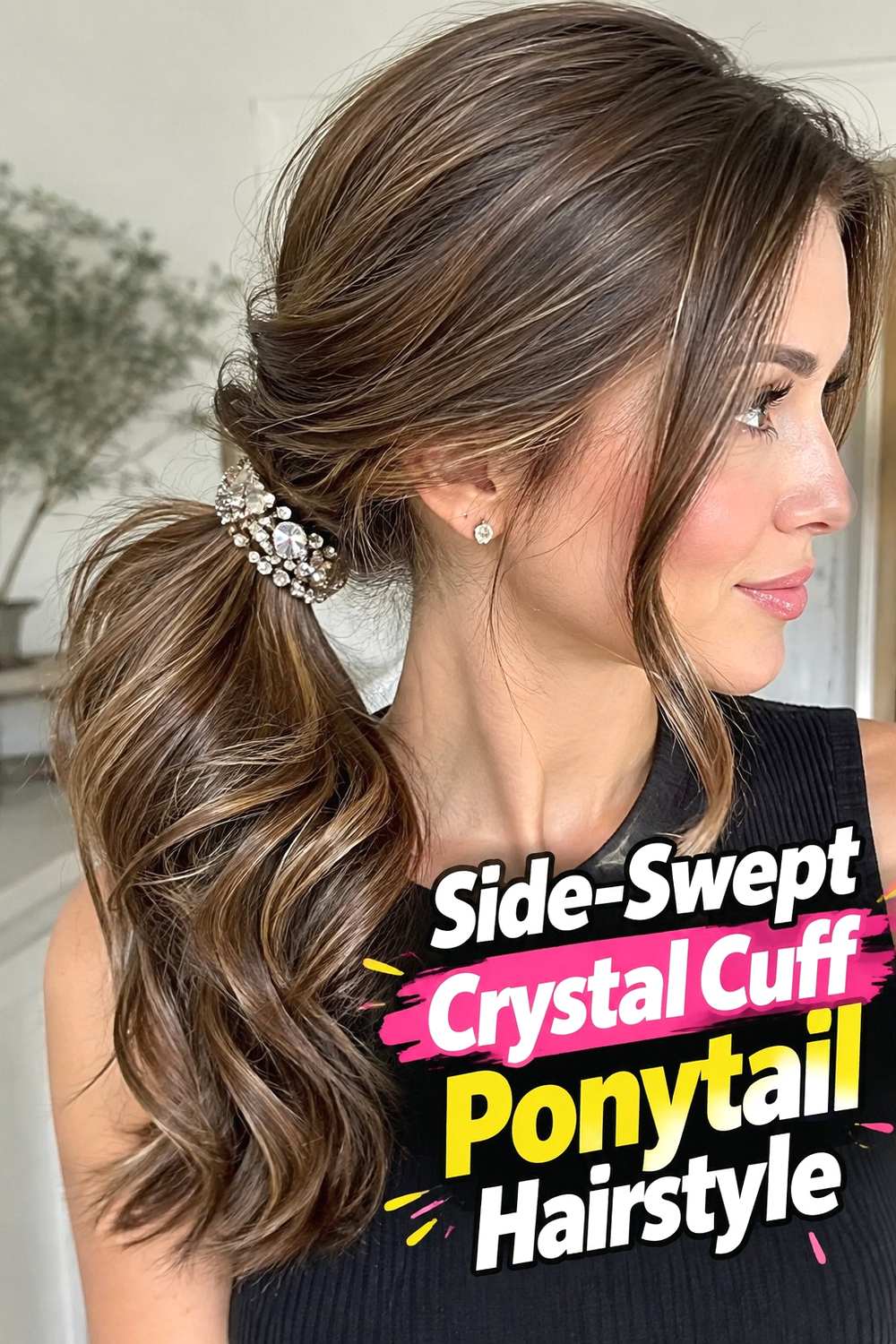
A side-swept ponytail gives the crystal cuff a more visible front-facing angle than a traditional centered pony. Hair is gathered low near one side of the nape, allowing the ponytail to fall over the shoulder while the cuff remains noticeable around the base. Soft waves enhance the romantic effect, while straighter lengths make the asymmetrical placement feel more contemporary. The key is keeping the side placement comfortable and balanced so the ponytail does not pull awkwardly across the scalp. A subtle side part or swept fringe can echo the direction of the ponytail. This style works especially well with statement earrings on the opposite side, provided the overall look does not become too accessory-heavy.
Why It Works
The asymmetrical position brings the crystal cuff into view from more angles, making a small accessory feel like a stronger part of the finished hairstyle.
10. Voluminous Crown Crystal Cuff Ponytail Hairstyle
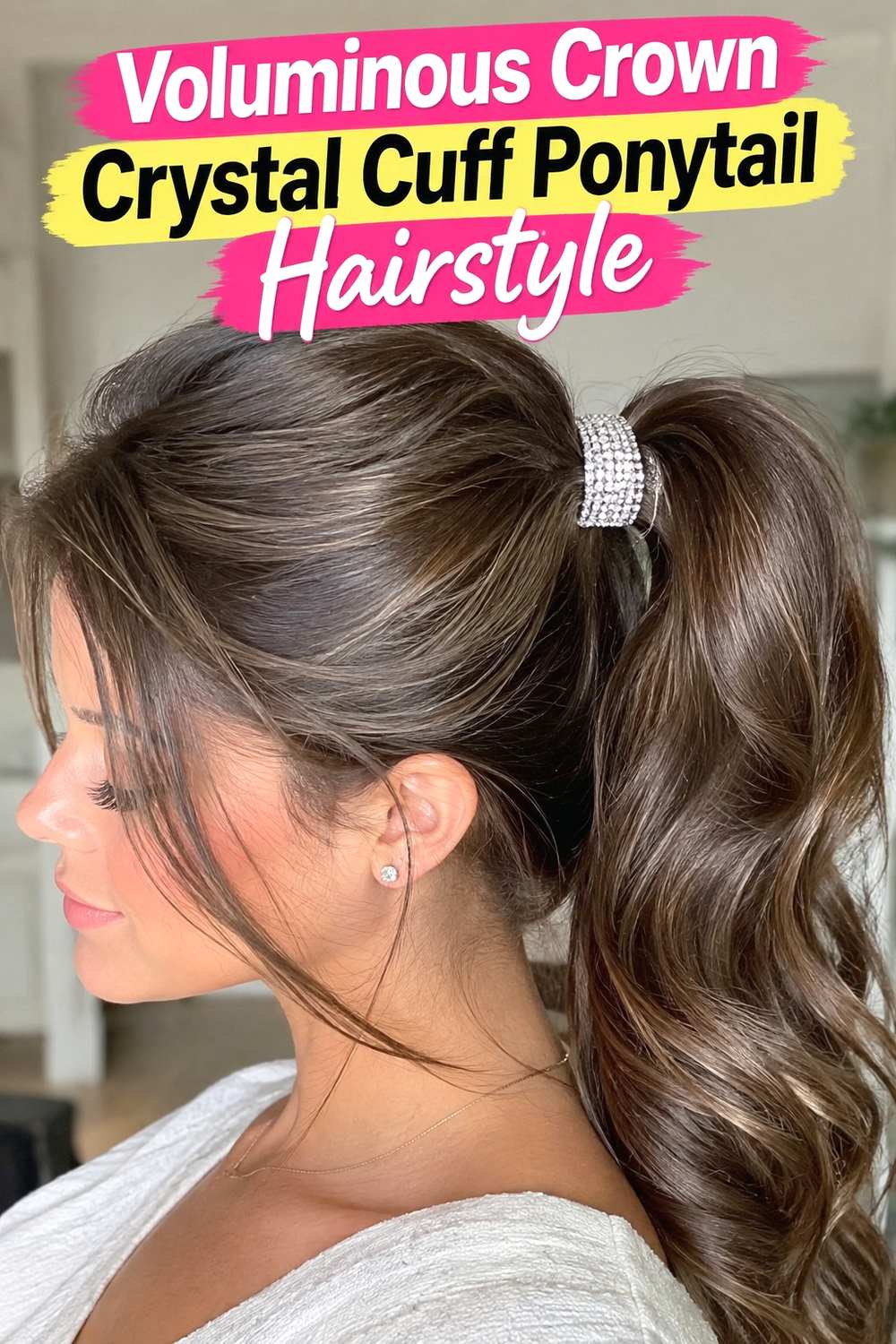
A lifted crown adds soft drama to a crystal cuff ponytail without requiring the ponytail itself to sit extremely high. The front and crown retain controlled volume, while the sides are guided back into a secure mid-height ponytail. The crystal cuff creates a crisp transition between the fuller upper section and the flowing lengths. This style looks particularly balanced with waves or a softly curled ponytail because both areas carry some dimension. Avoid building volume only at one small point; a gradual lift through the crown looks more natural and wearable. If your hair is very smooth or fine, a little grip at the roots can help the shape hold without relying on excessive teasing.
Pro Tip
Create the crown shape before securing the final elastic, then make small adjustments with your fingertips rather than pulling large sections loose afterward.
11. Center Part Crystal Cuff Ponytail Hairstyle
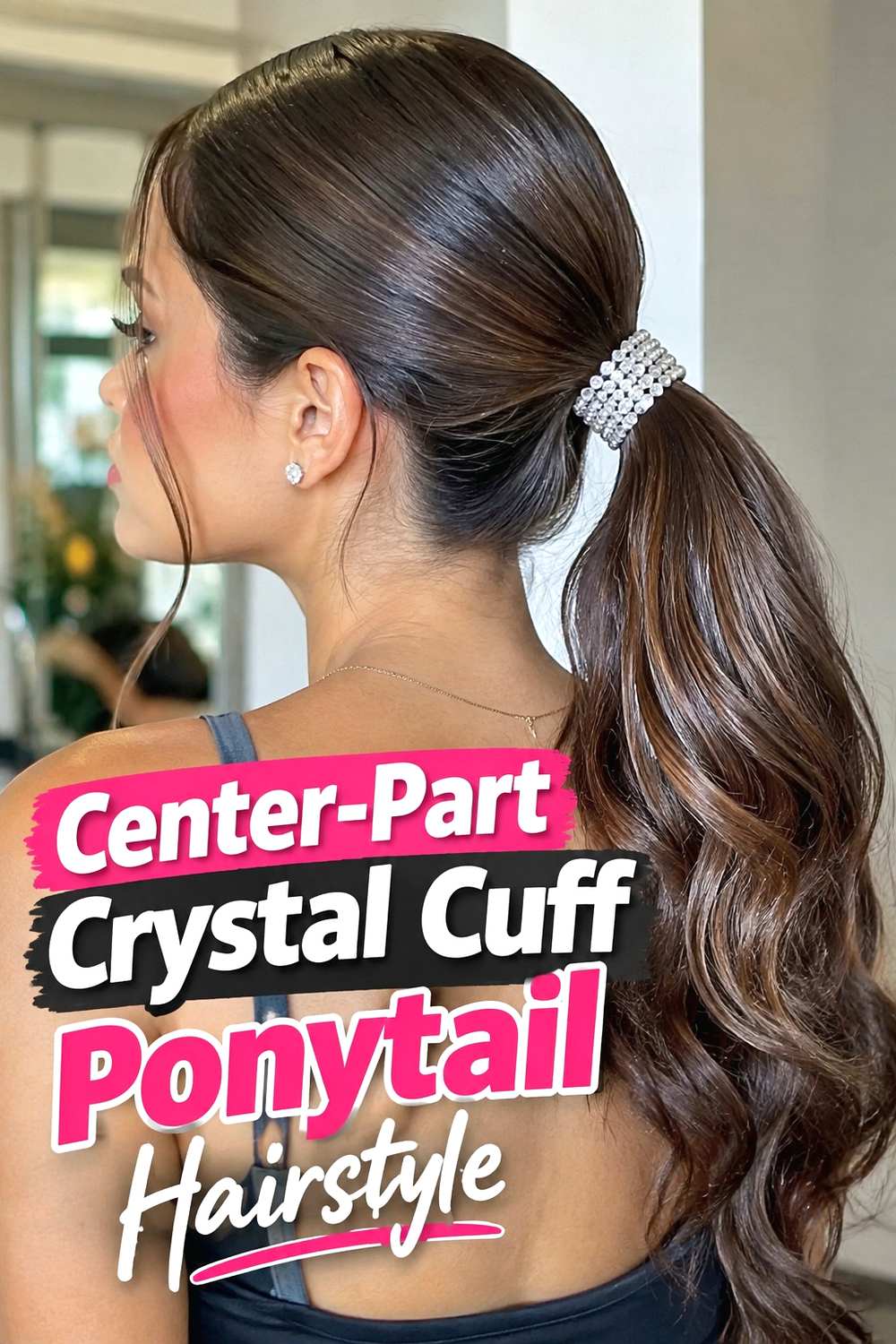
A precise center part gives a crystal cuff ponytail a clean, modern frame. Hair is divided evenly from the front and smoothed toward a low or mid-height ponytail, creating strong symmetry around the face. The sparkling cuff at the base prevents the minimalist shape from feeling too plain and adds a jewelry-like detail from the back. This version works especially well with straight or lightly polished lengths because the simple silhouette emphasizes shine and alignment. If the hair naturally lifts around the part, work with small sections rather than flattening everything aggressively. The ponytail should remain secure but comfortable, since the refined look depends more on neat direction and clean placement than extreme tension.
Styling Notes
Follow the natural center line as closely as possible, smooth each side separately, and join the sections only when both sides sit evenly.
12. Wrapped Base Crystal Cuff Ponytail Hairstyle
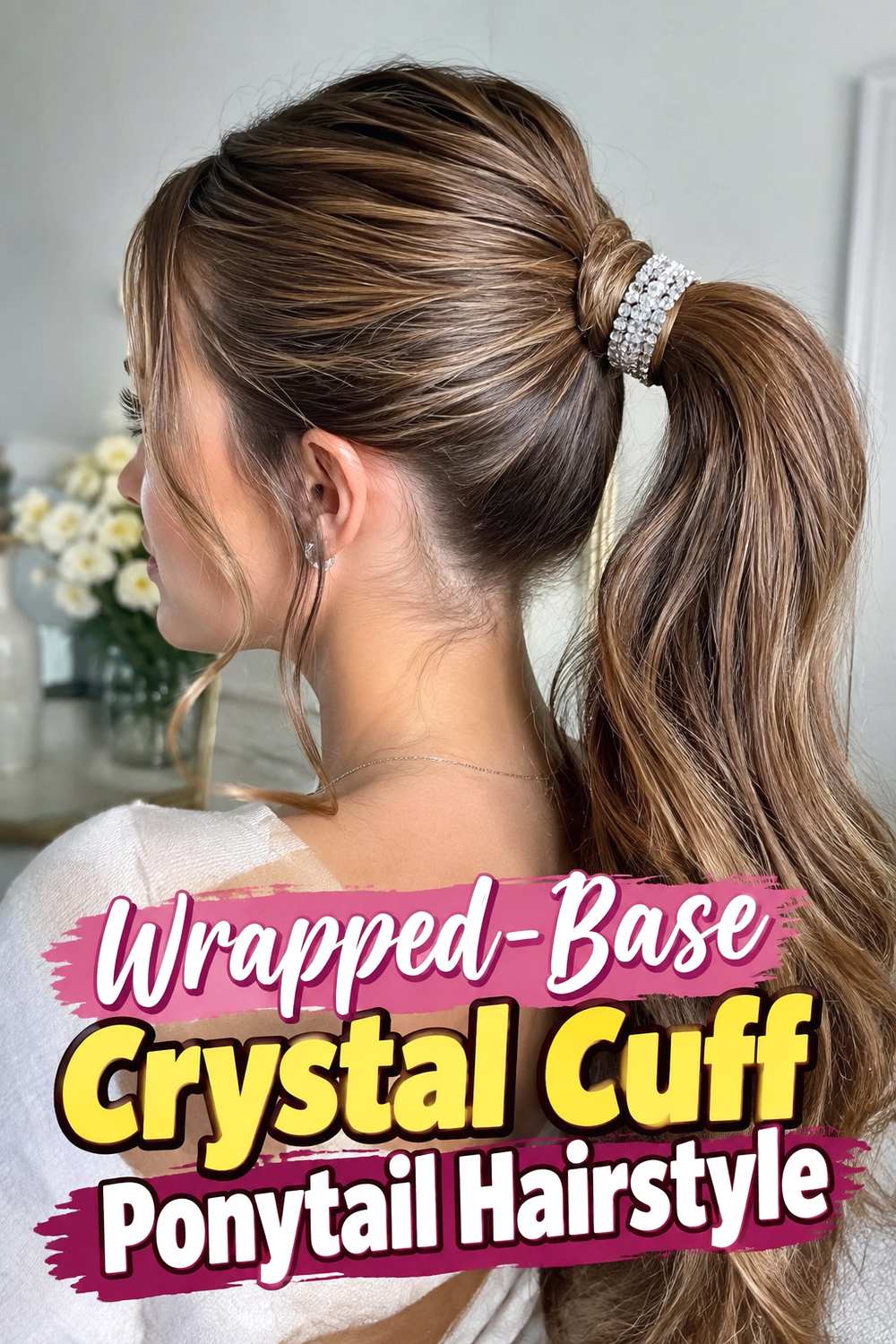
The wrapped-base ponytail adds an extra layer of refinement around a crystal cuff. A small strand of hair is reserved from the ponytail, wrapped neatly around part of the base, and secured discreetly before or alongside the cuff. The result combines natural hair detailing with the sparkle of the accessory, making the attachment point look intentional from every angle. This works best when the cuff design leaves enough room for the wrapped strand to remain visible rather than covering it completely. A straight or softly waved ponytail keeps the base from becoming visually crowded. The wrapped section should be smooth and firmly pinned so it does not unwind when the ponytail moves during wear.
Wear & Maintenance
Use a lightweight strand for the wrap and secure it independently underneath the ponytail before positioning the cuff around the remaining visible base.
13. Textured Mid Height Crystal Cuff Ponytail Hairstyle
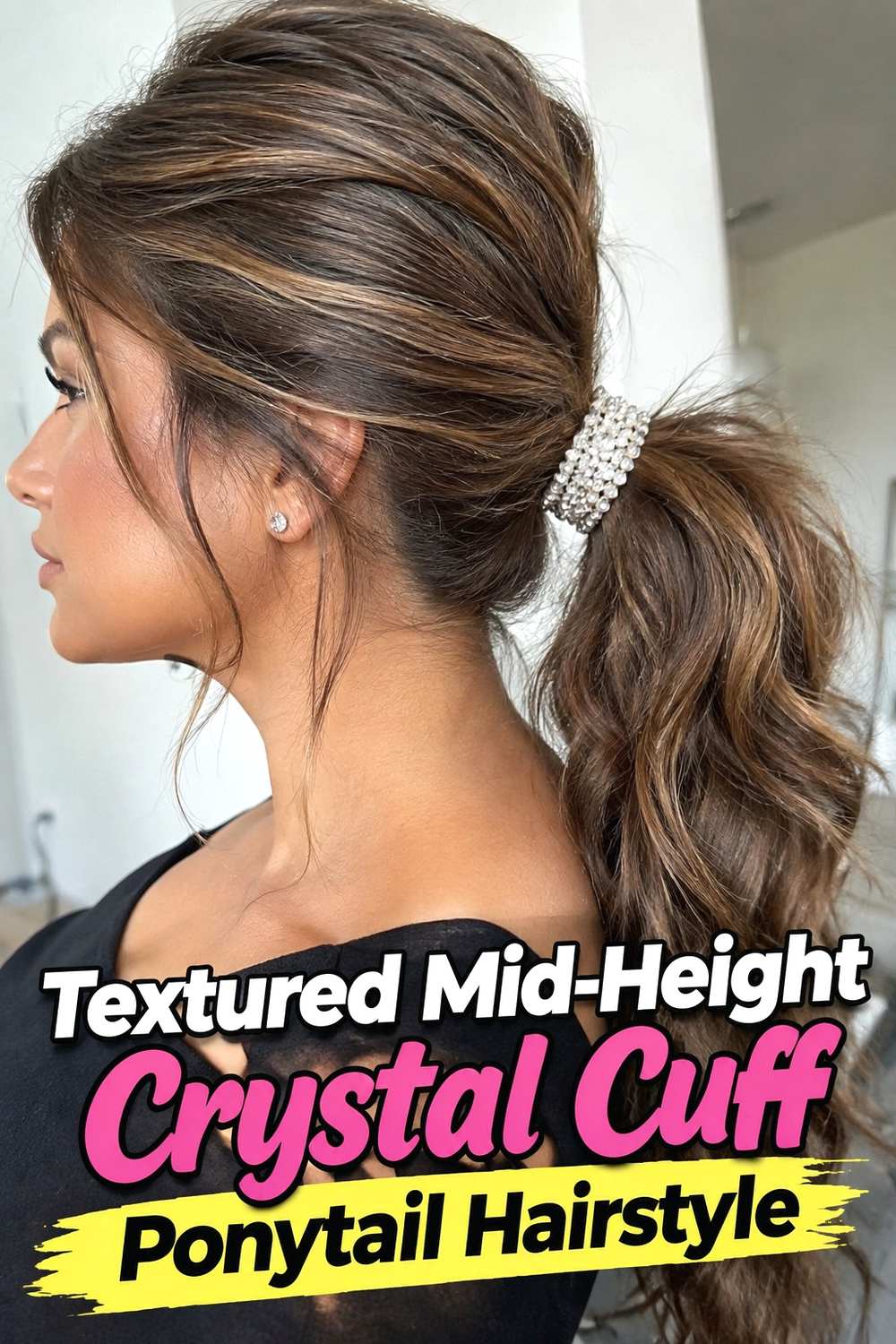
A textured mid-height ponytail sits between casual and polished, making it one of the easiest ways to wear a crystal cuff regularly. The base lands around the middle of the back of the head, while the crown keeps slight lift and the ponytail retains natural bends, waves, or lightly tousled texture. The crystal cuff adds enough structure to make the relaxed finish look deliberate. This placement can also feel more comfortable than a very high ponytail during longer wear. Instead of trying to smooth away every flyaway, keep the surface controlled but believable. Medium to long hair works particularly well because the ponytail has enough length to move while still showing the accessory clearly at the base.
Best For
Choose this option when you want visible sparkle with a wearable amount of volume, texture, and everyday comfort.
14. Double Braid Crystal Cuff Ponytail Hairstyle
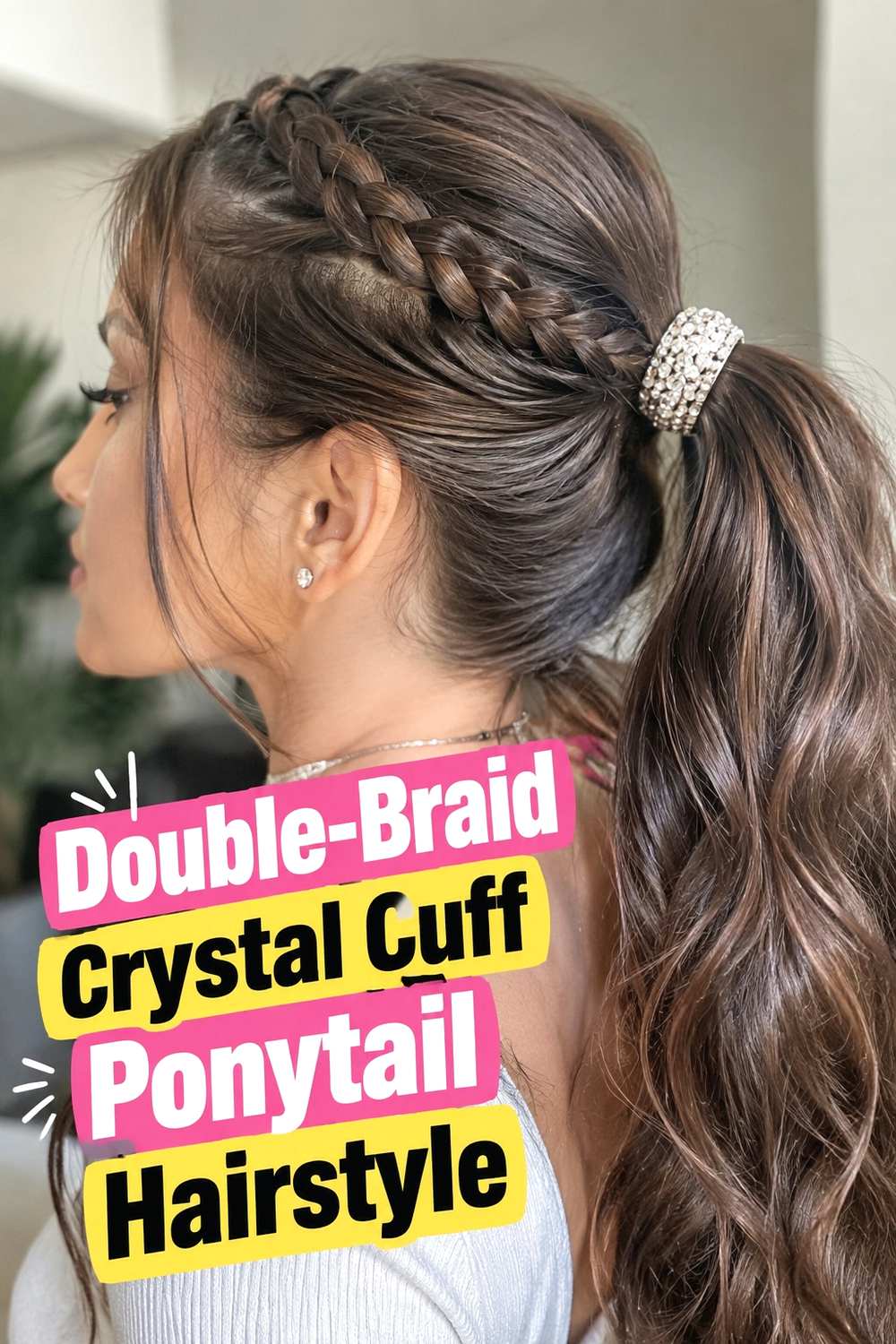
Two braids feeding into one ponytail create balanced detail on both sides of a crystal cuff. The braids can begin near the temples or slightly higher along the parting and travel backward toward the ponytail base. Once they meet, all the hair is secured together and the crystal cuff is added over the elastic. Leaving the ponytail smooth keeps the braids prominent, while curls or waves produce a softer, more decorative effect. The braids should follow a natural path toward the tie point so they do not look stretched or disconnected. This style may take more preparation than a basic ponytail, but the symmetry makes it especially effective for occasions when the hairstyle needs to look detailed from multiple angles.
Hair Type & Length
Medium to long hair provides enough room for visible braiding and a substantial ponytail, although braid size can be adjusted for different densities.
15. Loose Romantic Crystal Cuff Ponytail Hairstyle
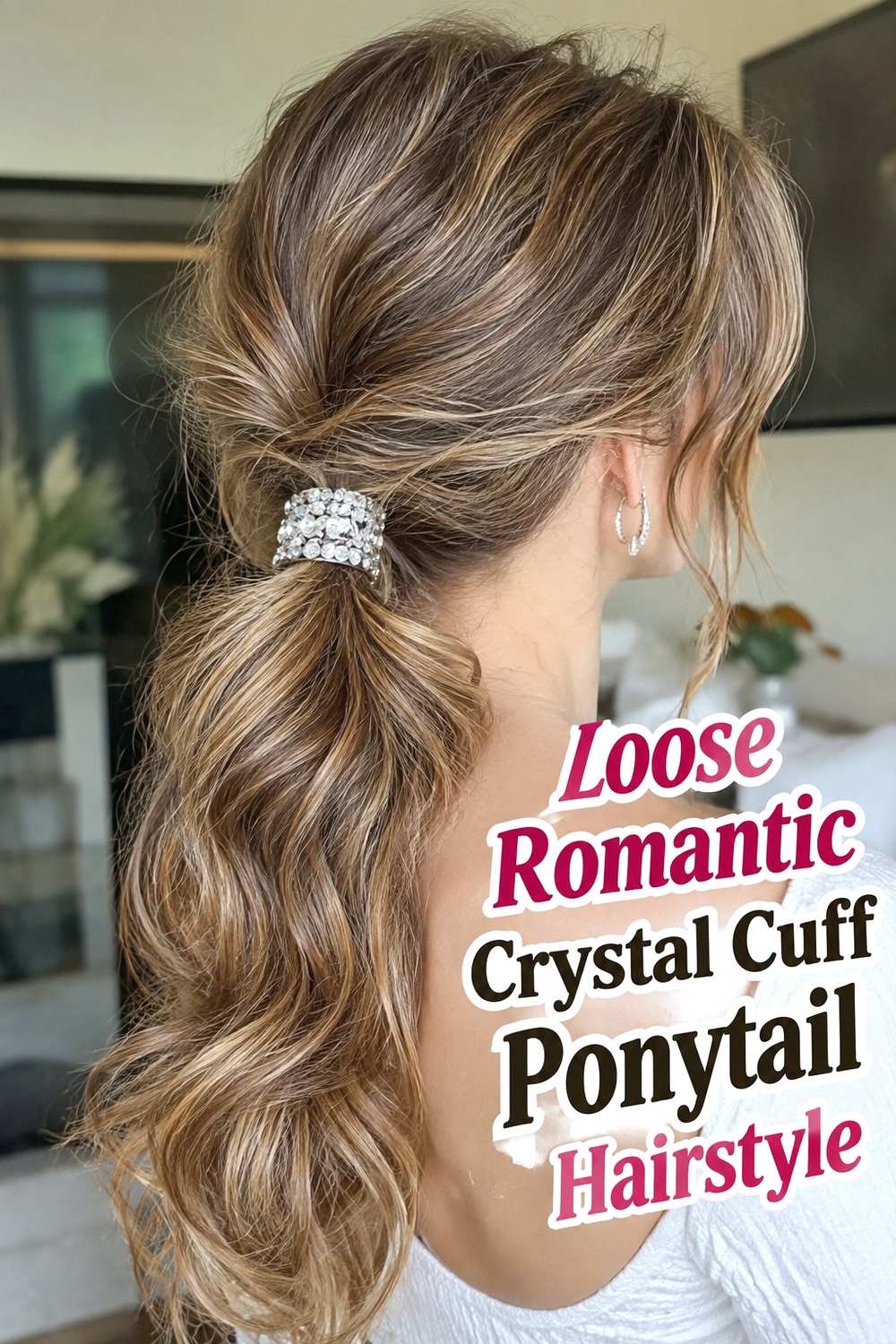
A loose romantic ponytail softens the sparkle of a crystal cuff with airy volume, gentle bends, and a few carefully placed face-framing strands. The ponytail usually sits low to mid-height, with the crown kept softly lifted instead of tightly brushed back. Broad curls or imperfect waves help the lengths move naturally, while the cuff gives the otherwise relaxed style a defined focal point. This is a strong option for weddings, dinners, photos, or dressed-up occasions where a sleek ponytail may feel too severe. The looseness should still be supported by a secure inner elastic, since relying on the cuff alone can cause the ponytail to sag as the hair settles.
Why It Works
The combination of soft texture and a structured sparkling cuff creates contrast, helping the style feel elegant without losing its relaxed movement.
16. Coily Crystal Cuff Ponytail Hairstyle
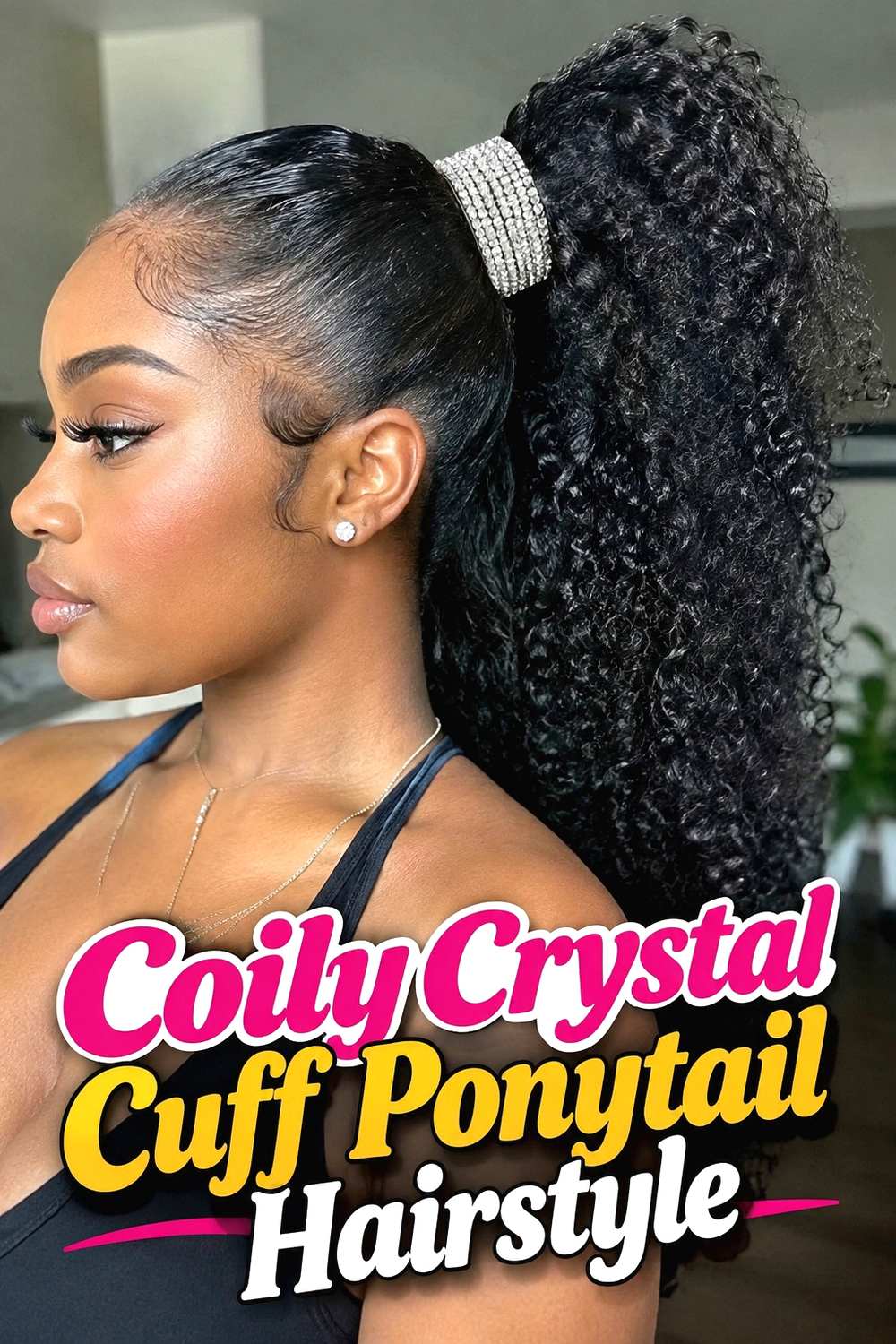
A coily ponytail lets natural texture become the main feature while a crystal cuff adds a bright accent at the base. Hair can be gathered high, mid-height, or slightly lower depending on comfort and length, with coils left full and dimensional rather than stretched into an overly uniform shape. The base may be smoothed lightly or retain natural texture for a softer transition. A cuff with a secure opening and enough width to accommodate the ponytail base is important, particularly when the gathered hair is dense. The decorative cuff should sit around the secured elastic rather than compressing the hair itself. This approach keeps the sparkle visible while respecting the volume, variation, and natural spring of the coils.
Wear & Maintenance
Choose an accessory that closes smoothly without catching strands, and remove it carefully rather than sliding it roughly through textured hair.
17. Minimal Straight Crystal Cuff Ponytail Hairstyle
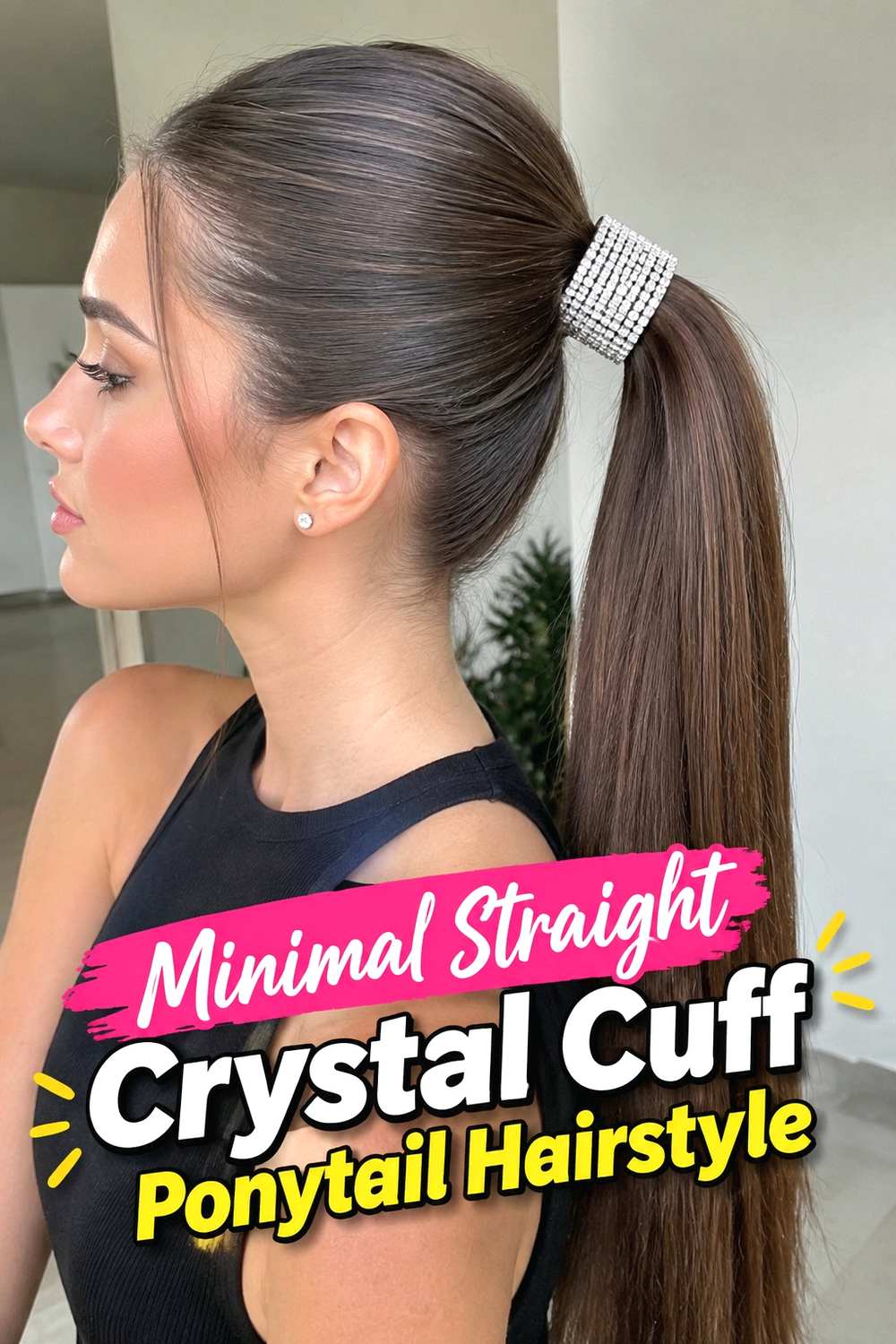
A minimal straight ponytail is one of the clearest ways to showcase a crystal cuff because there are few competing details. The hair is gathered into a simple low or mid-height ponytail, while the lengths remain straight with natural movement and soft shine. The base can be smooth without looking stiff, and the ends should retain enough weight to keep the silhouette realistic. A clean cuff with a single row or compact arrangement of crystals works especially well with this restrained finish. The look suits everyday styling as easily as an evening outfit, depending on the accessory design. Because the hairstyle is simple, neat placement matters: even a slightly tilted cuff can become more noticeable against the streamlined ponytail.
Pro Tip
Secure the ponytail first, check the base from the back, and position the cuff last so the crystal detail sits level and centered.
How to Choose the Right Look
Start with ponytail placement. High styles such as the sleek high and curly high versions create more lift and visual drama, but they generally require firmer tension. Low ponytails are easier to keep understated and can feel more comfortable for longer events. Mid-height options offer a practical middle ground with enough visibility for the cuff.
Next, consider texture. Straight hair makes the crystal accessory look crisp and graphic, while waves, curls, coils, and tousled finishes create contrast and softness. If your hair is fine, choose a cuff that does not feel disproportionately heavy. Thick or highly textured hair may need a wider accessory and a strong elastic underneath for secure support.
Styling time also matters. Minimal straight, center-part, and low polished versions are relatively streamlined. Bubble, braided, double-braid, and twisted styles require more sectioning and adjustment. For formal occasions, a wrapped base or romantic texture can add extra detail, while half-up and textured mid-height styles are easy to adapt for more casual wear.
Finally, treat the crystal cuff as decoration rather than the main support for the ponytail. Secure the hair first with an appropriate elastic, then position the cuff over or around the base according to its design. That approach helps maintain the shape and makes the accessory easier to adjust or remove.
Final Thoughts
Crystal ponytail cuffs work best when the hairstyle gives the accessory a clear purpose. Choose a sleek shape when you want the crystals to stand out sharply, or pair the cuff with waves, curls, braids, twists, or natural texture for a softer finish. Placement, comfort, hair density, and accessory weight are just as important as the overall look, so adapt each idea to what your hair can hold comfortably and naturally.
FAQs
1. Can a crystal cuff be worn on a high ponytail?
Yes. A high ponytail can showcase a crystal cuff very clearly, but the ponytail should first be secured with a strong elastic so the decorative cuff is not carrying the hairstyle’s tension.
2. Do crystal ponytail cuffs work with curly or coily hair?
Yes. Curly and coily textures can look especially striking with crystal accents. Choose a cuff that fits comfortably around the ponytail base and avoid designs that can snag individual strands.
3. What ponytail height shows a crystal cuff best?
High and mid-height ponytails usually make the accessory highly visible, while low ponytails create a subtler jewelry-like effect. The best placement depends on the look and comfort you want.
4. Can I use a crystal ponytail cuff on fine hair?
Yes, but lightweight or smaller cuffs are generally easier to balance on fine hair. Use a secure elastic underneath and avoid an accessory that feels heavy enough to pull the ponytail downward.
5. How do I keep a crystal ponytail cuff from slipping?
Build a secure ponytail first, then position the cuff around the elastic or supported base according to the accessory design. The cuff should fit snugly without pinching, catching, or compressing the hair.
Save your favorite crystal ponytail cuff hairstyles and share the ideas you want to recreate for your next polished hair look.