15 Side-Part Midi Blowout Hairstyle Ideas for Polished Volume
A side-part midi blowout brings polished movement to mid-length hair with lifted roots, sweeping front sections, soft curves, and plenty of wearable bounce.
Midi-length hair sits in a versatile zone where there is enough length for flowing movement without the extra weight of very long hair. Adding a side part immediately changes the balance of the cut, creating more lift on one side and a softer, sweeping shape around the face.
The finish can range from smooth and refined to feathered, wavy, or intentionally tousled. When comparing these ideas, consider where your layers begin, how much root lift your hair can comfortably hold, whether you prefer rounded or flipped ends, and how much daily styling you want to maintain.
Quick List
- Classic Side Part Midi Blowout Hairstyle
- Soft Layered Side Part Midi Blowout Hairstyle
- Rounded Ends Side Part Midi Blowout Hairstyle
- Flipped Ends Side Part Midi Blowout Hairstyle
- Face Framing Side Part Midi Blowout Hairstyle
- Bouncy Side Part Midi Blowout Hairstyle
- Sleek Side Part Midi Blowout Hairstyle
- Deep Sweep Side Part Midi Blowout Hairstyle
- Curtain Fringe Side Part Midi Blowout Hairstyle
- Soft Wave Side Part Midi Blowout Hairstyle
- Root Lift Side Part Midi Blowout Hairstyle
- Feathered Side Part Midi Blowout Hairstyle
- Polished Side Part Midi Blowout Hairstyle
- Tousled Side Part Midi Blowout Hairstyle
- Glamorous Side Part Midi Blowout Hairstyle
1. Classic Side Part Midi Blowout Hairstyle
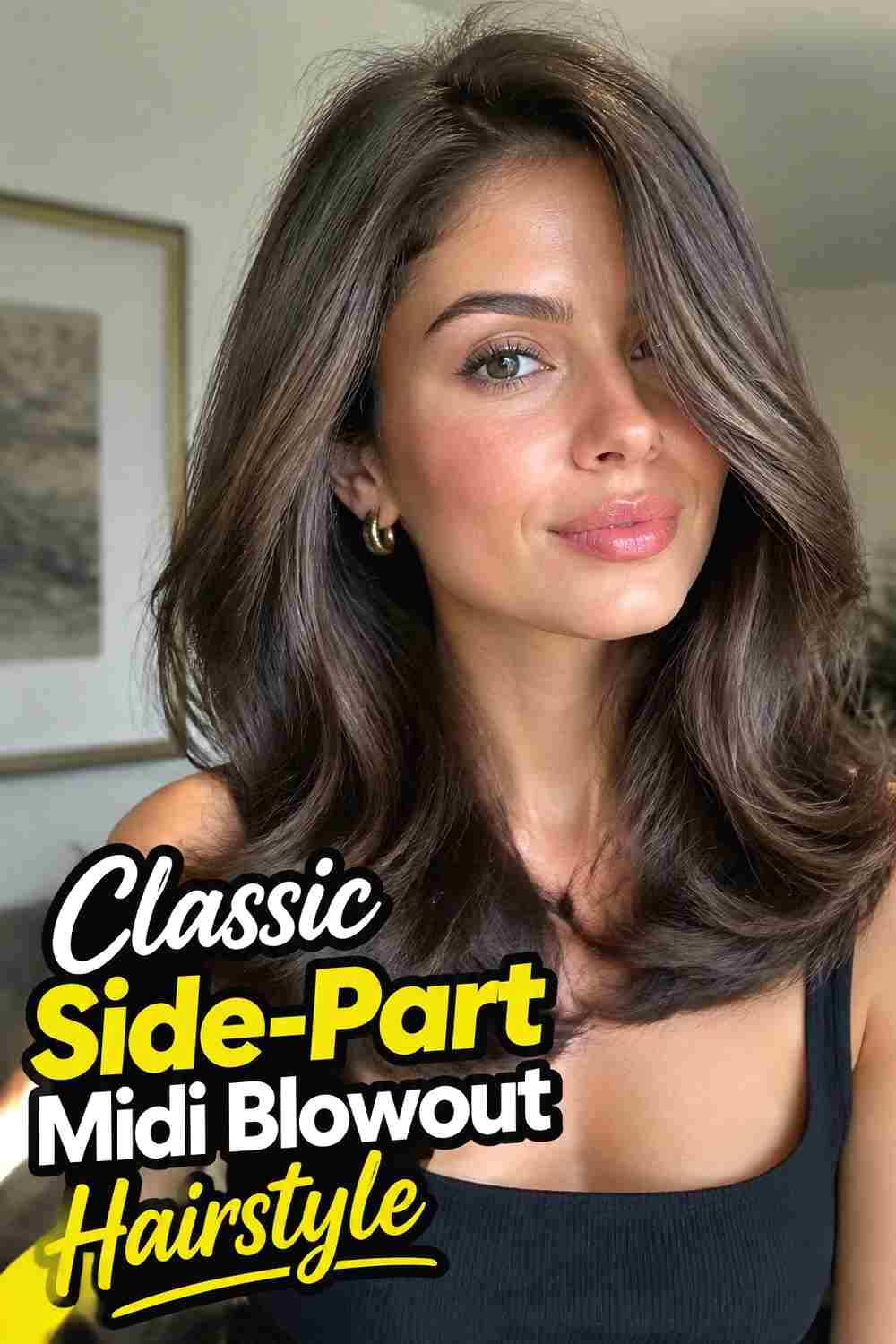
The Classic Side-Part Midi Blowout Hairstyle keeps the shape simple and balanced, letting the side part supply just enough asymmetry to make the mid-length cut feel fresh. Hair falls around the shoulders or upper chest with a smooth surface, gentle crown lift, and broad bends at the ends. The heavier side sweeps naturally across the forehead before blending into the lengths, while the lighter side sits closer to the head. This version works well when you want a polished everyday style without exaggerated curls or excessive height. A medium round brush can create the soft curve through the bottom while maintaining enough movement for the hair to swing naturally instead of forming a rigid shape.
Styling Notes
Create the part before blow-drying and lift the heavier front section upward first, then direct it sideways so the sweep retains volume.
2. Soft Layered Side Part Midi Blowout Hairstyle
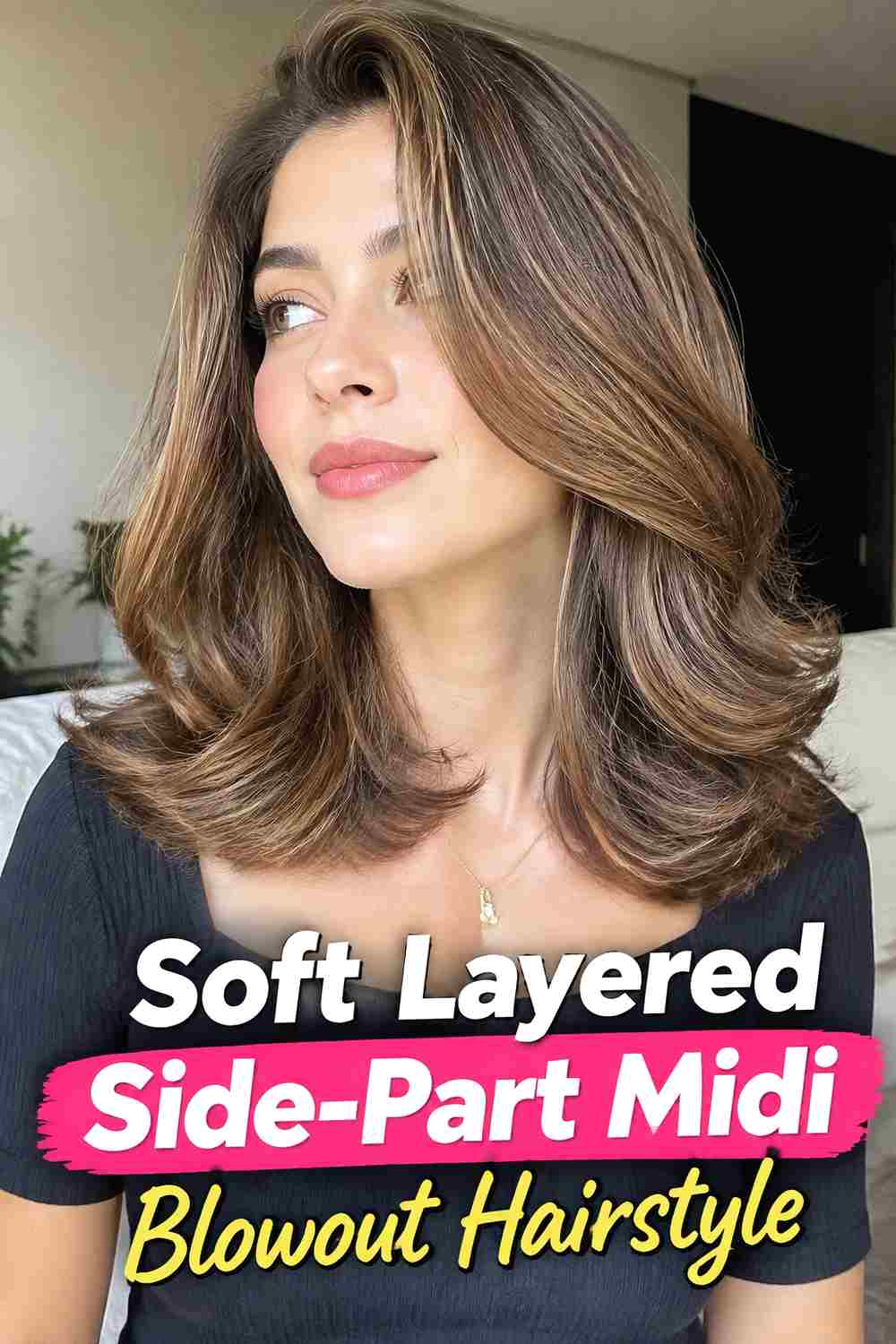
Soft layers give midi-length hair extra movement without removing so much weight that the ends appear thin. With a side part, the shortest layers around the front can lift and sweep away from the face while longer sections create a fuller shape through the shoulders. The blowout should emphasize the different lengths with broad bends rather than tight curls, allowing each layer to move independently. This style can be especially effective on medium or thick hair because layering reduces bulk while preserving volume. On finer hair, fewer longer layers may maintain a stronger perimeter. Keep the ends airy and use lightweight finishing products so the movement created by the cut remains visible instead of being flattened by heavy shine creams.
Hair Type & Length
Midi cuts with medium density and long, blended layers show this blowout particularly well, though the shape can be adapted for finer hair with less layering.
3. Rounded Ends Side Part Midi Blowout Hairstyle
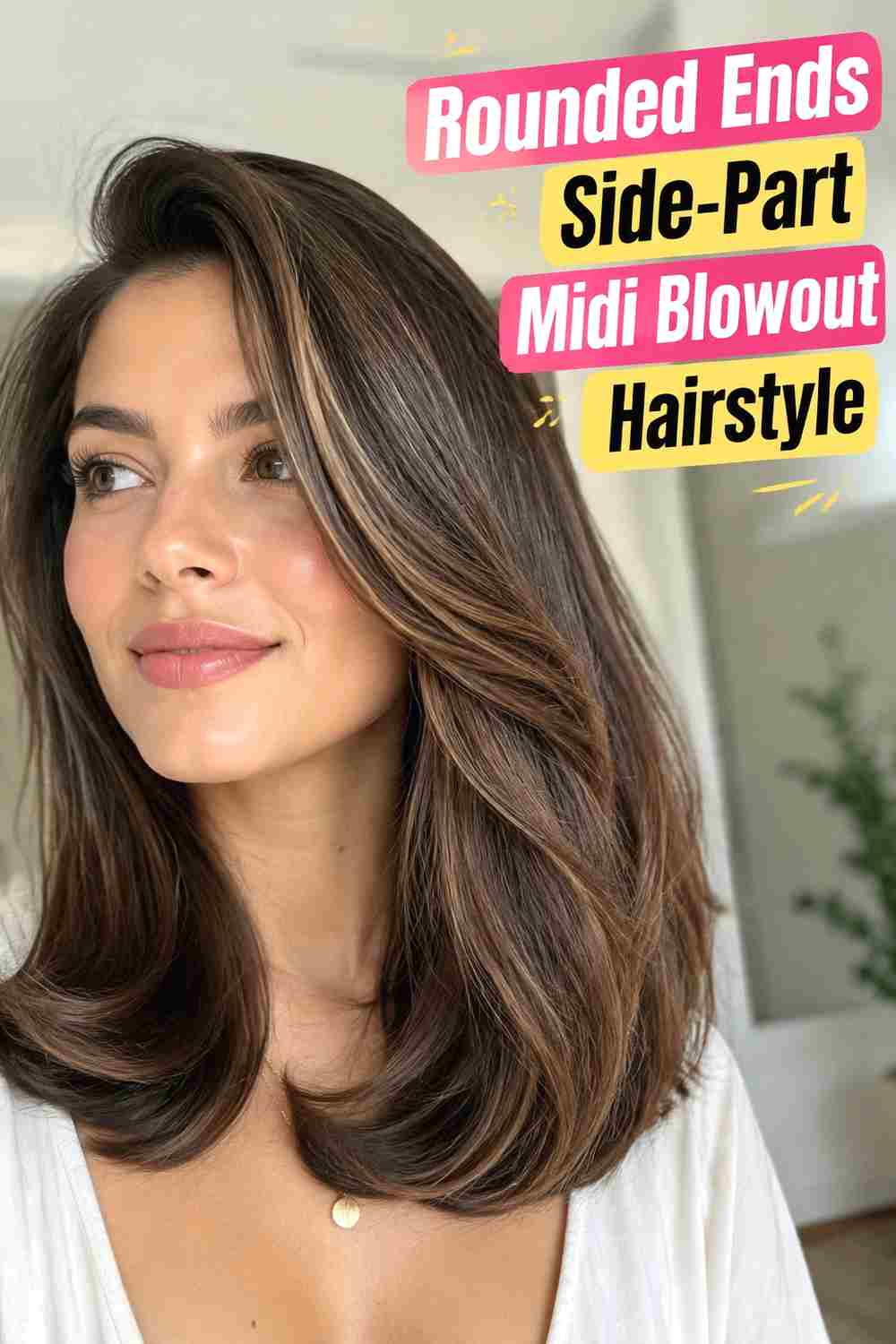
Rounded ends give a side-part midi blowout a smooth, classic finish that feels neat without looking overly formal. The roots stay lightly lifted, the mid-lengths remain sleek, and the lower few inches bend inward in one broad curve. Because the hair sits around shoulder to upper-chest length, that rounded perimeter is easy to see and helps the cut appear fuller. The side part introduces enough movement around the front to prevent the shape from feeling too symmetrical. A larger round brush usually produces a softer bend than a small one, which is useful when you want volume rather than a curled-under effect. Finish with minimal serum on the ends while leaving the root area light and airy.
Why It Works
The controlled perimeter makes midi hair look polished while the side part adds direction and prevents the rounded shape from appearing too uniform.
4. Flipped Ends Side Part Midi Blowout Hairstyle

Flipped ends bring more energy to a midi blowout by turning the lower sections outward instead of curving them under. The side part adds another directional element, making the finished shape lively without requiring tight curls throughout the hair. Shoulder-grazing lengths are especially suited to this look because the ends naturally lift and move as they meet the shoulders. Layers can make the flips appear softer by allowing different sections to turn outward at slightly different heights. Keep the root and mid-length areas relatively smooth so the perimeter remains the main feature. For a modern finish, avoid forcing every end into the same exact angle; small variations make the movement look much more natural.
Styling Notes
Direct the brush outward only through the final few inches, then let each section cool before loosening the ends with your fingers.
5. Face Framing Side Part Midi Blowout Hairstyle
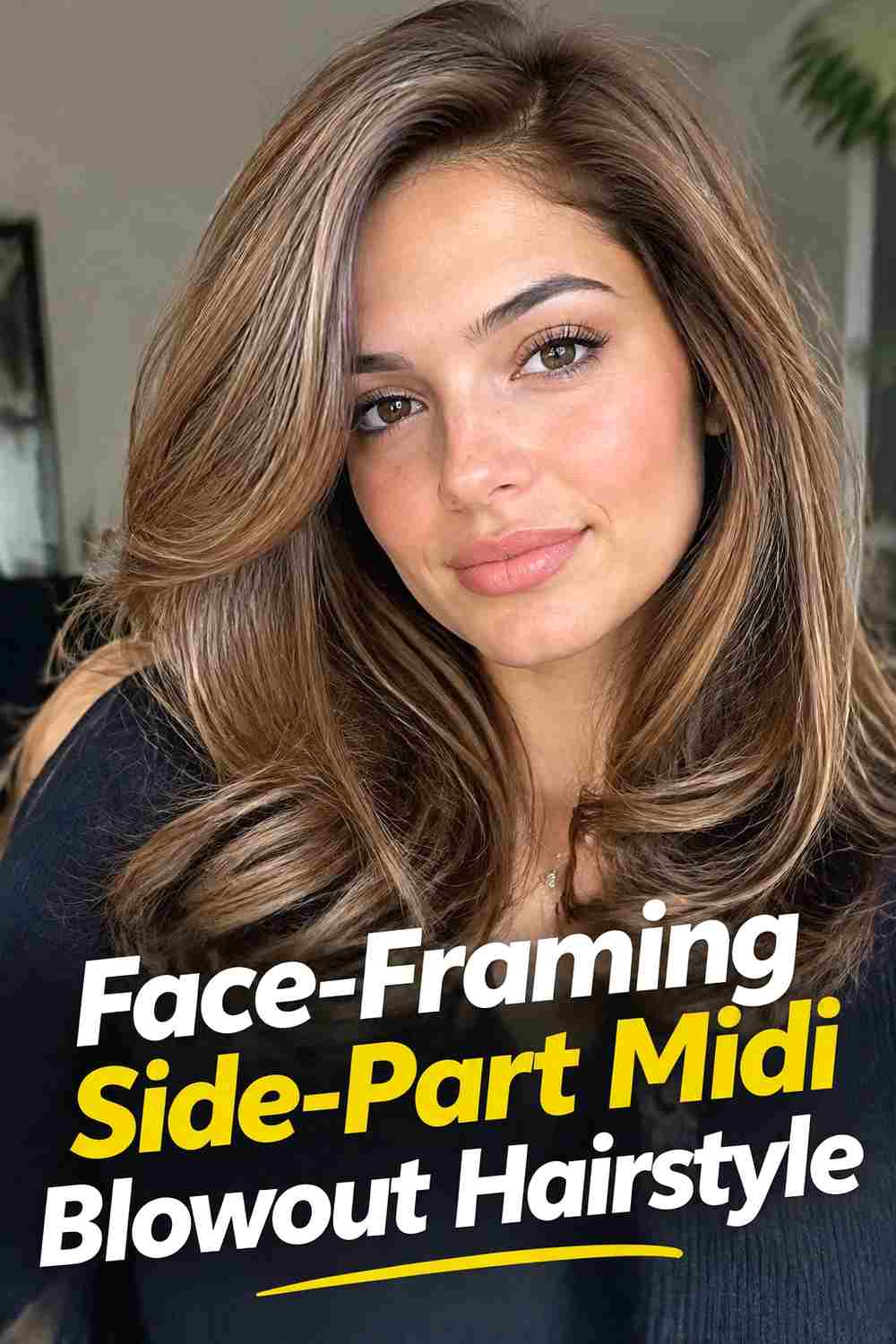
Face-framing layers become more noticeable when the hair is parted to one side because the heavier front section gains extra movement and height. Shorter pieces can sweep away from the cheekbones while longer layers fall around the jaw and shoulders, creating a soft staircase of bends rather than one solid curve. The rest of the midi-length hair can stay relatively smooth so those front sections remain visible. This style works best when the face-framing pieces are long enough to blend naturally into the body of the cut without becoming short fringe. Use a round brush to direct the front layers back and outward, then allow them to fall into place once cool for a softer, more relaxed finish.
Best For
This variation suits midi cuts with existing face-framing layers and anyone who wants noticeable movement around the front without adding full bangs.
6. Bouncy Side Part Midi Blowout Hairstyle
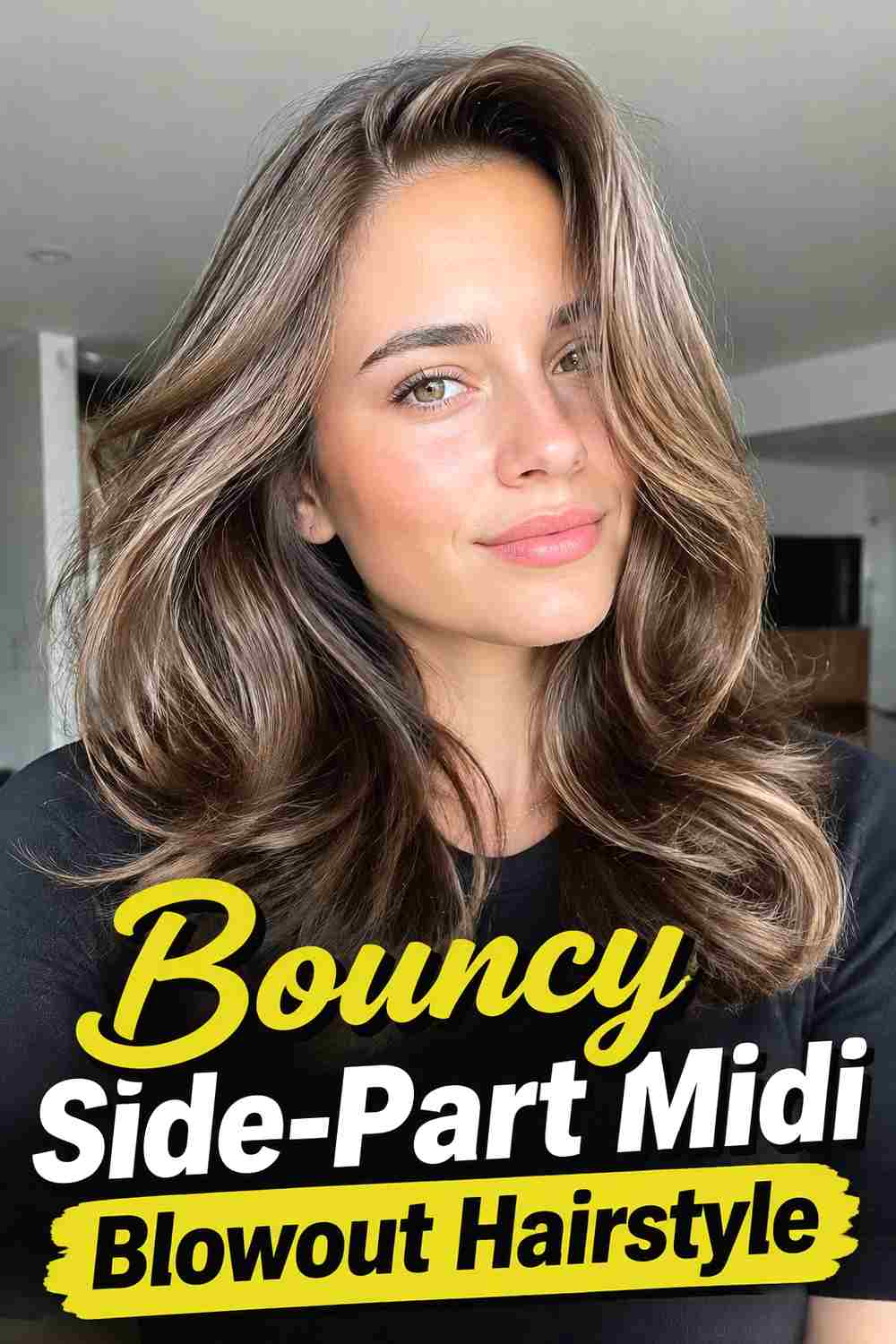
A bouncy side-part midi blowout focuses on broad, springy movement throughout the cut. The roots are lifted, the heavier side sweeps away from the face, and the lengths form generous curves that move rather than sit tightly in place. Midi hair works especially well for this finish because it has enough length to create visible bends but not so much weight that the roots immediately collapse. Large brush sections or rollers can help produce a softer, fuller shape rather than individual curls. Let each section cool before separating it, then gently shake out the lengths with your fingers. The goal is connected movement from root to end, with the side part creating a natural high point near the front.
Pro Tip
Set the front section away from the face while it cools to keep the side-part lift intact after the rest of the hair is loosened.
7. Sleek Side Part Midi Blowout Hairstyle
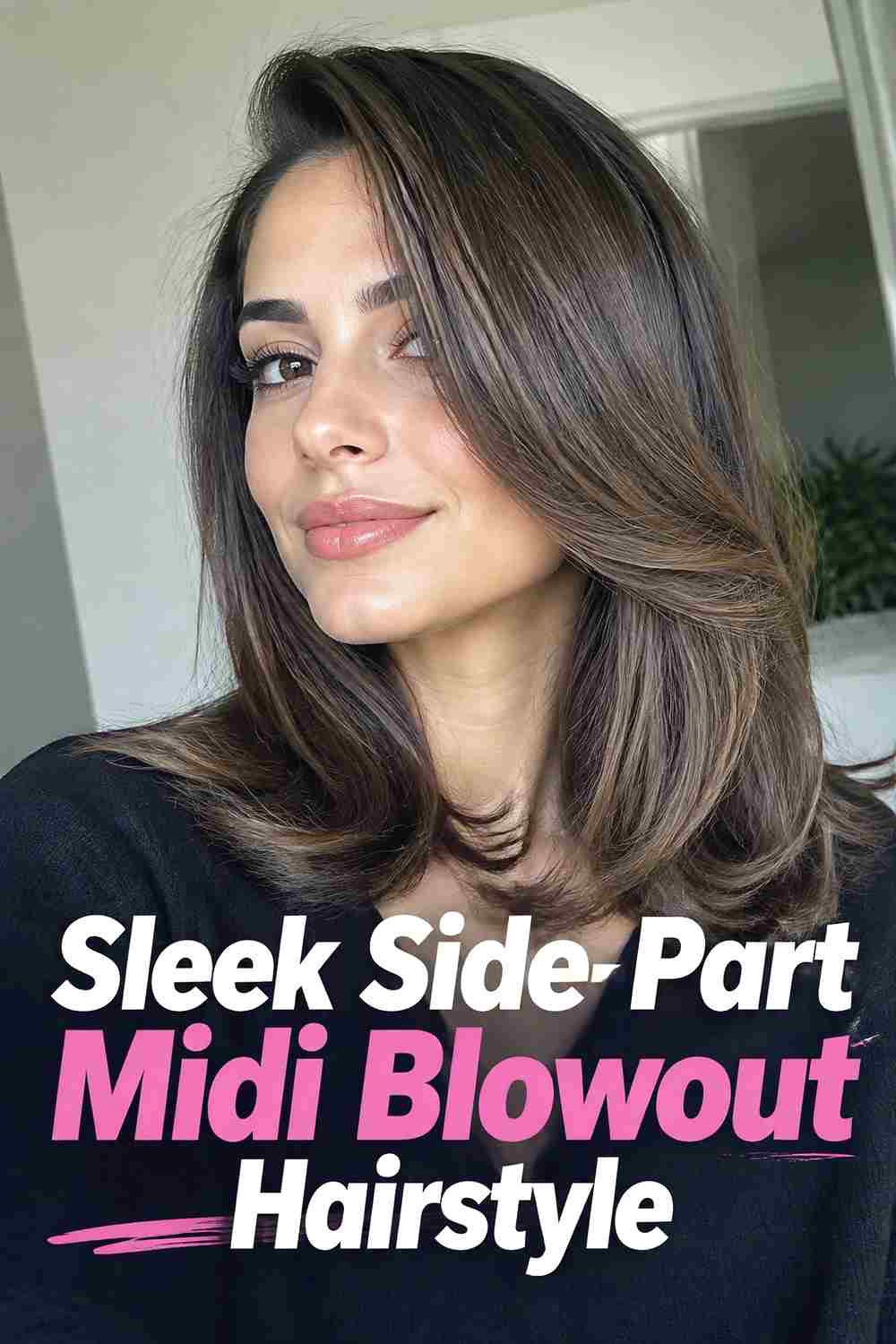
The Sleek Side-Part Midi Blowout Hairstyle keeps the surface smooth while preserving just enough volume to distinguish the result from flat-ironed hair. The roots sit close but not completely flat, and the heavier side glides across the forehead into straight, glossy lengths. A subtle bend through the ends prevents the midi cut from looking rigid and keeps the blowout effect visible. This variation can work particularly well on hair that naturally becomes smooth with tension drying. Use controlled brush tension and direct airflow down the hair shaft to reduce unnecessary fluff while maintaining natural strand detail. Finish sparingly, especially around the scalp, since too much product can remove the gentle root lift that gives the side part its shape.
Wear & Maintenance
Smooth only the mid-lengths and ends when refreshing the style so repeated brushing does not flatten the part or reduce crown volume.
8. Deep Sweep Side Part Midi Blowout Hairstyle

A deeper side placement creates a more dramatic sweep without changing the basic midi length. The heavier section begins farther across the head, giving it additional root height before it falls diagonally toward the opposite side. That movement can make a simple mid-length cut look much more dimensional, especially when the ends are softly rounded or slightly feathered. The lighter side may tuck naturally behind the ear, emphasizing the contrast in volume. Keep the front section broad rather than separating it into a tight curl; the appeal comes from one continuous sweep. Flexible hold underneath the lifted area can provide support while leaving the visible surface touchable and smooth enough to move throughout the day.
Why It Works
The stronger shift in root direction creates volume without requiring extra layers, making it useful for a relatively simple midi haircut.
9. Curtain Fringe Side Part Midi Blowout Hairstyle
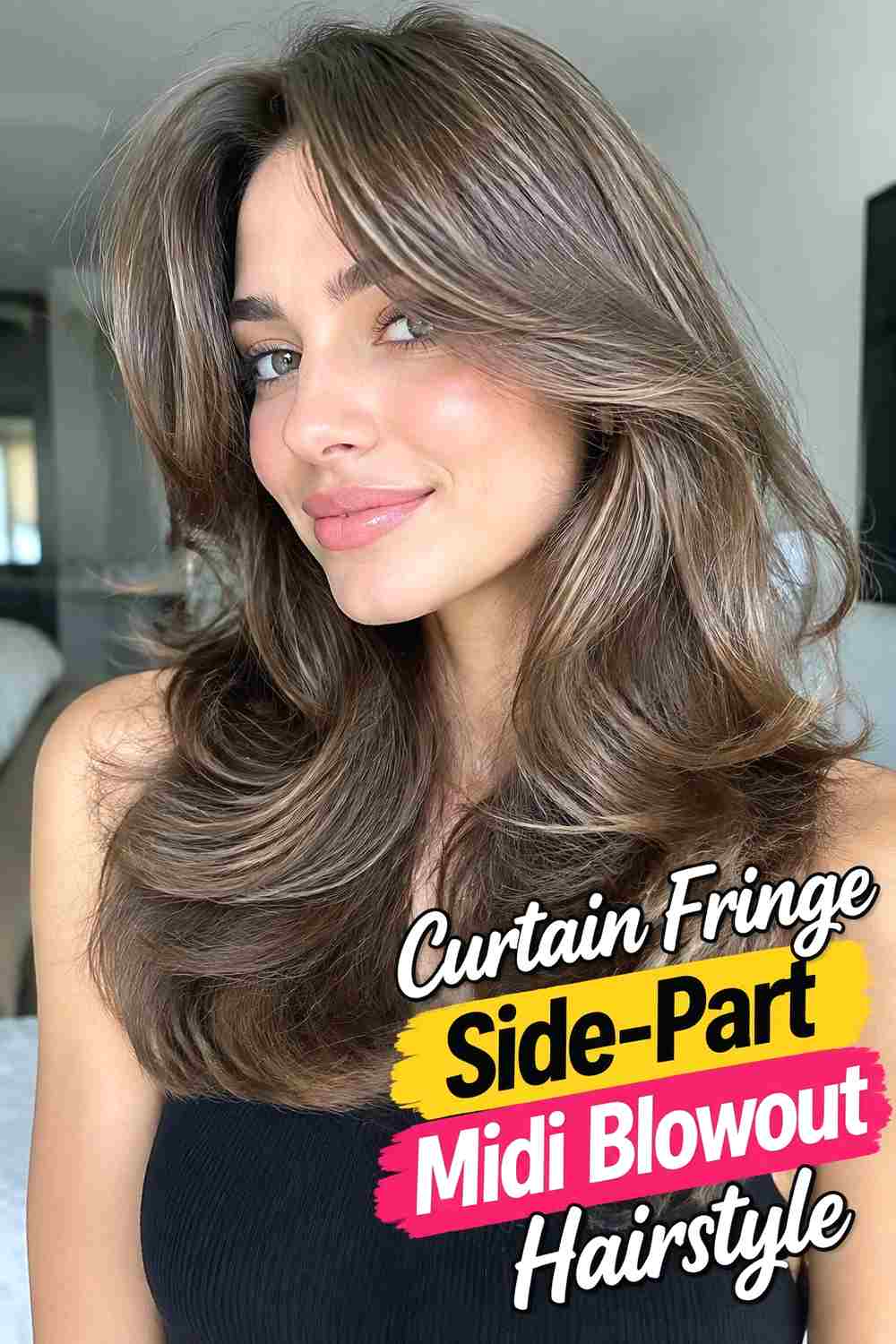
Curtain fringe can still work with a side part when the split is shifted instead of perfectly centered. One side of the fringe becomes fuller and more sweeping, while the opposite section curves gently away from the forehead. The rest of the midi blowout can follow that direction with soft bends through the layers and ends. This approach gives curtain bangs a less symmetrical finish and works especially well when the outer fringe pieces reach the cheekbones. Style the bangs first so their root direction is established before the longer sections are dried. Keep the fringe light and movable rather than heavily sprayed, allowing it to blend into the blowout while still maintaining its recognizable curved shape.
Styling Notes
Dry the fringe upward at the roots before directing it to the side; this helps it maintain lift instead of collapsing across the forehead.
10. Soft Wave Side Part Midi Blowout Hairstyle
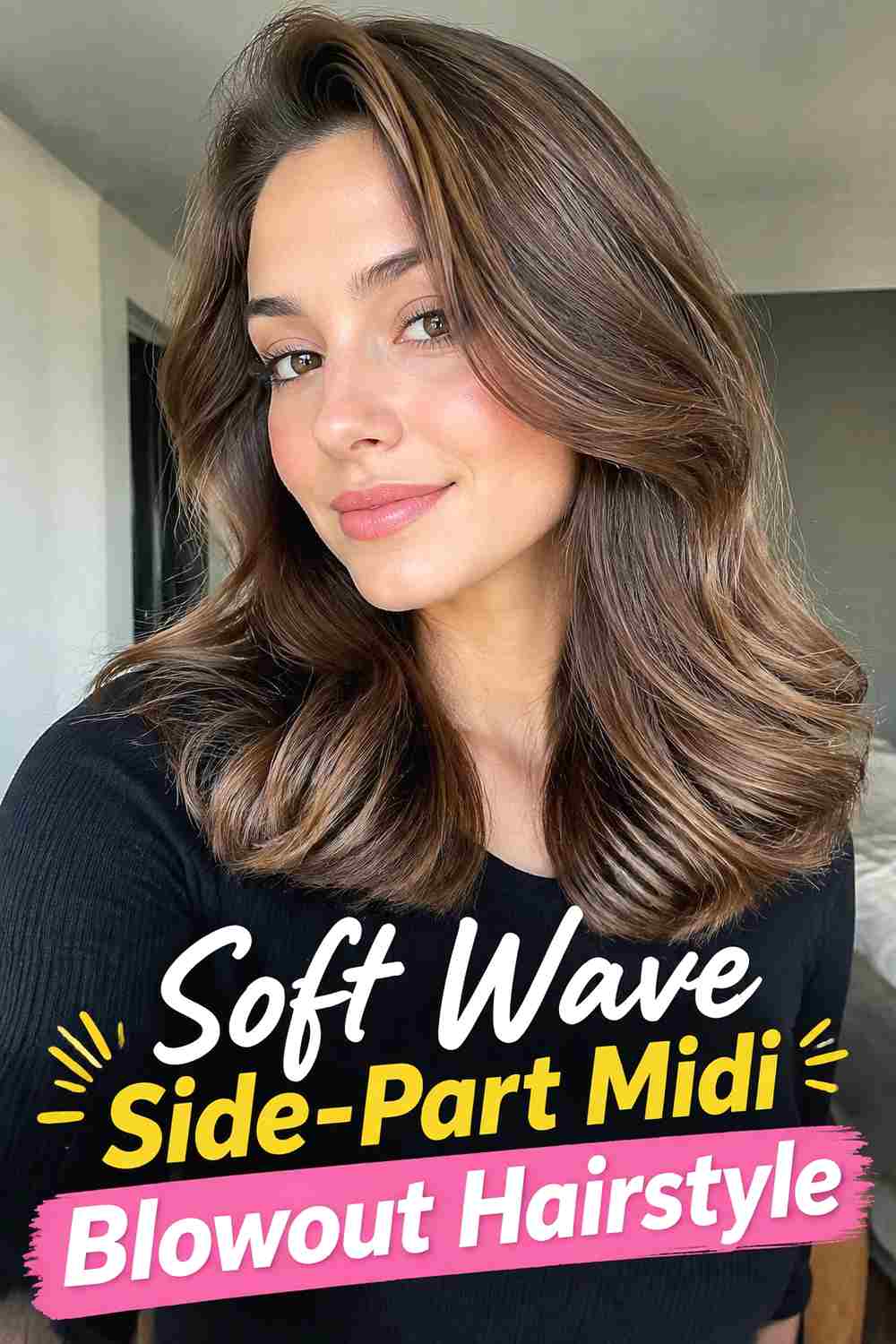
Soft waves give the midi blowout a relaxed finish while the side part keeps the overall silhouette structured. Instead of creating one rounded bend at the ends, the lengths move through broad, loose curves that begin below the cheekbones or around ear level. Alternating the direction slightly between sections prevents the waves from looking too uniform. Because midi hair is shorter than long lengths, keep the curves open so they do not shrink the hairstyle into a much shorter shape. A smooth root area helps preserve the blowout character, while the wavy lower sections add texture and fullness. After cooling, use your fingers rather than a dense brush to soften the pattern without removing it entirely.
Best For
This version is especially useful for naturally wavy hair or anyone who prefers movement through the lengths instead of a perfectly rounded blowout.
11. Root Lift Side Part Midi Blowout Hairstyle
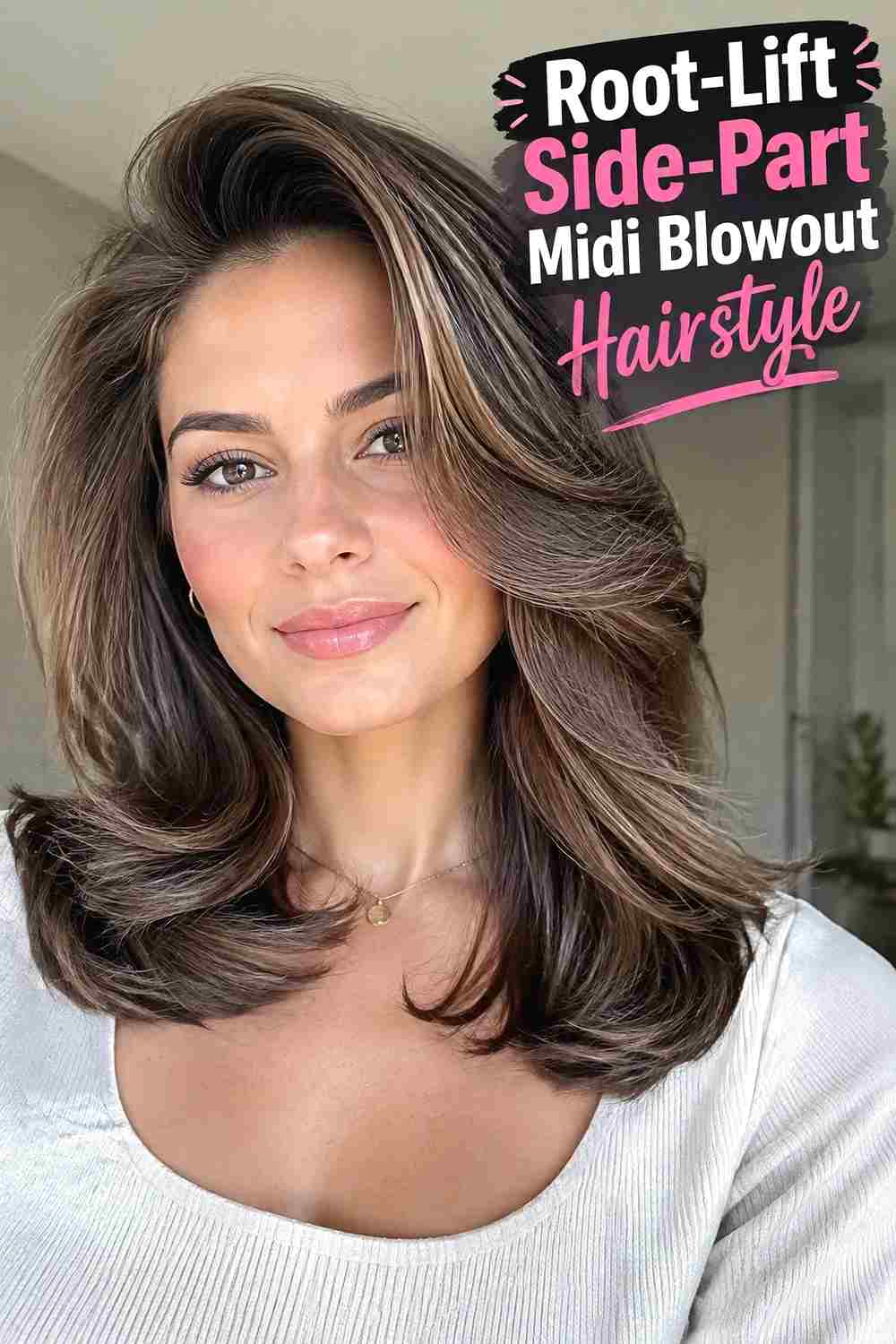
The Root-Lift Side-Part Midi Blowout Hairstyle puts most of its volume close to the scalp, creating an airy crown and elevated front sweep while keeping the lengths relatively controlled. This is useful when the midi cut already has enough body through the ends and does not need extra width. Blow-drying the root sections upward before directing them into the side part gives the style height without relying on heavy teasing. The lower half can stay smooth with a gentle bend to maintain a clean silhouette. Hair that tends to lie flat may benefit from smaller root sections and a lightweight volumizing product applied before drying. Keep oils and heavier creams away from the scalp once styling is complete.
Hair Type & Length
Fine to medium-density midi hair can benefit especially from concentrated root lift because the shorter length carries less weight than very long hair.
12. Feathered Side Part Midi Blowout Hairstyle
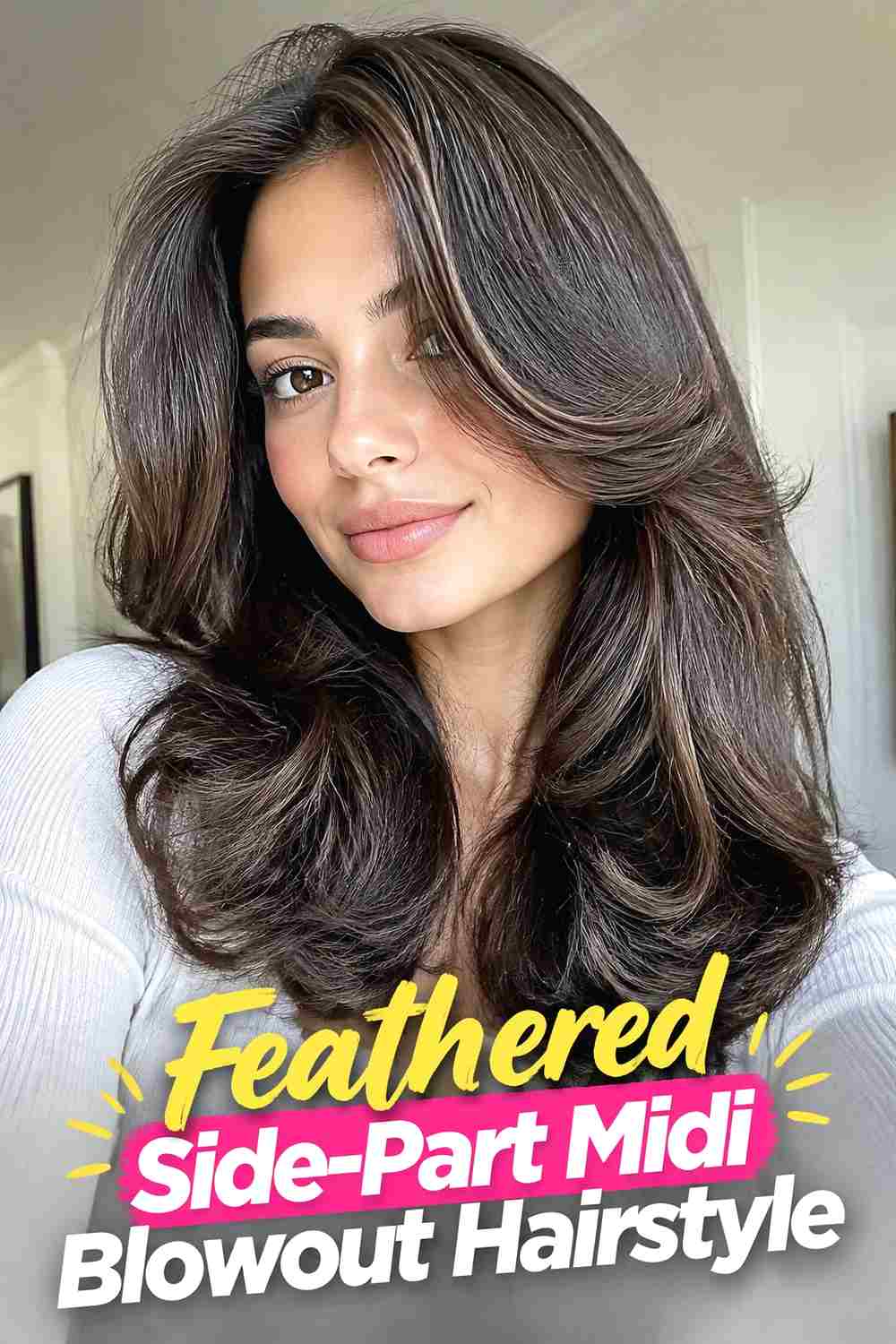
Feathered layers create a lighter interpretation of the side-part midi blowout by directing selected sections away from the face and shoulders. The ends are softly separated rather than grouped into one rounded perimeter, giving the cut an airy, flowing finish. A side part supports this movement naturally because the heavier front section can sweep back before joining the feathered lengths. The effect is most visible when the haircut contains layers around the cheekbones, jaw, and collarbone. Avoid making every section flip outward equally, since a mixture of softer and more noticeable bends creates greater depth. A light mist of flexible hairspray can preserve separation while allowing the feathered pieces to continue moving naturally.
Why It Works
Feathering removes visual heaviness from midi hair while the side part keeps the shape directional and polished rather than overly wispy.
13. Polished Side Part Midi Blowout Hairstyle
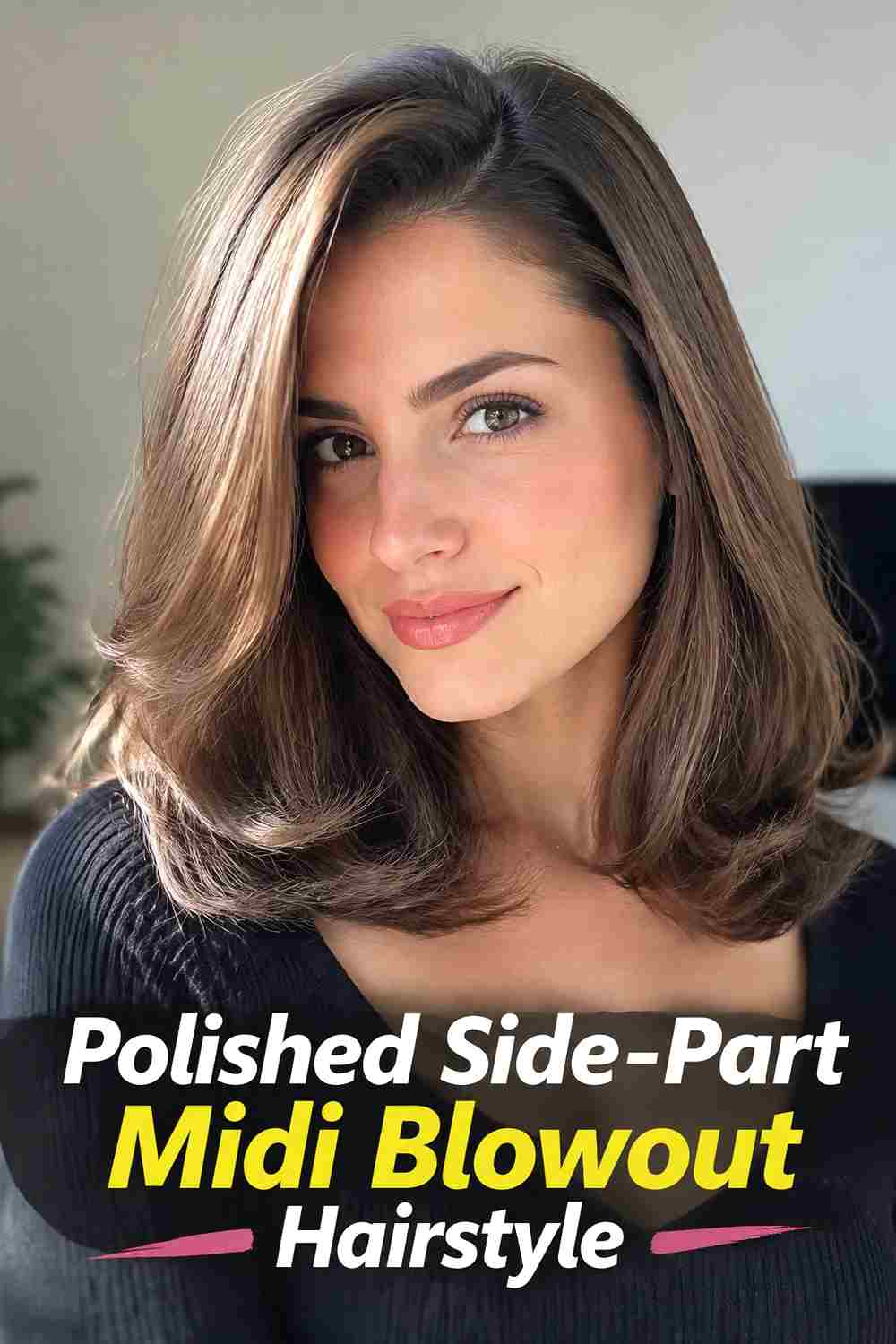
A polished midi blowout balances smoothness, controlled volume, and carefully shaped ends. The side part should look clean without feeling rigid, and the front section sweeps naturally into the rest of the cut rather than forming a separate curl. Through the lengths, the surface remains glossy and tidy, while subtle bends keep the hairstyle from appearing flat. This version is ideal when you want a versatile finish that can work for daytime, work settings, dinners, or events without requiring dramatic volume. Style in consistent sections for the smoothest result, then refine only obvious flyaways at the end. Too much finishing product can reduce the movement, so prioritize a light, touchable finish over a heavily coated surface.
Wear & Maintenance
Protect the smooth surface while sleeping or changing clothes, since friction around the shoulders can disturb the polished midi-length ends faster than the roots.
14. Tousled Side Part Midi Blowout Hairstyle

A tousled version loosens the structure of the classic blowout while keeping the side part as a clear anchor. The roots retain moderate lift, but the lengths feature irregular bends, separated ends, and small shifts in direction that make the style feel relaxed. This works especially well on layered midi hair because the different lengths naturally create movement without requiring every section to be curled. After the blowout has cooled, gently break up the shape with your fingers rather than brushing it into a uniform finish. A little texture around the ends can enhance the effect, but avoid roughing up the crown too much. The side part should remain visible enough to give the softness a deliberate framework.
Styling Notes
Leave a few sections smoother than the rest so the tousled texture looks intentional rather than uniformly frizzy.
15. Glamorous Side Part Midi Blowout Hairstyle
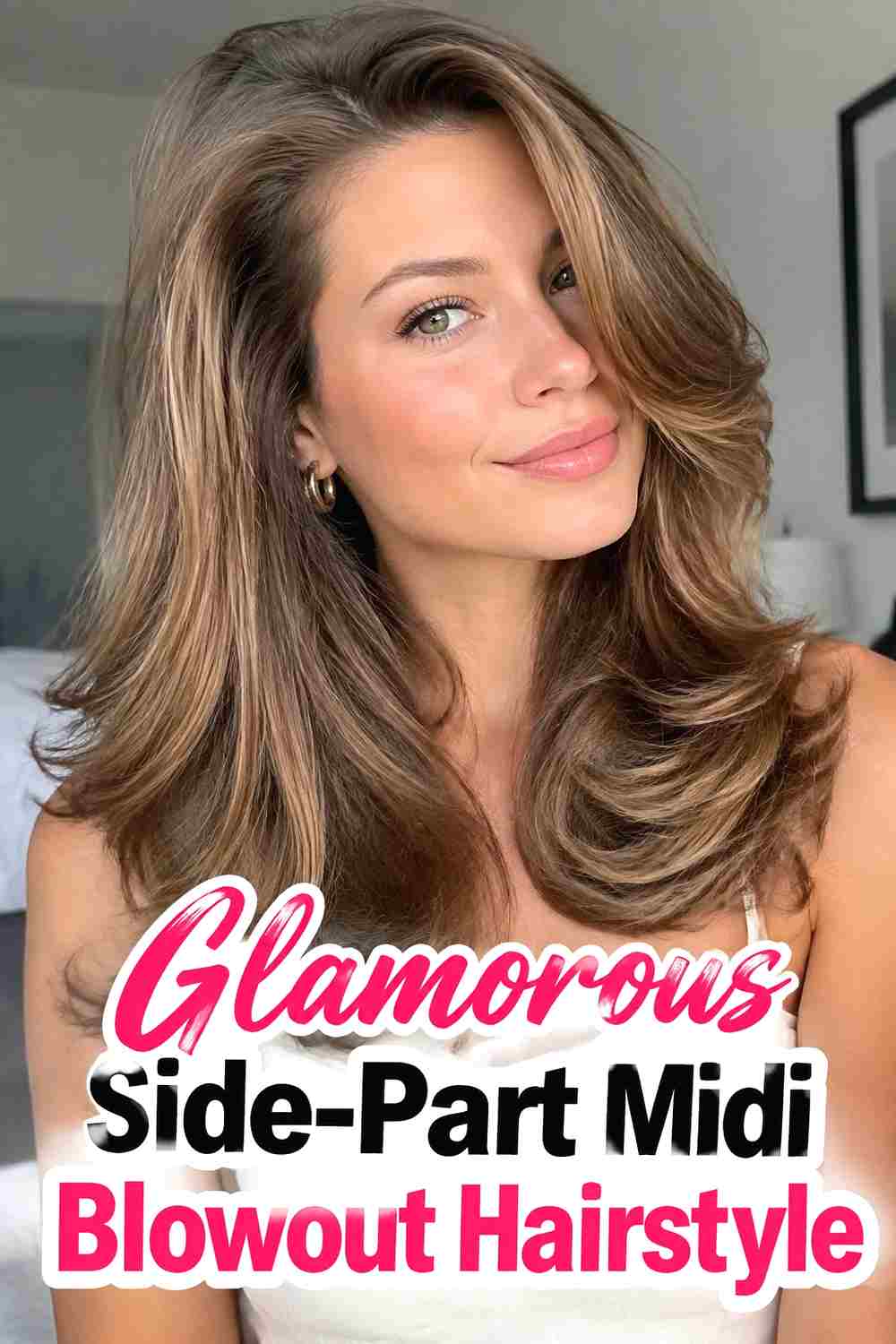
The Glamorous Side-Part Midi Blowout Hairstyle combines noticeable crown lift, a sweeping front section, flowing curves, and a smooth luminous finish. Midi length keeps the shape full without allowing the ends to become too heavy, making it particularly suitable for broad, polished bends. The heavier side can rise noticeably at the root before cascading into the layers, while the lighter side stays closer to the head for contrast. The ends should look soft and controlled rather than tightly curled. This variation is well suited to evenings, celebrations, or photographs when you want the blowout to feel more deliberate. Maintain flexibility with light hold so the hair can still move instead of forming a fixed, overly sprayed shape.
Best For
Choose this style when you want stronger volume and polish while keeping the practical movement and manageable length of a midi haircut.
How to Choose the Right Look
Start with the structure of your midi cut. If your hair has long layers, the Soft Layered, Face-Framing, Feathered, and Bouncy versions will help those different lengths show. A more blunt midi shape can look especially polished with Rounded Ends, Sleek, or Classic styling.
Next, consider your natural density. Fine hair may respond well to Root-Lift or Deep Sweep styling because both concentrate volume near the scalp without requiring heavy texture through the lengths. Dense hair can support bigger bends and fuller feathering, though strategic layering may help prevent the perimeter from feeling bulky.
Your preferred finish matters too. Sleek and Polished blowouts require more surface control, while Soft Wave and Tousled variations are more forgiving as the hair moves. Flipped Ends offer a livelier retro touch, while Rounded Ends keep the look classic.
For daily comfort, choose a side-part depth that follows your natural growth pattern rather than forcing the hair strongly against it. This usually improves hold and reduces the amount of restyling needed.
Final Thoughts
Side-part midi blowouts are versatile because mid-length hair can hold volume while still moving easily. Whether you prefer smooth rounded ends, soft layers, feathered movement, waves, or a glamorous sweep, choose the version that complements your haircut, density, and realistic styling routine.
FAQs
1. What length is considered midi hair?
Midi hair generally falls around the shoulders to the upper chest, although the exact point can vary depending on the haircut and how the term is used.
2. Does a side part add volume to a midi blowout?
It can. Shifting the root direction gives the heavier side more natural lift, especially when that section is blow-dried upward before being swept sideways.
3. Are layers necessary for a side-part midi blowout?
No. Layers create extra movement, but blunt and lightly layered midi cuts can also look polished with rounded, sleek, or flipped-end blowouts.
4. How can I keep midi blowout ends from becoming too puffy?
Use broader brush sections, focus on creating one smooth bend instead of repeated curls, and apply finishing product sparingly to the lower lengths.
5. Can naturally wavy hair wear a side-part midi blowout?
Yes. Natural waves can be smoothed for a classic finish or partially preserved for a softer wave blowout with more visible texture and movement.
Save your favorite side-part midi blowout hairstyle ideas, share the looks that inspire you, and explore more ways to style polished mid-length hair.