14 Sculptural Hair Fork Twist Hairstyle Ideas
Sculptural hair fork twists transform simple pinned-up hair into elegant folds, loops, and architectural shapes while letting the accessory become part of the finished design.
A hair fork works especially well with twisted updos because its prongs can slide through overlapping sections while the decorative top remains visible. The strongest looks balance secure construction with a shape that still feels natural, whether the hair is folded low, rolled vertically, or arranged into broader loops.
These 14 ideas explore clean, textured, asymmetrical, and more elaborate versions. When choosing one, compare your hair length and density, how much tension feels comfortable, the size of your hair fork, and whether you prefer a compact twist or a more dramatic sculptural silhouette.
Quick List
- Classic Sculptural Hair Fork Twist Hairstyle
- Low Folded Hair Fork Twist Hairstyle
- Vertical Shell Hair Fork Twist Hairstyle
- Asymmetrical Hair Fork Twist Hairstyle
- Double Loop Hair Fork Twist Hairstyle
- Sleek Center Part Hair Fork Twist Hairstyle
- Side Part Sculptural Hair Fork Twist Hairstyle
- Textured Hair Fork Twist Hairstyle
- Voluminous Crown Hair Fork Twist Hairstyle
- French Roll Hair Fork Twist Hairstyle
- Figure Eight Hair Fork Twist Hairstyle
- Minimalist Hair Fork Twist Hairstyle
- Braided Accent Hair Fork Twist Hairstyle
- Architectural Hair Fork Twist Hairstyle
1. Classic Sculptural Hair Fork Twist Hairstyle
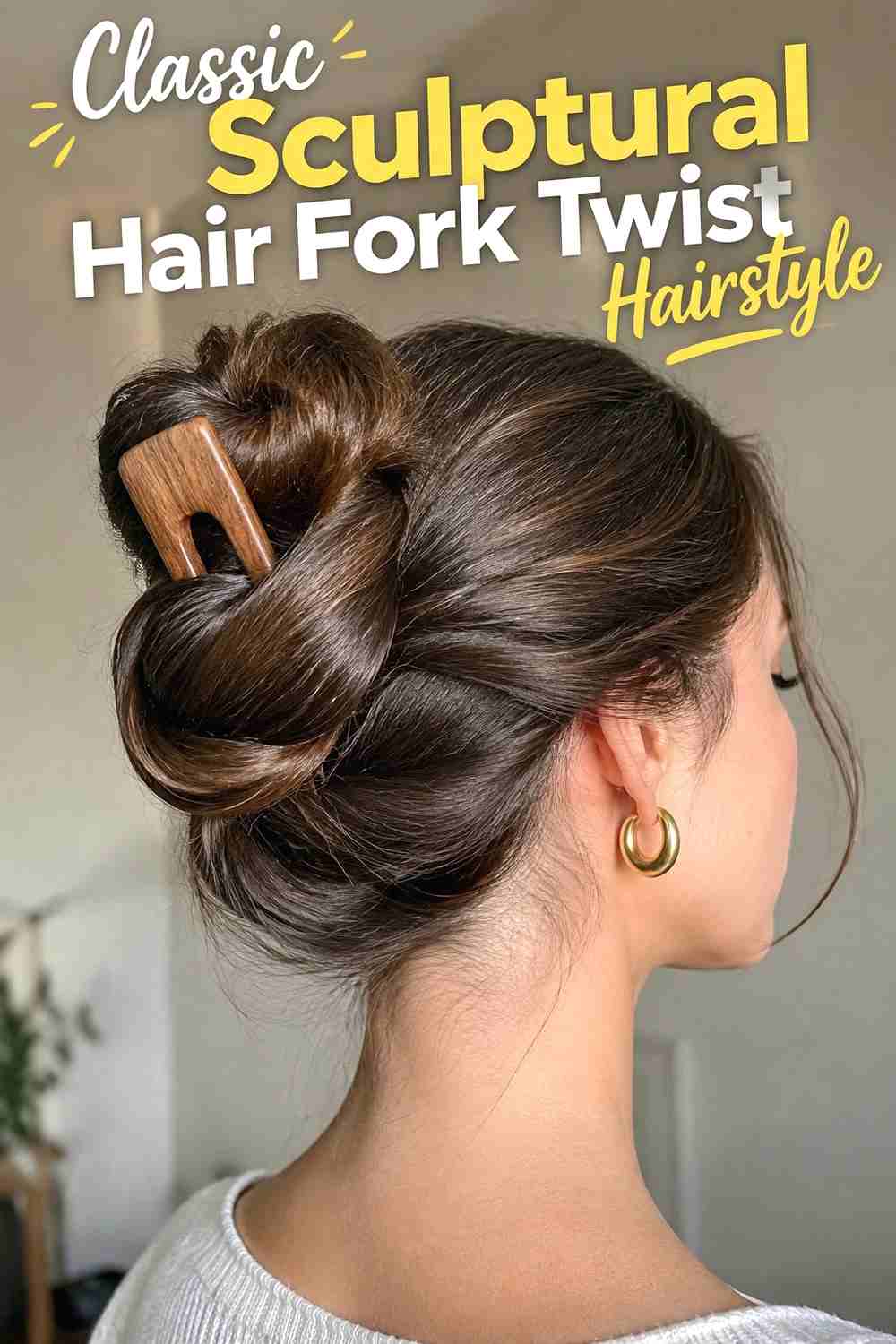
The classic sculptural twist gathers the lengths at the back and turns them into one broad, polished fold secured with a visible hair fork. Instead of winding the hair into a circular bun, the lengths are rolled upward or inward so the finished shape has a clean vertical curve. The hair fork sits through the strongest overlapping section, becoming both a structural and decorative feature. Medium to long hair usually provides enough length for the fold to look substantial without exposed ends. Keep the surface smooth but not overly compressed, allowing natural shine and individual strands to remain visible. A softly shaped crown prevents the twist from feeling too severe.
Styling Notes
Insert the fork through the outer fold and into the underlying hair so both prongs catch enough structure to hold the twist securely.
Best For
This versatile shape works well for dinners, work events, weddings, and minimalist formal styling.
2. Low Folded Hair Fork Twist Hairstyle
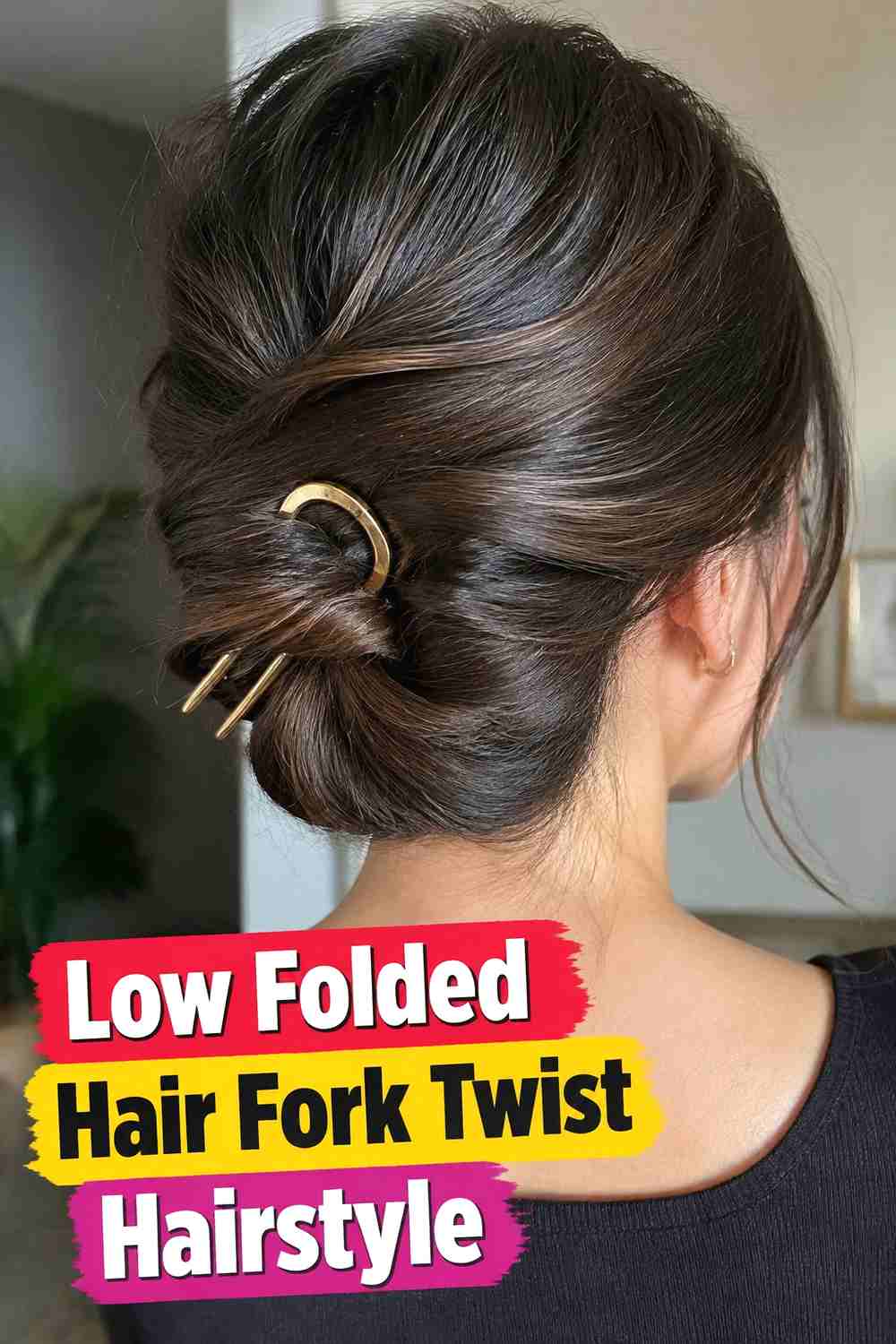
This low twist sits close to the nape and uses a horizontal or slightly diagonal fold rather than a tall vertical roll. The hair is gathered softly, turned inward, and tucked beneath itself to form a compact sculptural shape. A hair fork can be inserted from one side so its decorative top remains visible along the fold. The lower placement makes the style feel relaxed while still looking polished from the back. It can also be more comfortable for anyone who prefers less weight higher on the head. Keep the fold broad enough that the fork has a substantial section to grip, and conceal loose ends inside the structure before final placement.
Wear & Maintenance
Check that the fork does not press against the neckline or collar, especially if you plan to wear the hairstyle for several hours.
3. Vertical Shell Hair Fork Twist Hairstyle
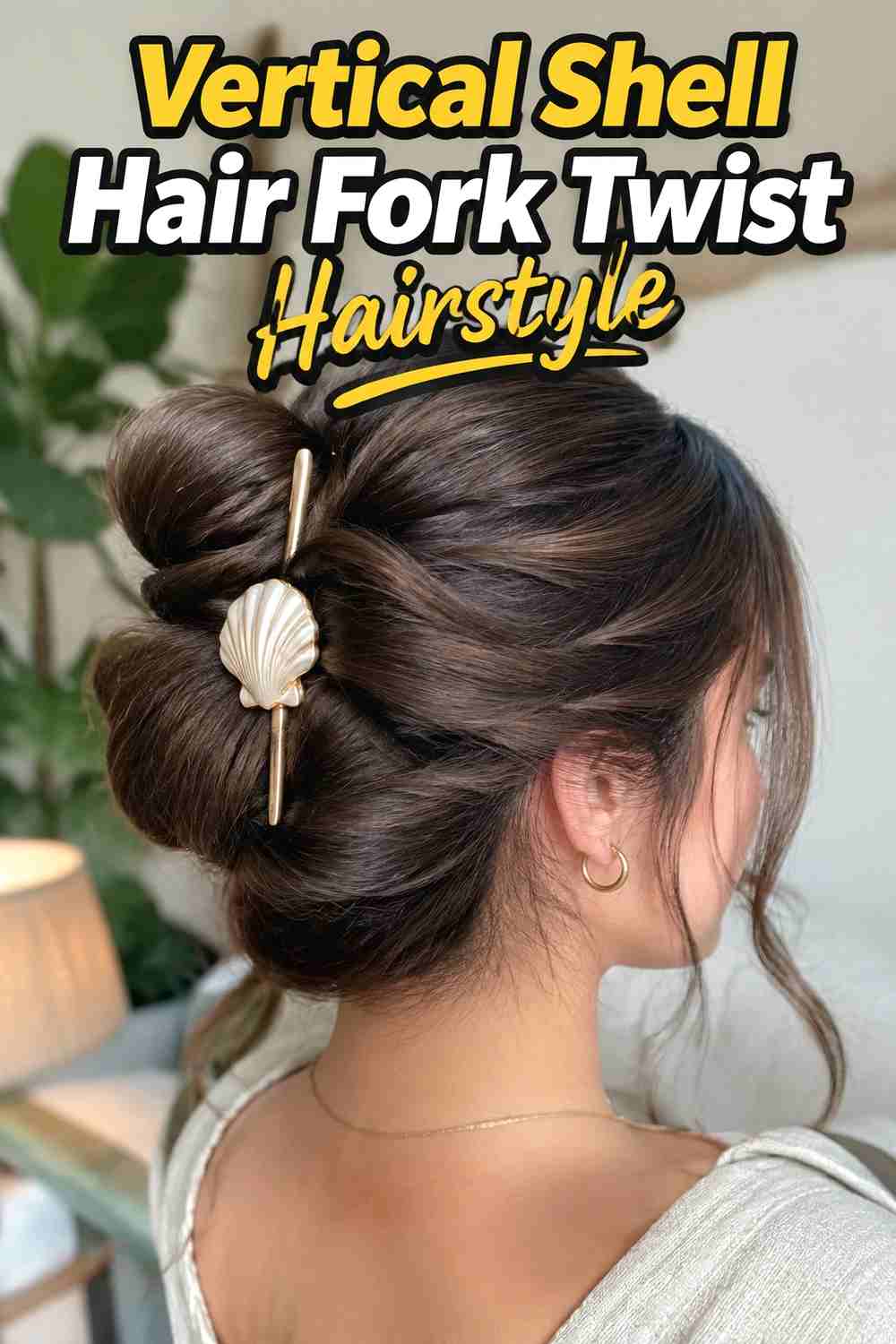
A shell-shaped twist follows a tall, curved line through the back of the head, creating a refined silhouette that resembles a smooth folded spiral. The hair is swept upward, rolled inward, and shaped so one outer panel overlaps the tucked center. A long hair fork inserted diagonally or vertically can stabilize the roll while emphasizing its elongated direction. The shell effect is clearest when the surface remains polished and the curve is uninterrupted by too many small sections. Longer hair provides more flexibility for a substantial roll, while medium hair can create a tighter version. Keep the crown softly lifted so the vertical shape flows naturally from top to bottom.
Why It Works
The continuous outer curve gives the twist a sculptural appearance while offering a clear, stable place for the hair fork to sit.
4. Asymmetrical Hair Fork Twist Hairstyle
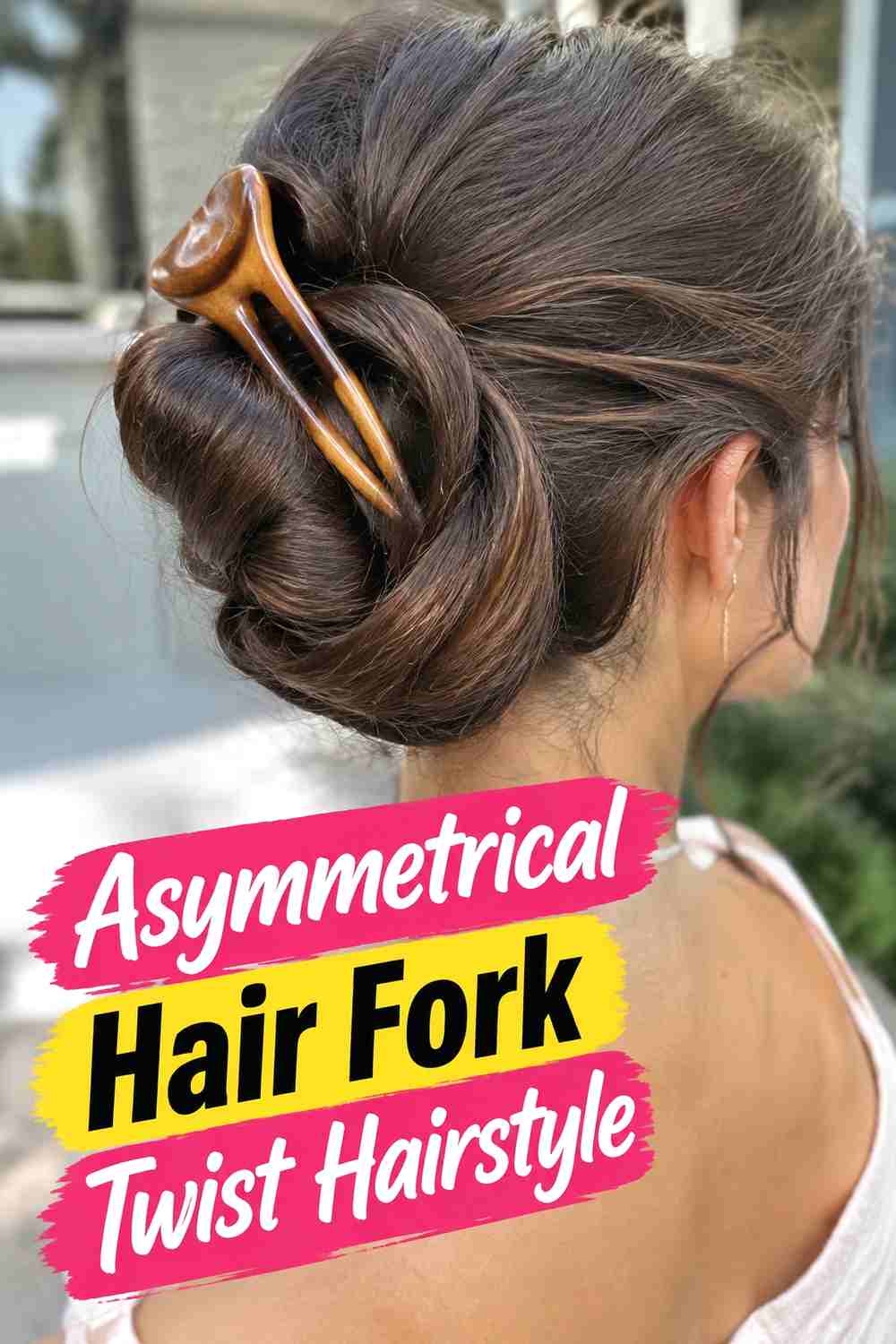
An asymmetrical twist shifts the main fold toward one side, creating a more directional silhouette than a centered updo. The hair can sweep diagonally across the back before turning inward near the opposite side, where a hair fork secures the strongest overlap. This placement creates movement even when the surface is smooth and relatively simple. The twist should remain balanced with the head rather than sitting too far behind the ear, where the accessory may feel bulky. A side part or softly swept front can reinforce the diagonal direction. Keep the fork angled with the structure so it looks deliberately integrated rather than inserted as a separate decorative piece.
Styling Notes
Decide the final twist position before pinning or inserting the fork so the front sweep and back fold follow the same visual direction.
5. Double Loop Hair Fork Twist Hairstyle
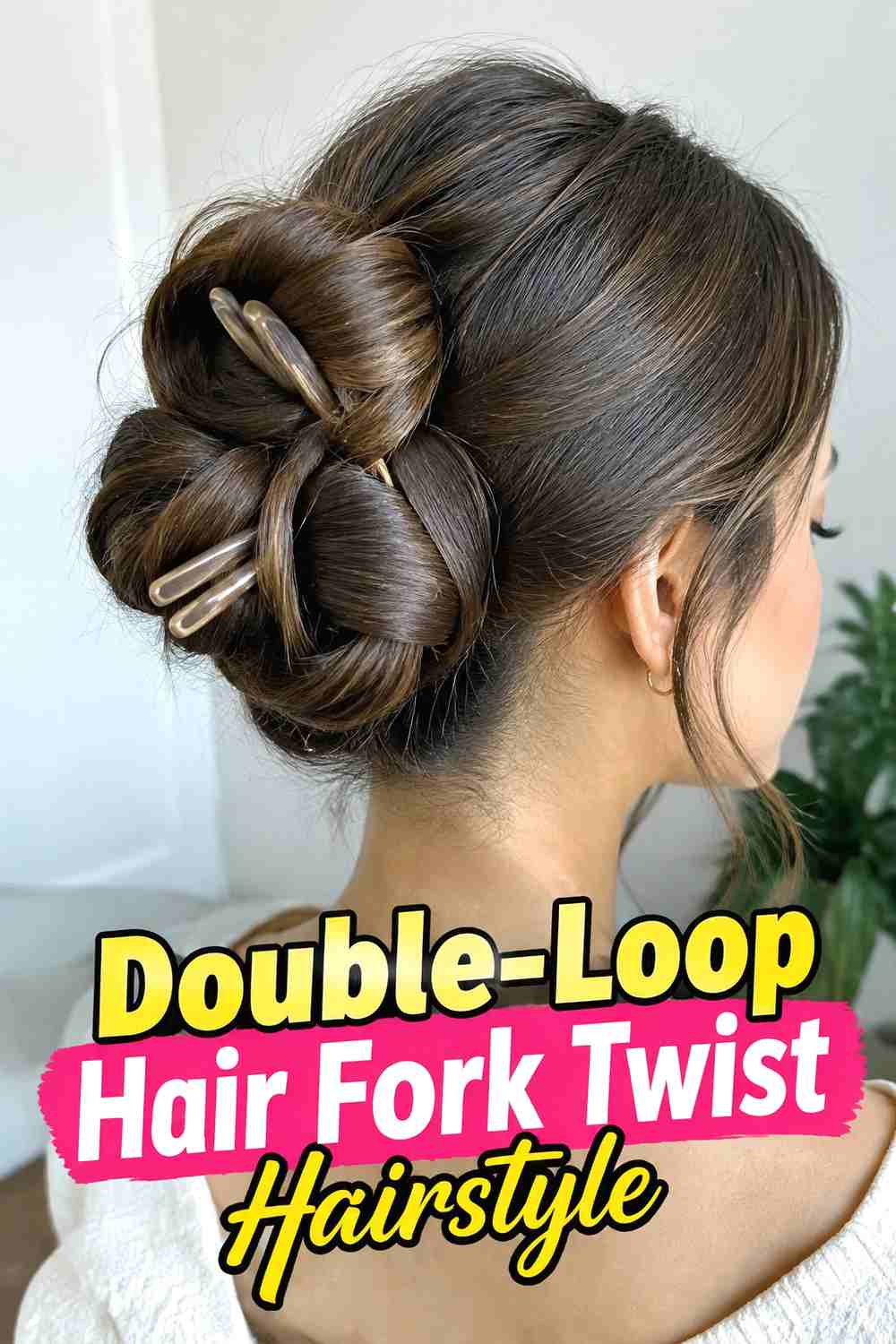
Two broad loops create a dimensional twist with more visual interest than a single folded section. The hair is divided or folded into upper and lower curves that overlap at the center, forming a soft stacked shape at the back. A hair fork passes through the central intersection, where it can secure both loops without covering their outer contours. The loops should remain substantial and connected to the gathering point, avoiding thin floating pieces that would look unstable. Medium to thick long hair naturally provides enough material for this construction, although finer hair can create a smaller version. Keep the surface controlled so the paired curves remain easy to distinguish.
Pro Tip
Form the lower loop first as the foundation, then place the upper loop over it before inserting the fork through both layers.
6. Sleek Center Part Hair Fork Twist Hairstyle
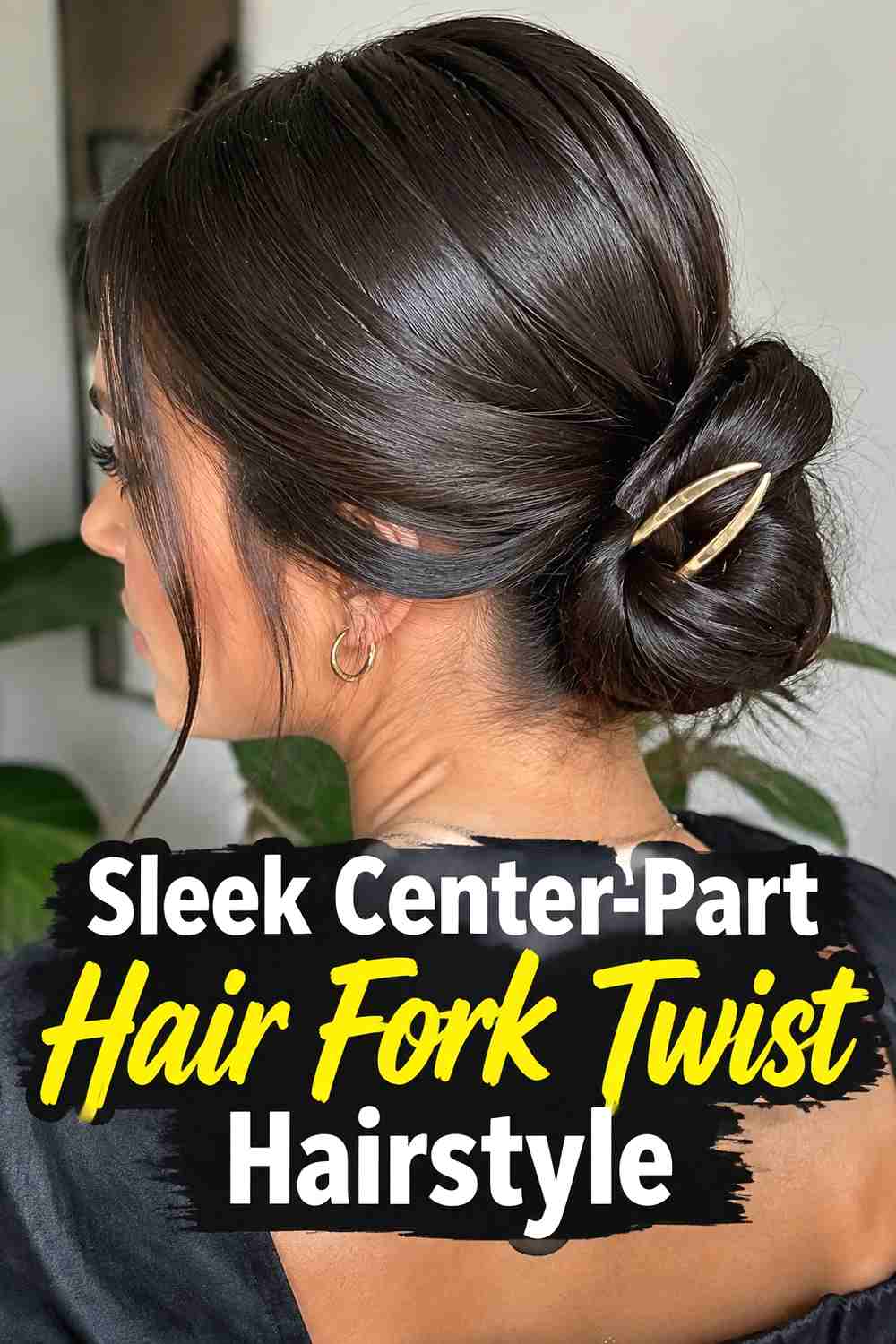
A sleek center part creates a balanced front that contrasts beautifully with the sculptural twist at the back. Both sides are smoothed evenly toward the gathering point, leaving the main visual detail to the rolled or folded updo. A simple metal or polished hair fork works especially well with this minimalist approach because it echoes the clean lines without adding excessive decoration. The twist can sit low or at mid height, but the outer fold should remain clearly visible around the accessory. Avoid pulling the roots painfully tight; smoothness comes from controlled direction and light finishing product rather than extreme tension. The overall result feels modern, deliberate, and refined.
Why It Works
The symmetrical front keeps the style visually calm while the twist and exposed hair fork provide architectural interest from the back.
7. Side Part Sculptural Hair Fork Twist Hairstyle
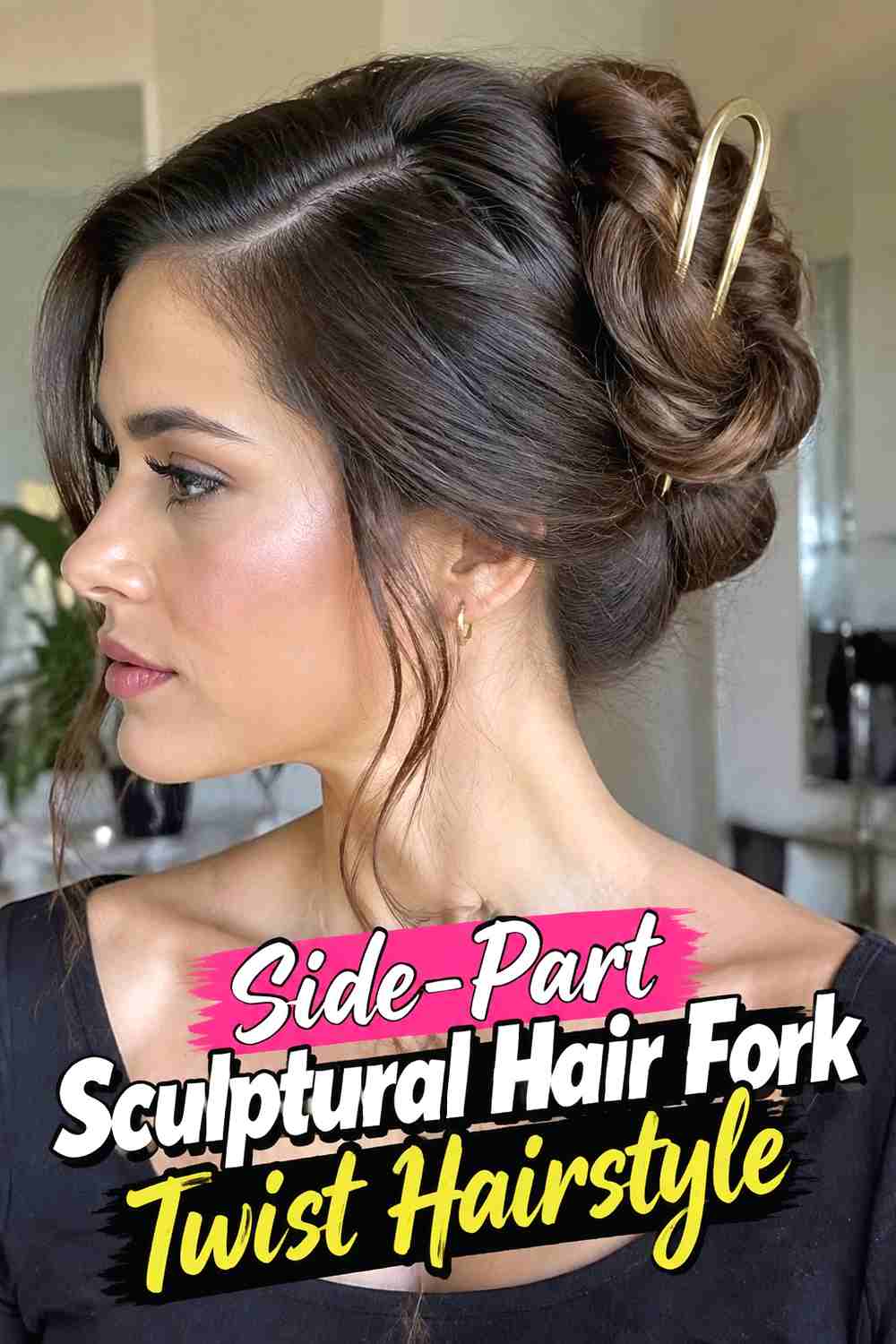
A side part introduces a sweeping front section that travels naturally into the sculptural twist. The heavier side can curve across the crown before joining a broad fold at the back, creating a flowing transition from front to rear. Place the hair fork along the opposite side of the twist or directly through the central overlap to balance the asymmetry. This version feels slightly softer than a centered sleek style because the front has more movement and root dimension. Medium to long hair allows the side sweep to stay continuous instead of breaking into short pieces. Keep the fork proportionate to the twist so its decorative top complements the silhouette rather than dominating it.
Best For
Choose this version when you want the elegance of a sculptural updo with a more flattering, directional front shape.
8. Textured Hair Fork Twist Hairstyle
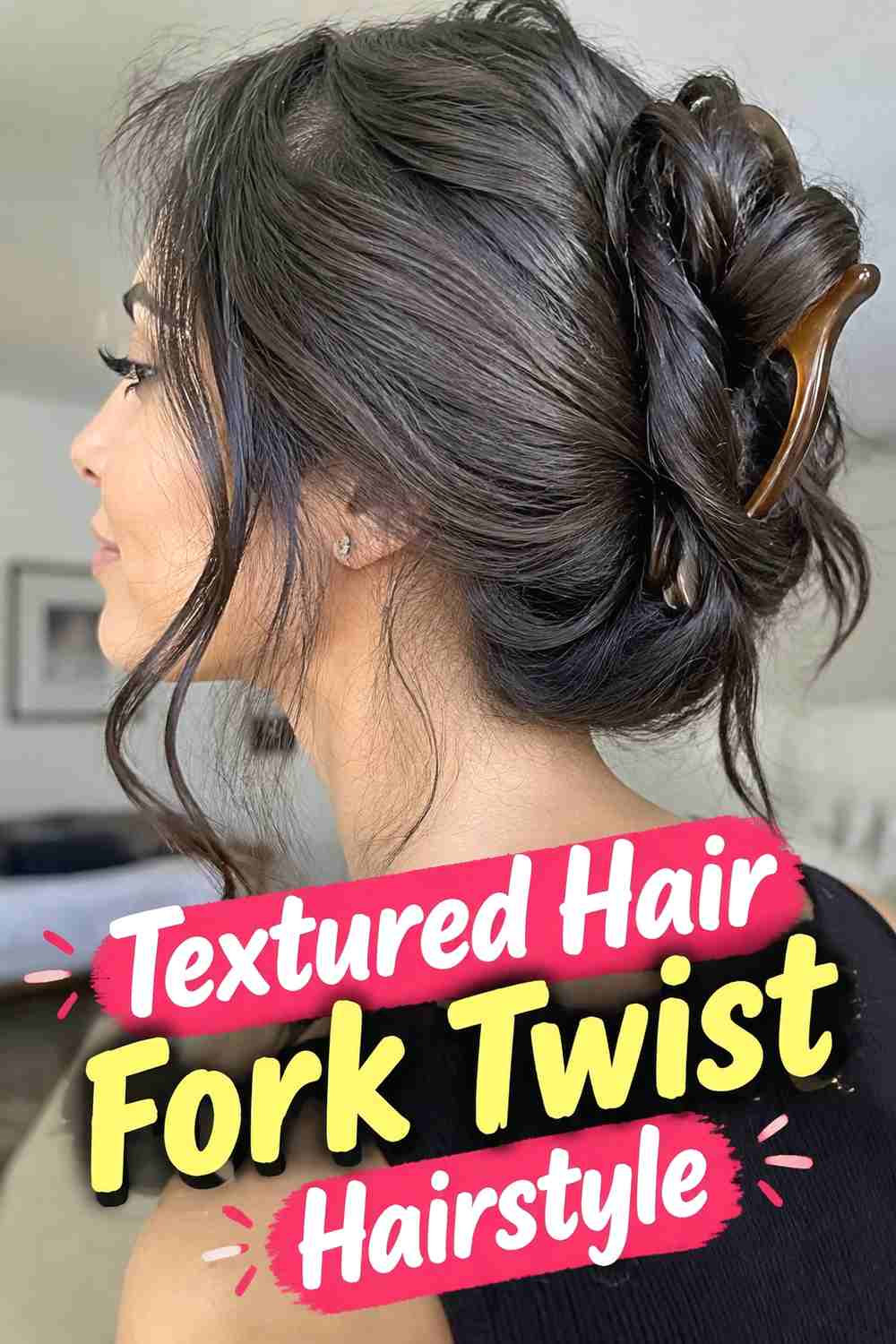
Soft texture gives the hair fork twist a relaxed, handcrafted quality while preserving its sculptural structure. Begin with natural waves or loose bends, then gather the hair without brushing away all of that movement. As the lengths are folded inward, subtle ridges remain visible across the outer surface and make the twist feel less formal. A hair fork inserted through a secure central section holds the shape while leaving the texture exposed. The key is maintaining a strong internal foundation; softness should come from the visible surface rather than weak construction. A few flyaways or wispy pieces can enhance the natural look, but the twist itself should still read as one intentional form.
Styling Notes
Build the secure inner fold first, then loosen only selected outer sections so the hairstyle keeps its shape while appearing softer.
9. Voluminous Crown Hair Fork Twist Hairstyle
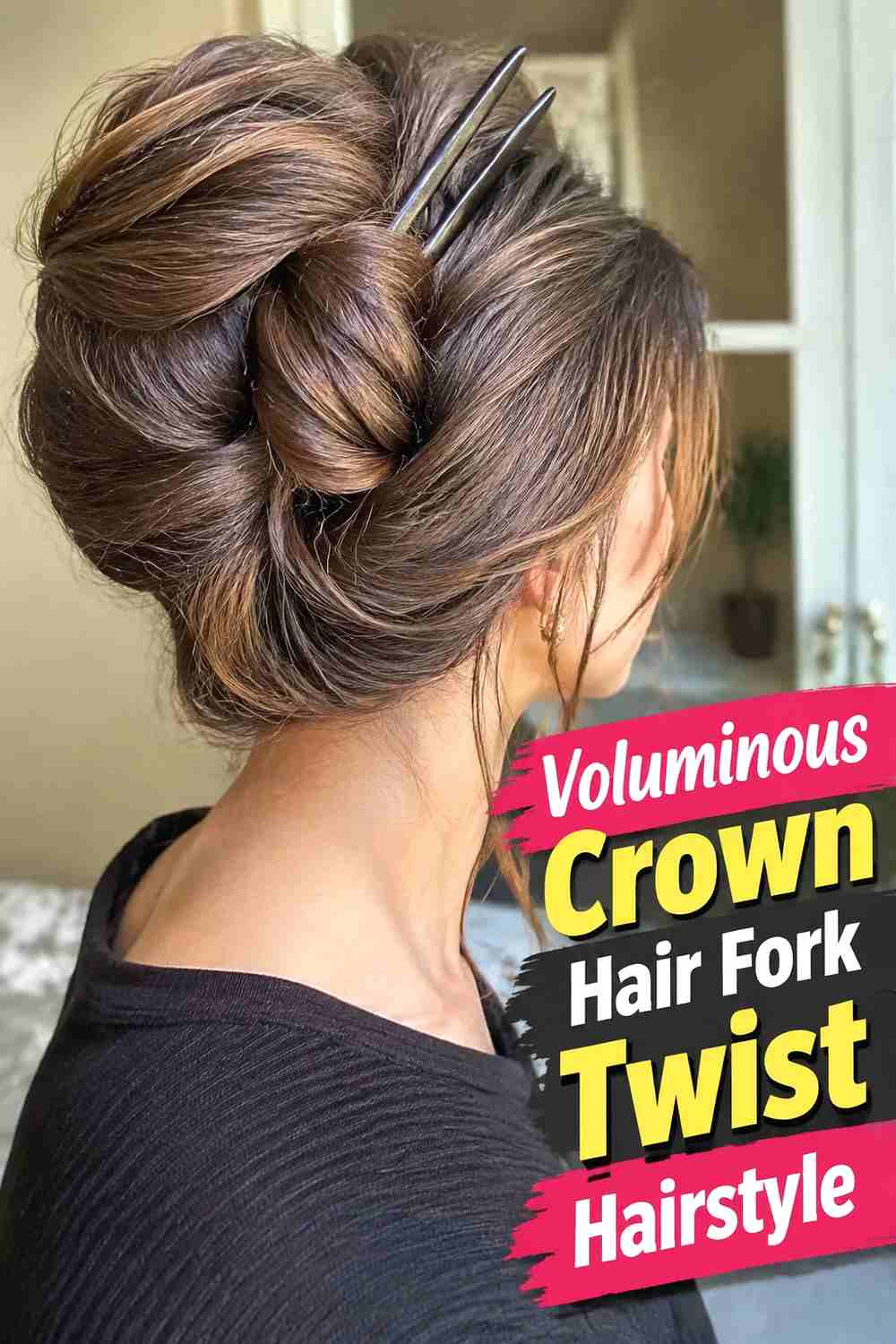
Crown volume adds height above a compact sculptural twist and creates a more formal silhouette. The upper sections are gently lifted before the lengths are directed backward and folded into a secure roll. Instead of teasing the visible surface heavily, create support underneath and smooth only the outer layer, preserving natural shine. A decorative hair fork placed through the twist provides a strong focal point beneath the elevated crown. Medium to long hair works especially well because the lengths can form a substantial fold without pulling the top flat. The finished updo should feel balanced rather than oversized, with volume tapering gradually from the crown into the twist.
Pro Tip
Create and secure crown lift before forming the twist, then gather the lower sections without pulling backward too tightly.
10. French Roll Hair Fork Twist Hairstyle
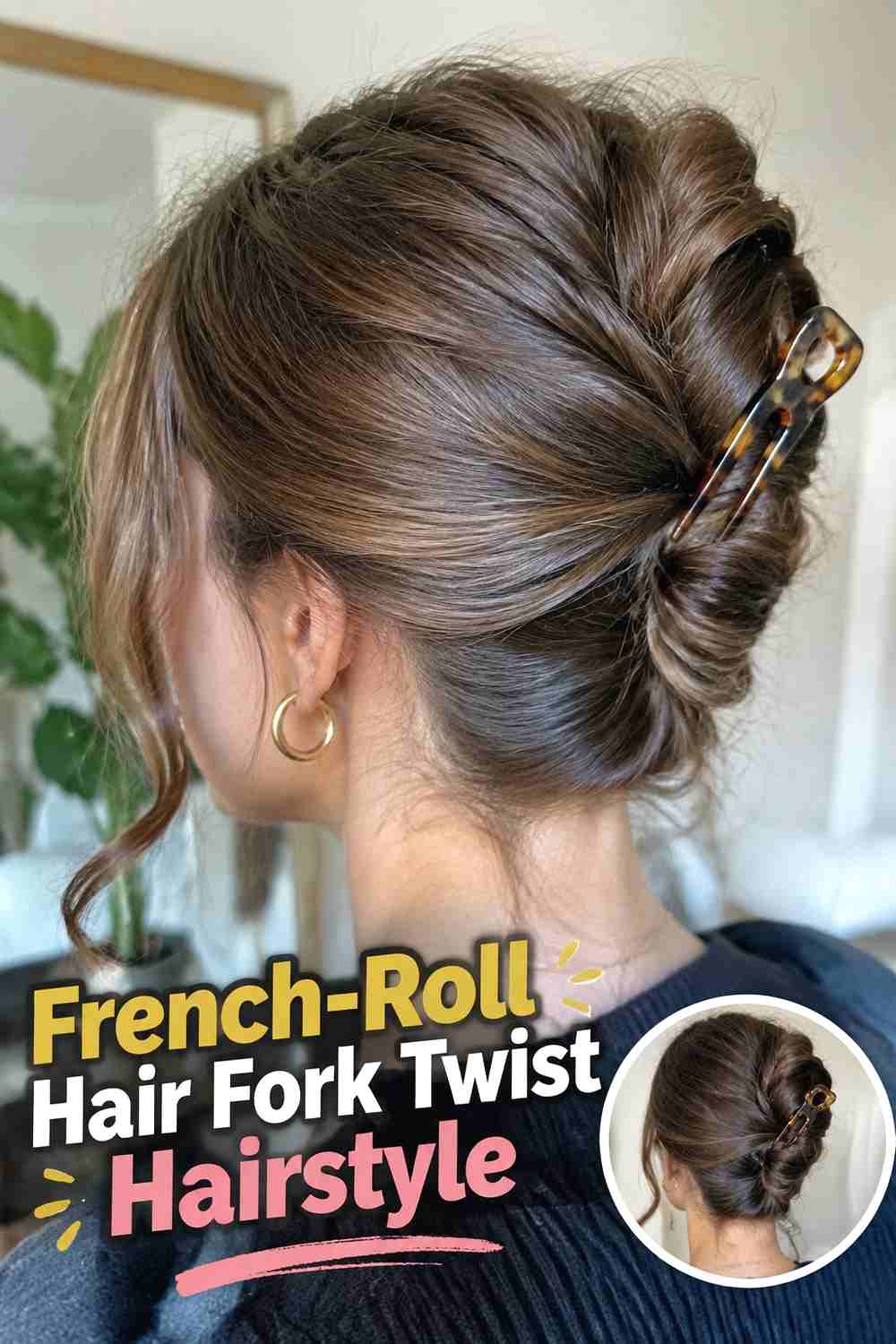
The French-roll version uses a classic vertical tuck but replaces visible pins with a carefully positioned hair fork. Hair is swept toward one side, folded upward, and rolled inward so the ends disappear inside the center. The fork is then inserted diagonally through the outer fold and underlying hair, helping stabilize the roll while remaining visible as a decorative accent. A smooth finish highlights the clean construction, although slight natural texture can make the style feel less formal. Medium to long hair provides the easiest working length, while very thick hair may need to be divided internally so the roll does not become bulky.
Hair Type & Length
Medium to long hair is ideal, with thick hair benefiting from internal sectioning and finer hair often creating a slimmer, elegant roll.
11. Figure Eight Hair Fork Twist Hairstyle
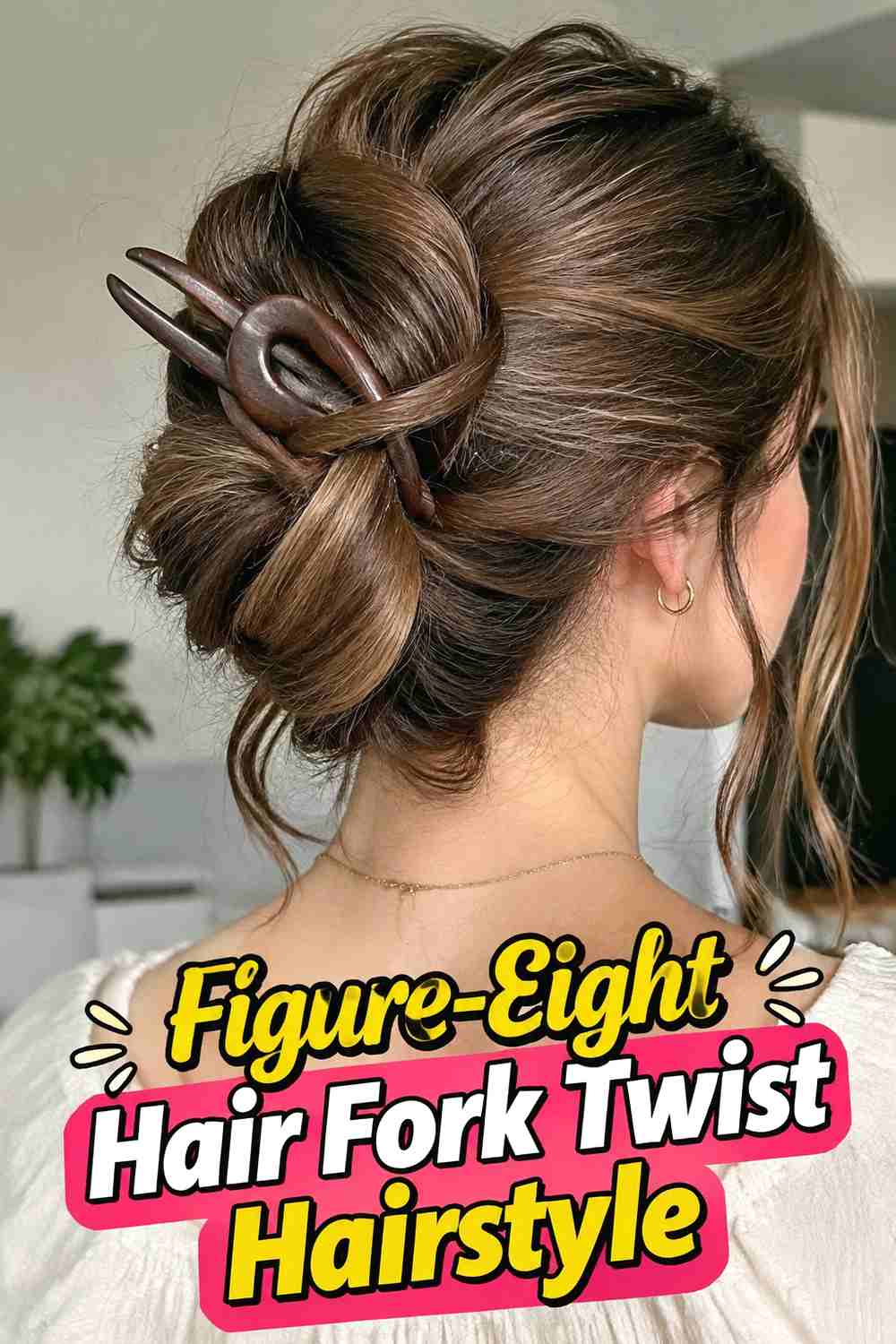
A figure-eight twist creates two connected curves that cross through the center of the updo. The hair is folded into an upper loop and lower loop, then secured where the two shapes meet. A hair fork inserted through that central crossing helps hold the design together while visually emphasizing the sculptural geometry. Longer hair makes the figure-eight easier to create because the lengths can form both curves without exposing too many ends. Keep each loop broad and smooth rather than tightly wound, and position the fork so it does not hide the crossing point entirely. The result feels artistic but remains wearable when the overall size stays proportional to the head.
Why It Works
The crossing curves create a recognizable architectural shape while the hair fork reinforces the exact point where the structure needs support.
12. Minimalist Hair Fork Twist Hairstyle
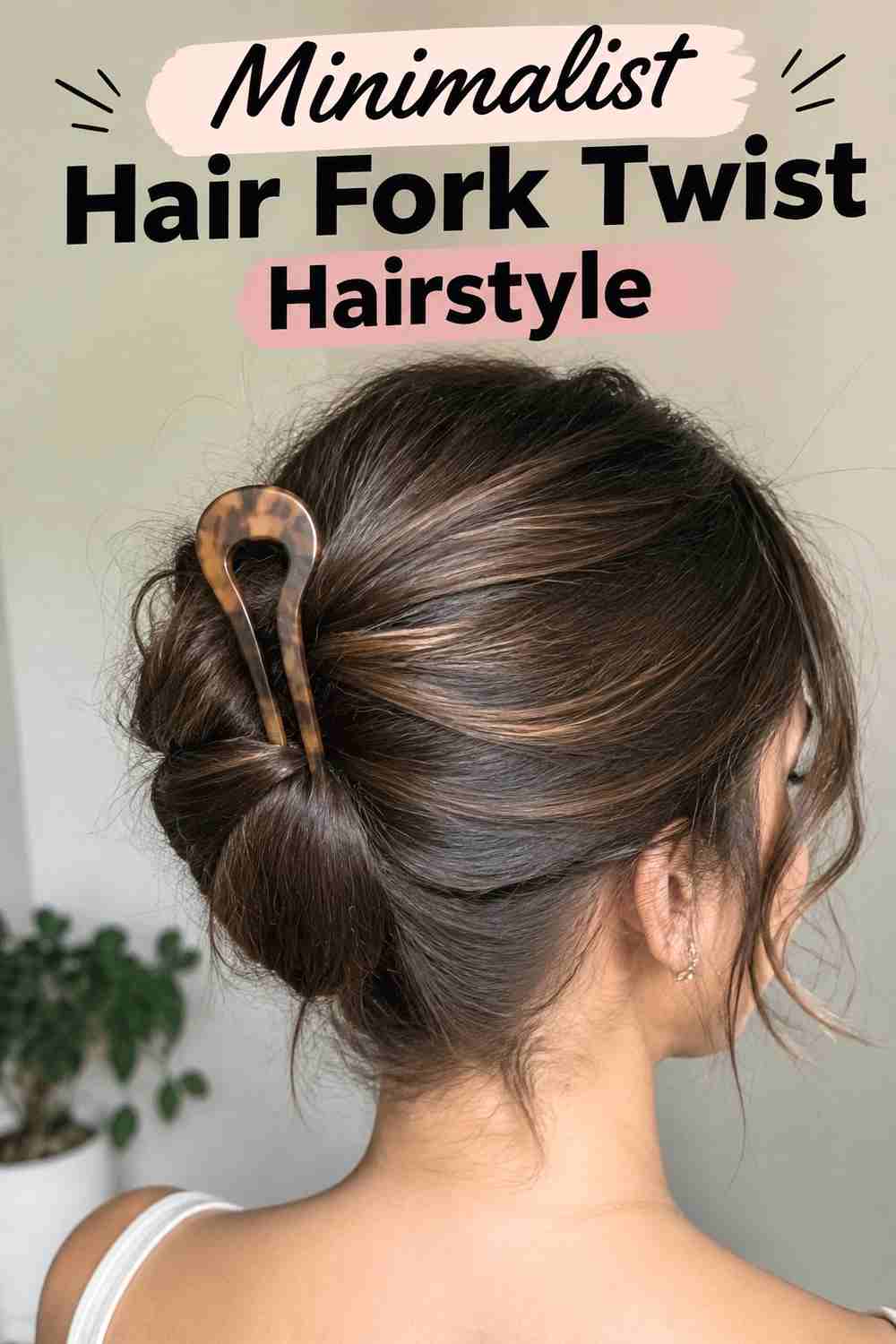
The minimalist version strips the look down to one compact twist and one clean hair fork. Hair is gathered at the nape or mid-back, folded inward with minimal visible texture, and secured so the outer surface forms a simple curved panel. A slim metal, wood, or neutral-toned fork complements the restrained shape without adding unnecessary ornament. The front can stay softly off-center or naturally parted, keeping the styling uncomplicated. This is one of the easiest sculptural variations to adapt for everyday wear because it does not depend on elaborate loops or large volume. The main focus is proportion, clean construction, and secure but comfortable placement.
Wear & Maintenance
A smaller fork is usually enough for a compact twist, but both prongs still need to pass through stable underlying hair for dependable hold.
13. Braided Accent Hair Fork Twist Hairstyle
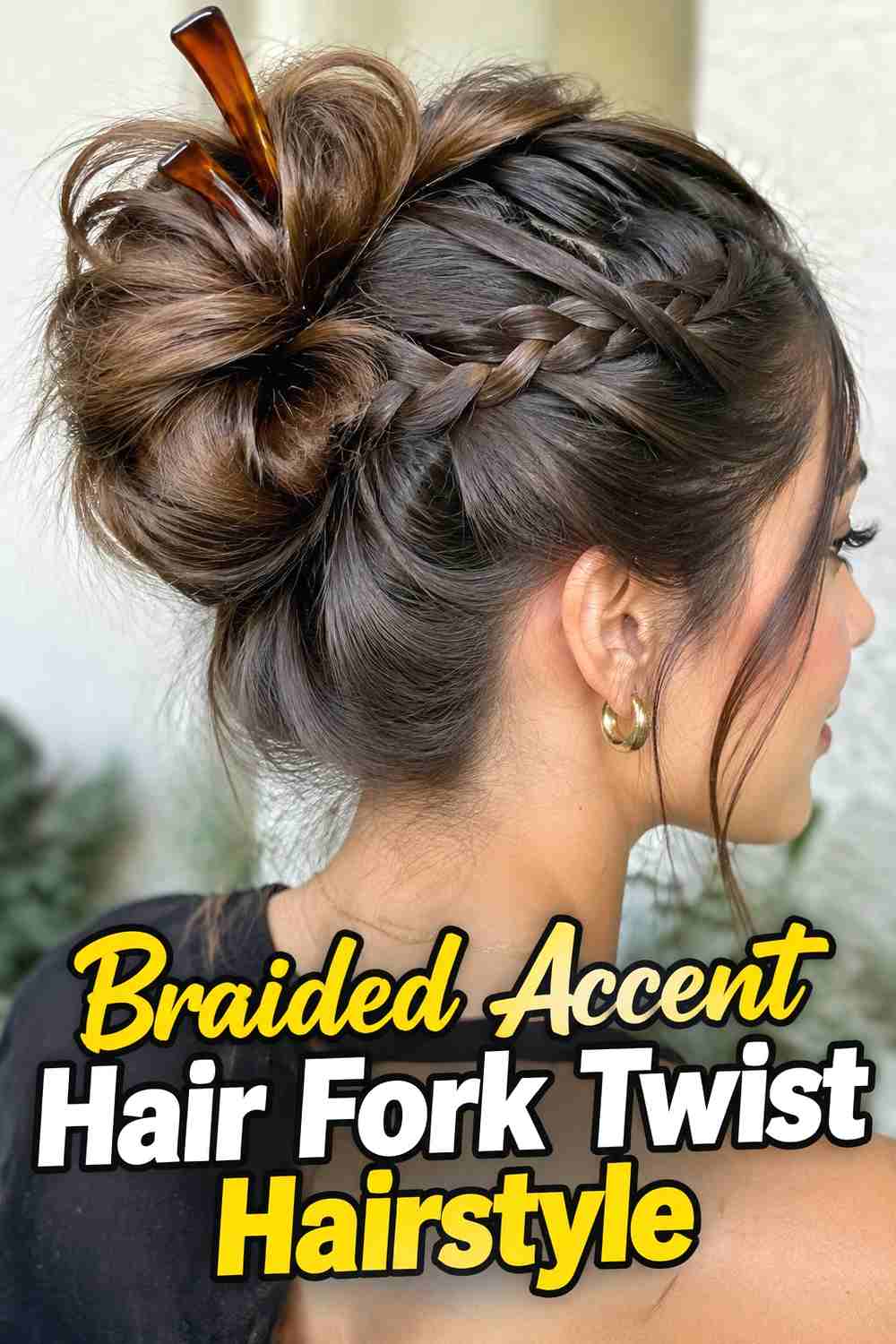
A braid introduces a decorative line before the hair transitions into the sculptural twist. One side can be braided from the temple toward the back, or a narrow braid can be created from a lower section and wrapped along the finished fold. The remaining hair forms a smooth or softly textured twist, while a hair fork secures the central structure without hiding the braid. Keeping the braided section broad enough to read clearly prevents it from disappearing against the larger updo. This combination works especially well on longer hair because there is enough length to create braid detail while still building a substantial twist. Limit additional accessories so the braid and fork remain the main features.
Styling Notes
Anchor the braid separately before constructing the twist so it stays in position when the larger sections are folded and secured.
14. Architectural Hair Fork Twist Hairstyle
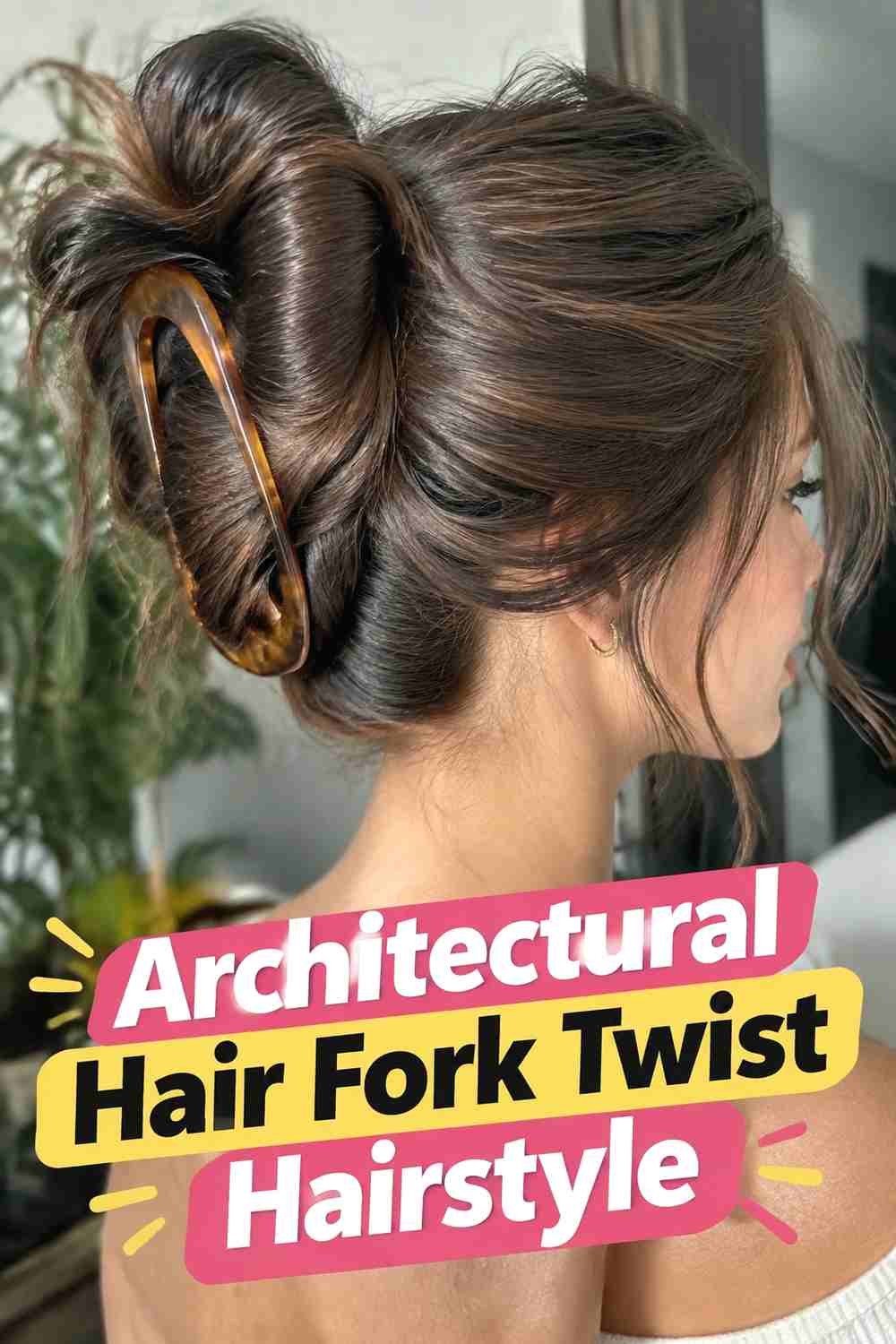
The architectural twist is the most dramatic version, using two or three broad folds to create a statement shape at the back. Instead of multiple small curls, the hair is arranged into clean overlapping panels that curve, cross, or sweep around one another while remaining physically connected to the gathering point. A strong hair fork sits through the central overlap, functioning as both structural support and a visible design element. Longer, denser hair offers the most flexibility for this approach, though the finished updo should still remain balanced and comfortable. Keep the outer surfaces smooth enough for each fold to read clearly, with hidden ends and discreet support beneath.
Best For
This style works especially well for formal photography, fashion-forward events, weddings, and occasions where the updo itself is meant to stand out.
Styling Notes
Plan two or three dominant shapes before pinning, then keep secondary folds simple so the finished hairstyle stays sculptural rather than cluttered.
How to Choose the Right Look
Start with the amount of structure you want. Minimalist, classic, and French-roll versions create recognizable twists with relatively clean construction, while figure-eight, double-loop, and architectural styles rely on broader folds and more deliberate shaping.
Hair length and density will affect what is practical. Medium hair can work beautifully with low folds, minimalist twists, and slimmer French rolls. Longer hair offers more flexibility for loops, braids, and sculptural multi-fold designs. Thick hair may need internal sectioning so the twist does not become overly bulky.
Consider the hair fork itself as part of the design. Longer forks suit substantial vertical rolls and architectural shapes, while compact twists often need a smaller accessory. The prongs should pass through enough underlying hair to hold securely without creating uncomfortable scalp pressure.
Texture changes the mood as well. Sleek surfaces emphasize shape and geometry, while waves and soft texture create a more relaxed finish.
Finally, test comfort and stability. A sculptural twist should look intricate from the outside while relying on a secure, balanced foundation underneath.
Final Thoughts
Sculptural hair fork twists can be as simple as one clean fold or as elaborate as connected loops and architectural panels. The accessory works best when it follows the structure of the hairstyle instead of being added as an afterthought.
Choose a twist your hair length can support comfortably, then adjust the height, parting, texture, and fork placement to make the finished updo feel polished and wearable.
FAQs
1. What is a sculptural hair fork twist hairstyle?
It is a twisted or folded updo shaped into defined curves, loops, or rolls and secured or accented with a multi-pronged hair fork.
2. Can a hair fork hold a twist without bobby pins?
It can in some styles and hair types, but more elaborate sculptural updos may benefit from hidden internal pins before the fork is added for extra stability.
3. What hair length works best for hair fork twists?
Medium to long hair offers the most options. Longer hair is especially useful for figure-eight, double-loop, braided, and architectural designs.
4. How should a hair fork be inserted into a twist?
The prongs should pass through part of the visible fold and then catch stable underlying hair before exiting or settling beneath the structure.
5. Can textured hair work with sculptural hair fork updos?
Yes. Natural waves, curls, or added texture can create beautiful dimension, provided the inner twist remains secure and the fork has enough stable hair to grip.
Save your favorite sculptural hair fork twist ideas, share them for inspiration, and explore more elegant accessory-based updos for everyday styling and special occasions.