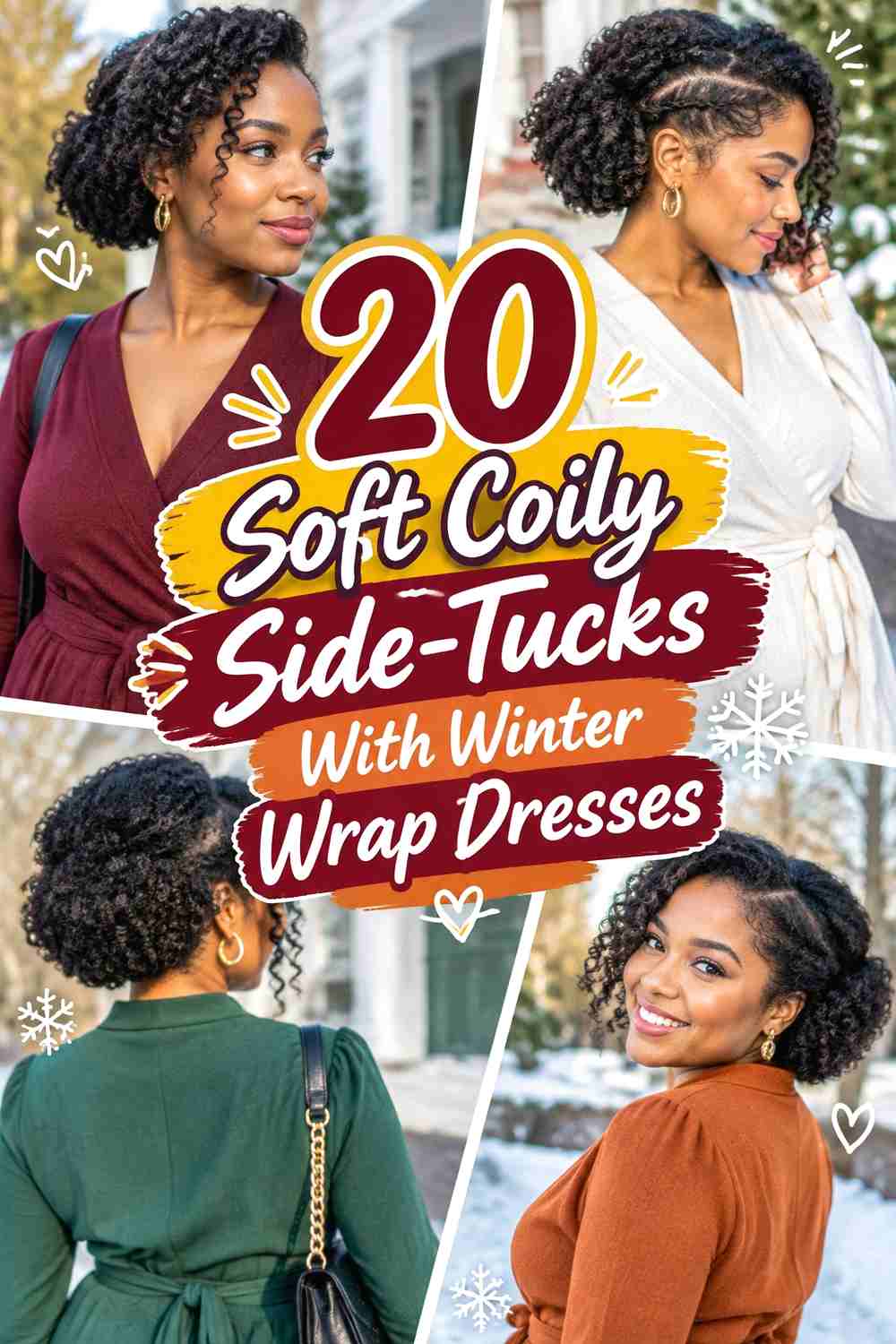
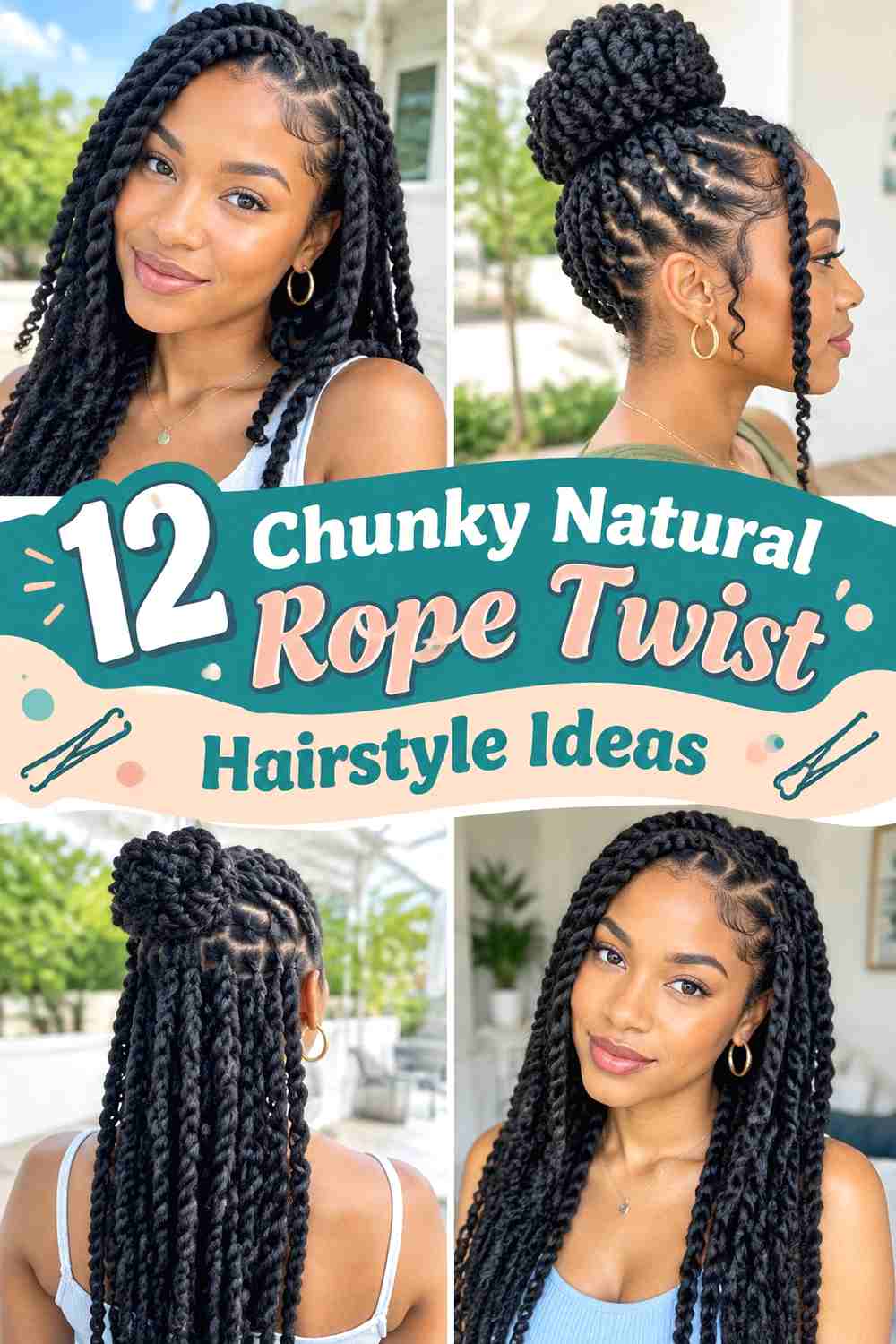
12 Defined Twist-Out Hairstyles With Tailored Winter Blazers
Defined twist-outs bring soft structure, visible texture, and natural movement to tailored winter blazers for a polished look that never feels overly formal.
A tailored blazer creates sharp lines through the shoulders and lapels, so a defined twist-out can provide an appealing contrast with its rounded shape and textured finish. The key is deciding where you want the volume to sit. Some styles emphasize the crown, others keep the sides compact, and several move the hair away from the blazer collar so the definition remains visible.
Before choosing a look, consider your hair length, density, shrinkage, parting preference, and how much contact the ends will have with wool, lined collars, or scarves. The most believable twist-outs retain natural variation between sections, visible strands, soft shine, and flexible movement rather than appearing perfectly uniform or overly sculpted.
Quick List
- Center Part Defined Twist Out Hairstyle
- Deep Side Part Twist Out Hairstyle
- Side Pinned Twist Out Hairstyle
- Crown Lift Twist Out Hairstyle
- Shoulder Skimming Twist Out Bob Hairstyle
- Tapered Defined Twist Out Hairstyle
- Half Up Defined Twist Out Hairstyle
- Headband Polished Twist Out Hairstyle
- Flat Twist Front Twist Out Hairstyle
- Soft Fringe Twist Out Hairstyle
- Asymmetrical Twist Out Hairstyle
- Low Puff Twist Out Hairstyle
1. Center Part Defined Twist Out Hairstyle
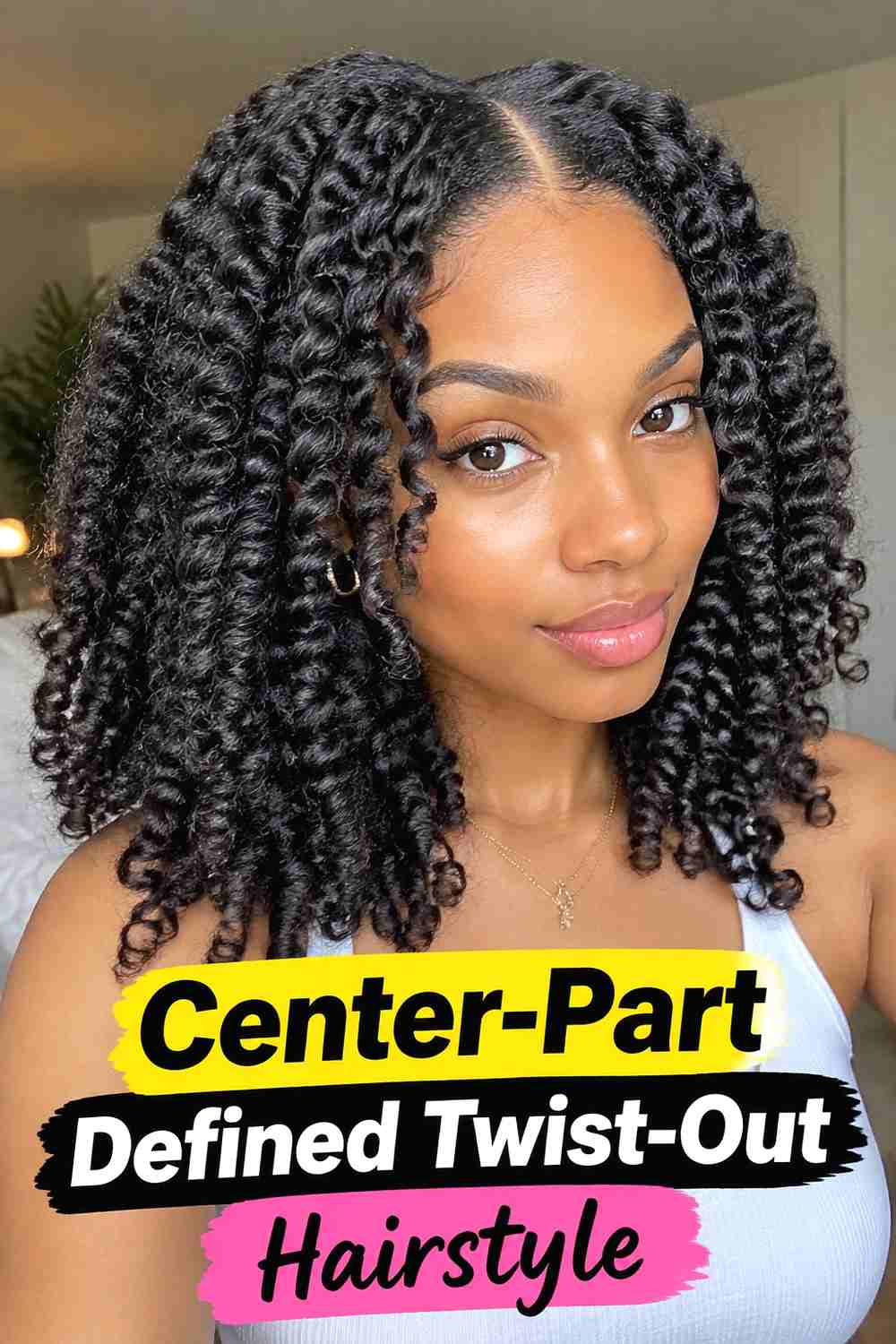
A center-part twist-out creates an even, balanced silhouette that works naturally with the clean symmetry of a tailored winter blazer. The part gives the style an intentional framework, while the released twists create definition through both sides without requiring every section to look identical. Keep the roots softly separated so the part remains visible, then allow the lengths to expand gradually toward the ends. This shape works especially well when the blazer has strong lapels because the hair can frame them without competing with the neckline. For a polished finish, concentrate definition around the front and mid-lengths while leaving enough softness at the crown to prevent the style from appearing flat.
Styling Notes
Separate each twist carefully and only as much as needed for fullness. Excessive splitting can reduce definition faster than necessary.
Best For
This version suits medium to long natural hair when you want an orderly shape that still highlights texture and movement.
2. Deep Side Part Twist Out Hairstyle
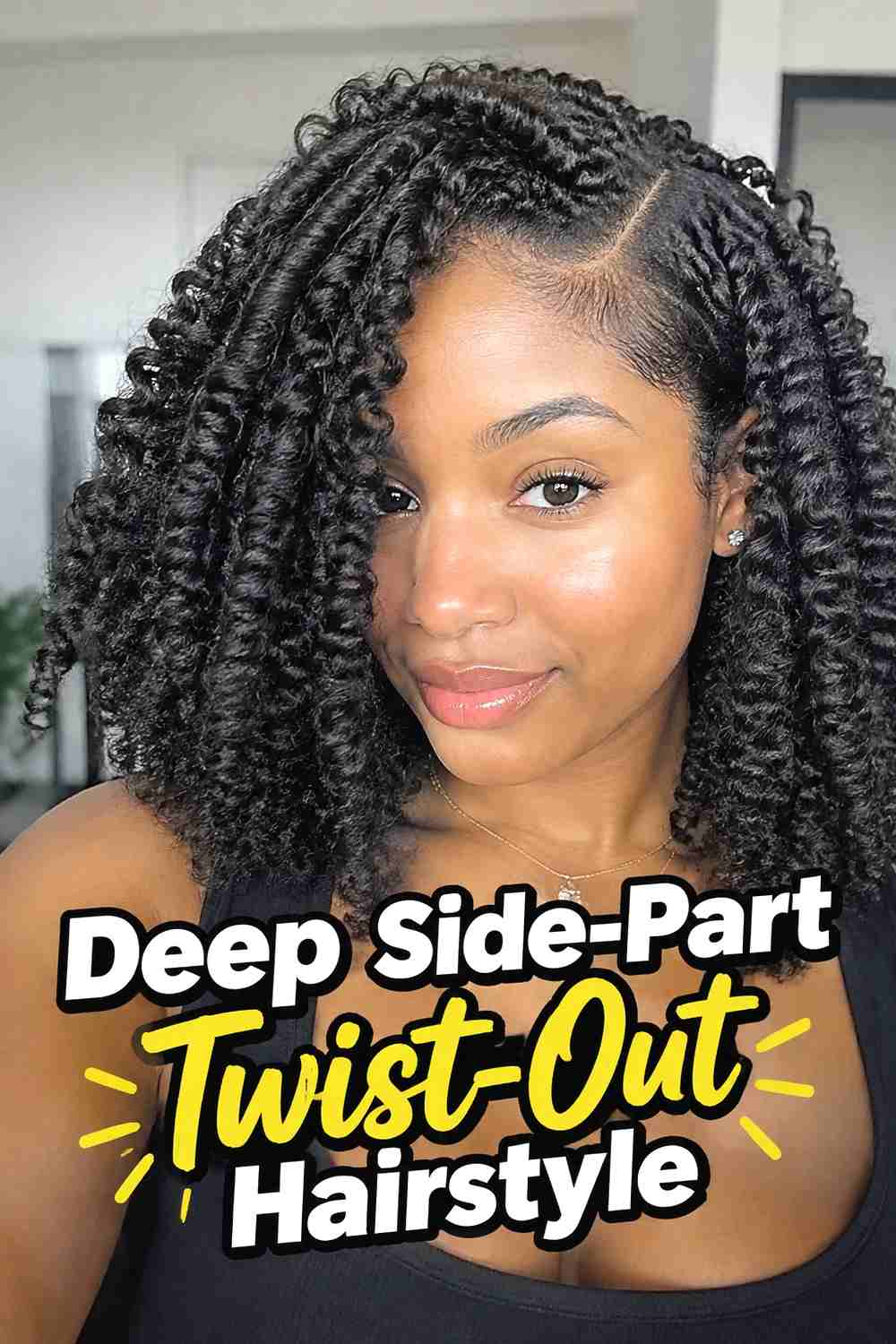
A deep side part shifts the volume of a twist-out to one side, creating a more directional silhouette against a structured blazer. The heavier side can sweep across the forehead or lift slightly at the roots, while the smaller side stays closer to the head. This asymmetry adds visual interest without requiring clips or complicated styling. It also pairs especially well with single-breasted blazers, where the diagonal movement of the hair contrasts with the clean front opening. Maintain definition through the larger side rather than over-fluffing it, and keep the part clean enough to remain visible. If one side naturally has more density, let that guide the placement instead of forcing perfect balance.
Why It Works
The uneven volume softens the blazer’s tailored structure while keeping the hairstyle polished enough for work, dinners, or winter events.
Pro Tip
Set the side part before separating the twist-out so you do not have to disturb finished sections later.
3. Side Pinned Twist Out Hairstyle
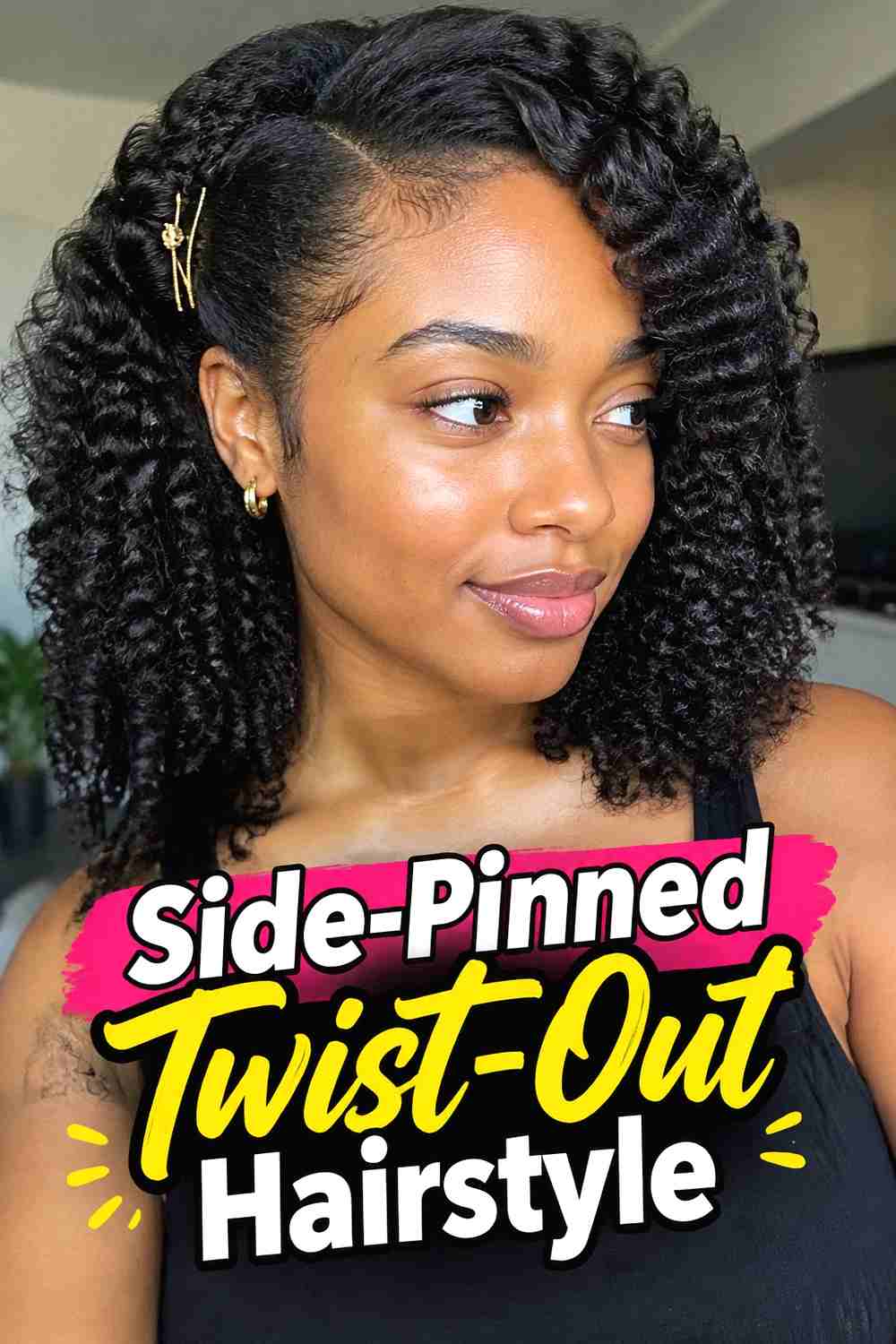
A side-pinned twist-out keeps one side compact while leaving the opposite side full and defined. Use a discreet pin or slim barrette above the ear to hold a small section back, exposing the cheek and creating a clean line beside the blazer collar. The unpinned side can retain more volume, giving the hairstyle a refined asymmetrical finish. This approach is useful when you want your twist-out visible without allowing both sides to rub constantly against a high winter lapel. Keep the pinned section smooth but not stretched flat, so the natural texture remains part of the look. A small accessory works better than a bulky clip if you plan to layer a coat over the blazer.
Styling Notes
Pin only enough hair to open the side of the face. Pulling back too much can distort the overall twist-out shape.
Wear & Maintenance
Position the pin where it will not be pressed directly by a coat collar or winter hat.
4. Crown Lift Twist Out Hairstyle
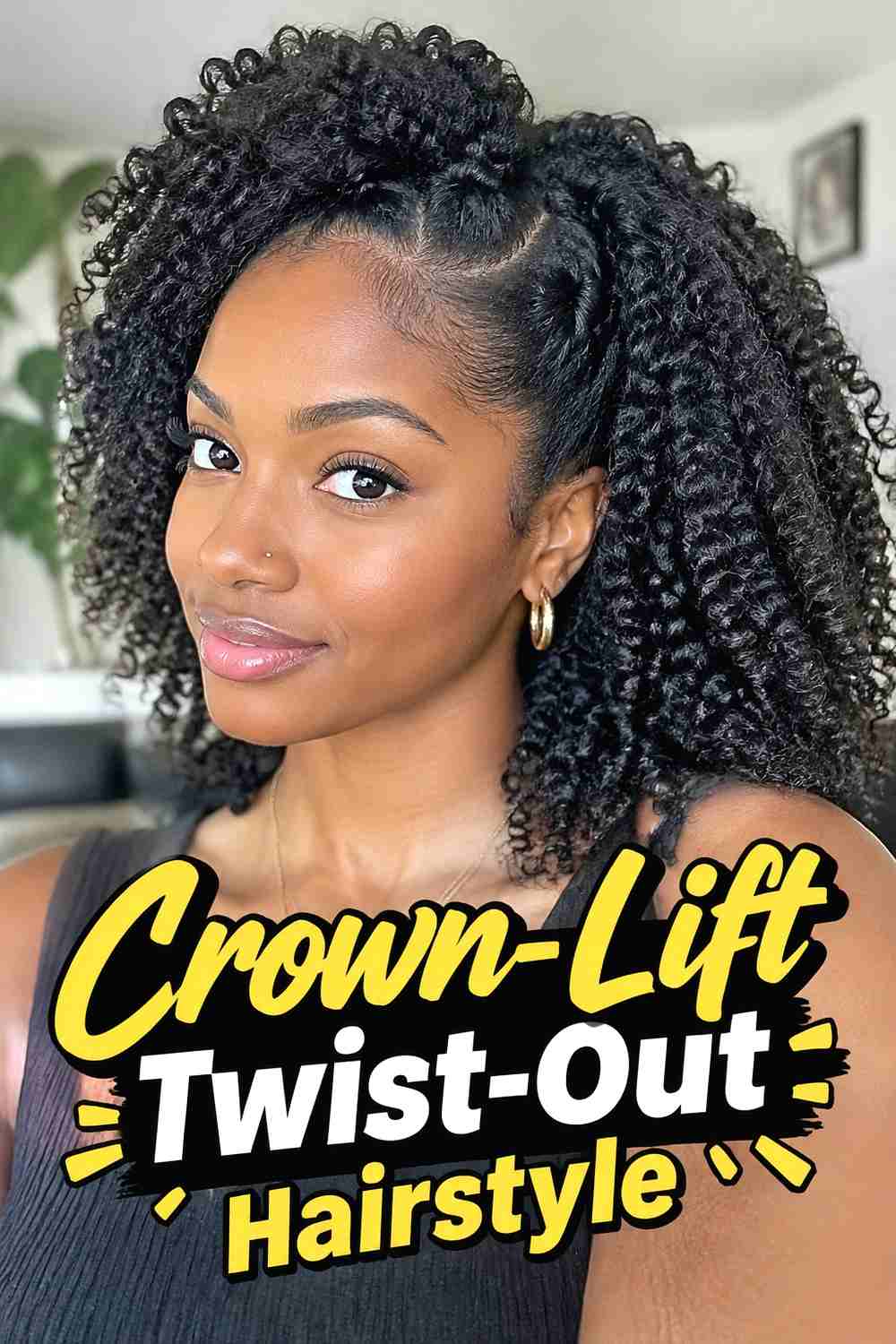
A crown-lift twist-out concentrates extra height through the top of the style while keeping the lower sides more controlled. After unraveling the twists, gently lift the roots at the crown without separating every defined section. The resulting silhouette looks especially strong with a tailored blazer because the vertical volume balances broad or structured shoulders. Keep the sides near the ears moderately compact so the hairstyle does not become excessively wide around the lapels. This version can be adjusted from subtle lift to fuller volume depending on hair density and personal preference. The most natural result keeps the ends defined while adding air primarily at the roots, preserving the twist pattern rather than turning the entire style into a fluffy shape.
Why It Works
The raised crown gives the hairstyle presence while the controlled sides maintain a clean relationship with a tailored neckline.
Pro Tip
Lift from underneath rather than combing through the defined ends, which helps preserve visible twist-out separation.
5. Shoulder Skimming Twist Out Bob Hairstyle
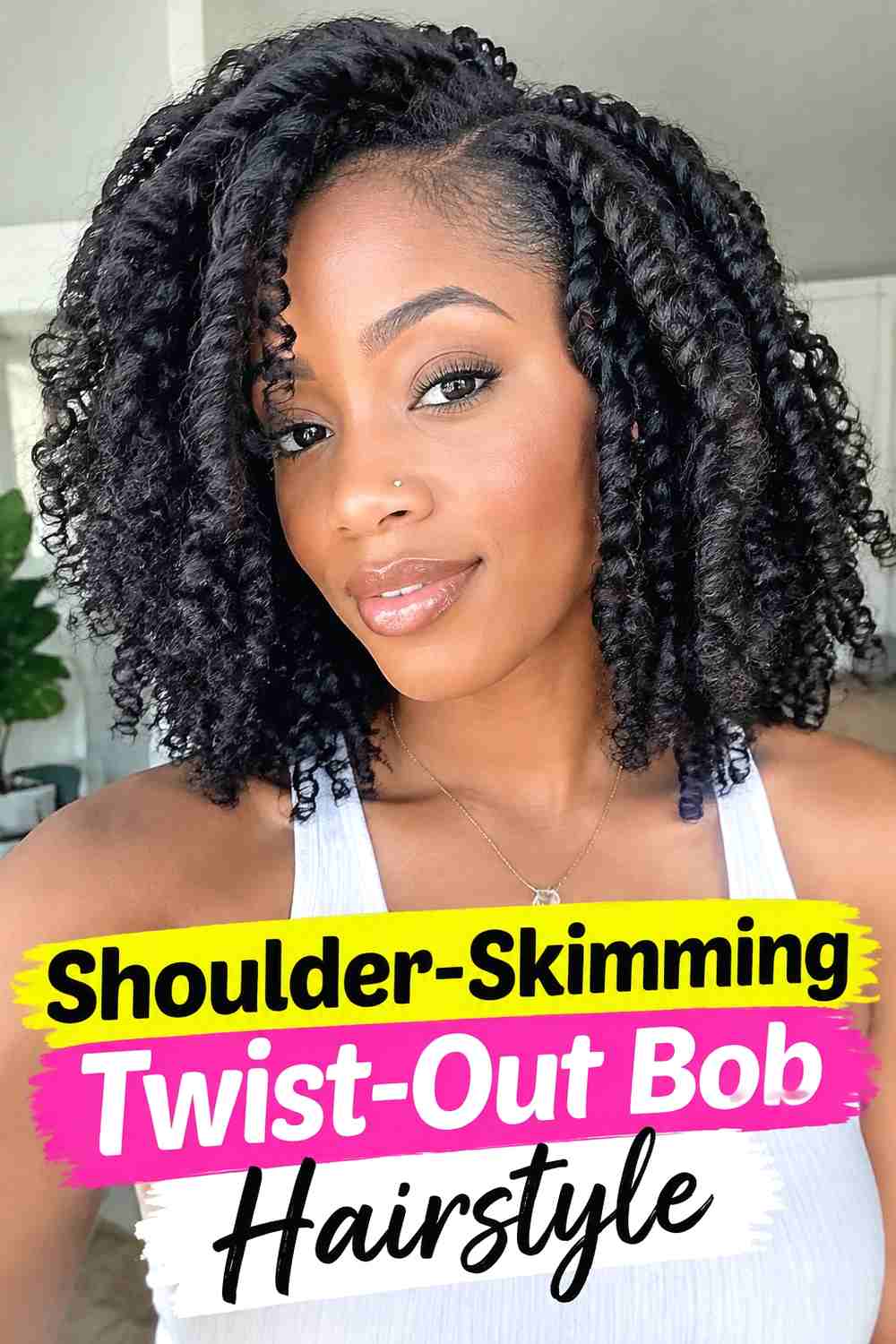
A shoulder-skimming twist-out bob creates a rounded shape that sits just above or around the blazer collar. This length makes the definition particularly noticeable because the ends form a clear textured outline rather than disappearing into long layers. A softly rounded perimeter works well with tailored outerwear, especially when the blazer has a simple lapel and minimal embellishment. Keep the twist sections slightly smaller around the front for definition and allow broader pieces through the back for natural variation. If the ends touch the blazer frequently, bring some sections forward over the shoulders instead of letting them rub continuously against the fabric.
Hair Type & Length
This look works well on short to medium natural hair that settles around chin, neck, or shoulder level after the twists are released.
Wear & Maintenance
Limit repeated friction against textured blazer fabrics, especially at the ends where definition can become fuzzy more quickly.
6. Tapered Defined Twist Out Hairstyle
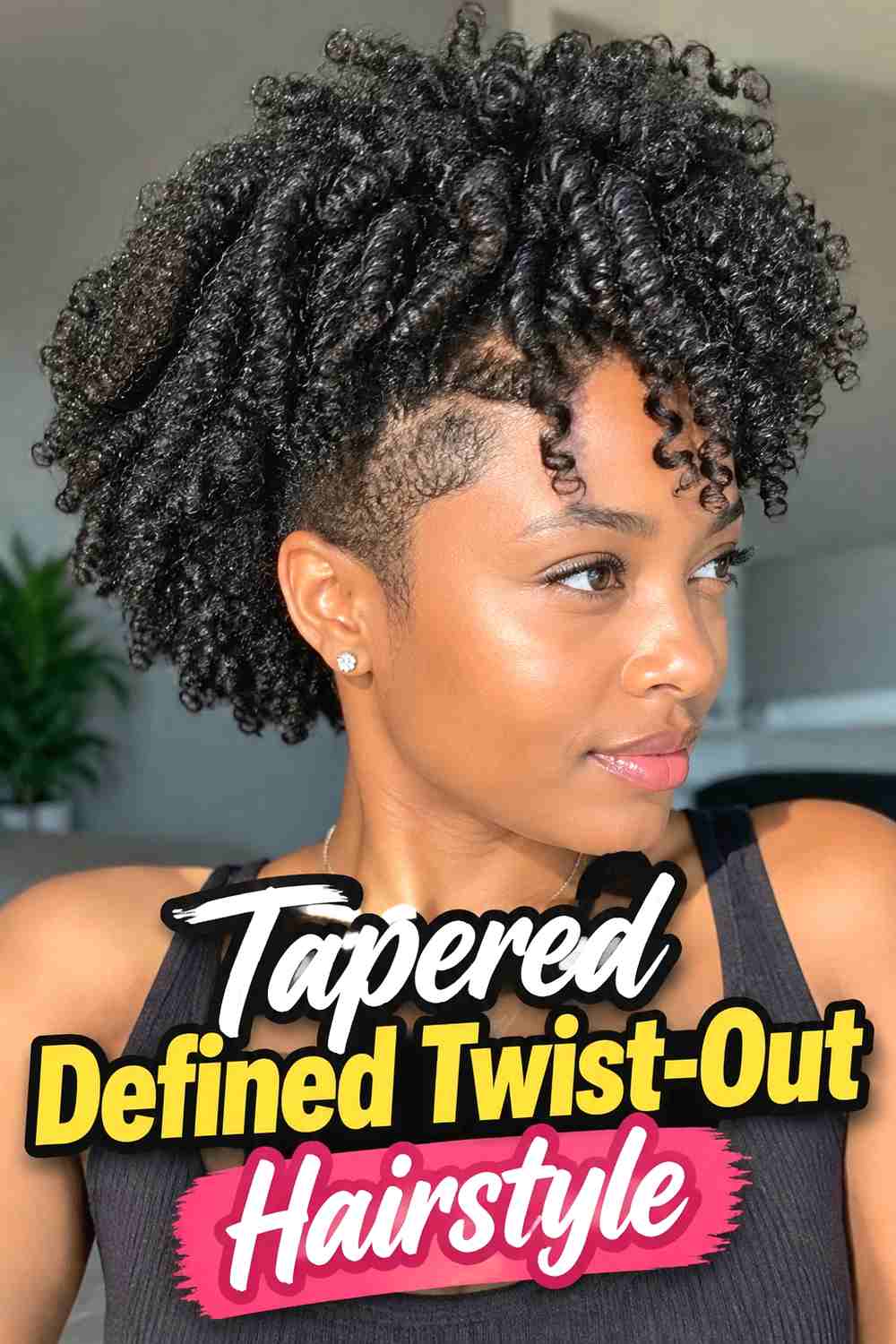
A tapered twist-out keeps the sides and back relatively close while allowing more length and definition through the top. The shape looks especially polished with tailored winter blazers because it leaves the neckline and lapels almost completely unobstructed. Defined coils and bends across the crown provide texture without adding bulk around the shoulders, making this a strong option for cropped natural hair. The top can be directed slightly forward, upward, or to one side depending on the cut. Avoid over-separating shorter sections, since their definition may disappear faster than longer pieces. Instead, use gentle root lifting to create fullness while preserving the visible pattern from the original twists.
Best For
This hairstyle suits tapered cuts and short natural hair with enough top length to create clearly visible twist-out definition.
Styling Notes
Use smaller twists in shorter areas and slightly larger twists where the hair is longer to keep the final shape balanced.
7. Half Up Defined Twist Out Hairstyle
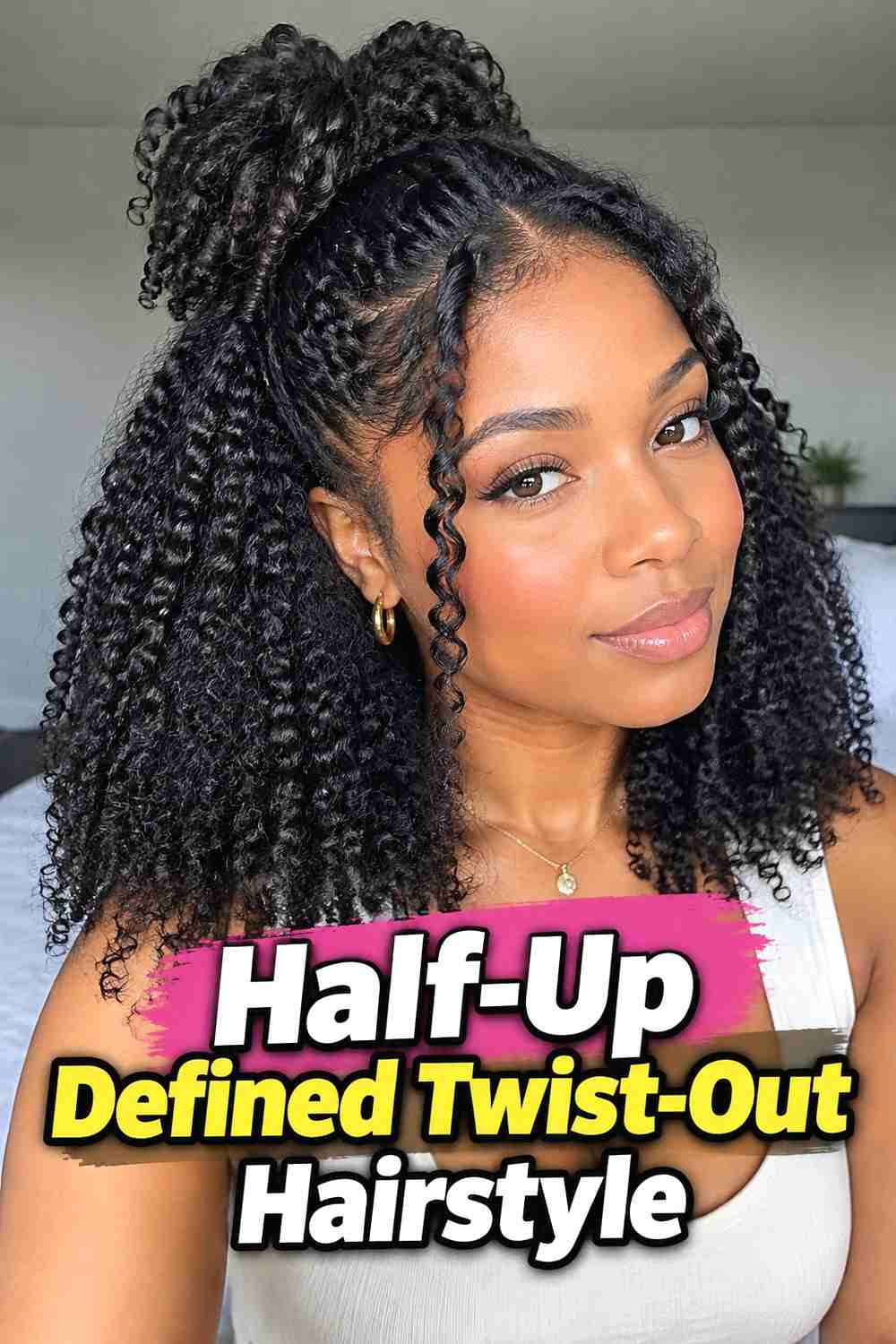
A half-up twist-out pulls the upper section away from the face while leaving the lower lengths defined and visible over the blazer. Gather the crown loosely and secure it with a small elastic or discreet pins, keeping the base soft enough that the twist-out texture is not flattened. The lower section can fall around the shoulders, creating a mix of structure and movement. This style is particularly useful when you want to showcase earrings, a blouse collar, or the upper lapels of a winter blazer without putting all the hair into an updo. Keep some texture at the crown rather than smoothing it completely, so the gathered portion feels connected to the rest of the twist-out.
Why It Works
The half-up placement clears the face and blazer neckline while preserving plenty of visible definition through the lower hair.
Pro Tip
Gather the top section with your fingers instead of a dense brush to avoid erasing the natural separation of the twist-out.
8. Headband Polished Twist Out Hairstyle
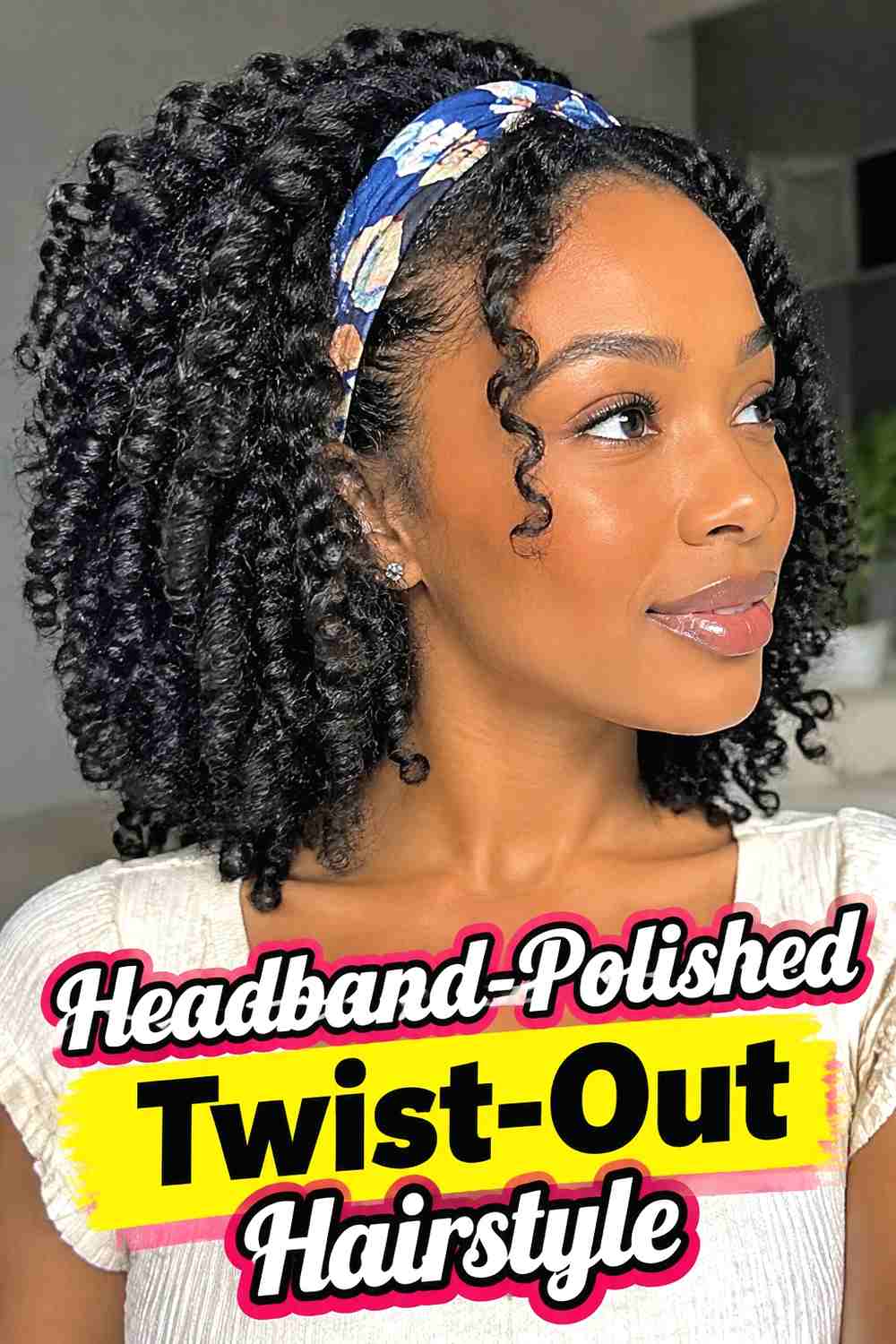
A slim headband can give a defined twist-out a clean front edge while leaving the textured lengths free. Position the band a short distance behind the hairline so it gently directs the front sections backward without flattening the entire crown. The twist-out should remain full behind the band, with clear definition through the sides and ends. Paired with a tailored blazer, the headband adds another structured detail while the hair provides softness and dimension. Choose a smooth, relatively narrow design rather than an oversized padded band if you want the hairstyle to remain balanced with winter layers. This is also useful when shorter front pieces tend to fall forward during a busy day.
Styling Notes
Place the headband after the twist-out is fully separated so you can control exactly how much volume remains at the front.
Best For
This style works well when you want a polished face-framing area without pinning or gathering the entire top section.
9. Flat Twist Front Twist Out Hairstyle
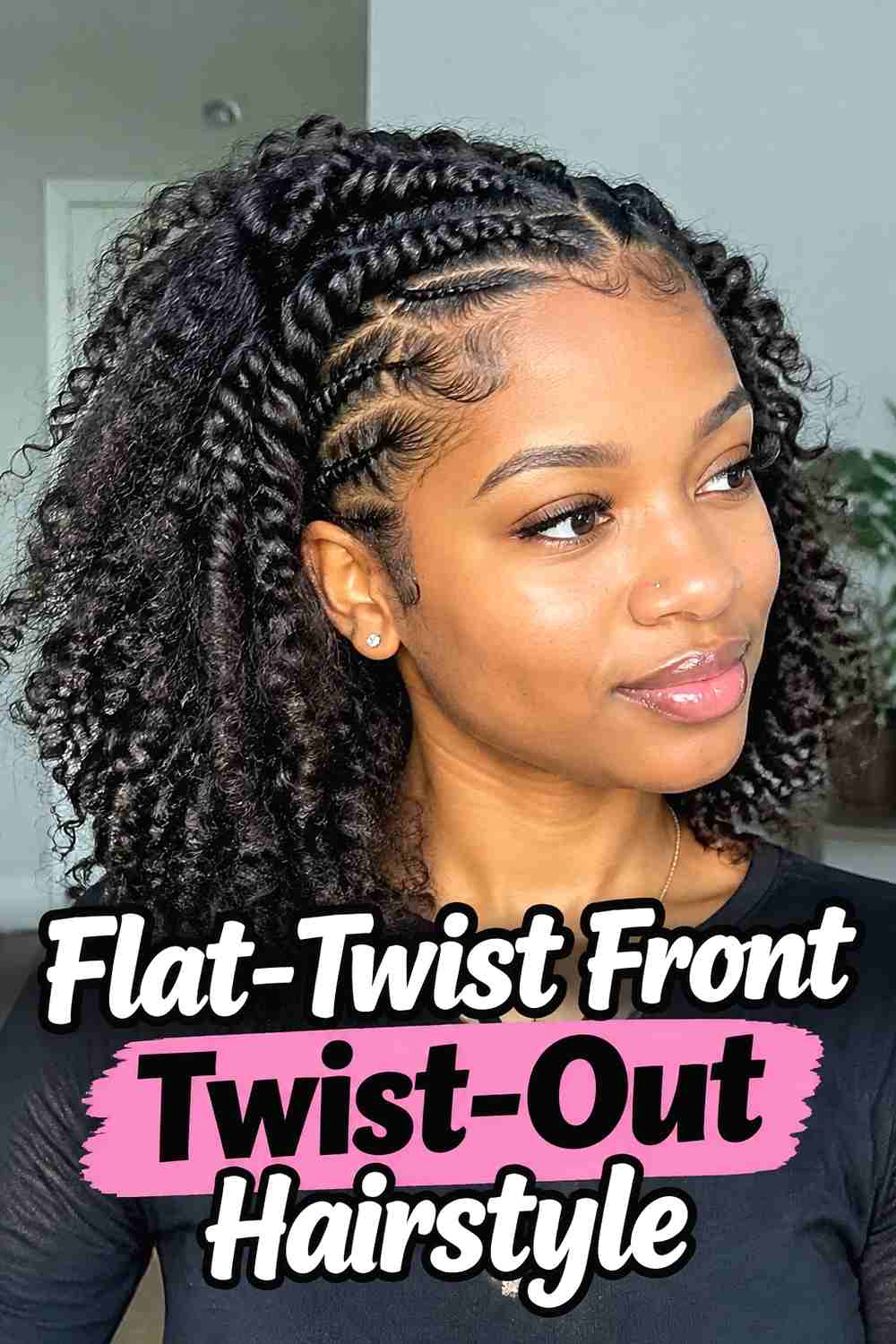
A flat-twist front detail gives the hairstyle a defined, directional element while leaving the majority of the hair in a full twist-out. Create one or two small flat twists near the front or temple, guiding them backward before securing the ends discreetly into the textured hair. The rest of the twist-out can remain rounded and free, creating a contrast between the controlled front and voluminous lengths. This works particularly well with a tailored blazer because the flat-twisted area keeps one part of the neckline visually open. Avoid making the front twists excessively tight; their purpose is shape and detail, not maximum tension. Keep the remaining texture soft enough to move naturally.
Styling Notes
Use modest sections for the flat twists so they complement the twist-out instead of removing too much volume from the front.
Why It Works
The controlled detail adds polish while the released twists maintain softness and a clearly natural textured finish.
10. Soft Fringe Twist Out Hairstyle
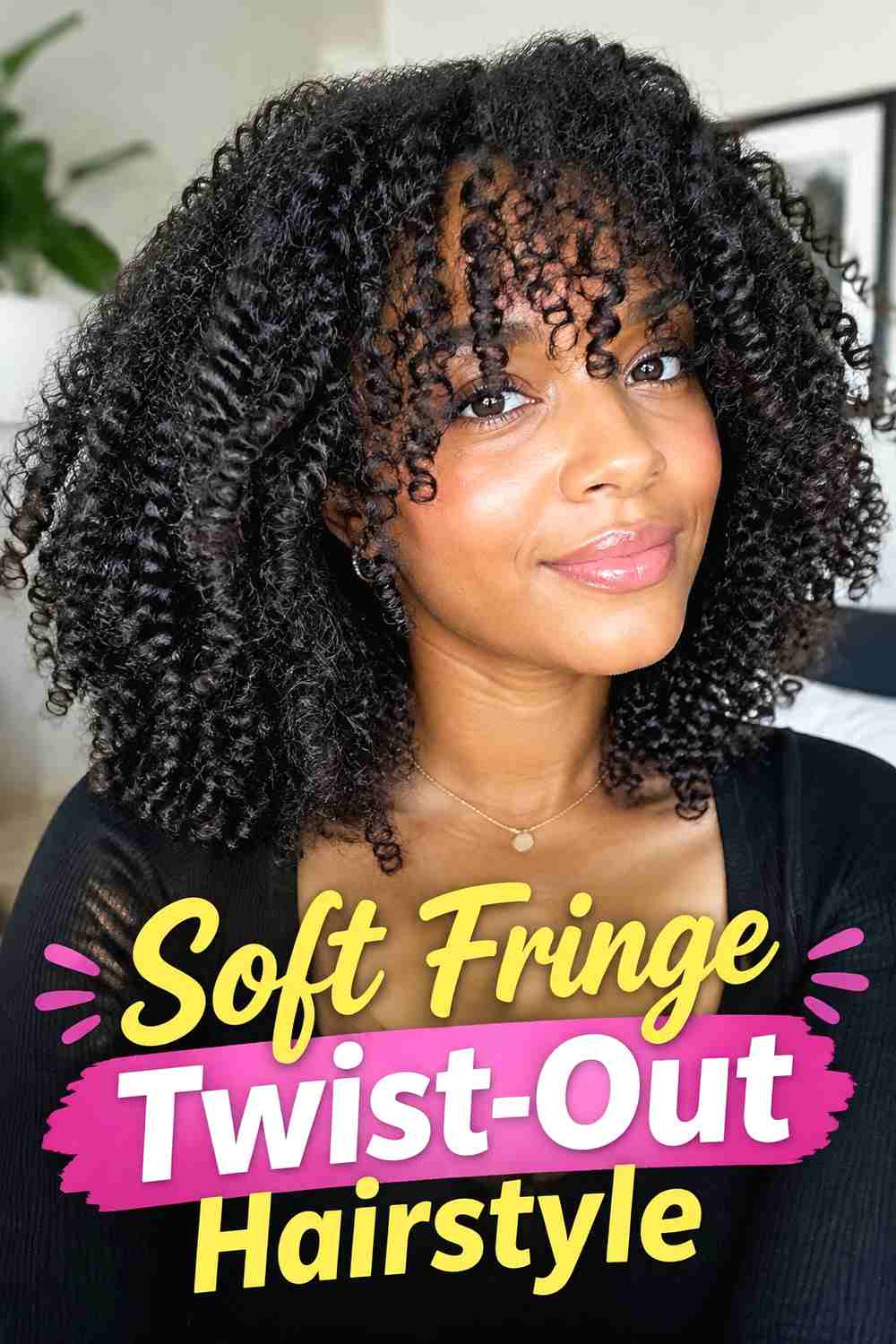
A soft fringe twist-out directs shorter front sections toward the forehead while maintaining rounded volume through the rest of the hair. The fringe can sit above the brows, sweep lightly to one side, or break into several defined pieces for a more relaxed look. Because the visual focus stays around the face, the lower sides can be kept slightly narrower to avoid crowding the blazer lapels. This style is especially effective on layered natural hair where shorter front sections already exist. Avoid forcing longer hair into an artificial fringe; the most believable version follows the haircut’s actual length. Keep the front sections defined but flexible so they move naturally rather than forming a rigid row.
Best For
This variation suits layered twist-outs with shorter pieces around the forehead and face.
Pro Tip
Separate the fringe last, when you can see how much fullness is already present through the crown and sides.
11. Asymmetrical Twist Out Hairstyle
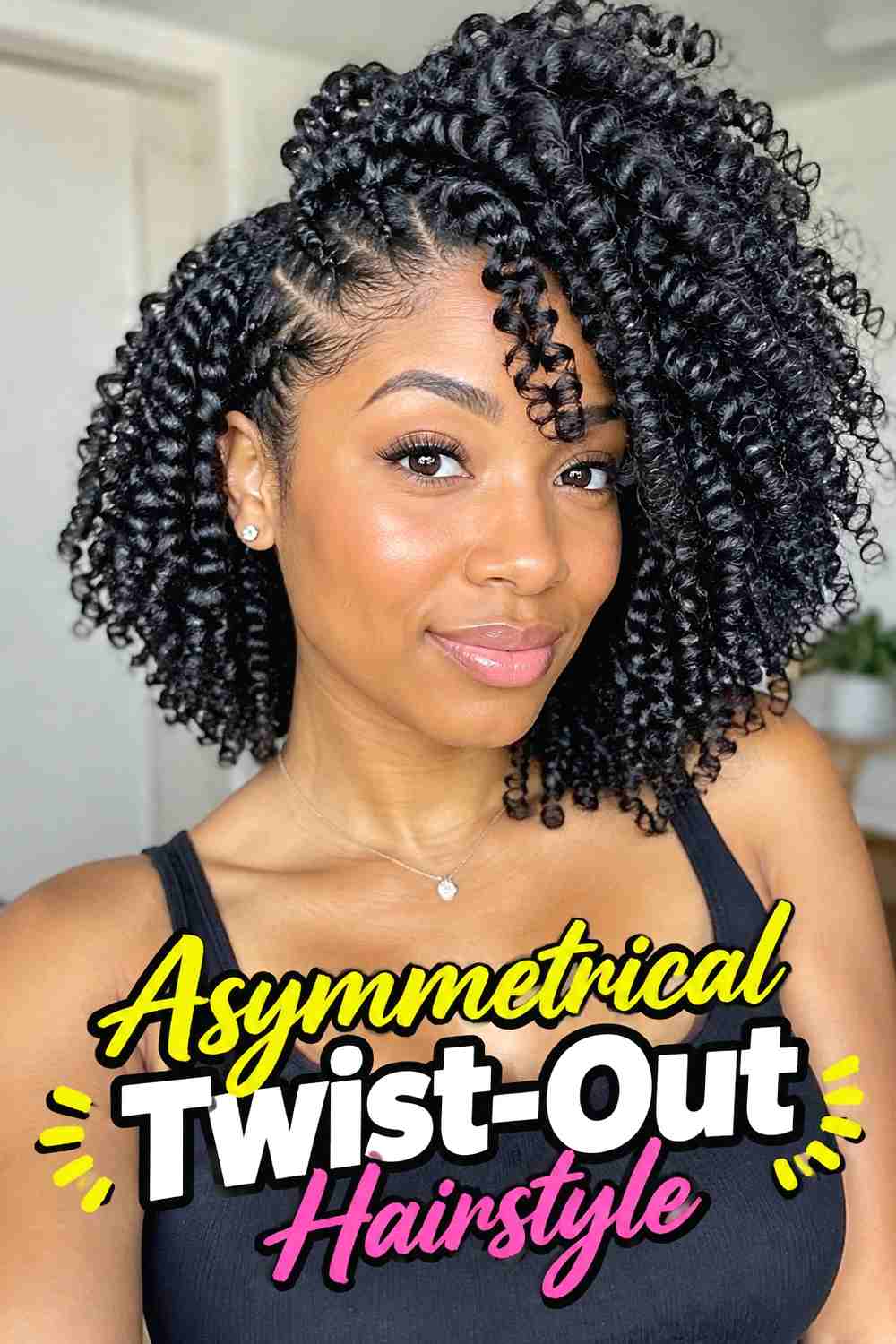
An asymmetrical twist-out intentionally places more shape and volume on one side while keeping the opposite side narrower. Unlike a simple side part, the entire silhouette can be directed diagonally, with selected sections lifted, pinned, or arranged to reinforce the uneven balance. The result feels modern against the sharp geometry of a tailored winter blazer. Keep the fuller side clearly defined through the ends so it looks deliberately sculpted rather than windblown. On the compact side, use finger shaping or a discreet pin instead of brushing the texture flat. This style is especially useful when you want dramatic shape without adding accessories across the top of the head.
Why It Works
The directional silhouette creates a strong contrast with straight blazer lines and gives a familiar twist-out a more editorial finish.
Wear & Maintenance
Keep the fullest side away from a bag strap or heavy coat collar that could repeatedly compress the defined sections.
12. Low Puff Twist Out Hairstyle
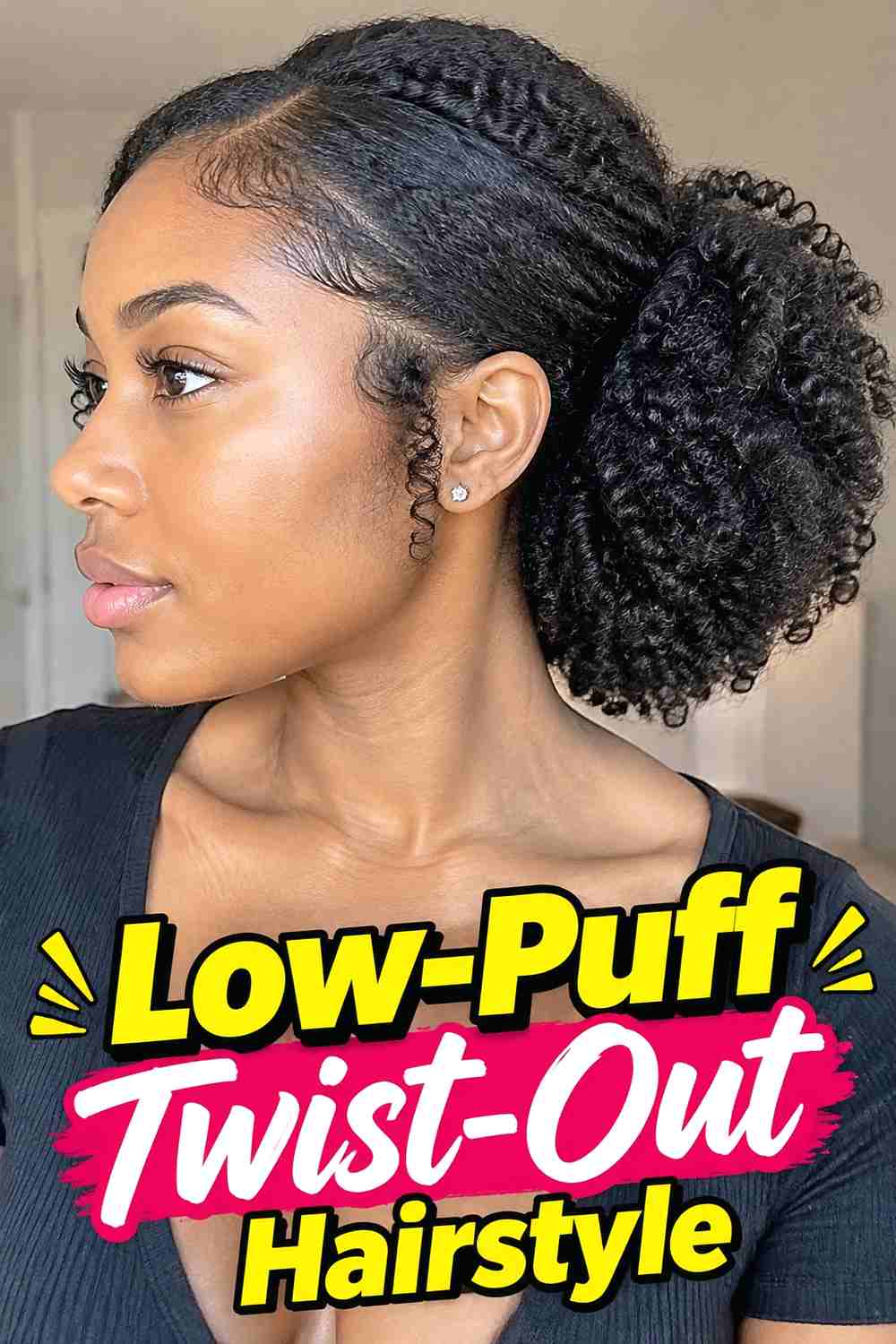
A low-puff twist-out gathers much of the hair toward the back while allowing the released twist texture to remain visible in the puff. Keep the front and sides softly directed backward without pulling them painfully tight, then secure the hair low enough to create a rounded textured shape near the nape. This can pair beautifully with a blazer when the puff sits just above the collar rather than being crushed against it. Leave the ends defined instead of fluffing them into an indistinct cloud, so the original twist-out pattern remains recognizable. This style is practical when you want the face and lapels fully visible while still showcasing natural texture rather than smoothing the hair into a conventional ponytail.
Styling Notes
Choose the puff position after putting on the blazer so you can keep the base clear of the collar.
Best For
Medium to long natural hair with enough length to gather comfortably works best for this softly structured finish.
How to Choose the Right Look
Start with the blazer neckline and your hair length. Cropped and tapered twist-outs naturally keep lapels visible, while shoulder-length and longer styles may need strategic pinning, a half-up section, or forward placement to limit constant fabric contact.
Next, decide how much volume you want. A center part creates balance, a deep side part and asymmetrical finish add directional volume, and a crown-lift shape emphasizes height. If you prefer a more contained look, choose a tapered style, side pin, headband, or low puff.
Texture definition matters too. Smaller twists usually create tighter pattern definition, while larger twists can produce broader bends and more volume. Your natural density, shrinkage, and existing cut will affect the final silhouette. For winter wear, consider blazer fabric, coat layering, scarves, styling time, and how often the ends will rub against clothing. Choose comfortable hold and flexible movement instead of trying to make every curl or coil identical.
Final Thoughts
A defined twist-out pairs naturally with tailored winter blazers because textured softness balances structured clothing. Whether you prefer a clean center part, lifted crown, pinned side, cropped silhouette, or low puff, the strongest look is one that respects your natural density and twist pattern. Keep the definition realistic, place the volume where it complements your blazer, and minimize unnecessary friction around the ends.
FAQs
1. How can I make a twist-out look polished with a blazer?
Use a deliberate part, maintain definition around the front, and shape the volume so it does not completely cover the blazer neckline or lapels.
2. Should a twist-out be fully separated for maximum volume?
Not necessarily. Separating each twist fewer times preserves stronger definition, while additional separation creates more fullness. Choose the balance that suits the look you want.
3. Which twist-out style keeps hair away from blazer collars?
A tapered twist-out, half-up style, side-pinned look, or low puff can reduce the amount of hair resting directly on the collar.
4. Can short natural hair create a defined twist-out?
Yes. Short and tapered hair can show clear twist definition when there is enough length to twist and release. Smaller sections may be easier on shorter areas.
5. How do I reduce frizz where my twist-out touches winter clothing?
Limit repeated rubbing against collars and scarves, keep the ends positioned thoughtfully, and avoid excessive handling throughout the day. Some natural softening is normal.
Save your favorite defined twist-out hairstyle and pair it with a tailored winter blazer for a polished cold-weather look that keeps natural texture at the center.