16 Mixie Pixie Mullet Ideas for a Bold, Wearable Short Cut
Fresh mixie pixie mullet ideas blend cropped confidence, shaggy movement, and soft face-framing detail for a short haircut that feels modern and wearable.
The mixie sits between a pixie and a mullet, combining shorter layers around the crown and sides with extra length toward the neckline. That basic formula can look soft and feathered, curly and full, sleek and polished, or deliberately choppy depending on how the fringe, side pieces, crown, and nape are shaped.
When comparing these looks, pay attention to how much length you want around your ears and neck, how your natural texture behaves when cut short, and how much daily styling you enjoy. Crown volume, fringe placement, sideburn detail, and the strength of the mullet tail can completely change the character of the cut without losing its mixie shape.
Quick List
- Soft Feathered Mixie Pixie Mullet Hairstyle
- Curly Shaggy Mixie Pixie Mullet Hairstyle
- Wispy Bangs Mixie Pixie Mullet Hairstyle
- Sleek Side-Parted Mixie Pixie Mullet Hairstyle
- Choppy Micro-Bang Mixie Pixie Mullet Hairstyle
- Wavy Textured Mixie Pixie Mullet Hairstyle
- Tapered Neckline Mixie Pixie Mullet Hairstyle
- Voluminous Crown Mixie Pixie Mullet Hairstyle
- Piecey Sideburn Mixie Pixie Mullet Hairstyle
- Coily Defined Mixie Pixie Mullet Hairstyle
- Razor-Cut Airy Mixie Pixie Mullet Hairstyle
- Curved Fringe Mixie Pixie Mullet Hairstyle
- Tousled Rocker Mixie Pixie Mullet Hairstyle
- Soft Side-Swept Mixie Pixie Mullet Hairstyle
- Rounded Crown Mixie Pixie Mullet Hairstyle
- Grown-Out Mixie Pixie Mullet Hairstyle
1. Soft Feathered Mixie Pixie Mullet Hairstyle
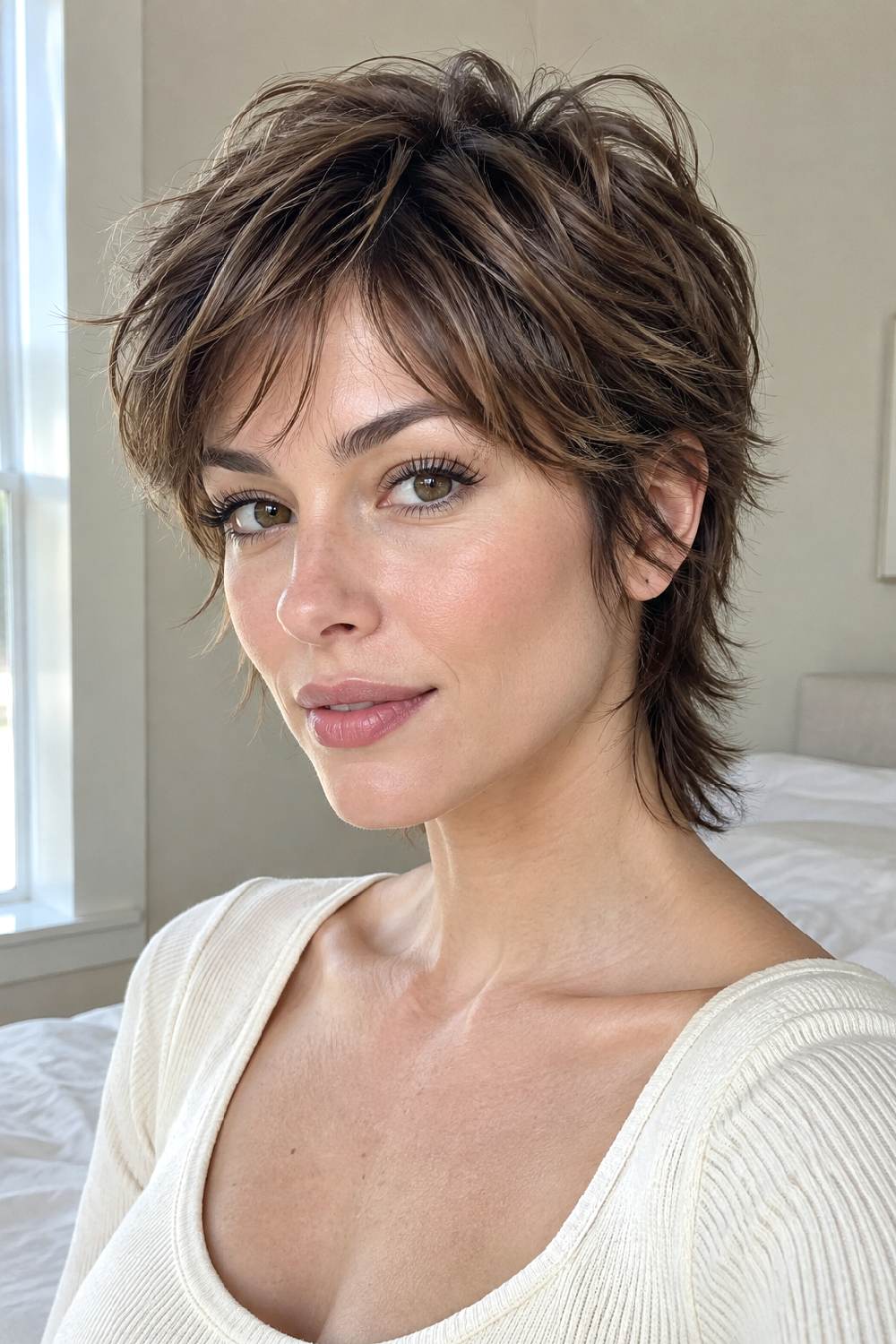
This softer version of the mixie keeps the silhouette light rather than aggressively choppy. Short feathered layers create movement over the crown, while wispy pieces around the temples and ears prevent the sides from looking heavy. At the back, a narrow extension through the nape supplies the mullet character without becoming a long tail. The result feels airy, feminine, and easy to personalize with a soft fringe or subtle off-center part. It can be especially appealing if you like short hair but still want enough movement to tuck, sweep, or reshape. A small amount of lightweight styling cream can help define the feathered ends without making them stiff.
Why It Works
The gradual change from cropped crown layers to a longer neckline creates contrast without a harsh jump in length. That makes this one of the easier mixie shapes to wear if you prefer softness.
Hair Type & Length
Fine to medium-density straight or gently wavy hair can show the feathering particularly clearly. Dense hair may need internal weight removal so the crown stays light instead of becoming rounded and bulky.
2. Curly Shaggy Mixie Pixie Mullet Hairstyle
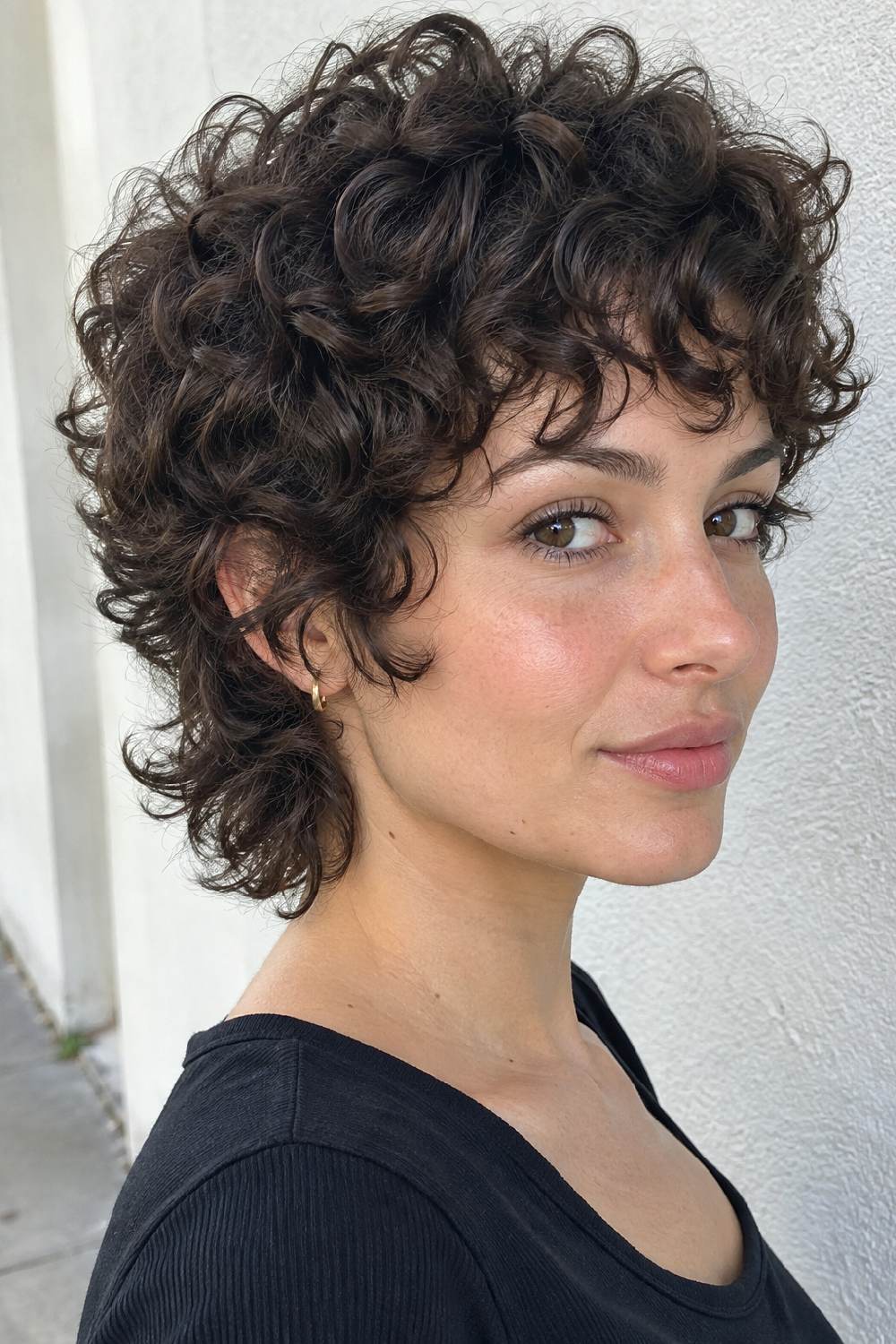
Natural curls give a mixie instant dimension because the short-to-long shape becomes visible through changing curl volume rather than sharp cutting lines. Here, the crown stays compact but lively, with curls opening around the temples and ears before extending slightly farther at the nape. Leaving some irregularity between curl clusters keeps the haircut shaggy and relaxed instead of overly sculpted. This style can be a strong choice if you want to work with natural curl movement while removing some of the bulk associated with a longer cut. The exact final length should account for shrinkage, especially around the fringe and neckline, where curls can spring considerably shorter once dry.
Hair Type & Length
Curly hair with enough natural definition to form visible clusters suits this shape well. Cutting and evaluating the shape close to its dry state can make the final proportions easier to predict.
Wear & Maintenance
Refresh flattened areas with water or a small amount of curl product rather than coating the entire haircut each morning. Keeping the nape intentionally shaped also stops the style from looking accidentally overgrown.
3. Wispy Bangs Mixie Pixie Mullet Hairstyle
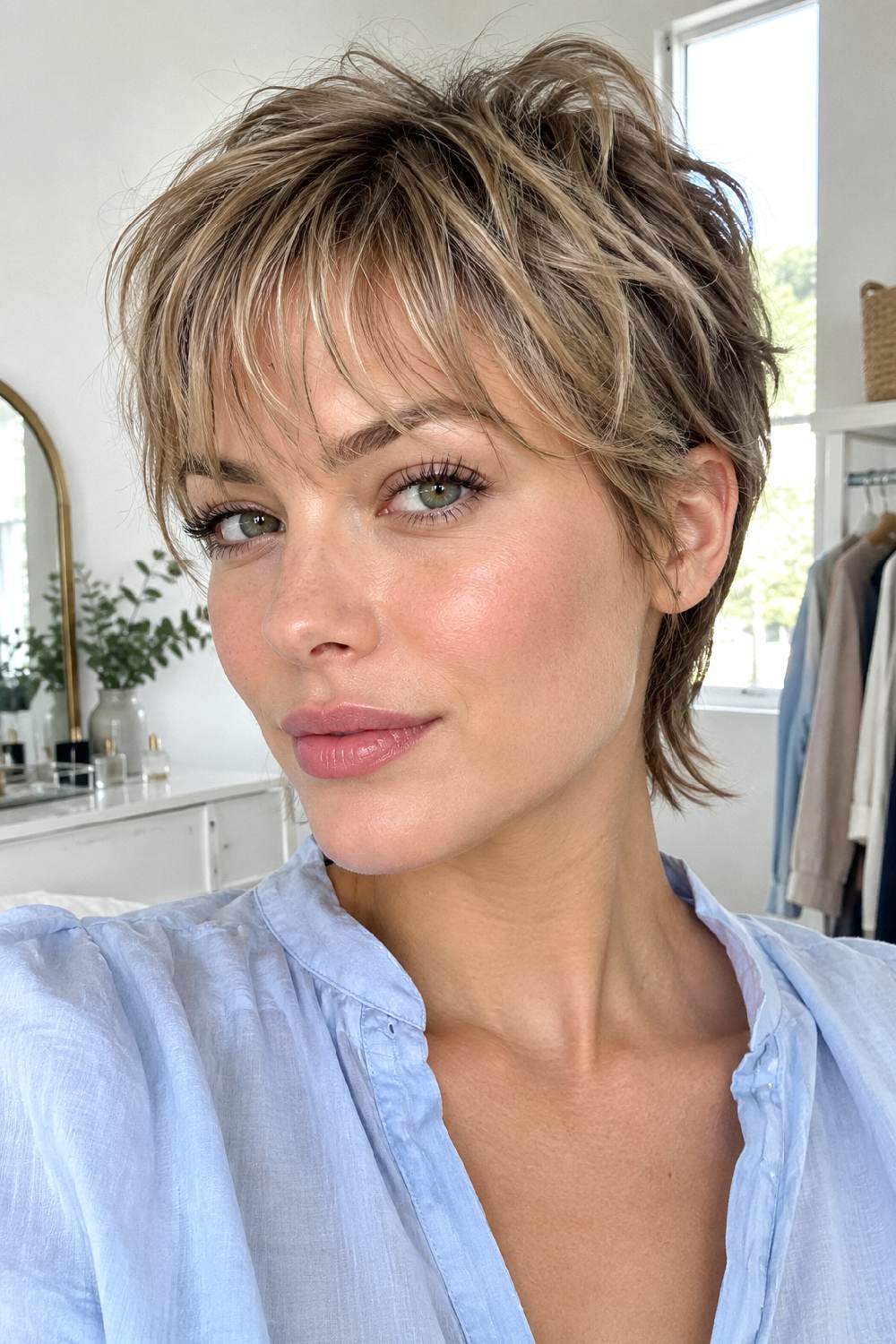
Wispy bangs give the mixie a softer focal point around the face while allowing the back to keep its edgier length. Instead of a heavy full fringe, thin separated pieces fall lightly across the forehead and blend into short layers near the temples. The crown stays textured enough to support the shaggy silhouette, while the neckline remains narrow and slightly elongated. This balance works well if you want a noticeable haircut without having a blunt fringe dominate your features. The bangs can sit nearly straight, split slightly in the center, or move toward one side depending on your growth pattern. Light styling is usually more flattering than pressing every strand into place.
Styling Notes
Use only enough product to separate the fringe into a few soft pieces. Heavy wax can collapse fine bangs and remove the airy quality that makes this version distinctive.
Pro Tip
Ask for the fringe to connect gradually into the temple layers. That transition helps the front look like part of the haircut rather than a separate set of bangs added afterward.
4. Sleek Side Parted Mixie Pixie Mullet Hairstyle
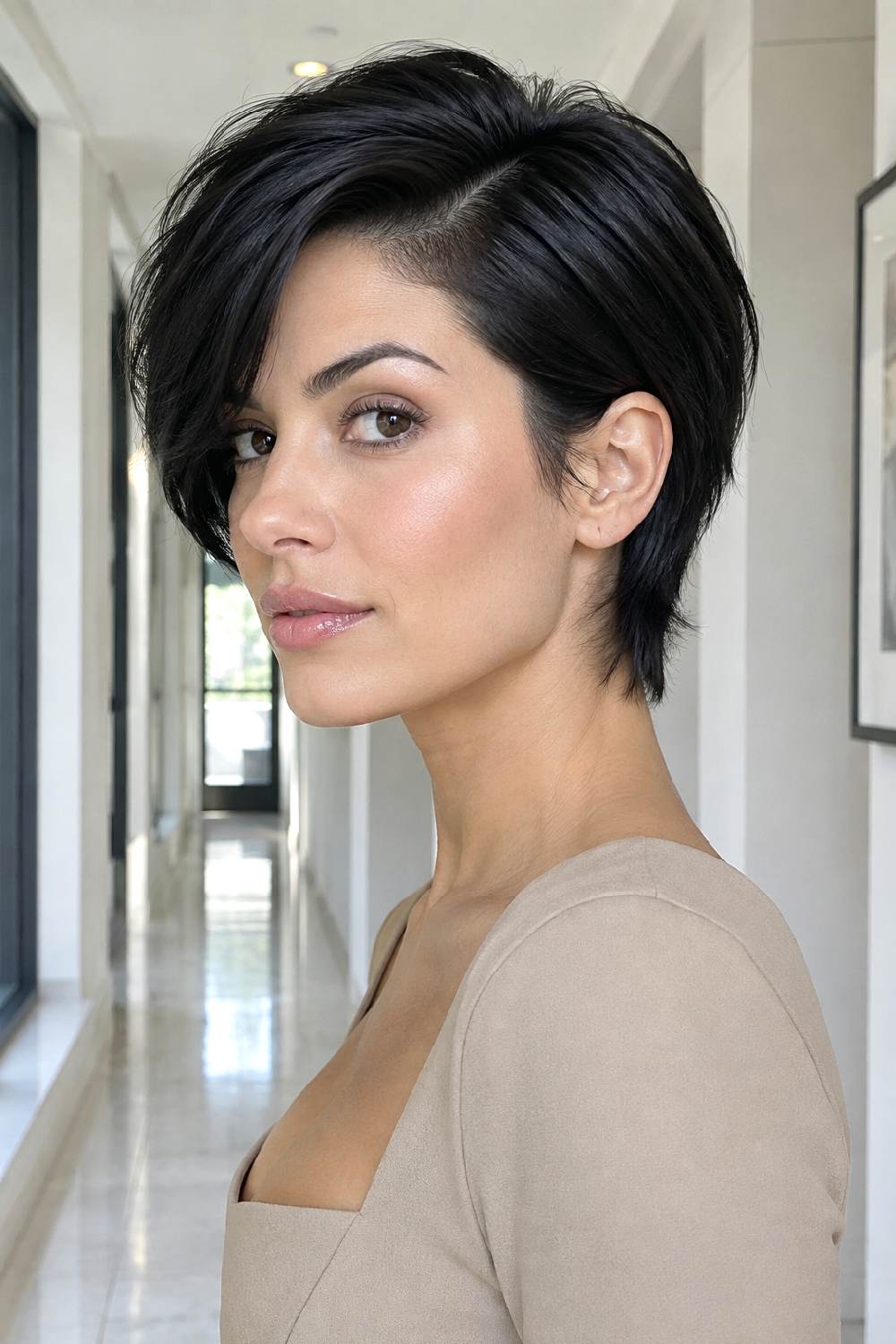
A sleek side part shows how polished a mixie can look without losing its unconventional shape. The front follows a defined part and lies close to the head, while the sides stay neat enough to reveal the ears. Extra length through the back creates a slim, deliberate neckline instead of a fluffy shag. This version can feel sophisticated with tailored clothes or minimal styling because the clean surface puts more emphasis on the silhouette itself. It works especially well when you prefer controlled shine and smoother texture rather than piecey separation. The key is keeping the crown from becoming completely flat; a subtle amount of lift preserves the pixie structure.
Styling Notes
Direct the hair from the part while it dries instead of forcing the shape afterward. A small amount of smoothing cream or serum can control flyaways while leaving the hair flexible.
Best For
This is a useful option for anyone who likes the mixie outline but wants a cleaner finish for work, evenings out, or more polished everyday styling.
5. Choppy Micro Bang Mixie Pixie Mullet Hairstyle
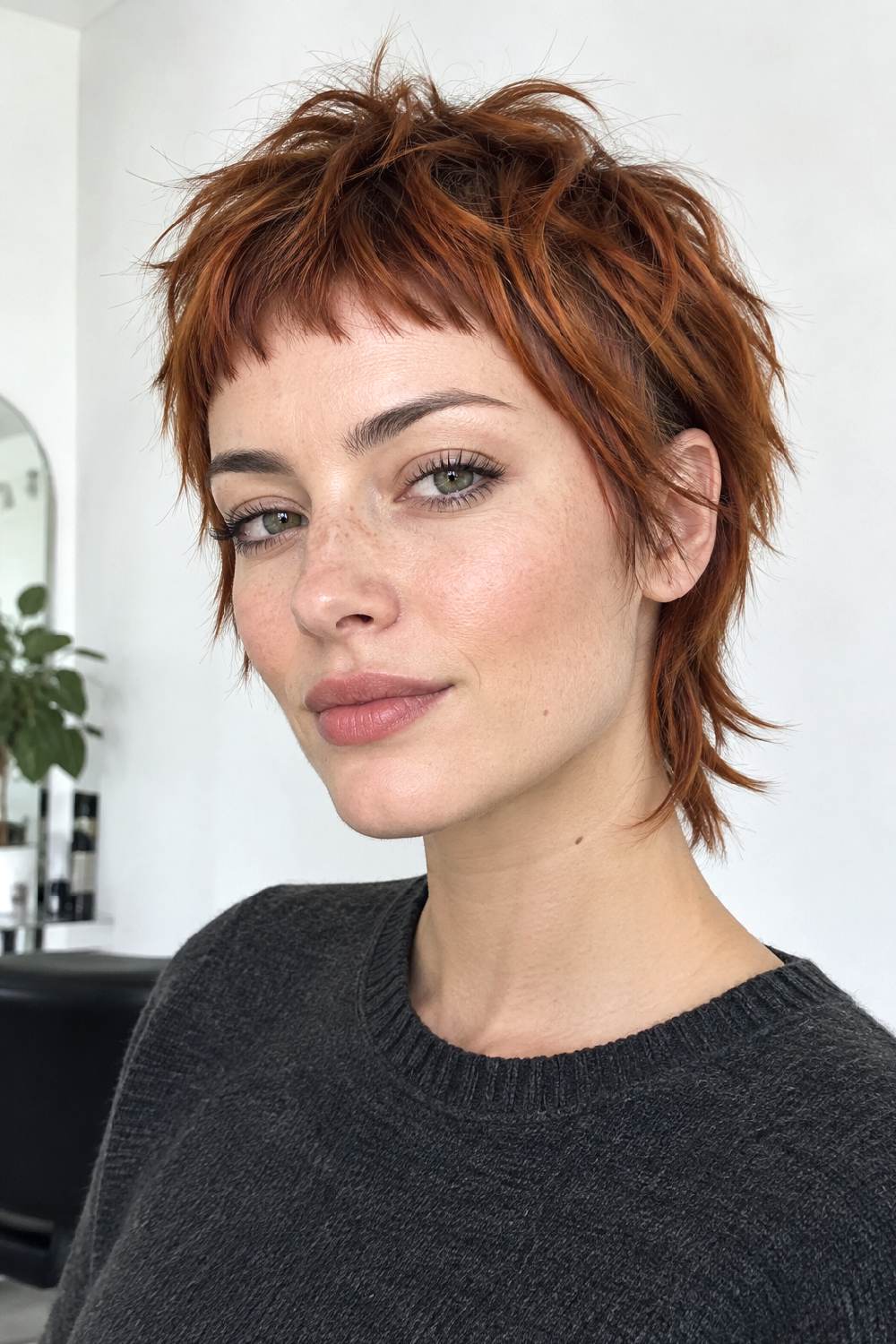
Short micro bangs push the mixie toward a bolder, more graphic look. The fringe sits well above the brows with intentionally uneven, piecey edges that echo the jagged crown layers. Around the ears, the cut remains cropped and broken up rather than smooth, while the back extends into a textured neckline with enough length to register as a mullet. Because both the fringe and nape make strong statements, the middle of the haircut benefits from controlled volume rather than excessive height. This idea suits someone who enjoys visible texture and doesn’t mind regular fringe maintenance. It can look especially striking when the ends are allowed to separate naturally instead of being curled into a uniform shape.
Wear & Maintenance
Micro bangs reveal growth quickly, so they usually need more frequent reshaping than a longer fringe. The rest of the haircut can remain intentionally loose between trims.
Why It Works
Repeating short, irregular edges at the front and longer broken texture at the back creates visual continuity, making the dramatic fringe feel connected to the mullet shape.
6. Wavy Textured Mixie Pixie Mullet Hairstyle
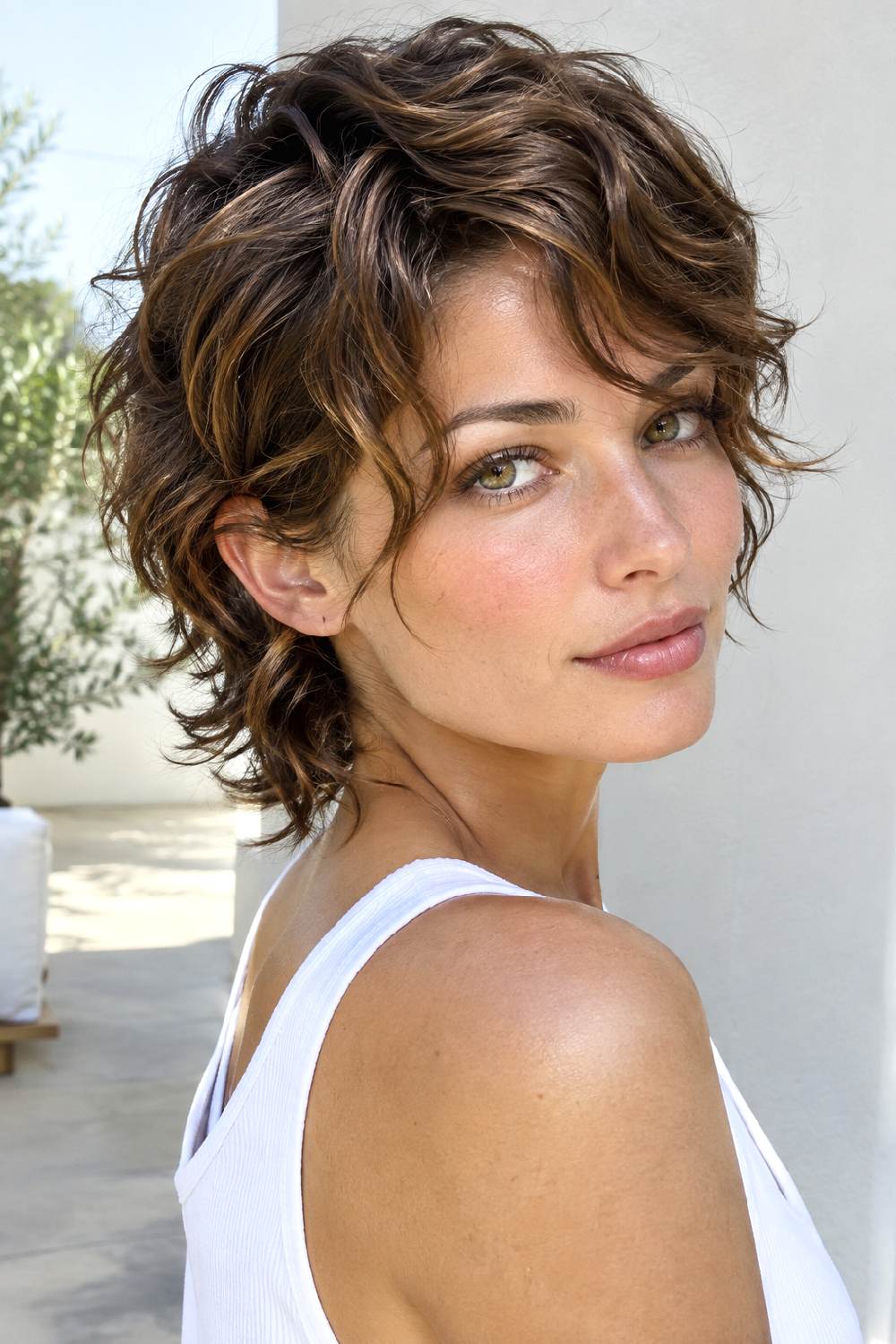
Loose waves soften the directional lines of a mixie and give the haircut a naturally tousled finish. Short crown layers encourage bends to lift away from the scalp, while slightly longer pieces around the ears and nape create movement without becoming bulky. An off-center part keeps the waves casual and lets individual sections fall differently from day to day. This style is particularly useful if your hair already forms inconsistent bends that never sit completely straight. Instead of fighting that texture, the haircut turns it into part of the design. Avoid trying to make every wave identical; a mix of flatter sections, stronger bends, and slightly flipped ends gives the cut its lived-in character.
Styling Notes
Scrunch in a small amount of mousse or lightweight texture product while the hair is damp, then let the natural wave pattern do most of the work.
Best For
This version suits people who prefer relaxed movement and don’t want the haircut to depend on precise straightening or highly structured styling every morning.
7. Tapered Neckline Mixie Pixie Mullet Hairstyle
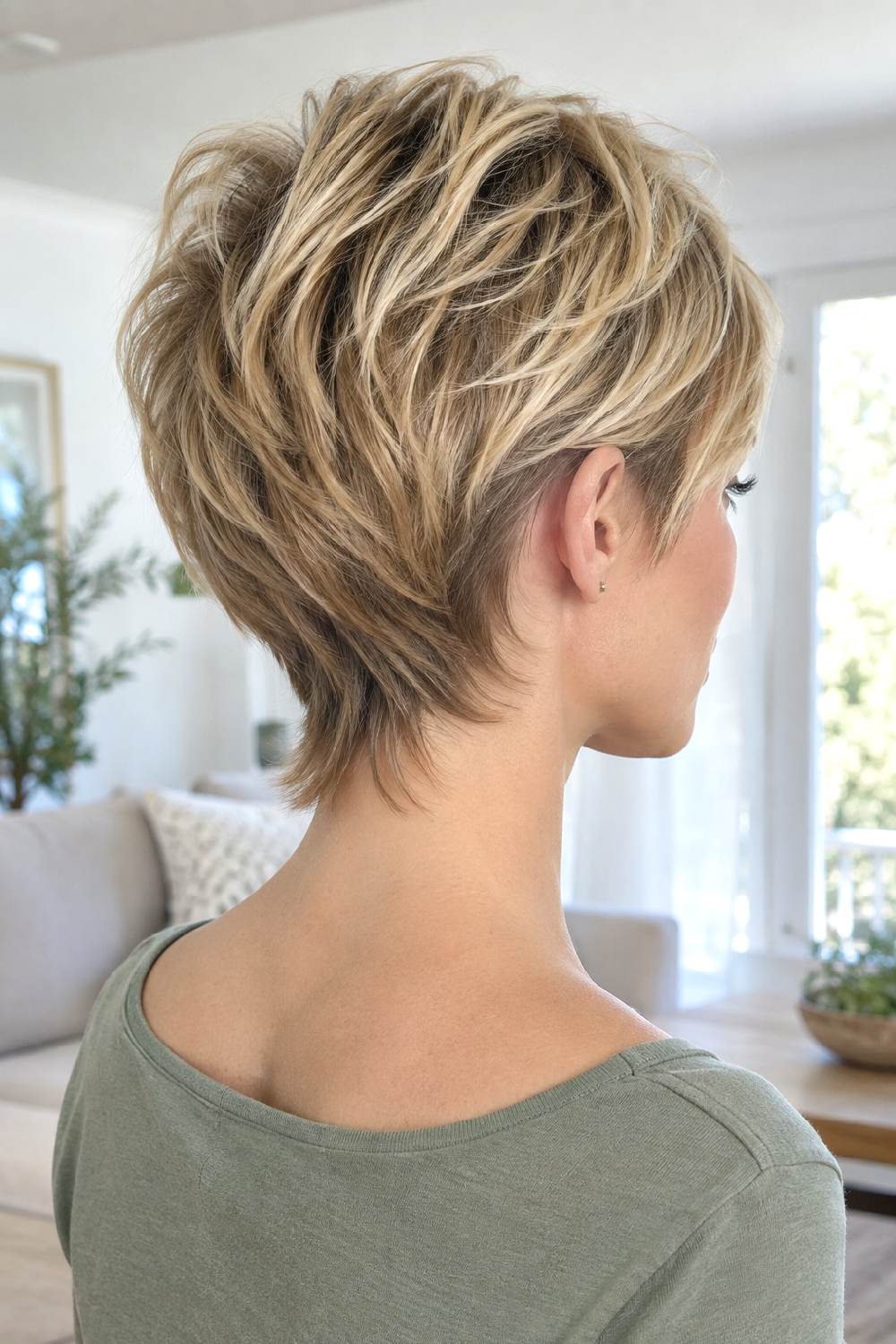
The neckline becomes the main design feature in this refined mixie. Short layers through the crown and sides gradually narrow into a feathered point or slim tail at the center of the nape, creating a clear pixie-to-mullet transition without excessive length. Because the back is shaped so deliberately, this haircut looks especially good from side and three-quarter angles rather than only from the front. The tapered outline can also keep dense hair from feeling too wide around the neck. If you want the mullet influence to be visible but still neat, this is a balanced direction. The nape should move naturally rather than forming one stiff, isolated strip of hair.
Wear & Maintenance
The neckline is the first area to lose its precision as it grows. Regular cleanup around the perimeter can preserve the intentional taper while allowing the top to remain slightly more relaxed.
Pro Tip
Keep a little texture within the tail instead of cutting the outline completely blunt. Soft internal variation helps the back move naturally against the neck.
8. Voluminous Crown Mixie Pixie Mullet Hairstyle
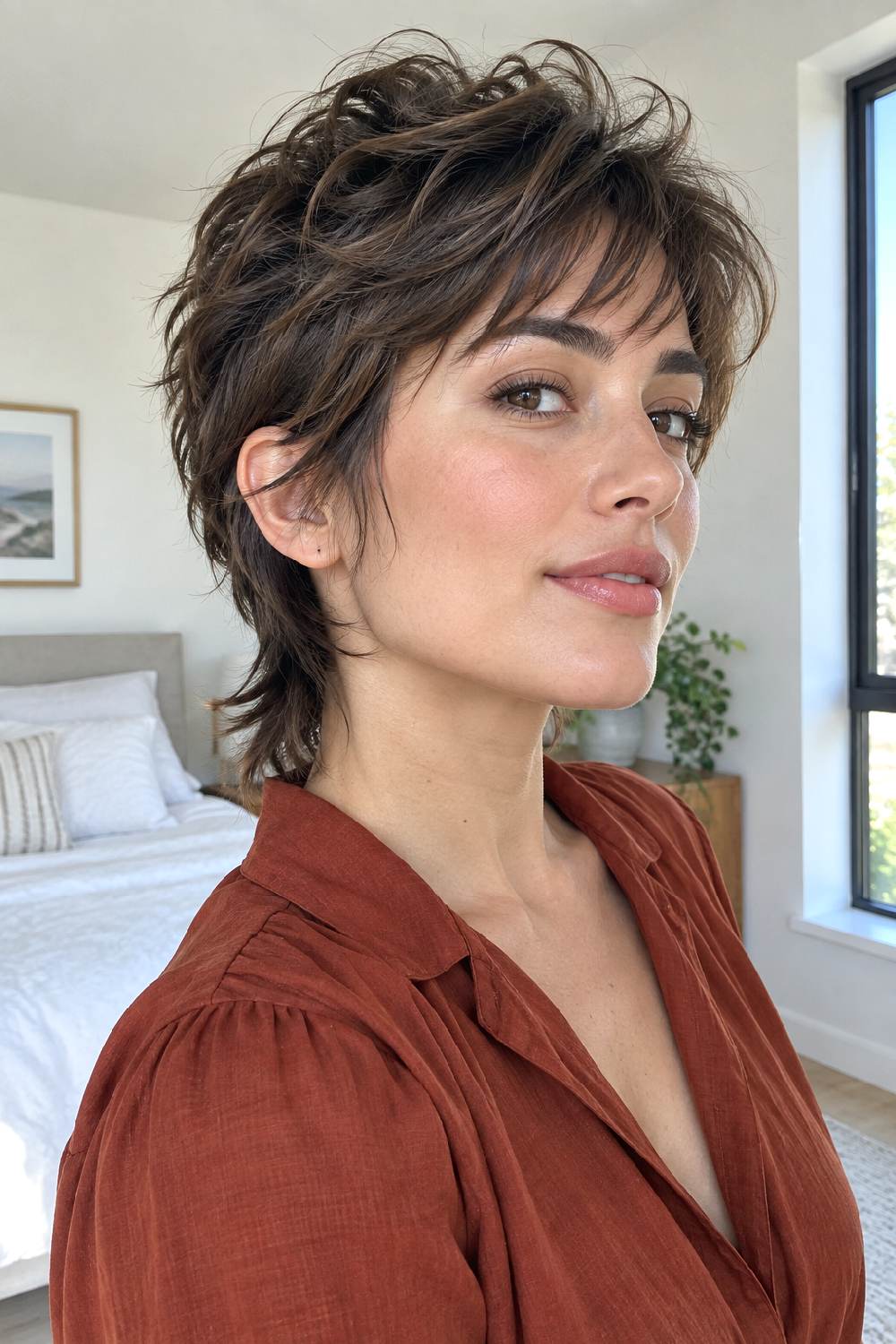
Extra crown lift changes the mixie into a more vertical, energetic shape. Short layers are cut and styled to rise through the top, while the temple area remains relatively close so the volume doesn’t make the whole haircut look wide. At the back, a soft textured tail extends beyond the main crown shape and gives the style its mullet balance. This approach can work well if your hair tends to fall flat on top or if you simply enjoy a more dramatic profile. The volume should still follow the natural direction of the hair rather than standing straight up. Keeping the nape lighter prevents the haircut from feeling equally bulky everywhere.
Why It Works
Concentrating fullness at the crown creates height while the close sides and longer back establish contrast. That distribution makes the silhouette look intentional from several angles.
Styling Notes
Lift the roots as the hair dries and add texture only where needed. Applying heavy product throughout the lengths can pull the crown down and reduce the airy effect.
9. Piecey Sideburn Mixie Pixie Mullet Hairstyle
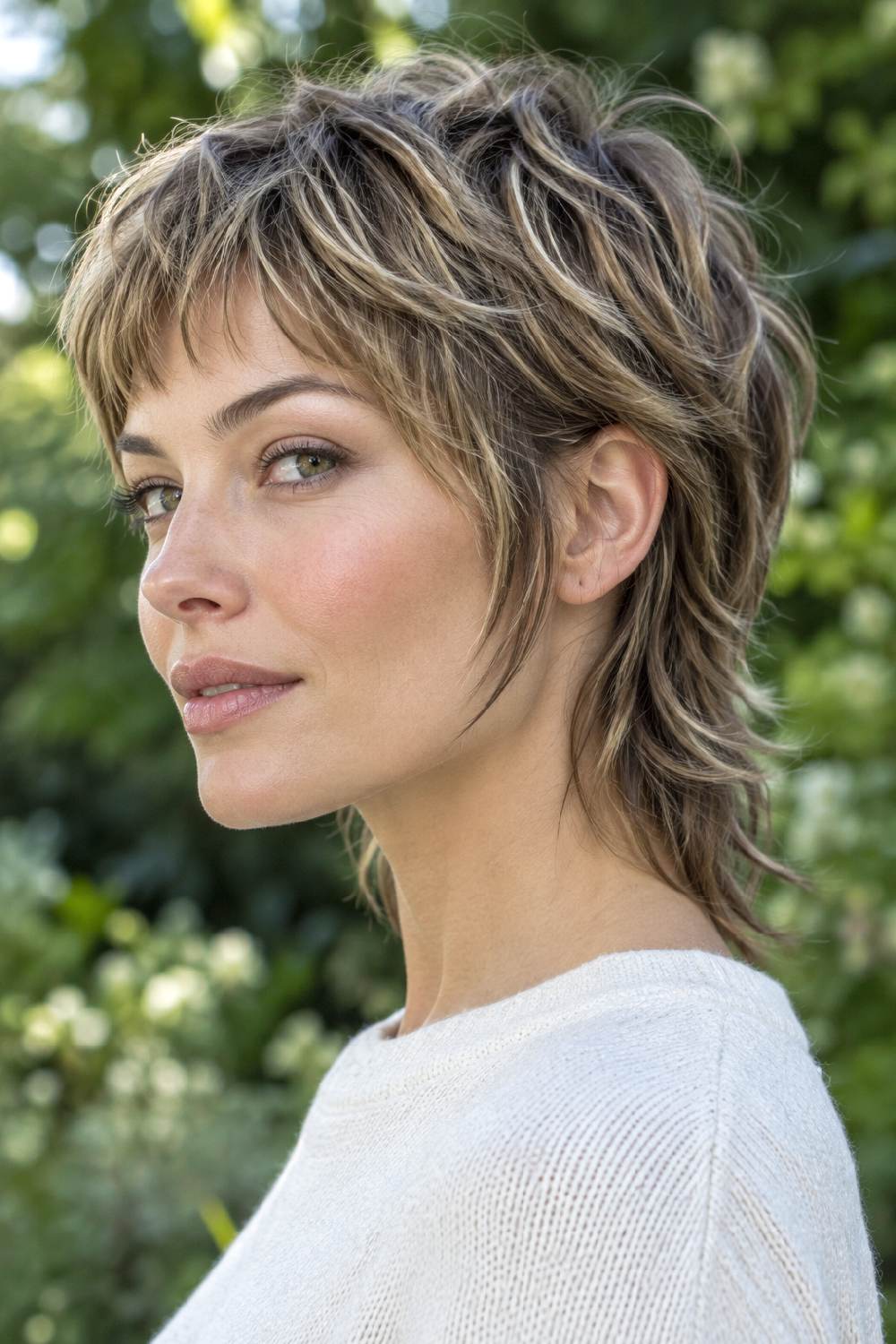
Defined sideburn pieces add a small but noticeable detail to the front profile of a mixie. The crown stays shaggy and cropped, but narrow sections are left slightly longer in front of the ears so they taper toward the cheek area. Those pieces connect visually with the elongated nape, making the haircut feel balanced from front to back. This idea can be subtle or bold depending on how pointed the side sections are. Softer, feathery sideburns create a delicate effect, while sharper pieces give the cut more attitude. Because the feature sits close to the face, it is worth considering how the hair naturally bends around your ears before choosing the final length.
Styling Notes
Pinch a trace of styling cream through the ends rather than coating the entire side section. The goal is visible separation with natural movement, not a rigid spike.
Why It Works
The longer side details prevent the front from looking disconnected from the mullet neckline, creating a more complete short-to-long silhouette around the head.
10. Coily Defined Mixie Pixie Mullet Hairstyle
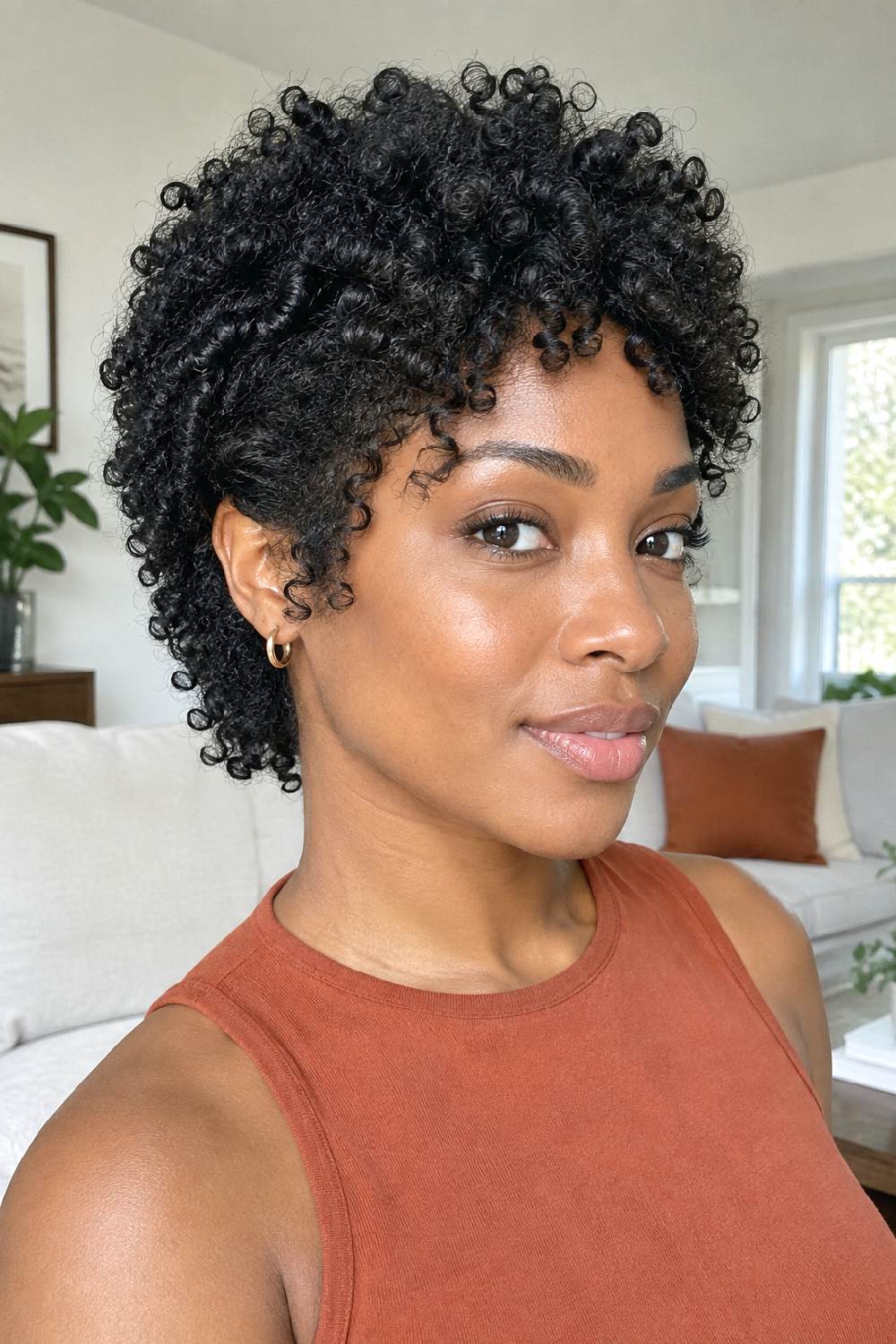
Coily texture gives the mixie a sculptural shape while keeping plenty of natural movement. The crown can remain full and compact, with shorter coils around the sides and slightly more length allowed through the nape. Instead of forcing the texture into a flat pixie outline, this version lets shrinkage, coil clustering, and soft frizz contribute to the silhouette. The longer back may be subtle when dry, but its extra length becomes clear through the overall shape and profile. This is a useful option if you want a short cut that still celebrates visible texture. Hydration and definition matter, but the style should not depend on making every coil perfectly separated or identical.
Hair Type & Length
Tighter curls and coils can shrink substantially, so the shape should be planned around how the hair naturally sits when dry. Leaving strategic length at the nape helps preserve the mixie contrast.
Wear & Maintenance
Refresh only the sections that lose definition rather than reworking the entire haircut. Gentle nighttime protection can also reduce unnecessary flattening and tangling.
11. Razor Cut Airy Mixie Pixie Mullet Hairstyle
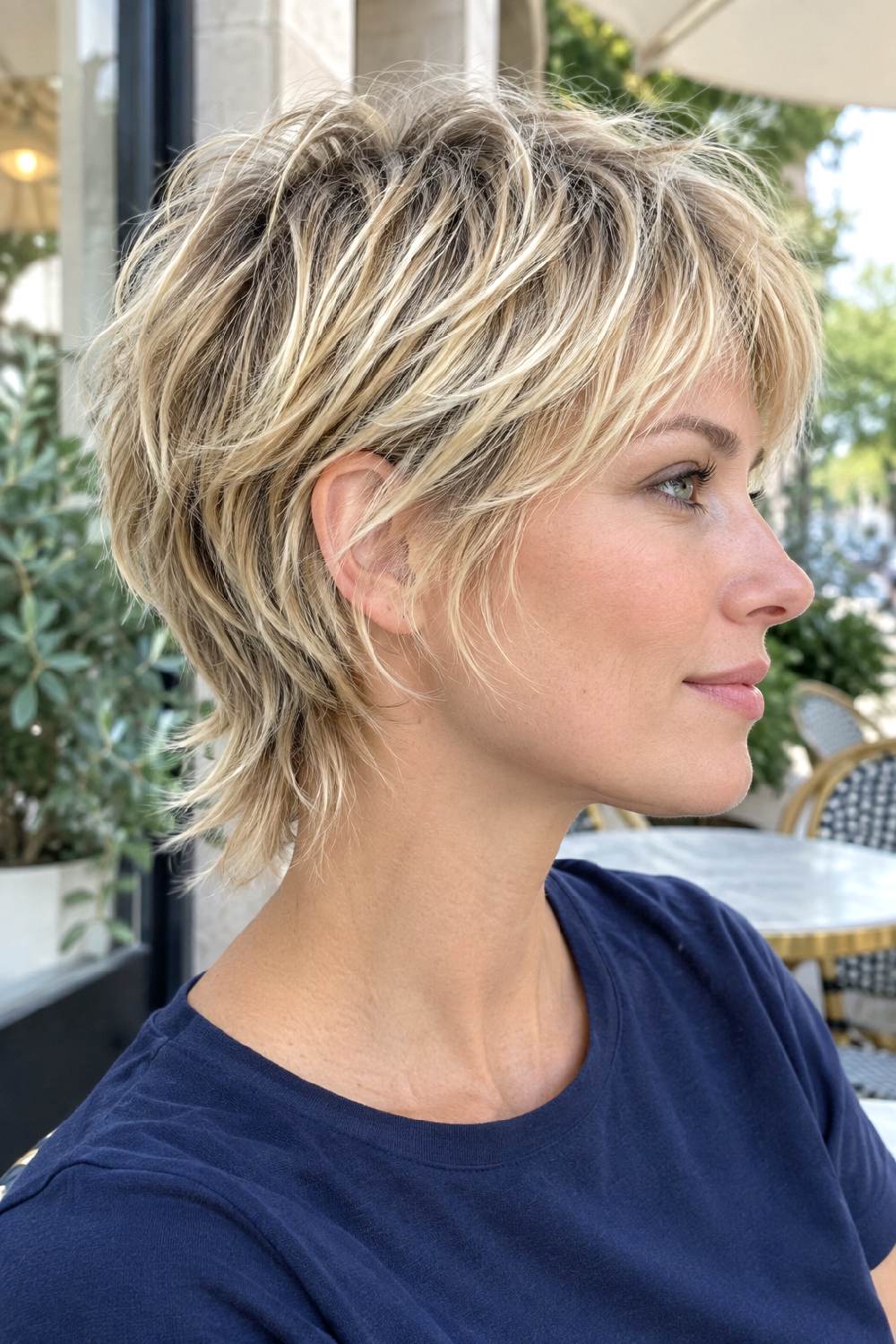
A razor-cut approach creates a lighter, more translucent mixie with ends that almost seem to float around the outline. Fine pieces separate through the crown and sides, while wispy lengths at the nape keep the mullet detail soft rather than chunky. This look is less about strong geometric lines and more about movement, texture, and narrow feathered edges. It can be especially flattering when you want short hair to feel light and flexible instead of compact. Razor work isn’t ideal for every texture, so the technique should suit the hair’s condition and natural pattern. On appropriate hair, it can remove stiffness and help the layers blend with a deliberately undone finish.
Best For
Straight or gently wavy hair often displays the feathered separation clearly. Very fragile or highly frizz-prone hair may benefit from a different cutting technique that preserves stronger ends.
Pro Tip
Keep styling products lightweight. Fine razor-cut ends can clump together quickly if too much wax, cream, or oil is applied at once.
12. Curved Fringe Mixie Pixie Mullet Hairstyle
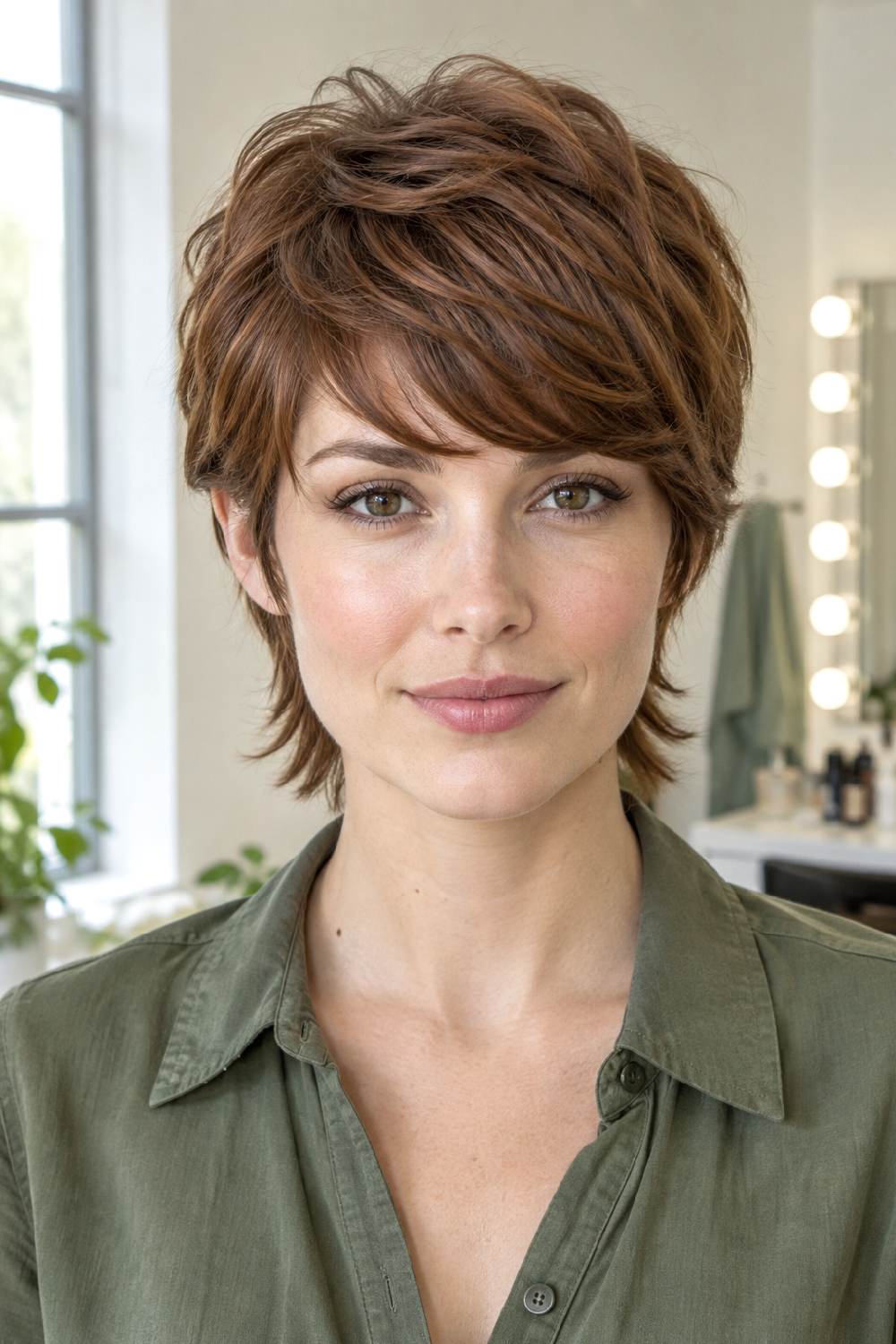
A curved fringe brings softness to the front of the haircut while the extended neckline keeps the overall shape unmistakably mixie. Rather than dropping straight across the forehead, the fringe bends gently to follow the face and merges into the temple layers. Behind it, the crown stays textured but controlled, creating enough lift to prevent the haircut from looking flat. The nape can remain narrow and feathered for a clean finish. This direction works well if you like bangs but don’t want the severe line of a blunt fringe. The curve can be subtle, and it should work with the natural fall of the hair instead of requiring constant reshaping throughout the day.
Styling Notes
Dry the fringe in the direction you want it to settle before adding product. A flexible bend usually looks more natural than pressing it firmly against the forehead.
Why It Works
The rounded front contrasts with the longer, narrower back, giving the haircut both softness and structure without relying on extreme length differences.
13. Tousled Rocker Mixie Pixie Mullet Hairstyle
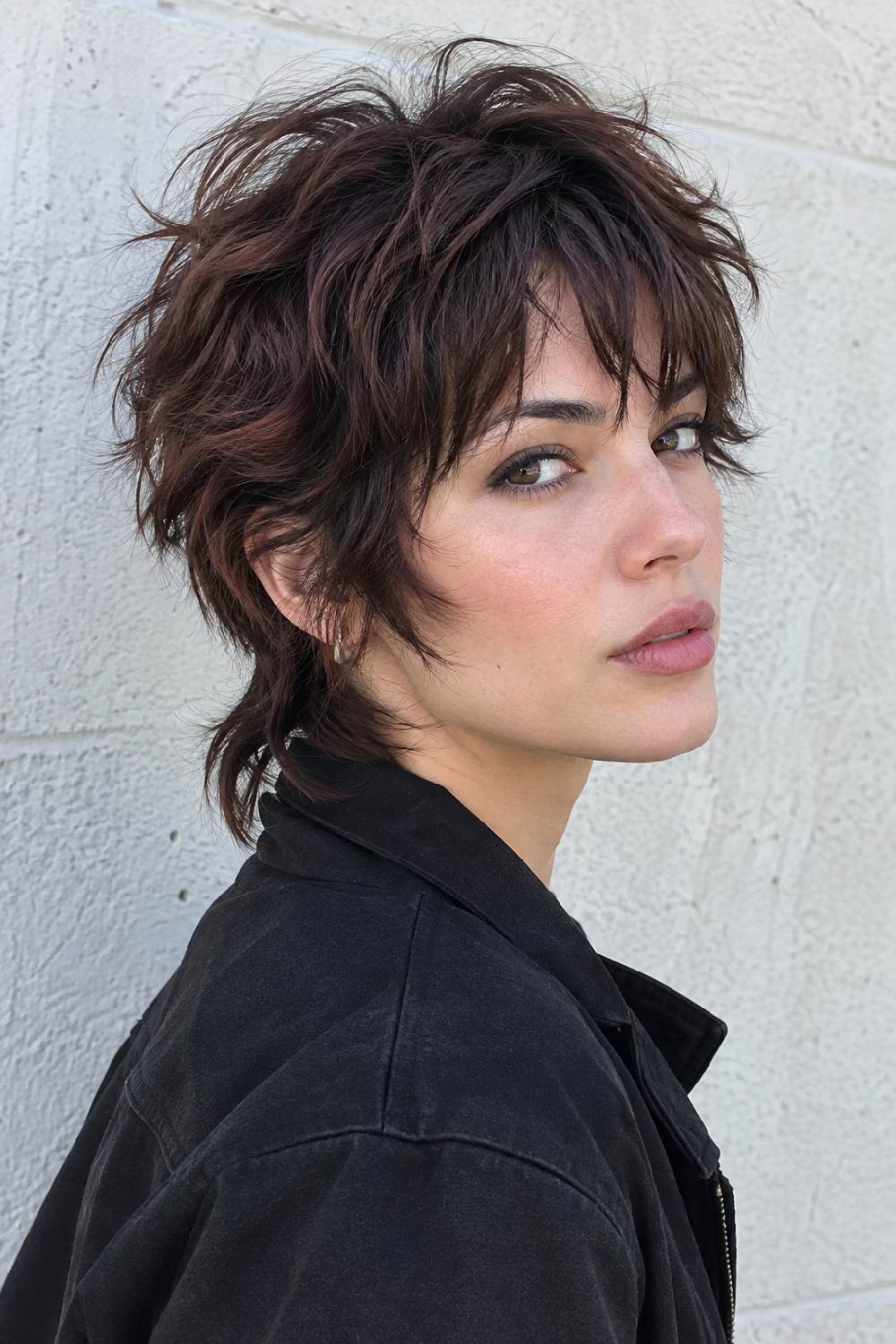
This version leans into the rebellious side of the mixie with rough texture, lifted crown pieces, irregular fringe, and a more noticeable nape. The finish should feel messy by design rather than unkempt: sections are separated, the crown has visible direction, and the back follows a deliberate shape instead of simply being left long. It suits someone who enjoys texture that changes slightly every time it’s styled and doesn’t need every strand to sit perfectly. The haircut can look dramatic even without extreme length because the contrast between cropped sides and active top layers creates plenty of attitude. Flexible texture usually works better than hard spikes for keeping the result wearable.
Styling Notes
Work a small amount of matte or flexible styling product through dry hair, focusing on the crown and selected ends instead of covering every strand.
Best For
Choose this direction if you like undone styling, visible separation, and a haircut that can look good with a little natural imperfection rather than polished symmetry.
14. Soft Side Swept Mixie Pixie Mullet Hairstyle
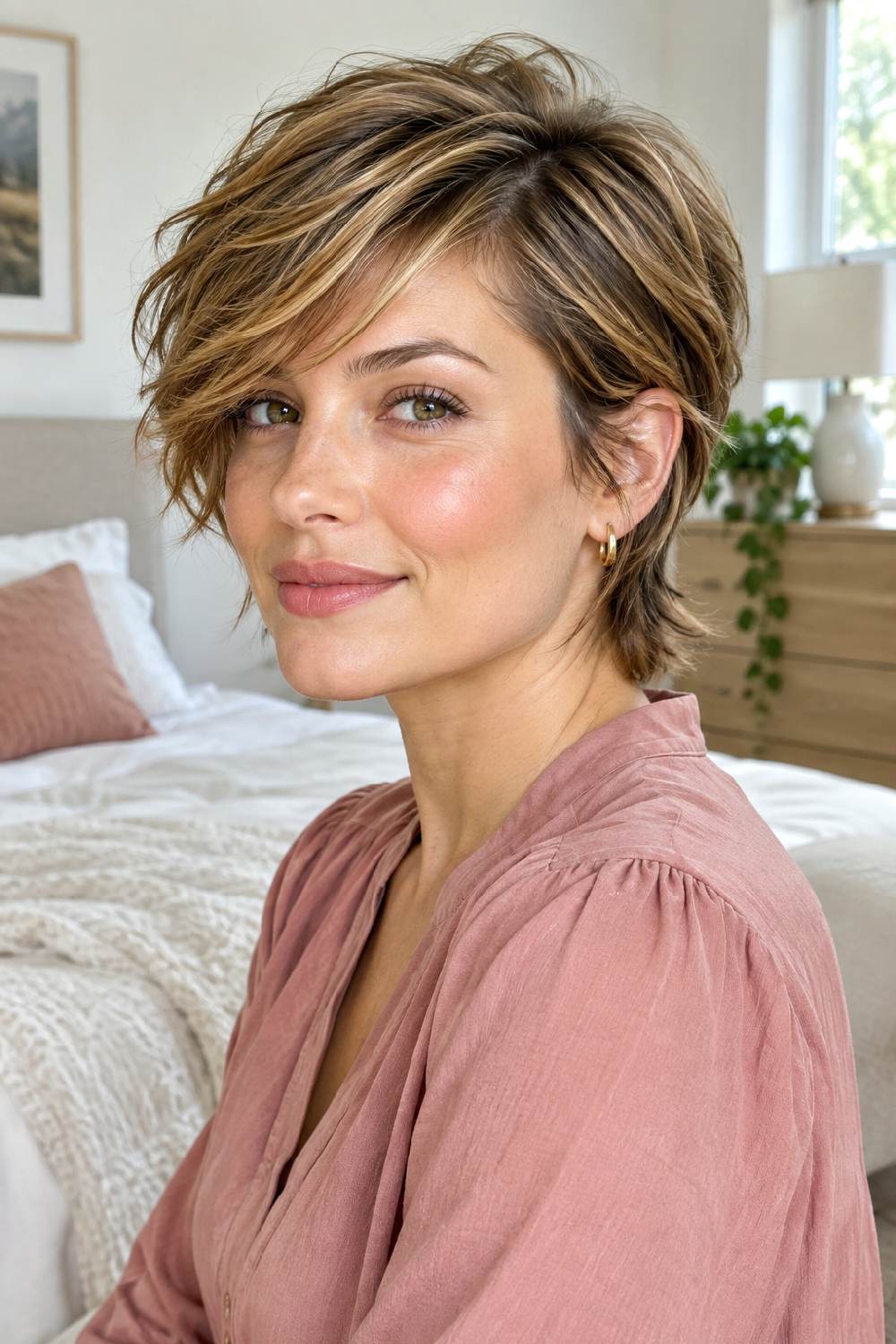
Longer front layers give this mixie a graceful side-swept finish that can feel softer than a short, exposed fringe. The front moves diagonally across the forehead and blends into cropped temple sections, while the back remains feathered and slightly extended at the neckline. Because the eye is drawn toward the sweeping front, the mullet portion can stay relatively understated without disappearing. This is an adaptable option if you enjoy changing your part or tucking one side behind the ear. It can also make the transition from a longer haircut feel less abrupt because a little extra length remains near the face. The sweep should stay flexible rather than heavily sprayed into position.
Hair Type & Length
Straight, wavy, and softly curly textures can all work, but the front needs enough length to travel across the forehead naturally without springing straight upward.
Pro Tip
Ask for the swept section to blend into the crown instead of being isolated as one long piece. That keeps the movement cohesive when you change your part.
15. Rounded Crown Mixie Pixie Mullet Hairstyle
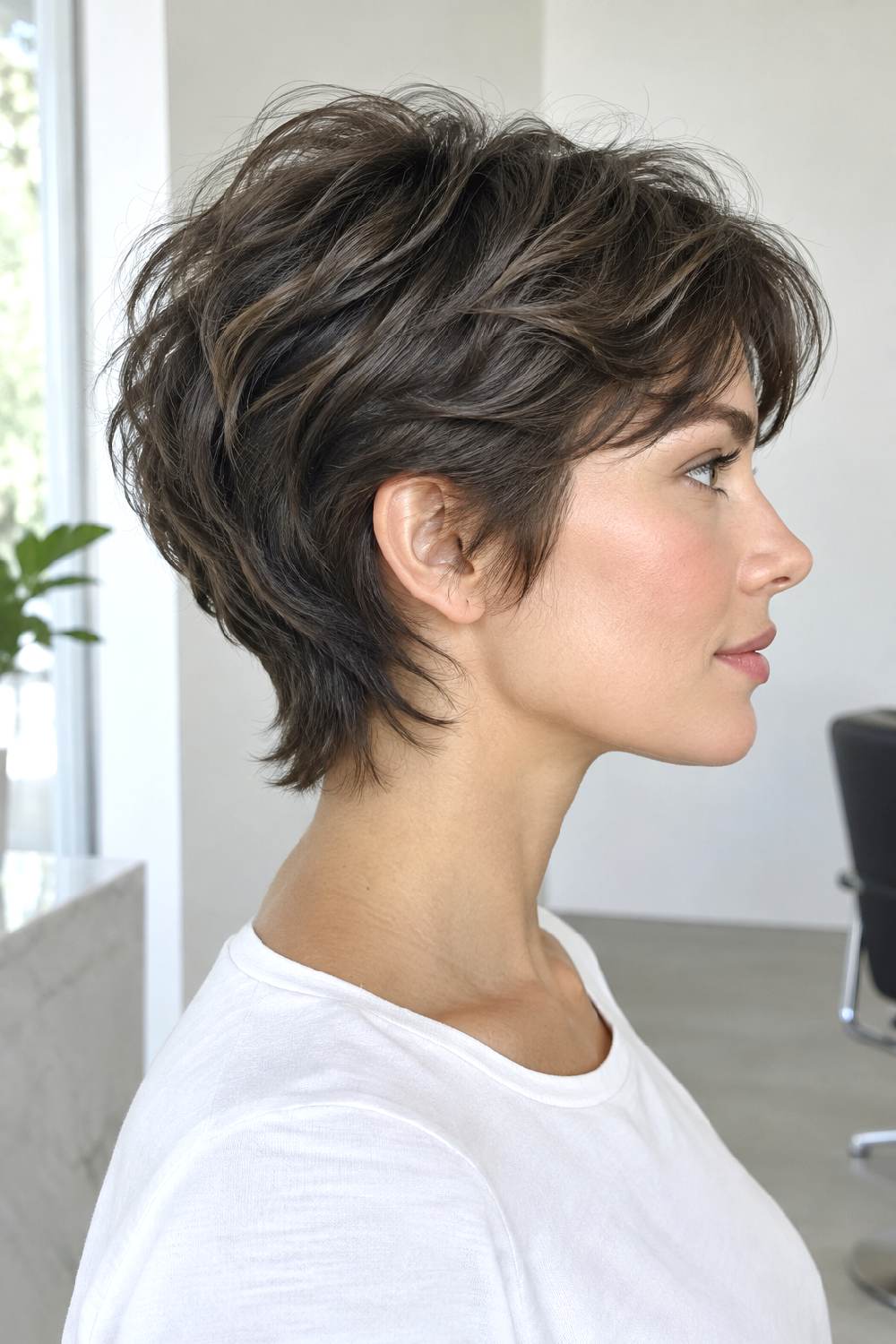
A rounded crown gives the mixie a balanced, softly sculpted shape that feels less jagged than heavily shattered versions. Short stacked layers build gentle fullness over the top and back of the head, while the sides taper closer around the ears. A subtle longer section at the neckline breaks the round silhouette just enough to introduce the mullet element. This is a useful choice if you like polished short hair but still want a little edge. The crown should remain soft and movable rather than forming a rigid cap. Slight natural wave can make the stacked layers look especially dimensional, while straight hair can emphasize the clean progression from rounded top to tapered nape.
Why It Works
The rounded upper shape creates a clear focal point, and the slightly longer neckline interrupts it in a controlled way. That contrast keeps the haircut modern without making it extreme.
Wear & Maintenance
As the layers grow, the crown may become heavier before the neckline changes much. Light reshaping through the top can restore the original balance without removing all the back length.
16. Grown Out Mixie Pixie Mullet Hairstyle
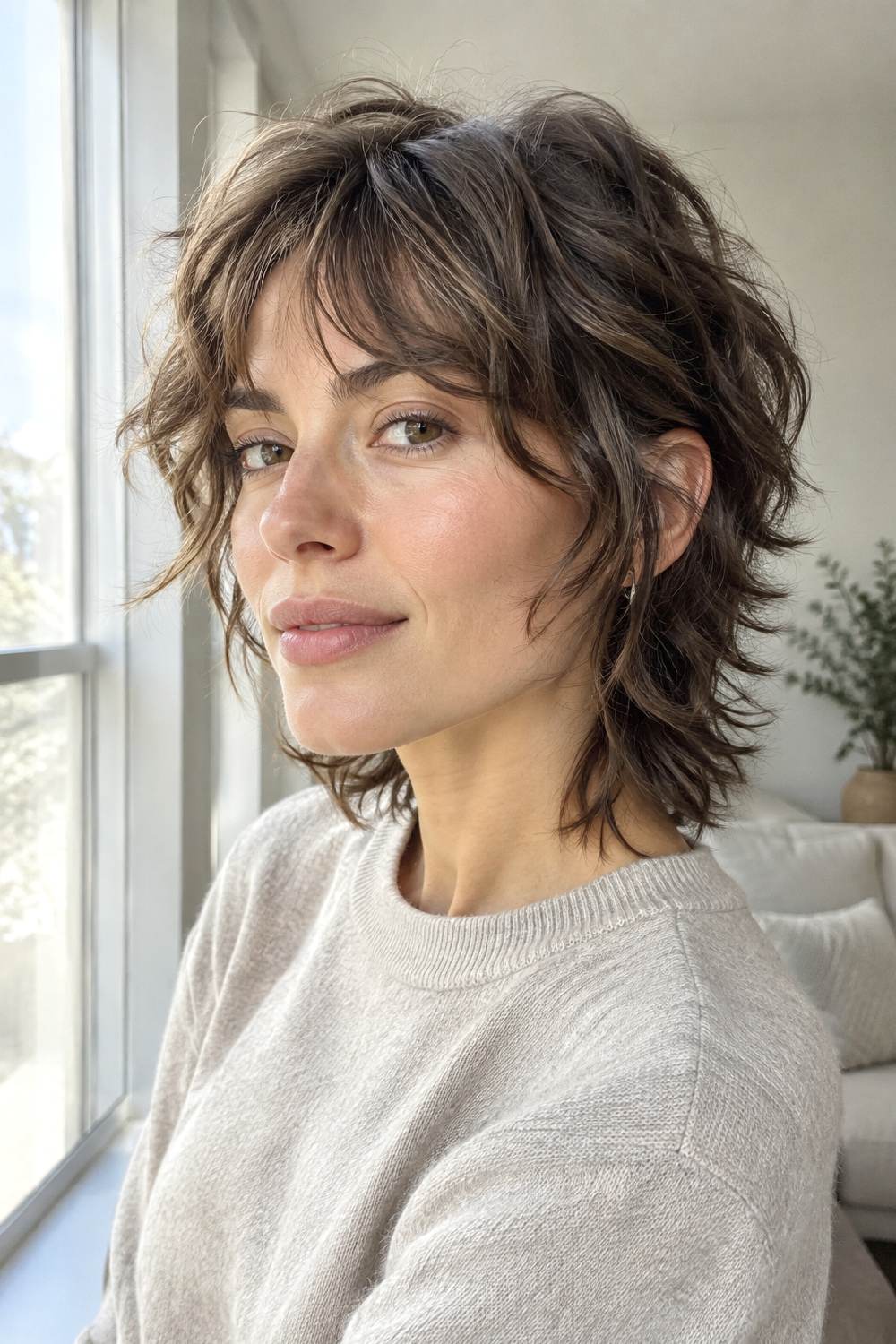
A grown-out mixie embraces the stage between a cropped cut and a longer shag instead of treating it as an awkward transition. Layers around the crown and ears become softer and looser, while the nape naturally gains more visible length. Face-framing sections can be allowed to bend, wave, or tuck rather than being continually shortened back into a classic pixie. The key is preserving enough shape that the haircut still looks deliberate as it grows. Small perimeter adjustments and selective internal layering can prevent bulk from collecting behind the ears or at the back of the head. This version is especially practical if you’re enjoying the mixie but aren’t interested in maintaining a very precise short silhouette.
Wear & Maintenance
Focus trims on areas that become bulky or disconnected instead of automatically shortening everything. That approach lets the overall haircut gain length while retaining a recognizable shape.
Best For
This style is ideal if you want lower-maintenance growth, more movement around the ears, or a natural route from a pixie-inspired cut toward a short shag.
How to Choose the Right Look
Start with your natural texture and the amount of styling you realistically want to do. Straight or softly wavy hair makes feathered, sleek, razor-cut, and side-swept versions easy to read, while curls and coils can create more volume and a softer short-to-long transition. If your hair is dense, tapered sides or internal weight removal can keep the mixie from becoming too wide; finer hair may benefit from crown layers that create lift without removing too much density.
Next, decide how strongly you want the mullet element to show. A tapered or softly feathered nape keeps the effect subtle, while a rocker-inspired or grown-out version makes the back more noticeable. Fringe changes the mood just as much: wispy bangs feel airy, micro bangs look sharper, and longer side-swept pieces offer more flexibility.
Maintenance matters too. Micro bangs, precise tapered necklines, and polished shapes reveal growth sooner, while wavy, shaggy, and grown-out mixies can tolerate a softer outline. For all-day comfort, choose a shape that works with your natural part, cowlicks, curl pattern, and preferred level of volume instead of relying on heavy product to force the hair into position.
Final Thoughts
The most wearable mixie pixie mullet is usually the one that works with your existing texture rather than hiding it. Start with the silhouette you like most, then adjust the fringe, crown height, side pieces, and nape length to make the cut feel realistic for your routine. A subtle tapered mixie can introduce the shape gently, while choppier, curlier, or longer versions let the mullet influence take a stronger role.
FAQs
What is a mixie pixie mullet haircut?
A mixie combines the cropped structure of a pixie with the longer back and layered movement associated with a mullet. The sides and crown are generally shorter, while the nape keeps enough length to create visible contrast.
Can a mixie pixie mullet work on curly or coily hair?
Yes. Curls and coils can create a beautifully dimensional mixie, but shrinkage should be considered when deciding fringe and nape length. Keeping the natural texture visible usually makes the shape easier to maintain.
Is a mixie suitable for fine hair?
It can be. Strategic crown layers can add movement and lift, but removing too much hair may reduce density. Softer feathering and carefully placed texture are often more useful than aggressive thinning.
How often does a mixie need reshaping?
That depends on how precise you want the silhouette to remain. Short micro bangs and sharply tapered necklines show growth sooner, while shaggy or grown-out mixies can remain intentional with a looser shape.
Do I need heat tools to style a mixie pixie mullet?
Not necessarily. Many versions can be air-dried or styled with natural texture, lightweight cream, mousse, or texture product. If you do use hot tools, apply heat protectant and focus only on sections that need extra direction.
Save the mixie pixie mullet ideas that match your texture and styling routine, or share the collection with someone considering a fresh short haircut.