17 Secure Winter Walk Hairstyles With High-Neck Puffers
Wind, high collars, and bulky winter layers are easier to handle when your hairstyle stays securely above the puffer neckline and comfortably in place.
High-neck puffers create a specific styling challenge because the raised collar can push loose hair upward, trap longer lengths, and repeatedly disturb styles positioned at the nape. Winter walks add movement and wind, so a look that feels fine indoors may shift noticeably once you are outside.
These hairstyles focus on higher placement, compact braiding, secure twists, and controlled ponytails that leave more room around the collar. Compare your hair length, density, natural texture, hood placement, and preferred tension before choosing. The best winter-walk style should feel stable without being painfully tight or unnecessarily complicated.
Quick List
- High Ponytail Hairstyle
- Double Dutch Braids Hairstyle
- High Braided Ponytail Hairstyle
- Crown Braid Hairstyle
- Scarf Clear Top Knot Hairstyle
- French Braid Ponytail Hairstyle
- High Half Up Ponytail Hairstyle
- Double Rope Braids Hairstyle
- Braided High Bun Hairstyle
- High Bubble Ponytail Hairstyle
- Side Dutch Braid Hairstyle
- Twisted Crown Half Up Hairstyle
- Pinned High Twist Hairstyle
- Double High Braids Hairstyle
- Wrapped High Ponytail Hairstyle
- Flat Braided Crown Hairstyle
- Mid High Rope Ponytail Hairstyle
1. High Ponytail Hairstyle
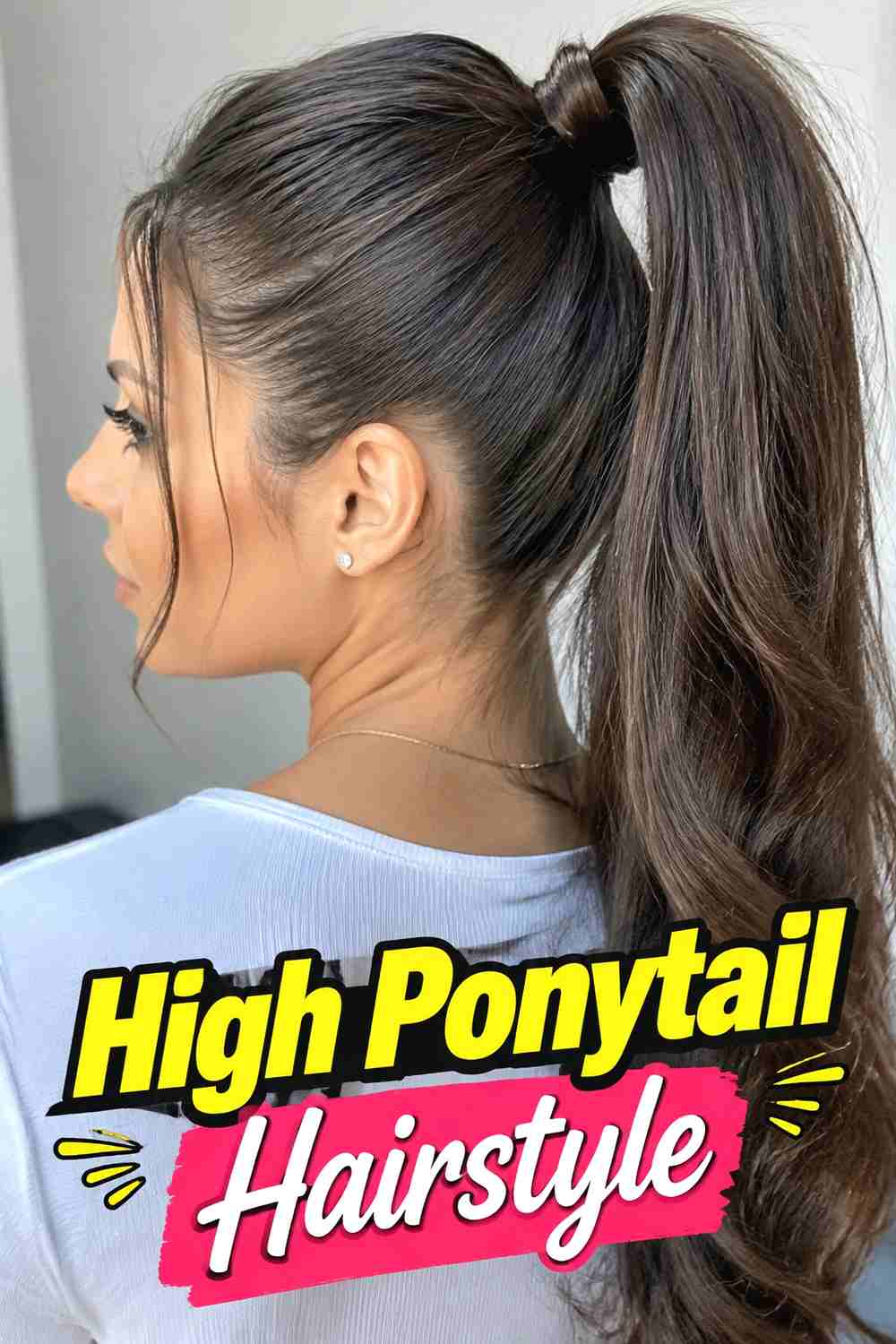
A high ponytail is one of the cleanest ways to create space between long hair and a raised puffer collar. Gather the hair above the occipital area rather than at the nape, smooth the surface with your hands or a soft brush, and secure it with an elastic that suits your density. The tail then falls over the collar instead of becoming trapped inside it. Straight, wavy, curly, and coily lengths can all work with this placement, although the finished volume will naturally vary. For a winter walk, aim for secure hold without pulling the hairline excessively tight. A small amount of smoothing product can control surface flyaways while allowing the ponytail itself to keep natural movement.
Wear & Maintenance
Check where your hood rests before choosing the final height. A ponytail placed slightly above or below the hood’s pressure point is usually more comfortable.
Pro Tip
Carry a spare elastic on longer walks. Replacing a stretched tie is often easier than continually tightening a loose ponytail.
2. Double Dutch Braids Hairstyle
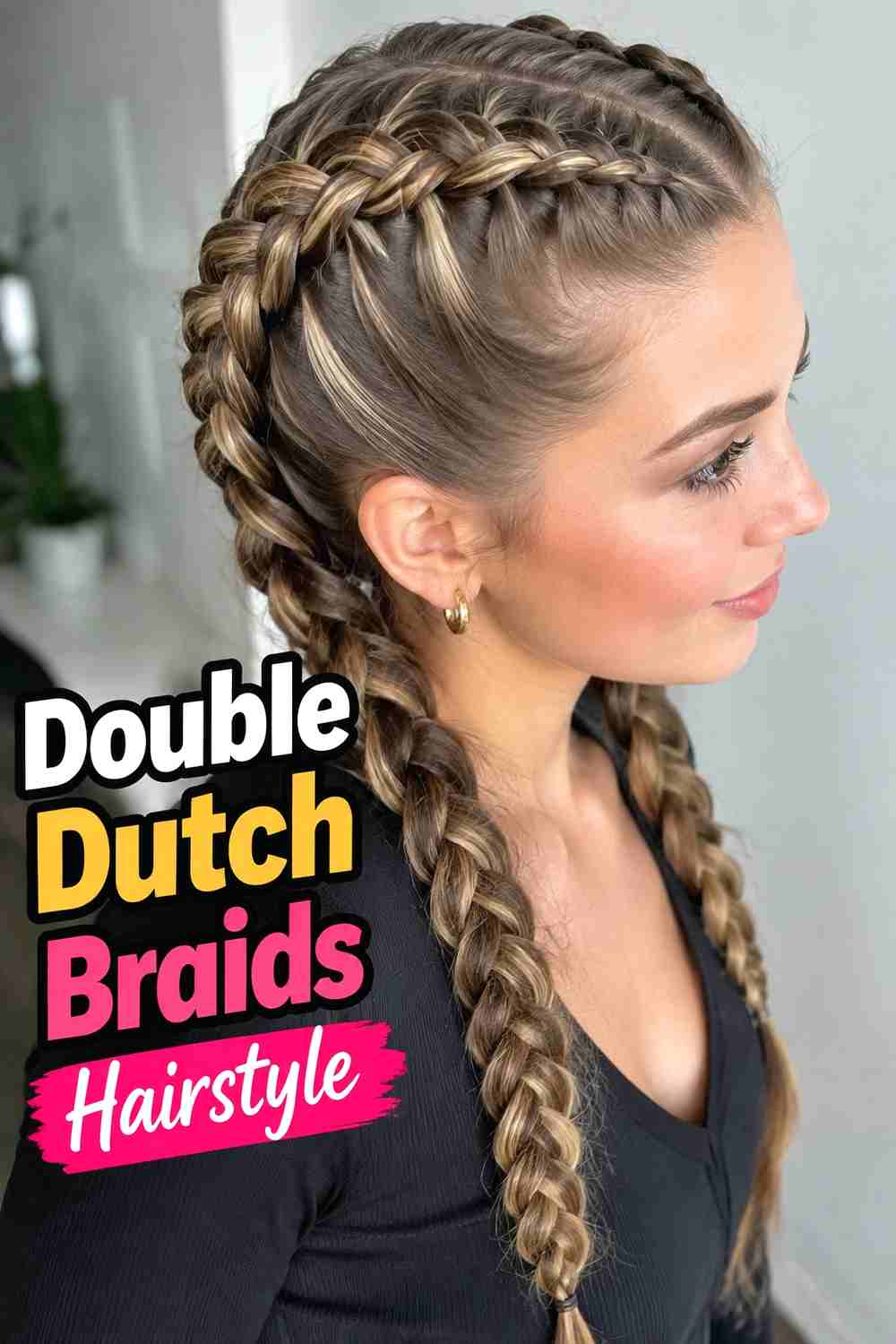
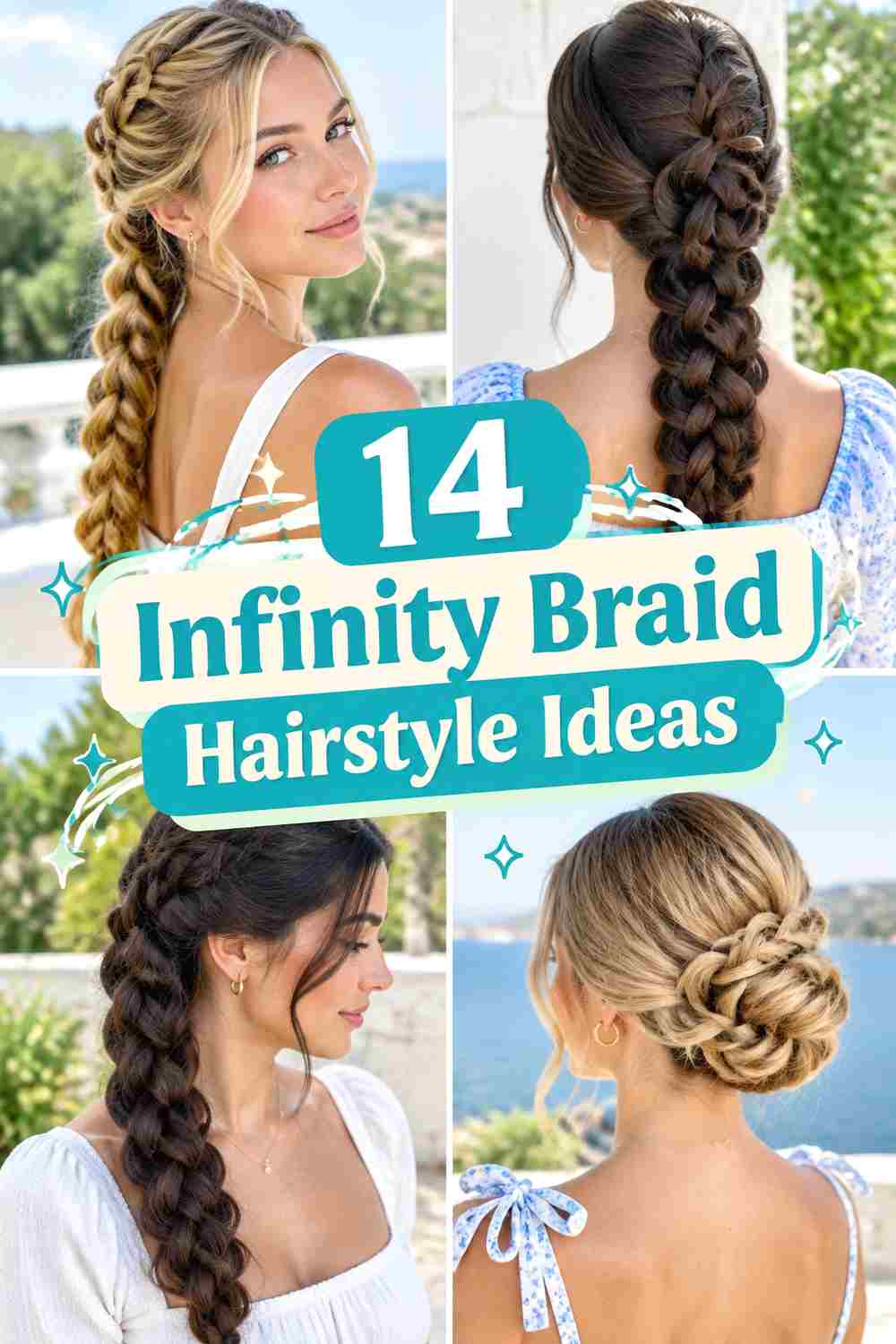
Double Dutch braids secure hair from the front hairline through the lengths, which makes them particularly dependable when winter wind and a high puffer collar are both involved. Create a center part, braid each side by crossing sections underneath, and keep the structure close to the scalp through the crown. Once the braids pass the ears, angle the tails slightly forward so they can rest over the shoulders instead of directly against the collar. The style works best on medium to long hair and can be adapted to many textures. Moderate, even tension creates a tidy finish without making the roots uncomfortable during a long walk.
Why It Works
The hair is divided and contained before it reaches the collar, so there are fewer loose sections to become trapped or pushed upward.
Hair Type & Length
Shoulder-length and longer hair works most easily. Layered cuts may develop soft flyaways, which can be left natural or controlled with light styling cream.
3. High Braided Ponytail Hairstyle
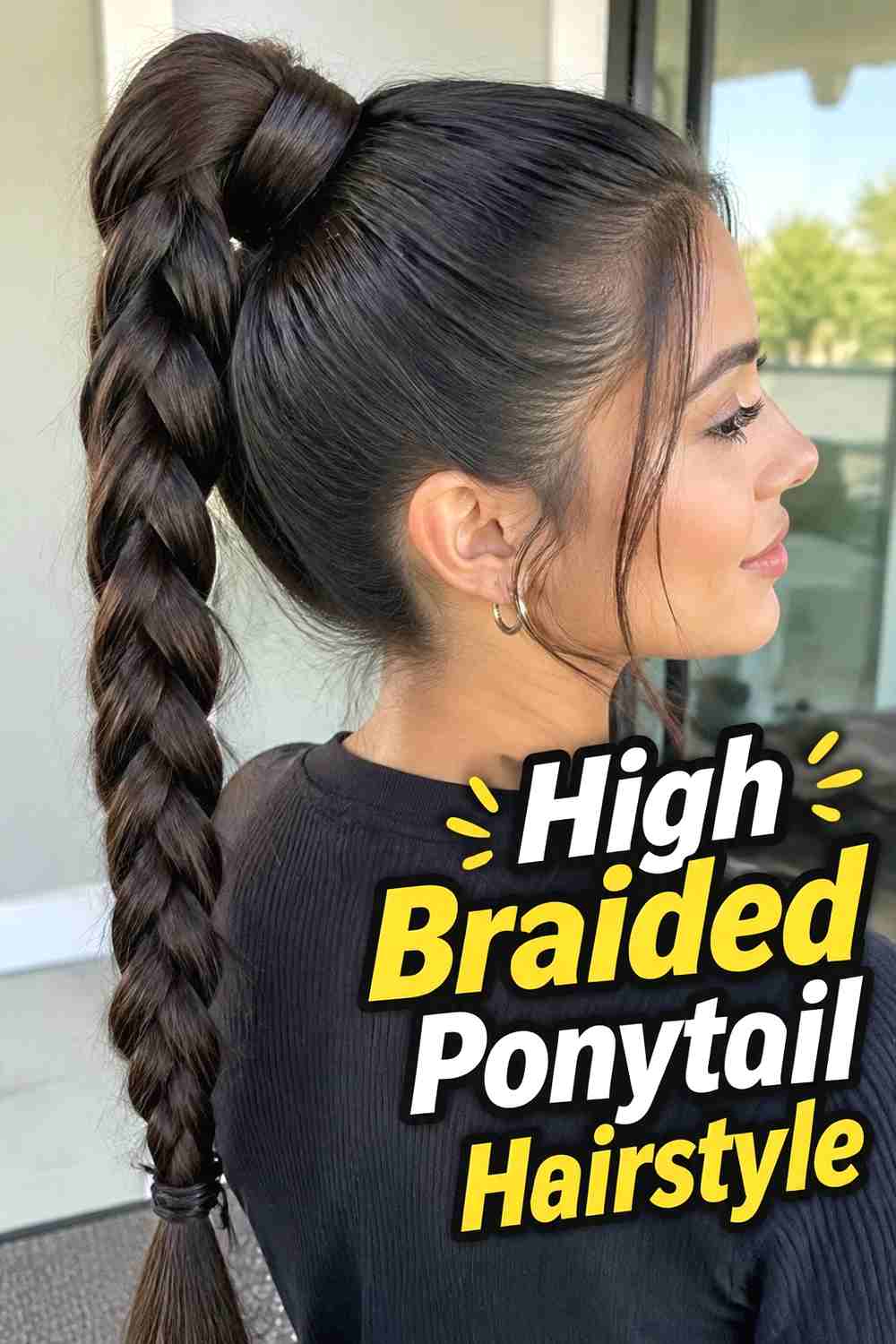
A high braided ponytail combines the collar-clearing placement of a high pony with the control of a full braid through the lengths. Secure the hair high on the back of the head, divide the ponytail into three even sections, and braid down toward the ends. The braid prevents long hair from spreading across the shoulders while you walk, yet it still has enough movement to feel relaxed. This is especially practical for dense or very long hair that tends to become tangled in coats. Keep the braid firm but not rigid, and use a smaller elastic at the end. For a polished finish, wrap one narrow strand around the main ponytail elastic before beginning the braid.
Best For
This style is especially useful for long hair when a loose high ponytail feels too active in wind or against a hood.
Styling Notes
Avoid heavily pancaking the braid for outdoor wear. A narrower braid generally keeps its shape better as clothing and wind move around it.
4. Crown Braid Hairstyle
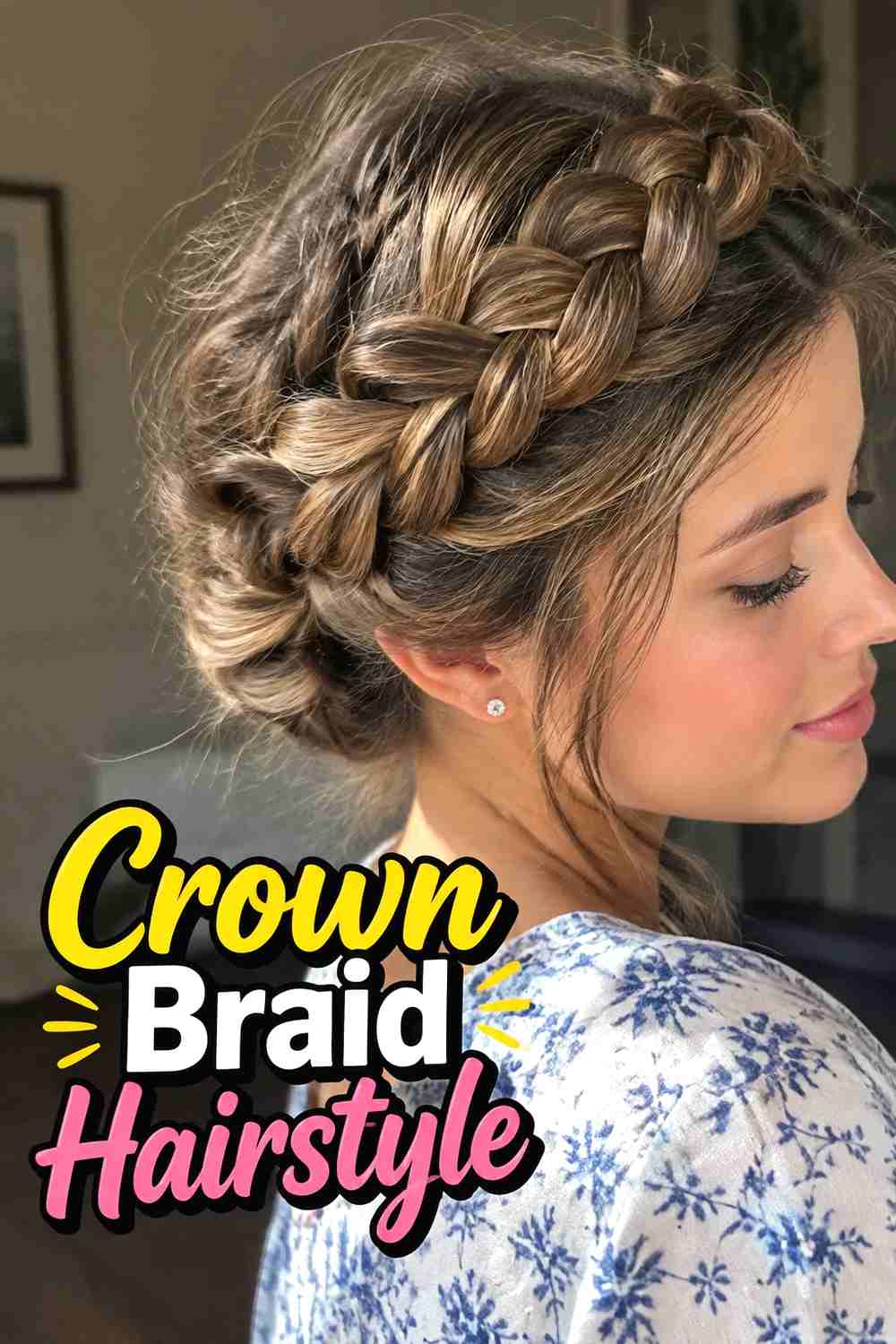
A crown braid moves the hair completely away from a high puffer neckline by wrapping the braid around the head rather than letting it hang down the back. Depending on your length and braiding preference, you can create two braids and pin them across the crown or form a continuous braided shape around the head. Keep the braid relatively flat so it remains comfortable under a roomy hood. The tucked ends should be secured with pins that lie close to the scalp rather than projecting outward. This style is particularly useful for medium to long hair when you want nearly complete containment and do not mind spending a little more time on the initial setup.
Wear & Maintenance
Test the braid with your hood before leaving. Pins that feel fine without outerwear may need slight repositioning if the hood presses directly against them.
Why It Works
There is no loose tail at the neckline, so the puffer collar has very little hair to catch, lift, or compress.
5. Scarf Clear Top Knot Hairstyle
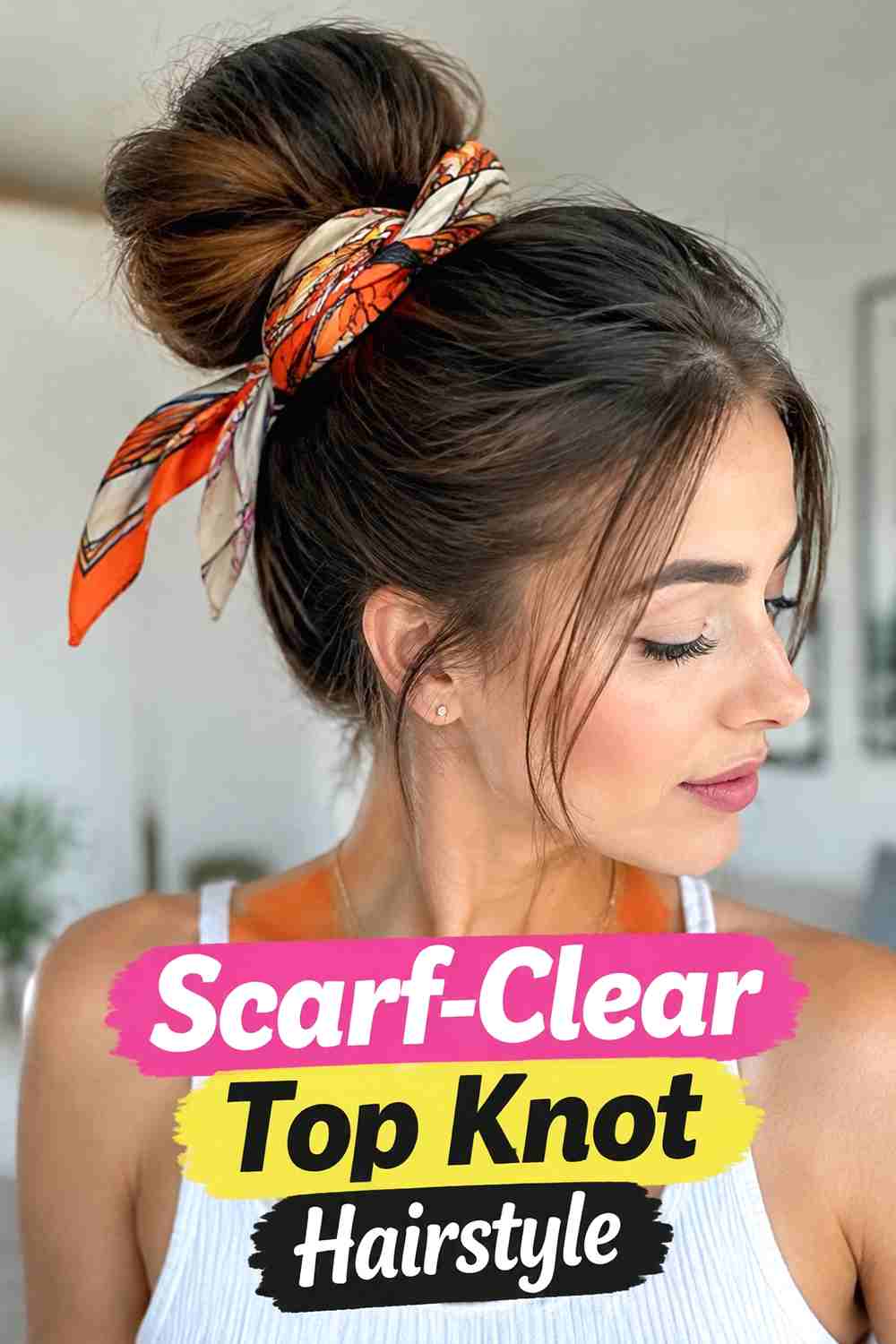
A scarf-clear top knot keeps all the hair high above both a puffer collar and any scarf layered inside it. Gather the hair near the crown, secure a ponytail, then twist or wrap the lengths into a balanced bun. Long hair can be coiled gradually around the base, while medium-length hair may create a smaller knot with a few pins securing the ends. Keep the bun stable but avoid pulling the front hairline excessively tight. The highest possible placement is not always necessary; the goal is simply to clear the collar and avoid the area where a hood naturally presses. Soft wisps around the face can remain if they suit the look and do not bother you outdoors.
Best For
Choose this style for maximum neckline clearance, especially with oversized puffers, thick scarves, or coats that zip high beneath the chin.
Pro Tip
Put your hood up once before finalizing the knot. Adjusting the bun by even an inch can improve comfort considerably.
6. French Braid Ponytail Hairstyle
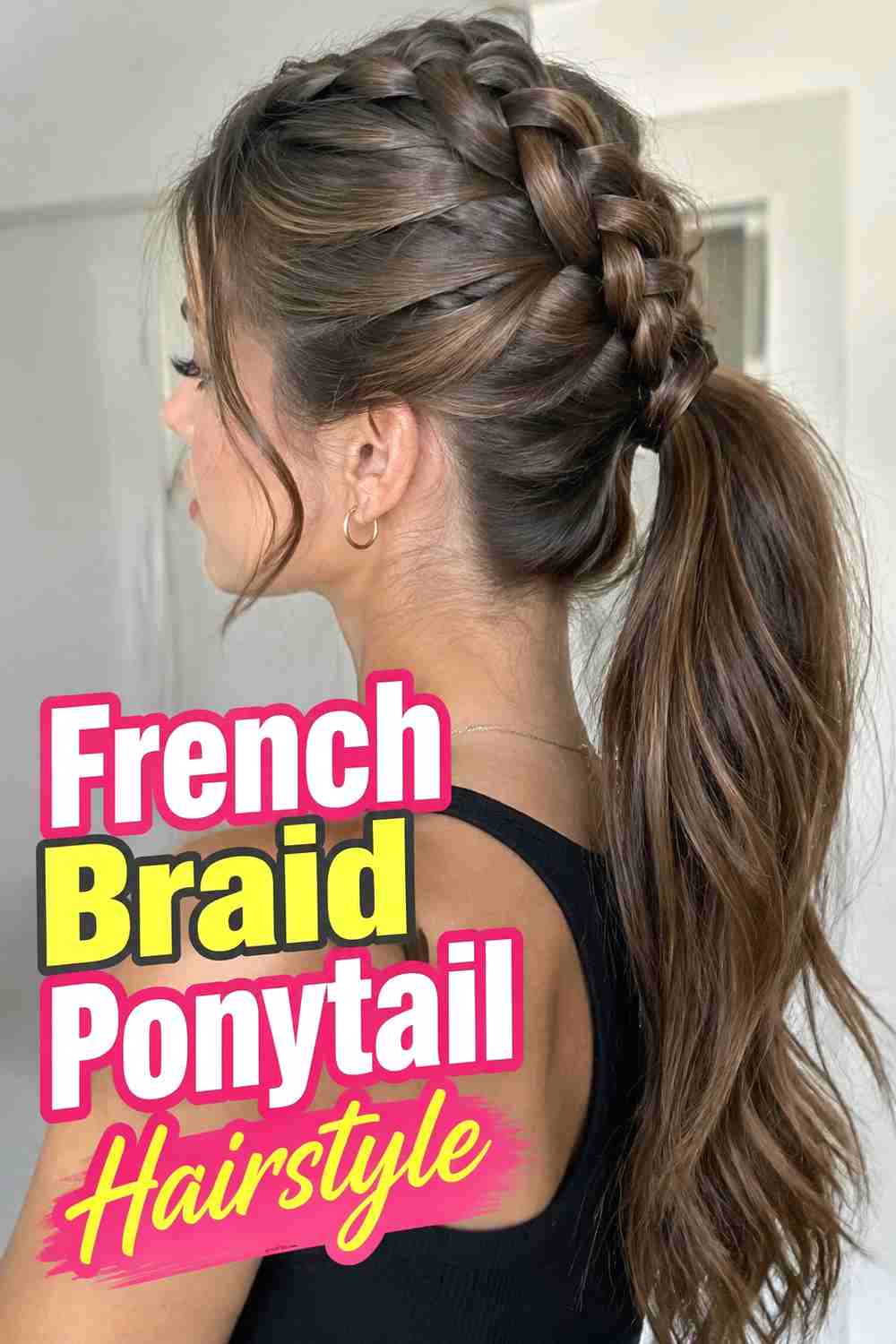
A French braid ponytail secures the crown and side sections while keeping the remaining length in one movable tail. Start the braid near the top of the head and gradually add hair until you reach a point several inches above the puffer collar. Instead of continuing the braid, secure all the hair into a ponytail. This creates a smooth, controlled upper section that is less likely to develop loose pieces in wind, while the ponytail remains easy to move over a shoulder. Medium to long layered hair works particularly well because shorter pieces can be incorporated into the braid. Keep the transition point above the raised collar so the elastic does not become compressed.
Styling Notes
Smooth each new section before adding it to the French braid. Consistent sectioning usually gives better outdoor hold than trying to correct bumps after the braid is complete.
Wear & Maintenance
If the tail is long, bring it forward after zipping the puffer so it does not become trapped between your back and the coat.
7. High Half Up Ponytail Hairstyle
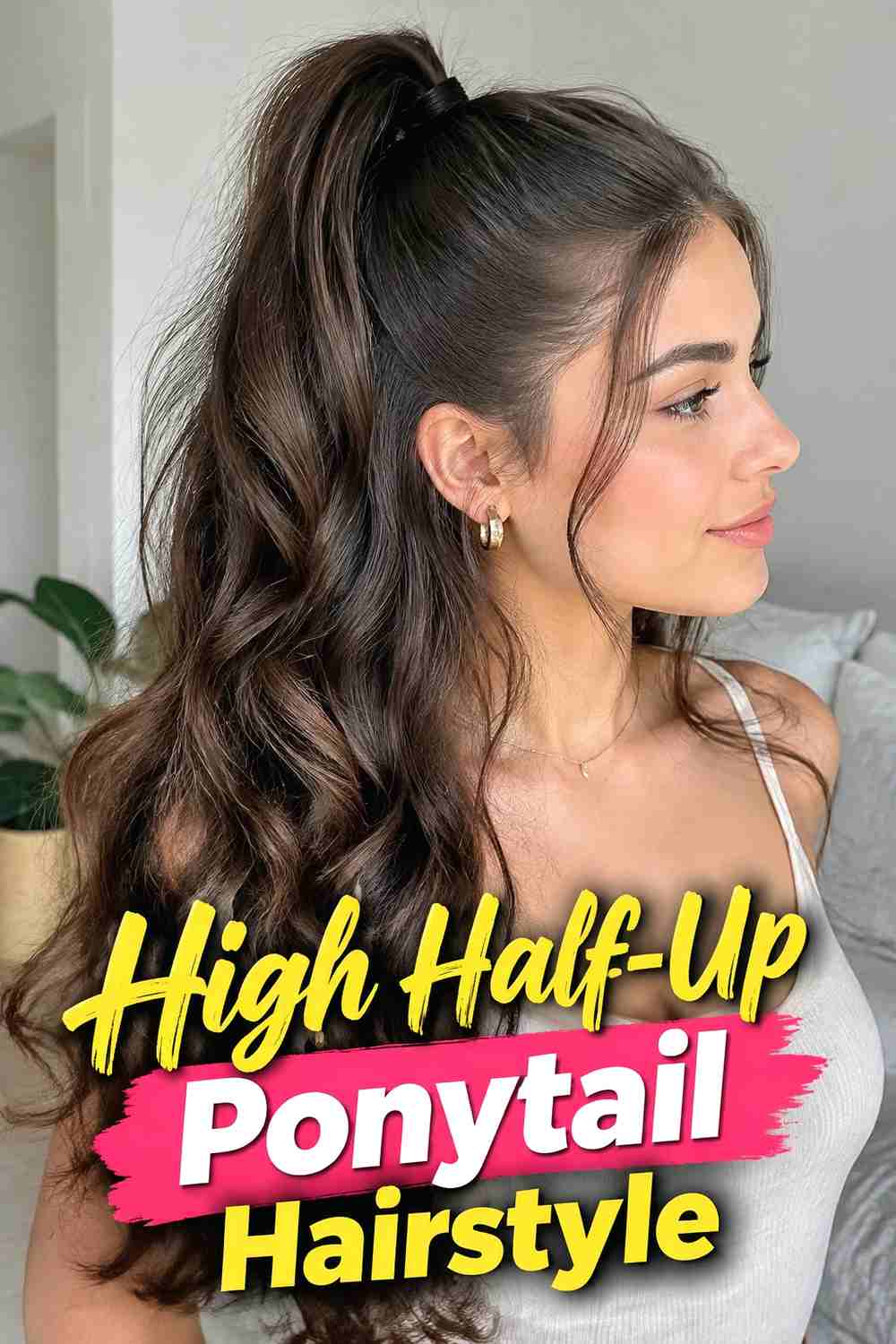
A high half-up ponytail keeps the upper layers secured while leaving the lower lengths free, making it useful when you want some winter-walk control without wearing a complete updo. Gather hair from the temples and crown and secure it high enough that the tie remains clear of the puffer collar. The lower hair can stay straight, wavy, curly, or naturally textured. This placement prevents many shorter face-framing layers from repeatedly falling into the collar while still showing off overall length. For windy conditions, keep the ponytail base firm and use minimal heavy product at the roots. The lower lengths can be brought forward over the shoulders once your coat is zipped.
Best For
This look works well for medium to long hair when you prefer the softness of hair down but need more stability around the crown and face.
Pro Tip
Use a small but secure elastic rather than an oversized accessory. Less bulk at the back makes the style easier to combine with winter hoods.
8. Double Rope Braids Hairstyle
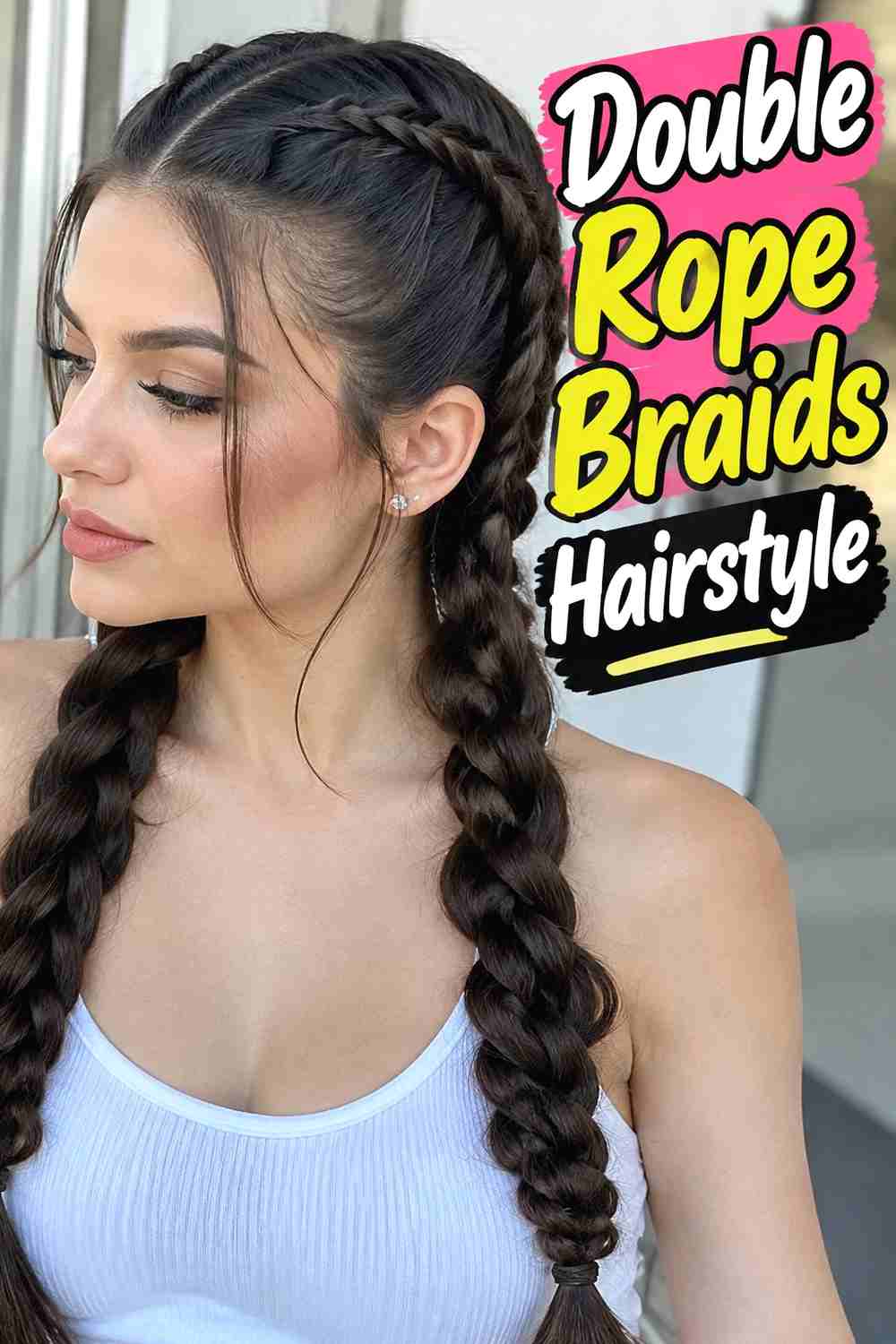
Double rope braids give long hair a streamlined, symmetrical shape without requiring traditional three-strand braiding. Divide the hair into two sections, then split each side into two smaller pieces. Twist both pieces in one direction and wrap them together in the opposite direction to create a spiral. Begin the rope sections behind the ears rather than at the nape, then bring the finished braids forward over the shoulders. This keeps most of the length away from a high puffer collar while distributing weight evenly. Thick hair creates particularly visible rope definition, although medium-density hair also works well. Secure each end firmly because rope braids can unravel more quickly than standard plaits.
Styling Notes
Keep the twist direction consistent on both sides. Uneven twisting can make one braid loosen faster while you are walking.
Why It Works
The forward placement leaves the back of the collar comparatively clear and prevents one heavy central braid from pressing against the coat.
9. Braided High Bun Hairstyle
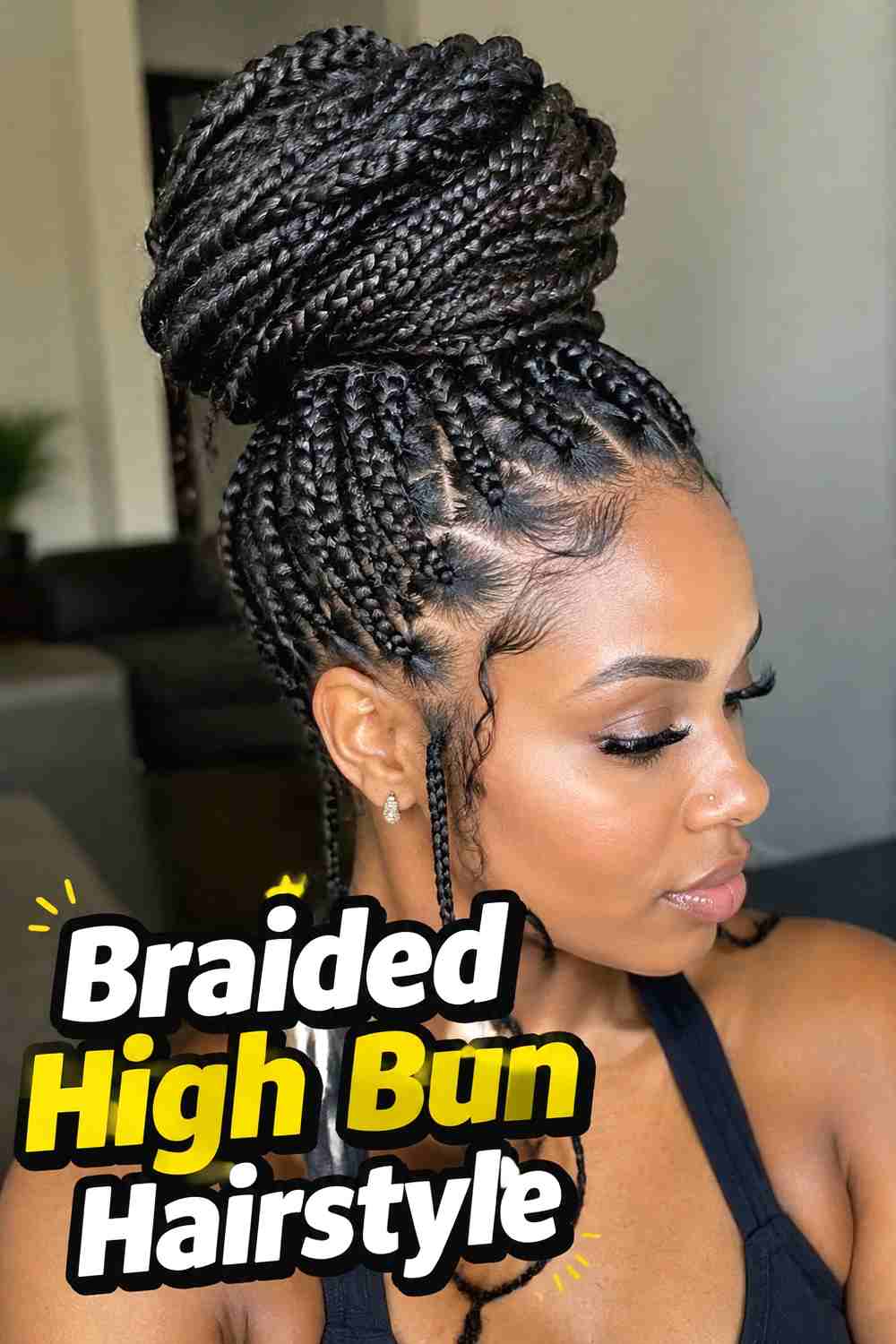
A braided high bun provides full containment while adding more structure than a simple top knot. Gather the hair into a high ponytail, braid the entire length, then wrap the braid around the base and pin it securely. The braided structure helps long hair stay organized as it is coiled, making this especially useful for dense or layered lengths. Position the bun high enough to clear the puffer collar but low enough to avoid the top of your hood if you plan to use it. A slightly flattened bun can feel more comfortable than a tall, round shape beneath winter outerwear. Keep pins evenly distributed so no single section carries all the weight.
Wear & Maintenance
Walk around indoors with the coat zipped before leaving. This quick test can reveal whether the bun or pins touch the hood in an uncomfortable spot.
Best For
This is a strong option for very long hair when you want almost no movement around the shoulders or neck.
10. High Bubble Ponytail Hairstyle
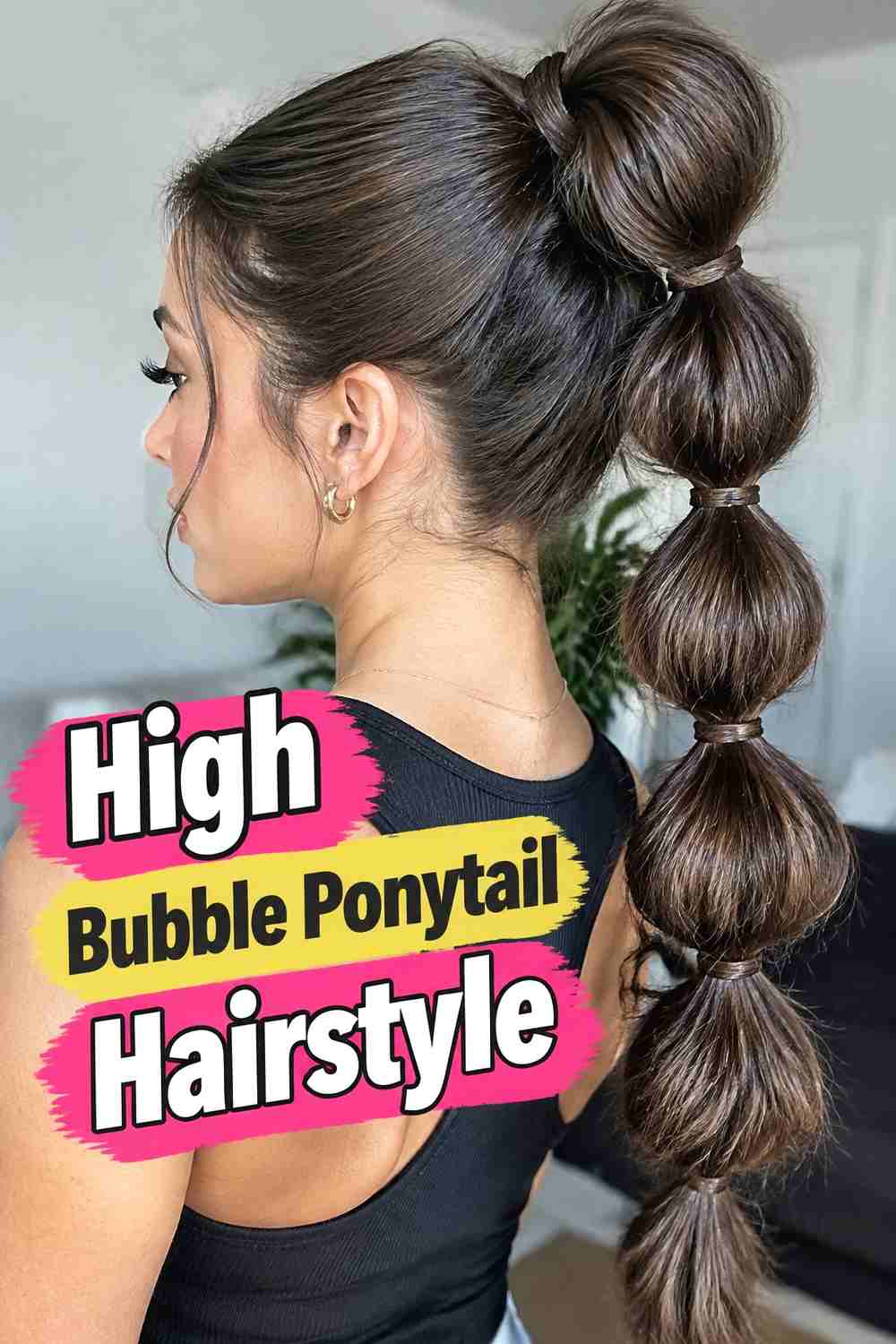
A high bubble ponytail controls long hair in sections, making the tail feel more structured on windy winter walks. Start with a secure high ponytail, then add small elastics at regular intervals down the length. Gently expand each section between the ties just enough to create rounded bubbles without making them oversized. The segmented design helps prevent the ponytail from spreading widely across a puffer or becoming as tangled as fully loose lengths. It works especially well on long, medium-to-thick hair because there is enough length and density to create several distinct sections. Keep the first elastic above the collar line and use lightweight ties so the finished ponytail remains comfortable.
Styling Notes
Space the elastics according to your hair length rather than forcing a fixed number of bubbles. Even proportions create a more polished result.
Pro Tip
Keep each bubble moderately compact for outdoor wear. Dramatically pulling the sections apart can make the ponytail more vulnerable to friction from a hood or coat.
11. Side Dutch Braid Hairstyle
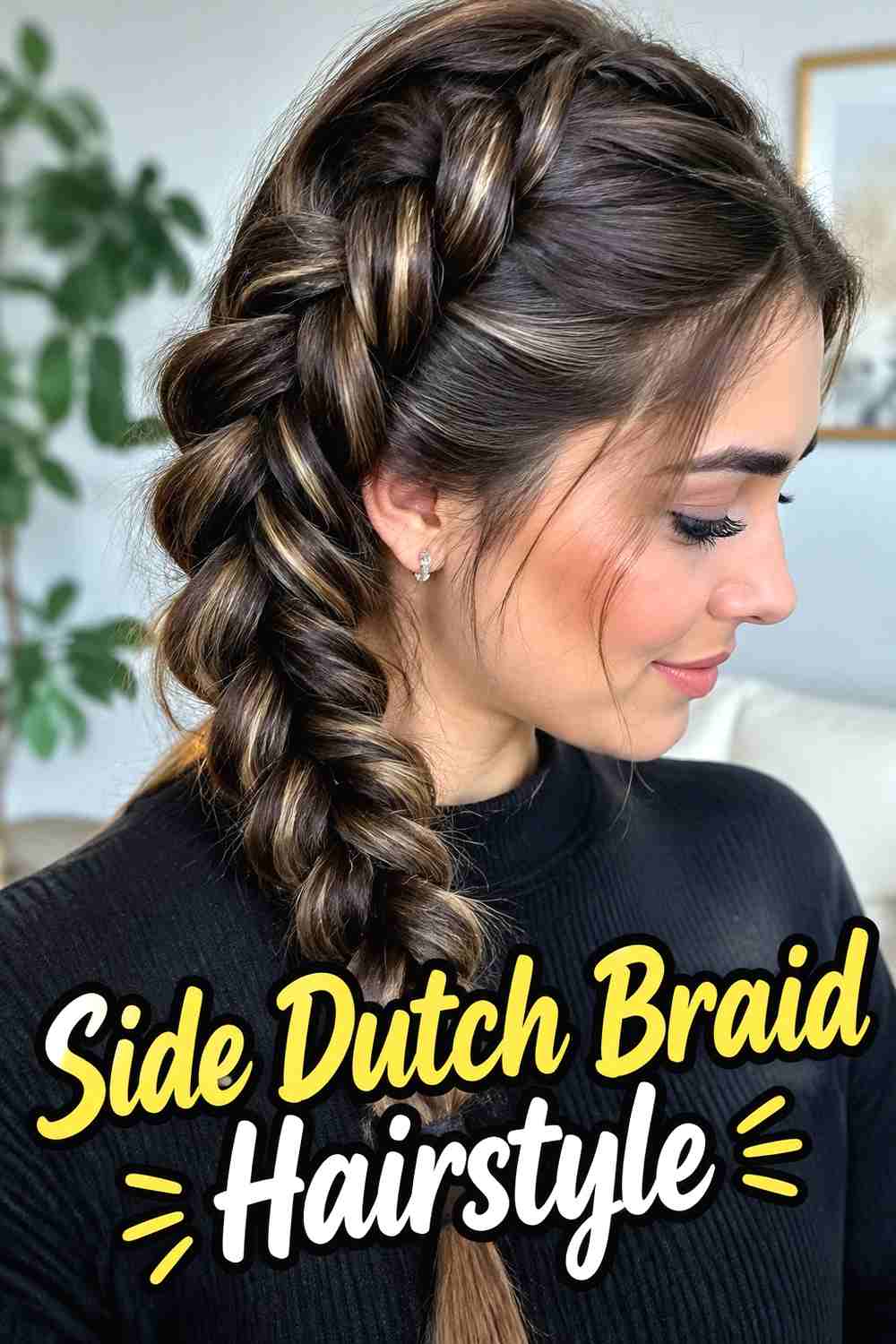
A side Dutch braid redirects the entire hairstyle toward one shoulder, leaving the center back relatively free for a high-neck puffer. Start near the front hairline or temple and braid diagonally, crossing sections underneath as you gradually incorporate more hair. Continue through the lengths once all the hair has been added, then secure the braid over one shoulder. The raised Dutch pattern gives the style definition without needing loose volume around the neck. Medium to long hair works best, and dimensional color can make the woven shape particularly visible. Keep the braid controlled rather than extremely loose if your walk involves wind, since a compact structure tends to maintain its silhouette longer.
Best For
Choose this style if traditional back braids collide with your puffer collar or if you prefer to keep the finished braid visible from the front.
Wear & Maintenance
Place backpack or shoulder-bag straps on the opposite side when possible so they do not repeatedly rub against the braid.
12. Twisted Crown Half Up Hairstyle
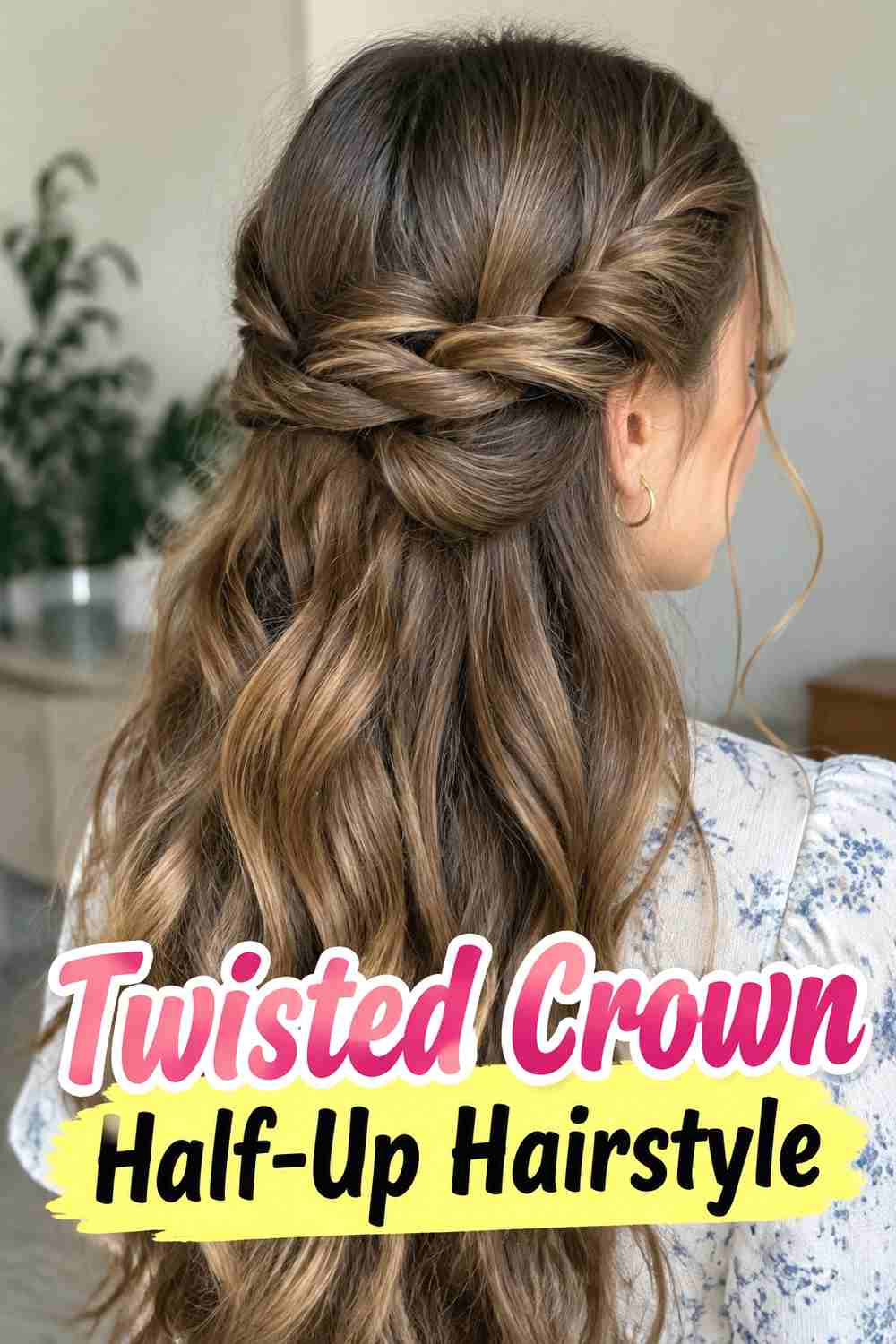
A twisted crown half-up style keeps face-framing sections secure while placing the fastening point well above a high coat collar. Take a section from each side near the temples, twist both toward the back, and secure them together around crown level. The remaining hair stays loose, giving you movement without leaving every section free to blow forward. This look suits straight, wavy, and curly lengths and can be secured with a small elastic or flat barrette. For winter walking, make the twists slightly firmer than you might for an indoor occasion. Once the puffer is zipped, move the loose lower hair forward if it would otherwise sit between the coat and your back.
Why It Works
The upper layers stay controlled around the face, while the securing point remains comfortably above the collar’s highest edge.
Hair Type & Length
Shoulder-length and longer hair can wear the style. Slippery straight hair may benefit from a small concealed pin where each twist meets the back section.
13. Pinned High Twist Hairstyle
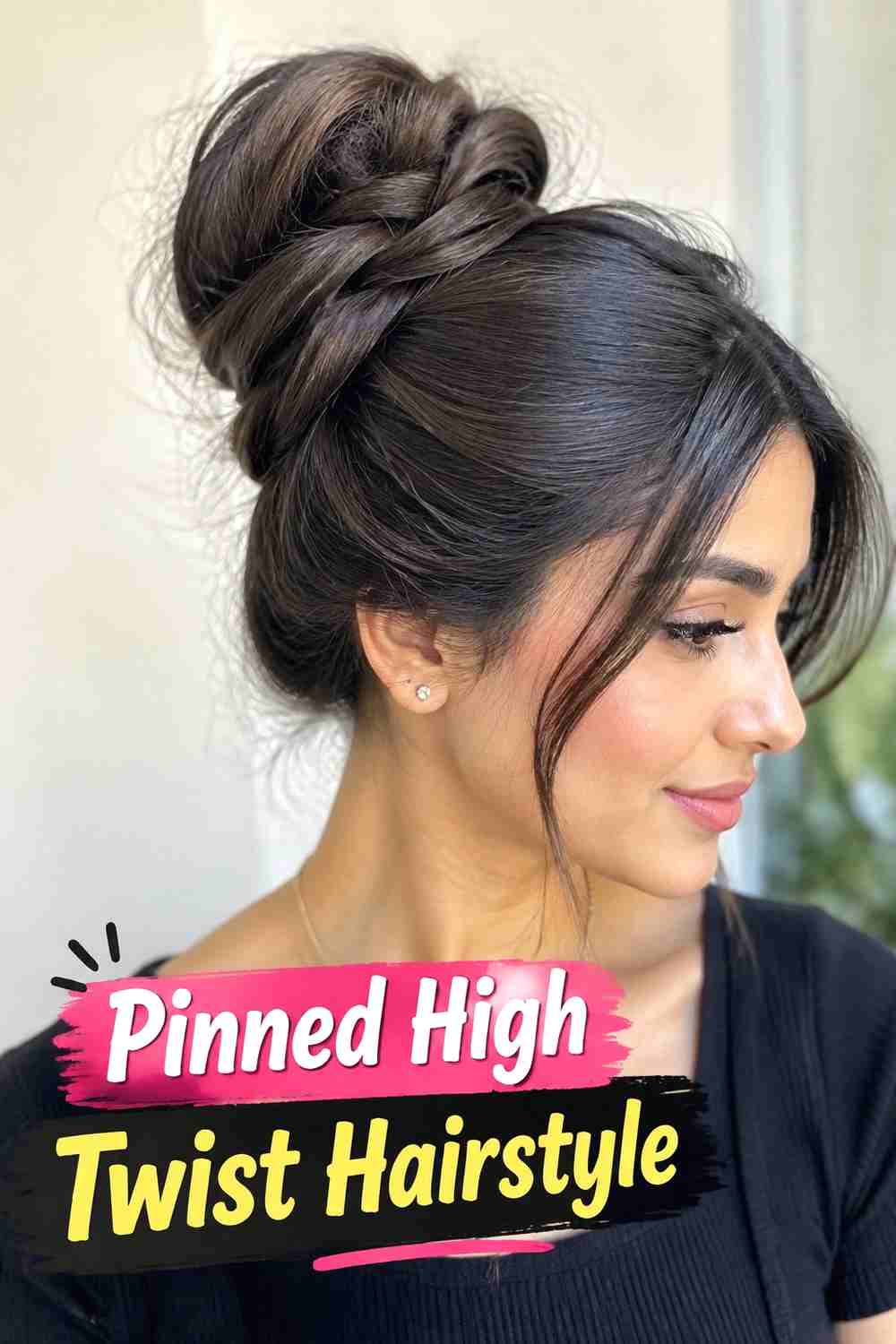
A pinned high twist offers the contained feel of an updo without forming a round bun at the neckline. Gather the hair upward, twist the length vertically against the back of the head, tuck the ends inward, and secure the shape with sturdy pins. Position the lower edge of the twist clearly above the puffer collar so the coat cannot push it upward with every step. The silhouette works well for medium to long hair and can be adapted to different densities by widening or narrowing the twist. Keep the pins flat against the head and distribute them through the shape rather than relying on one heavily anchored point.
Styling Notes
Twist firmly enough to create structure but stop before the scalp feels pulled. Comfortable tension is more practical for a long outdoor walk than an extremely tight updo.
Best For
This is useful when you want full containment but find that round buns interfere with your hood or winter hat.
14. Double High Braids Hairstyle
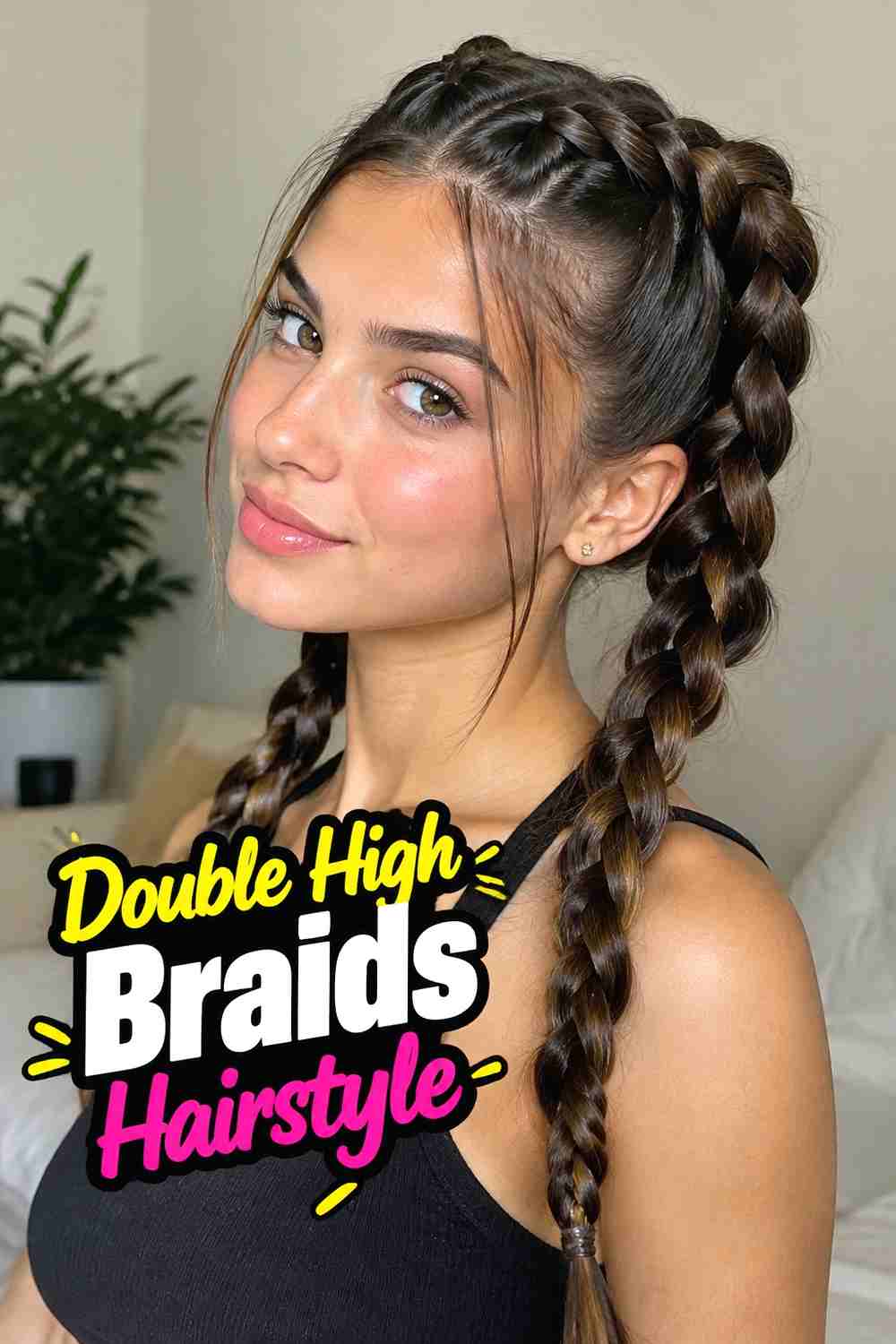
Double high braids begin from two elevated ponytail bases, keeping the starting points well above a puffer neckline. Create a center part, secure each side high behind the ears, and braid the ponytail lengths downward. The style has a playful shape while still containing long hair more effectively than two loose ponytails. Bringing the braids forward over the shoulders after your coat is zipped keeps them away from the center back. This option works particularly well on medium to long hair with enough length for visible braids below the elastics. Keep both bases balanced in height and tension so the hairstyle feels even while walking and does not pull more strongly on one side.
Wear & Maintenance
Make sure neither braid base sits directly beneath the edge of a hood. A small placement adjustment can prevent pressure during longer walks.
Why It Works
The elevated bases clear the collar, while the braiding keeps the hanging lengths narrower and easier to control in wind.
15. Wrapped High Ponytail Hairstyle
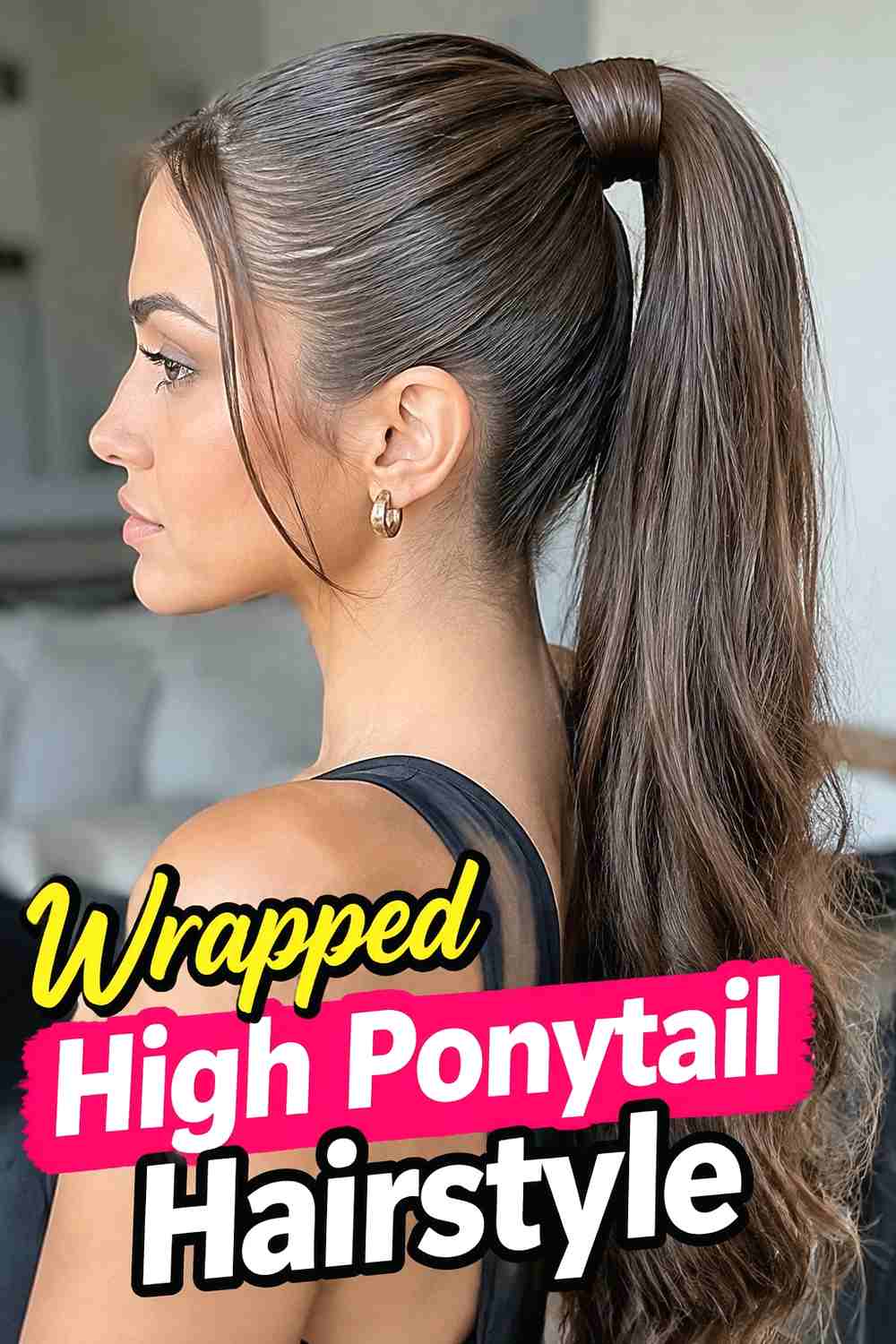
A wrapped high ponytail uses the simplicity of a high tie while hiding the main elastic for a more polished winter look. Gather the hair securely above the collar zone, tie it with a strong elastic, then take a slim section from underneath the ponytail and wrap it around the base. Pin the wrapped strand discreetly beneath the tie. The hairstyle works well for straight, wavy, and softly curly long hair and can transition easily from an outdoor walk to work or lunch. Keep the tail flexible rather than heavily coated with styling product. A small amount of serum through the ends can help them look smoother after exposure to cold air and repeated contact with outerwear.
Styling Notes
Use the primary elastic for all structural hold. The wrapped strand should disguise the tie rather than being expected to secure the ponytail itself.
Pro Tip
Place the hidden pin on the underside of the ponytail where it is less likely to meet a hood.
16. Flat Braided Crown Hairstyle
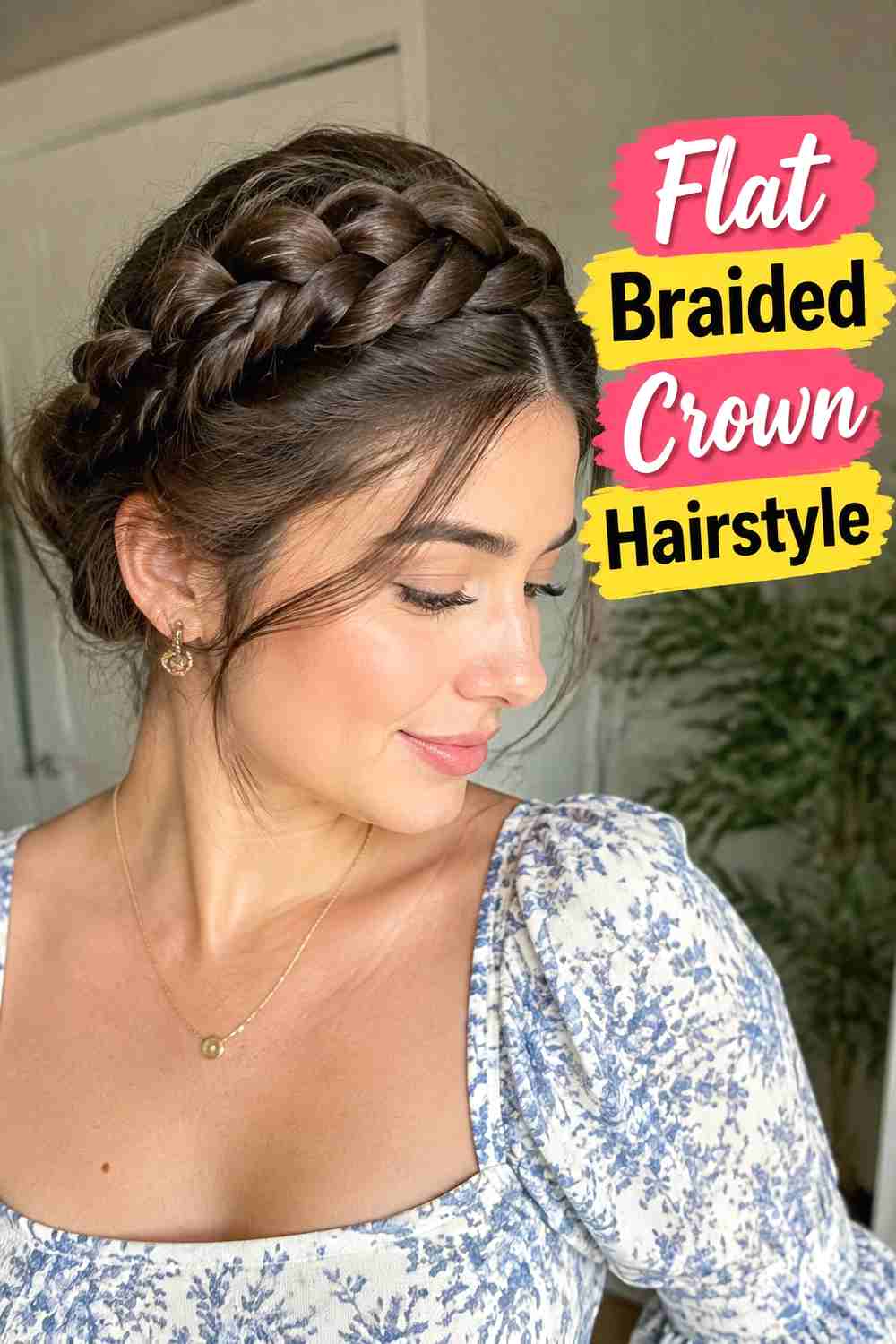
A flat braided crown keeps the woven detail close to the scalp, making it a useful alternative to a fuller crown braid when you expect to wear a hood. Create slim braids from sections near the temples or above the ears, then bring them around the upper back of the head and pin them flat. The remaining hair can be incorporated into the crown for greater containment or left partly loose depending on your preference. For a secure winter-walk version, use enough pins to keep the braid from lifting while avoiding bulky intersections. The elevated placement leaves the nape open for a high puffer collar and creates a neat silhouette from the front and side.
Wear & Maintenance
Use flat, crossed pins where extra hold is needed, then test the style beneath your hood. Any pin that creates pressure should be repositioned before heading outside.
Why It Works
The braid remains high and close to the head, so both the collar and hood have more room than they would with a thick low updo.
17. Mid High Rope Ponytail Hairstyle
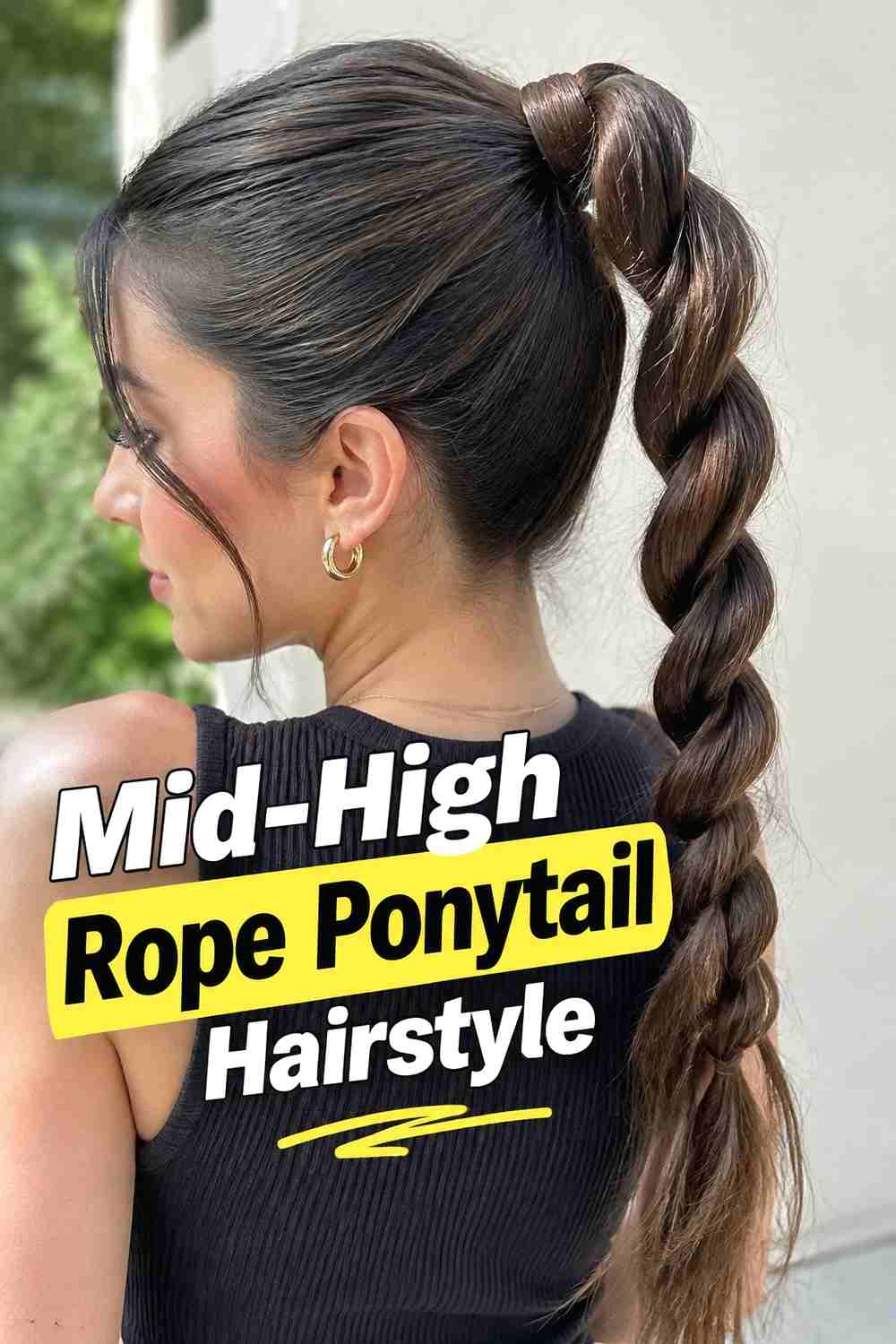
A mid-high rope ponytail is a practical compromise when a very high pony feels uncomfortable but a low style collides with the puffer collar. Secure the ponytail around the upper-middle back of the head, clearly above the coat neckline, then divide the tail into two sections. Twist both pieces in the same direction and wrap them together in the opposite direction to form a compact rope. The finished ponytail has less loose movement than a standard tail while staying simpler than a full braid. Medium to long hair works best, particularly when the texture has enough grip to hold the twist. Tie the end firmly and keep the spiral moderately compact for outdoor wear.
Best For
Choose this when you need collar clearance but want the ponytail base lower than a crown-level style for easier hood placement.
Styling Notes
Once your puffer is zipped, bring the rope over one shoulder if the tail still brushes against the coat while you walk.
How to Choose the Right Look
Start with your puffer collar. If it rises high behind the neck, avoid placing elastics, bun bases, clips, or thick braid sections directly at the nape. High ponytails, top knots, elevated twists, and crown styles create the most space.
Next, think about how much wind and movement your walk involves. Dutch braids, braided ponytails, rope styles, and compact buns provide more control than fully loose hair. If you still want visible length and movement, a high half-up ponytail or twisted crown gives moderate security without turning the whole style into an updo.
Hair density should influence both placement and accessories. Thick hair may need stronger elastics, larger pins, or divided styles such as double braids. Fine hair usually benefits from smaller accessories and less heavy product.
Hoods are another key factor. A beautiful high style can become uncomfortable if it sits exactly where a hood presses. Test the complete outfit before leaving, including the fully zipped collar and hood.
Finally, prioritize secure, comfortable tension rather than simply making the hairstyle tighter. Even sectioning, reliable elastics, flat pins, and sensible placement usually provide better winter-walk wear than excessive pulling.
Final Thoughts
High-neck puffers work best with hairstyles that respect the limited space around the back of the neck. Moving ponytails upward, redirecting braids over the shoulders, and choosing compact crown or bun styles can keep winter hair more controlled without sacrificing a polished finish.
The most wearable option depends on your hair length, density, texture, hood use, and walking conditions. Choose secure placement first, then adjust the amount of polish, softness, or visible texture to match your personal style.
FAQs
1. What hairstyle works best with a high-neck puffer?
High ponytails, top knots, crown braids, and elevated buns are especially practical because their main securing point sits above the raised collar.
2. How can I stop my puffer collar from pushing my hair upward?
Avoid placing thick hair sections or elastics directly at the nape. Move the style higher, bring braids forward over your shoulders, or fully contain the hair in an elevated updo.
3. Which hairstyle is best for a windy winter walk?
Double Dutch braids, a high braided ponytail, or a braided bun offer strong control because much of the hair is secured rather than left loose.
4. Can I wear a hood with a high hairstyle?
Yes, but placement matters. Test the hood after styling and move the ponytail, braid, or bun if it sits directly under a pressure point.
5. Do winter-walk hairstyles need to be very tight?
No. They should be secure enough to stay in place, but excessive tension is unnecessary. Even braiding, reliable accessories, and good placement can provide hold without making the style uncomfortable.
CTA
Save your favorite secure winter-walk hairstyle and share these ideas whenever a high-neck puffer makes your usual hair routine harder.