16 Side-Part Beveled Lob Hairstyle Ideas
A side part and softly beveled ends give the classic lob a polished shape with movement, volume, and an effortlessly finished silhouette.
The side-part beveled lob combines shoulder-skimming practicality with ends that curve gently inward rather than falling completely blunt. That subtle bevel creates a rounded, controlled perimeter while the side part introduces asymmetry, lift, and flattering movement across the front.
Small adjustments can change the overall mood considerably. A deeper part adds drama, textured lengths make the cut more relaxed, and face-framing layers create additional movement around the front. Before choosing a version, consider your preferred length, natural texture, styling time, and how strongly you want the beveled ends to turn under.
Quick List
- Classic Side Part Beveled Lob Hairstyle
- Deep Side Part Beveled Lob Hairstyle
- Soft Side Part Beveled Lob Hairstyle
- Sleek Side Part Beveled Lob Hairstyle
- Voluminous Side Part Beveled Lob Hairstyle
- Side Part Beveled Lob Hairstyle With Face Framing Layers
- Side Part Beveled Lob Hairstyle With Swooping Fringe
- Side Part Beveled Lob Hairstyle With Wispy Bangs
- Textured Side Part Beveled Lob Hairstyle
- Wavy Side Part Beveled Lob Hairstyle
- Straight Side Part Beveled Lob Hairstyle
- Rounded End Side Part Beveled Lob Hairstyle
- Angled Side Part Beveled Lob Hairstyle
- Chin Grazing Side Part Beveled Lob Hairstyle
- Collarbone Side Part Beveled Lob Hairstyle
- Polished Side Part Beveled Lob Hairstyle With Tucked Side
1. Classic Side Part Beveled Lob Hairstyle
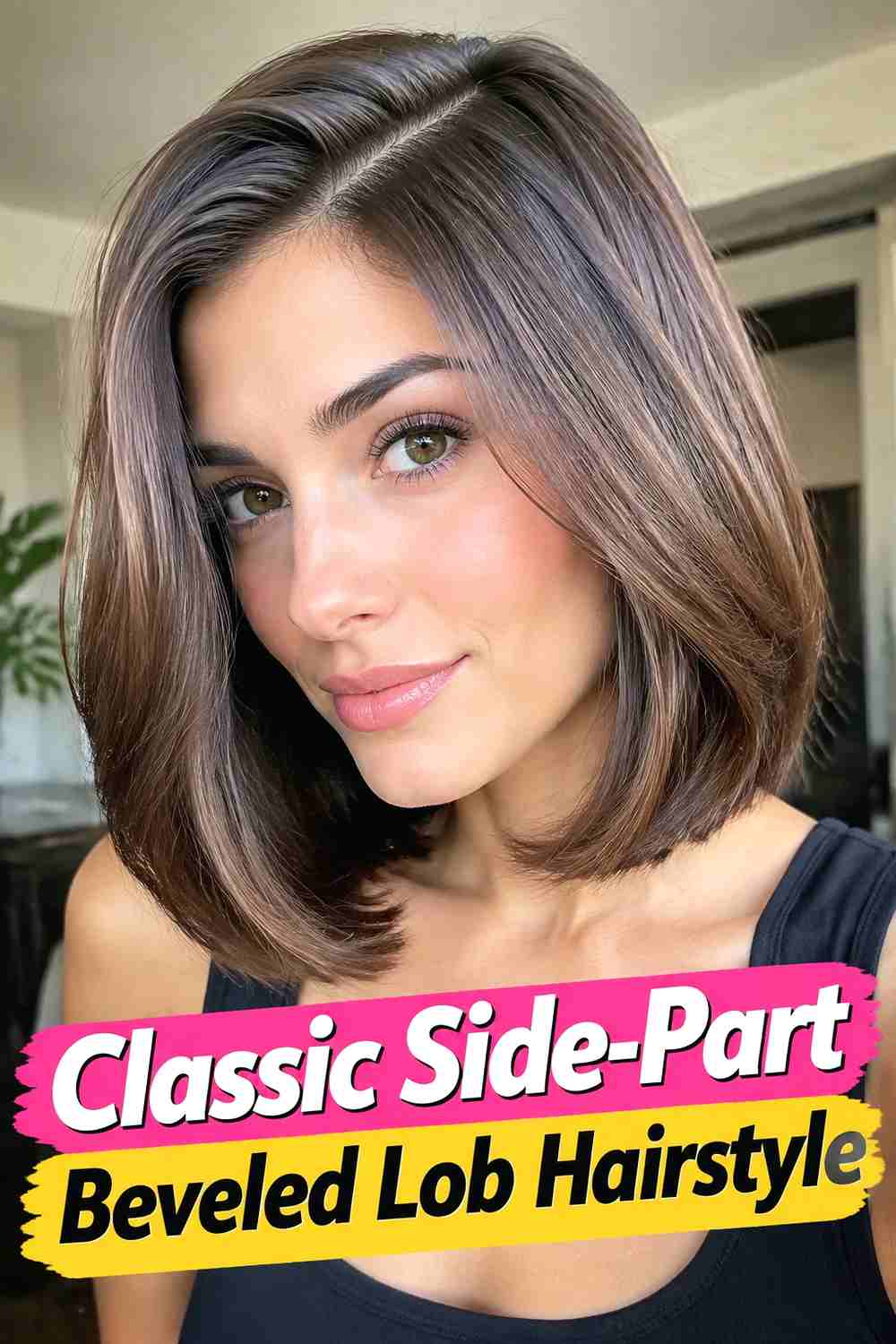
The classic version keeps the lob clean and balanced, with a side part creating gentle lift while the ends curve softly underneath. The length usually falls between the jaw and shoulders, giving the haircut enough weight to maintain a smooth outline without appearing heavy. A subtle bevel through the perimeter makes the ends look finished while preserving natural movement. This variation works especially well when you want a polished everyday haircut that can still transition into waves or straighter styling. A round-brush blowout is usually the easiest way to emphasize the shape, directing the ends inward without creating an exaggerated curl. Keeping the crown softly lifted prevents the side part from looking flat.
Styling Notes
Use a medium or large round brush through the final few inches, rotating it slightly inward as the hair dries.
Best For
This version suits anyone who prefers a neat, versatile lob with visible shape but minimal layering or dramatic texture.
2. Deep Side Part Beveled Lob Hairstyle
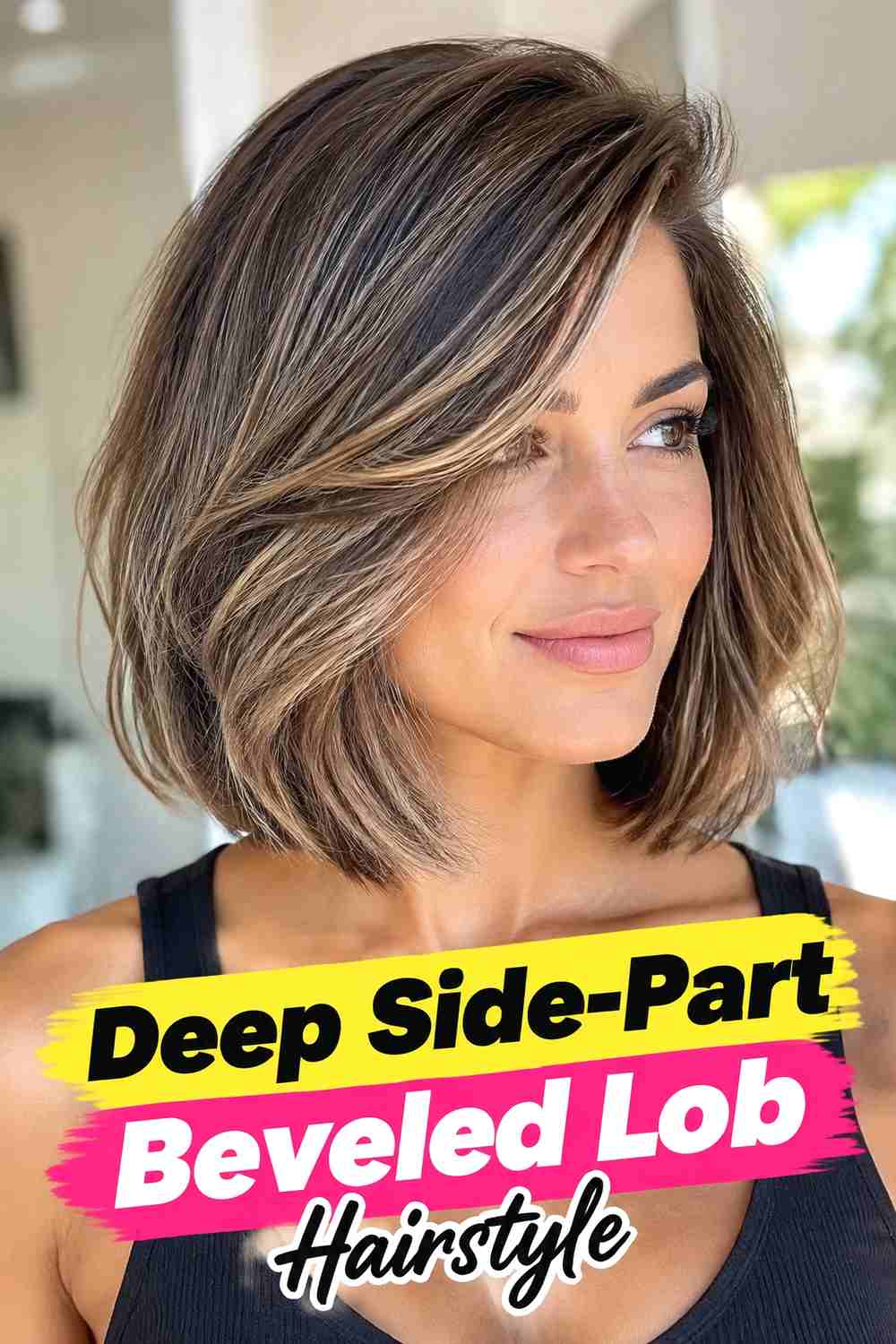
Moving the part farther to one side changes the beveled lob from balanced to noticeably directional. The heavier section sweeps across the top of the head and creates more volume through one side, while the shorter side sits closer to the face. The softly turned-under ends keep that asymmetry polished instead of making the haircut feel uneven. This version can look especially striking on smooth hair because the curved perimeter remains clearly visible beneath the stronger side sweep. A root-lifting blowout helps maintain the deeper part throughout the day, but the ends should stay controlled rather than overly curled. The finished look combines a sleek lob silhouette with a little extra drama through the front.
Styling Notes
Set the part before drying and direct the heavier side away from the scalp briefly to encourage lasting lift at the roots.
Why It Works
The deep part adds movement and volume without requiring additional layers or changing the fundamental lob shape.
3. Soft Side Part Beveled Lob Hairstyle
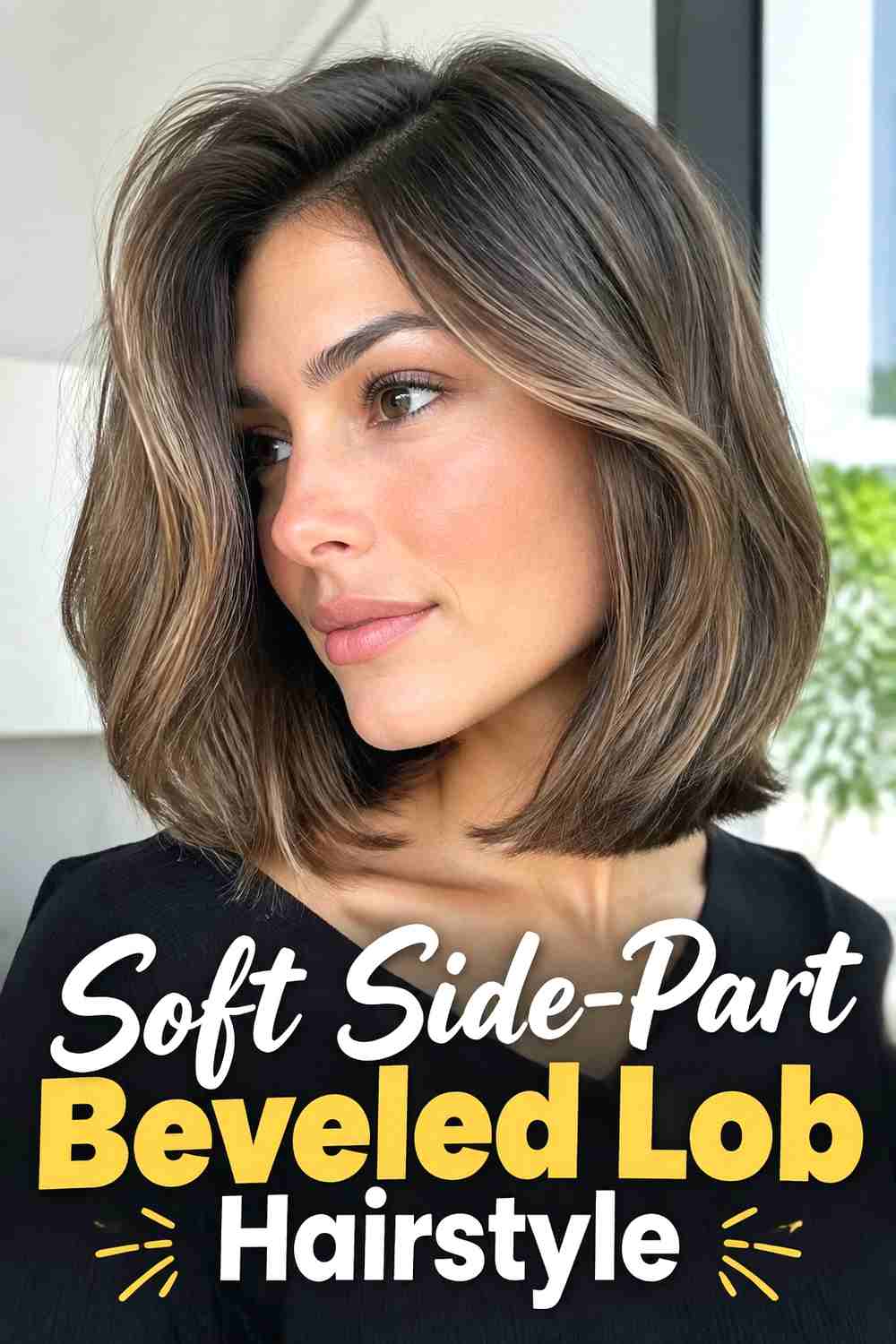
A soft side part creates a relaxed interpretation of the beveled lob, especially when the part is only slightly off center. Instead of producing a dramatic sweep, it encourages subtle asymmetry while keeping the top smooth and natural. The ends turn gently inward, giving the haircut a rounded outline without appearing rigid or overly styled. This is a useful choice if you like polished hair but want the result to feel effortless rather than formal. Light movement through the mid-lengths can make the bevel blend more naturally into the overall shape. A simple blow-dry with a paddle brush followed by a round brush at the ends is often enough to create the finished effect.
Best For
Choose this variation if you prefer understated styling, natural root movement, and a lob that works easily for everyday wear.
Wear & Maintenance
The soft shape is forgiving as it grows, although routine trims help prevent the beveled perimeter from losing its clean outline.
4. Sleek Side Part Beveled Lob Hairstyle
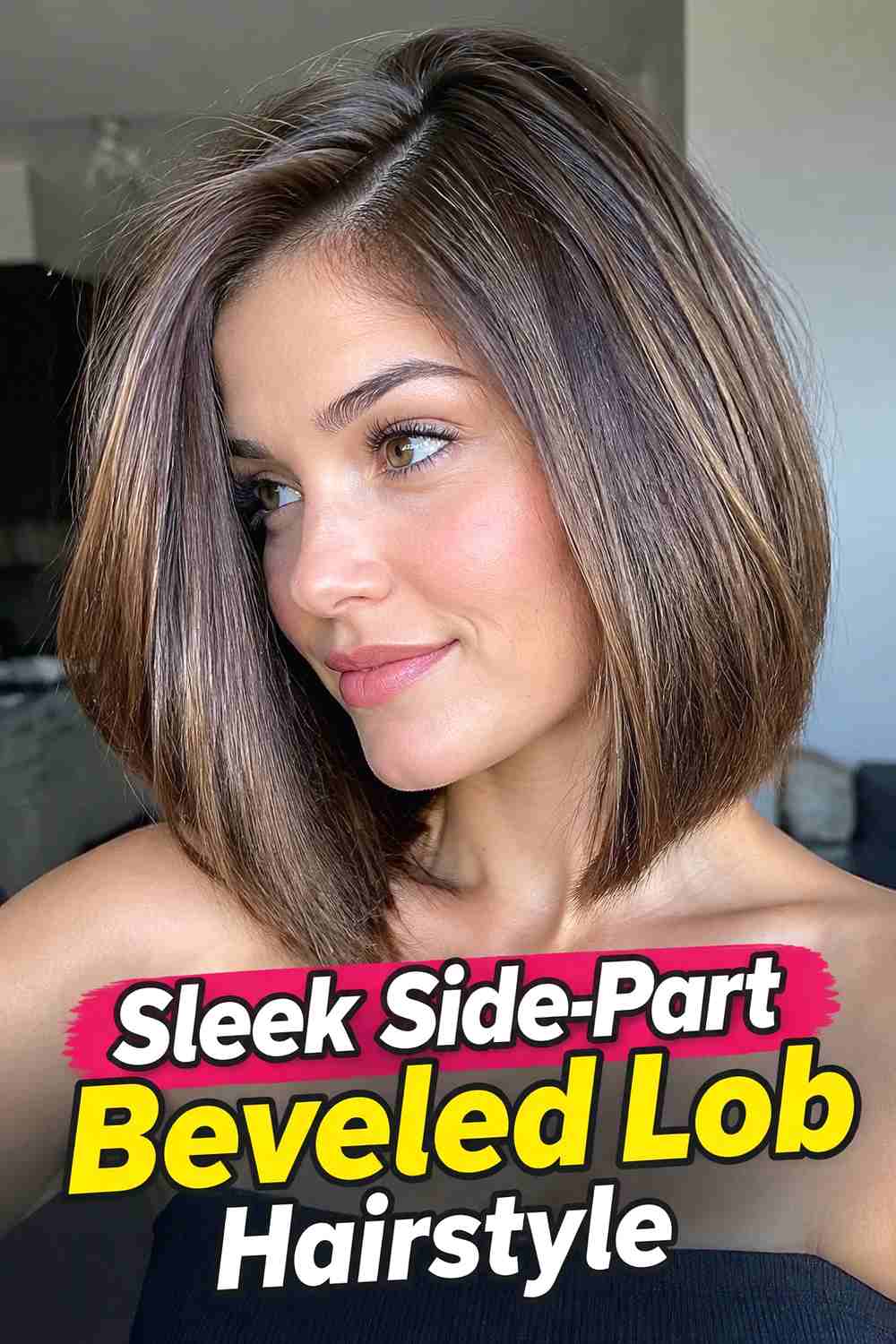
The sleek side-part beveled lob emphasizes smoothness, shine, and a sharply defined perimeter. Hair remains controlled from the roots through the mid-lengths, then turns slightly inward at the bottom to create the characteristic beveled finish. A precise side part gives the style structure without requiring much volume, making the clean surface the main feature. The look works particularly well when the ends are healthy enough to form an even curve rather than appearing separated or frayed. Heat styling can help achieve the finish, but the goal is smooth movement rather than a stiff, flat shape. A small amount of lightweight smoothing product can control flyaways while preserving realistic strand detail.
Styling Notes
Keep the roots smooth and use a straightener or round brush only near the bottom to turn the perimeter gently inward.
Why It Works
The combination of a sleek surface and softly curved ends gives a simple lob a more intentional, professionally finished appearance.
5. Voluminous Side Part Beveled Lob Hairstyle
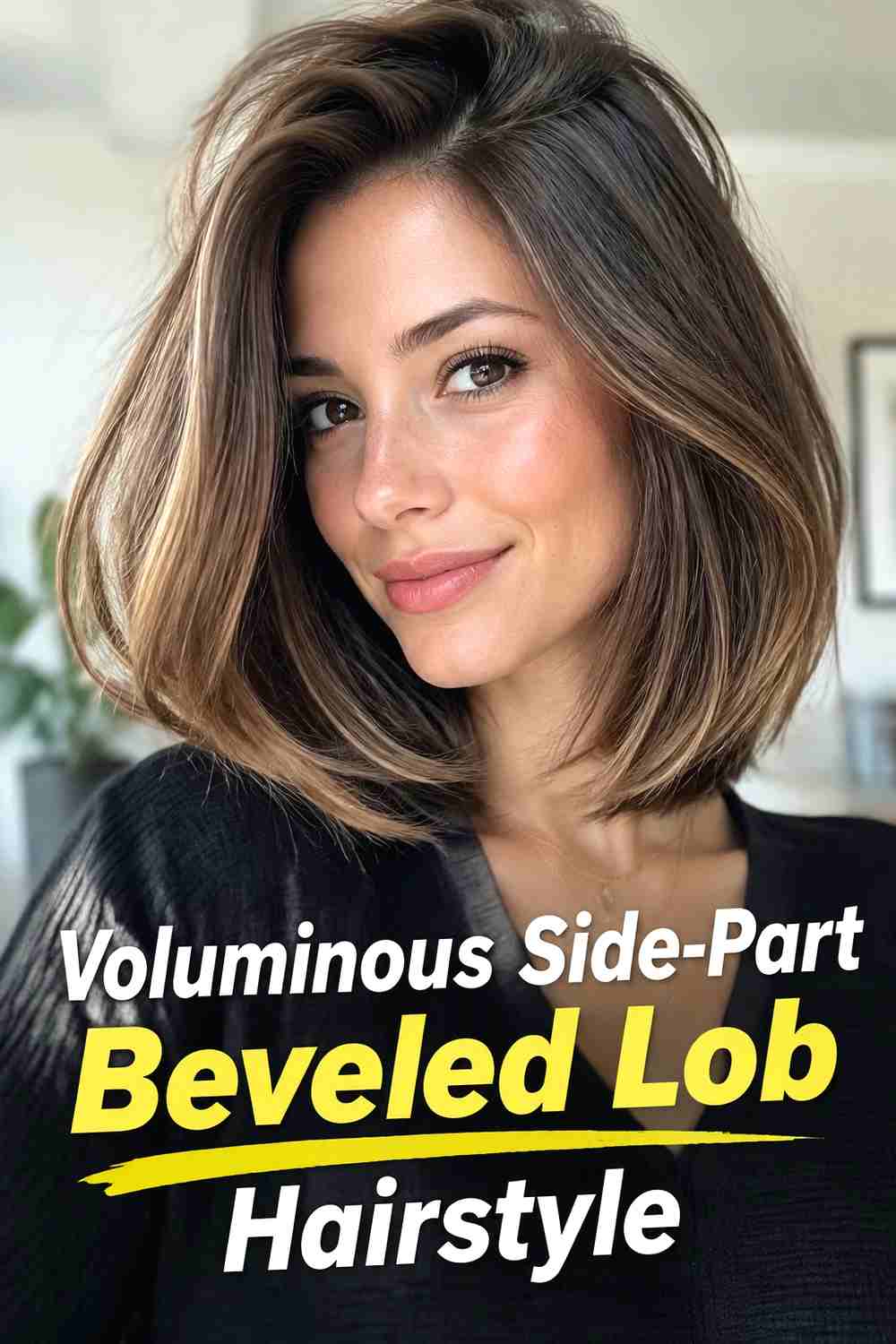
This fuller version uses root lift and rounded movement to make the beveled lob feel more expansive. The side part naturally directs additional hair toward one side, while a blowout builds volume through the crown and upper lengths. Rather than ending in loose waves, the haircut finishes with softly curved ends that turn inward and reinforce the rounded silhouette. This look works particularly well when you enjoy a salon-blowout effect but still want the manageable length of a lob. Medium or dense hair can support the volume naturally, while finer hair may benefit from lighter layering. Keep the bottom controlled so the shape does not become overly fluffy or lose the visible bevel.
Hair Type & Length
Medium-density and thicker hair generally provide enough body for a fuller shape without requiring excessive product or backcombing.
Pro Tip
Concentrate lift at the roots and upper sides rather than curling every section, which keeps the beveled ends visible.
6. Side Part Beveled Lob Hairstyle With Face Framing Layers
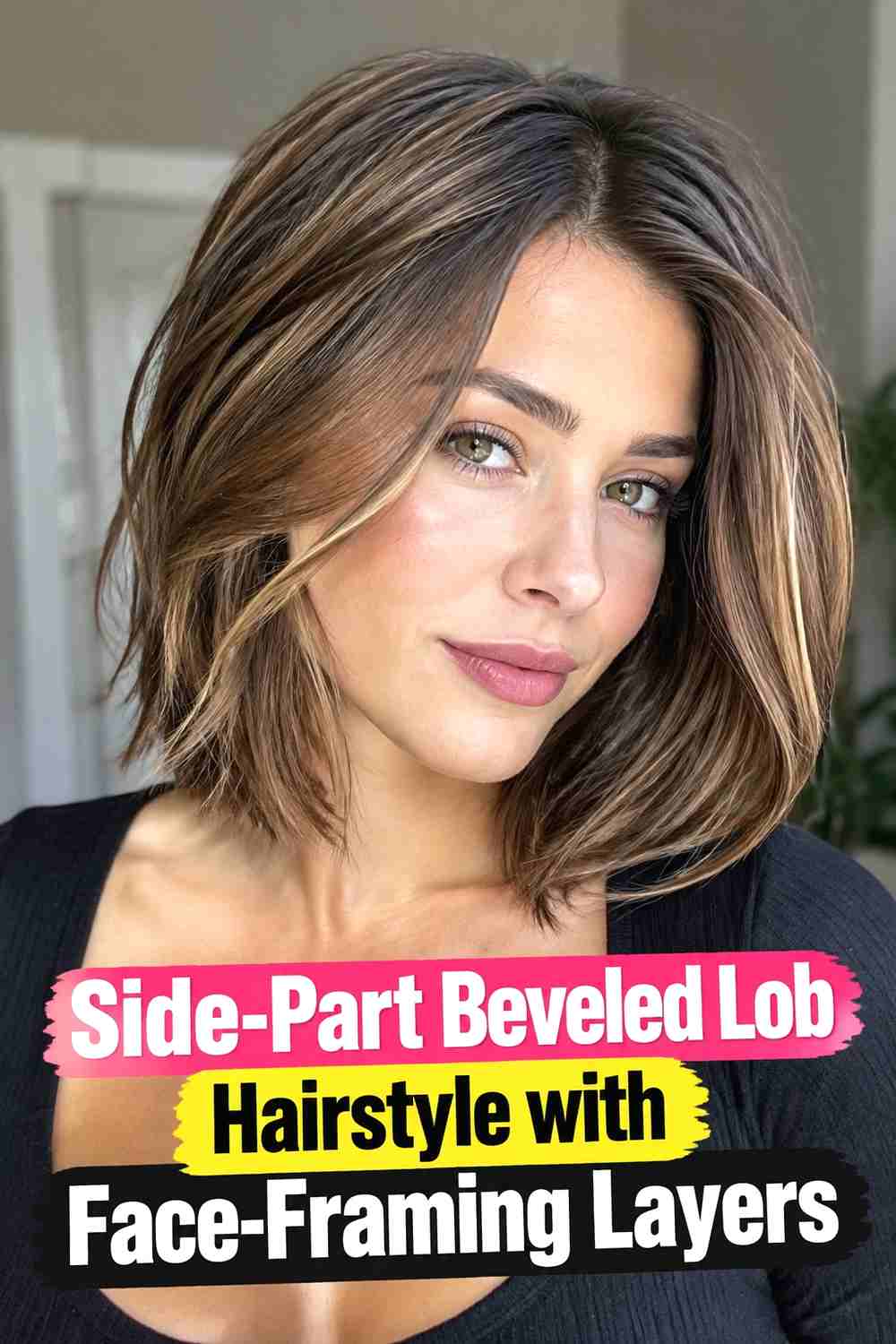
Face-framing layers add movement around the front while the main lob perimeter remains softly beveled. Shorter pieces can begin around the cheekbones or jaw before blending into the longer sides, creating a smooth transition rather than a heavily layered haircut. When combined with a side part, those front sections naturally sweep across and away from the face, giving the hairstyle extra shape without removing too much density. The lower ends still curve inward, preserving the polished outline that defines the beveled lob. This is a good option if a one-length lob feels too solid around the front. Styling the shorter sections separately can make the layers visible without disturbing the smooth perimeter.
Styling Notes
Direct the front layers slightly away from the face while turning the main perimeter inward for a balanced mix of openness and structure.
Best For
This variation suits anyone wanting more movement around the front while keeping the body of the haircut relatively full.
7. Side Part Beveled Lob Hairstyle With Swooping Fringe
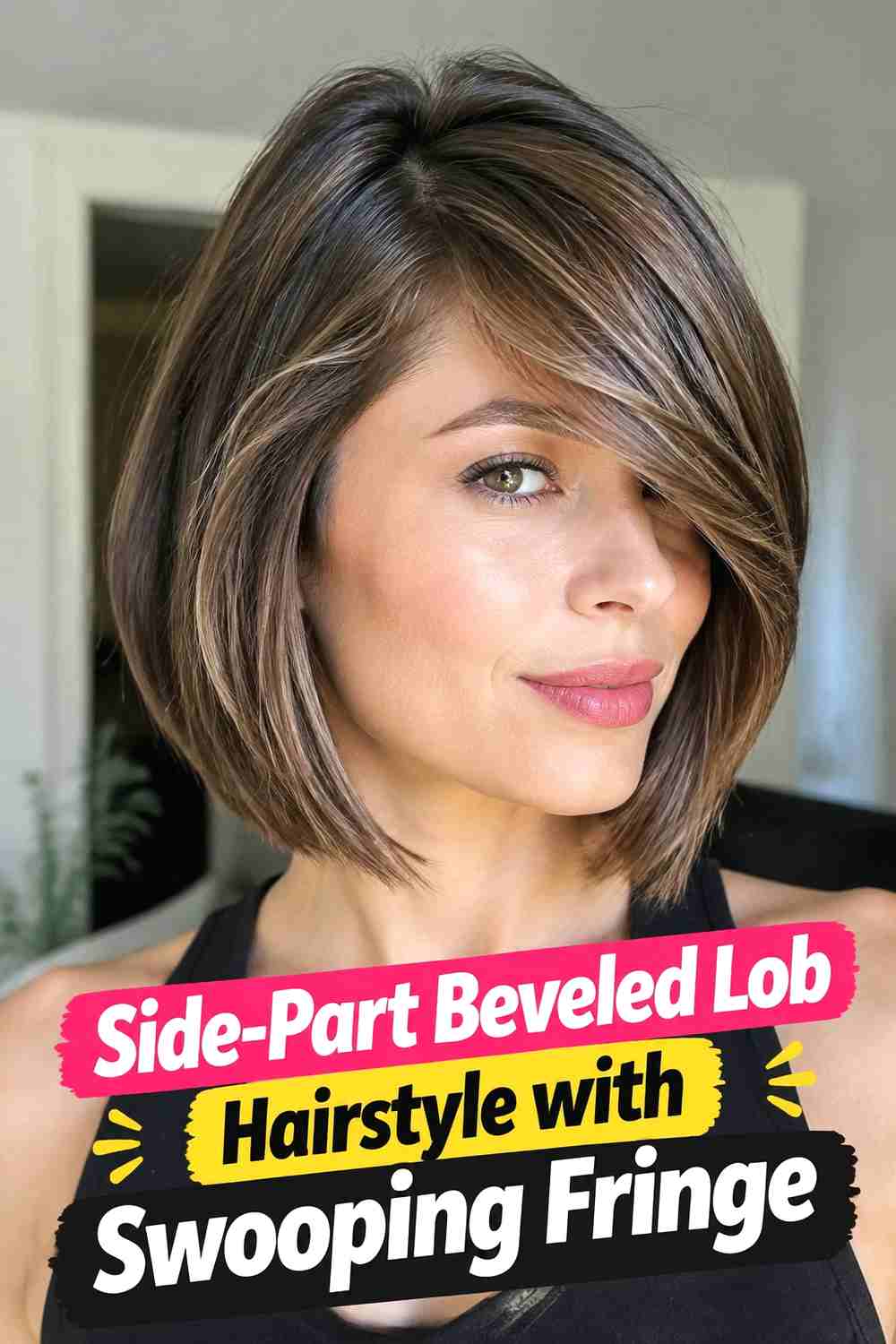
A long swooping fringe naturally complements a side part because it follows the same directional movement across the forehead. The fringe can begin shorter near the brow or cheek area and gradually blend into the longer lob, creating a continuous curve from the front into the sides. Beneath that movement, the ends remain softly beveled inward for a neat, rounded finish. This combination gives the hairstyle more personality without requiring a short or blunt bang. The fringe does need some styling attention, especially after washing, since its direction is easiest to control while damp. A round brush can establish the sweep before the rest of the lob is smoothed and shaped.
Styling Notes
Dry the fringe first and guide it diagonally across the forehead before finishing the beveled ends through the rest of the haircut.
Wear & Maintenance
Long fringe grows more gracefully than short bangs, but occasional trims help maintain its connection with the side layers.
8. Side Part Beveled Lob Hairstyle With Wispy Bangs
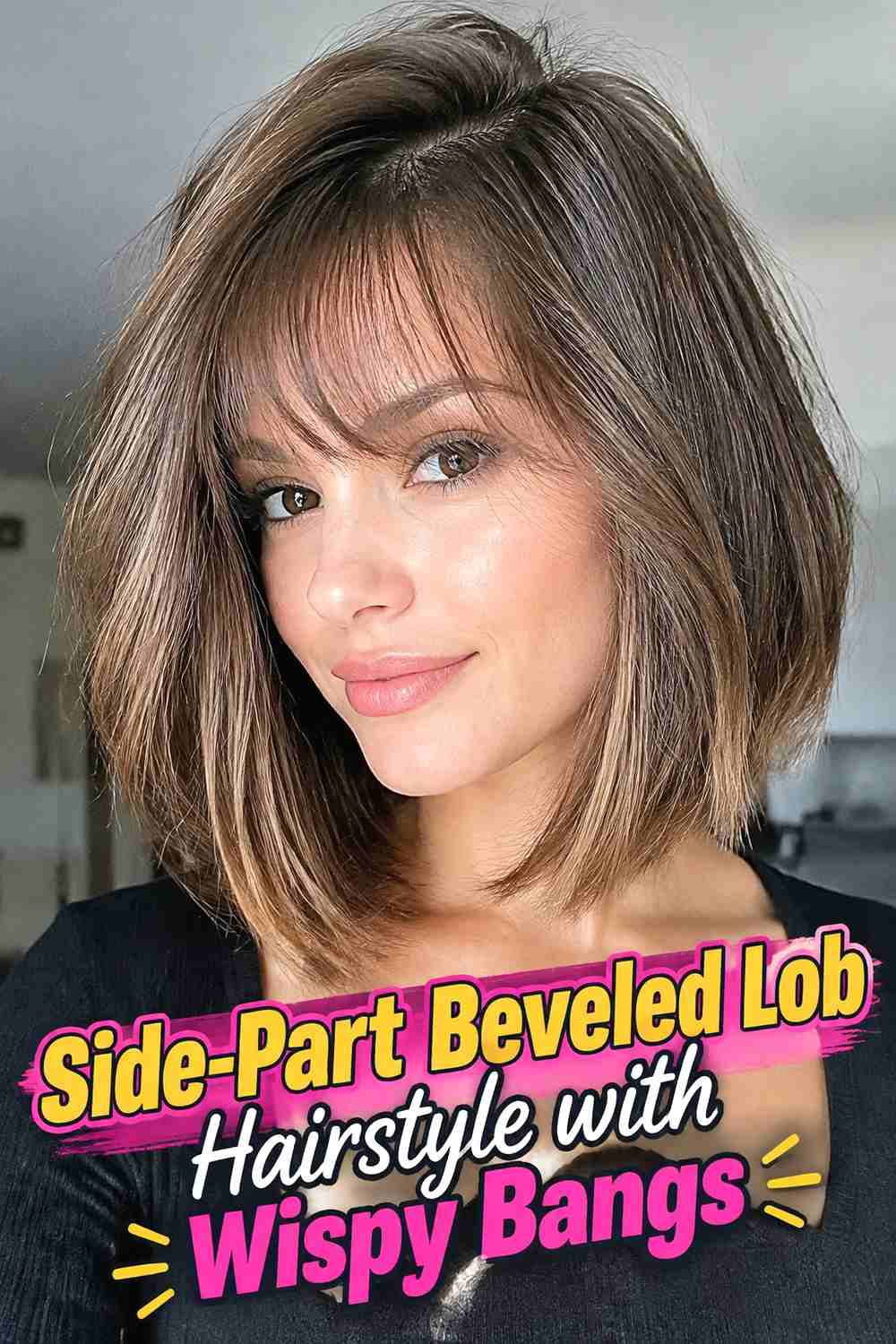
Wispy bangs soften the more structured shape of a beveled lob by adding light, separated strands across the forehead. The side part can remain visible behind the fringe, allowing one side to carry slightly more volume while the bangs sit with a delicate, airy finish. Keeping the bangs light is important because a dense fringe could compete with the rounded perimeter of the lob. The ends below turn gently inward, creating a tidy shape that contrasts nicely with the softer front detail. This style works well when you want bangs without losing the versatile feel of a medium-length cut. Minimal product on the fringe helps prevent fine pieces from clumping together.
Best For
This option suits anyone looking for a lighter fringe that complements rather than dominates the side-parted lob.
Pro Tip
Style the bangs with a small round brush or gentle directional blow-dry, then leave them slightly separated for a softer finish.
9. Textured Side Part Beveled Lob Hairstyle
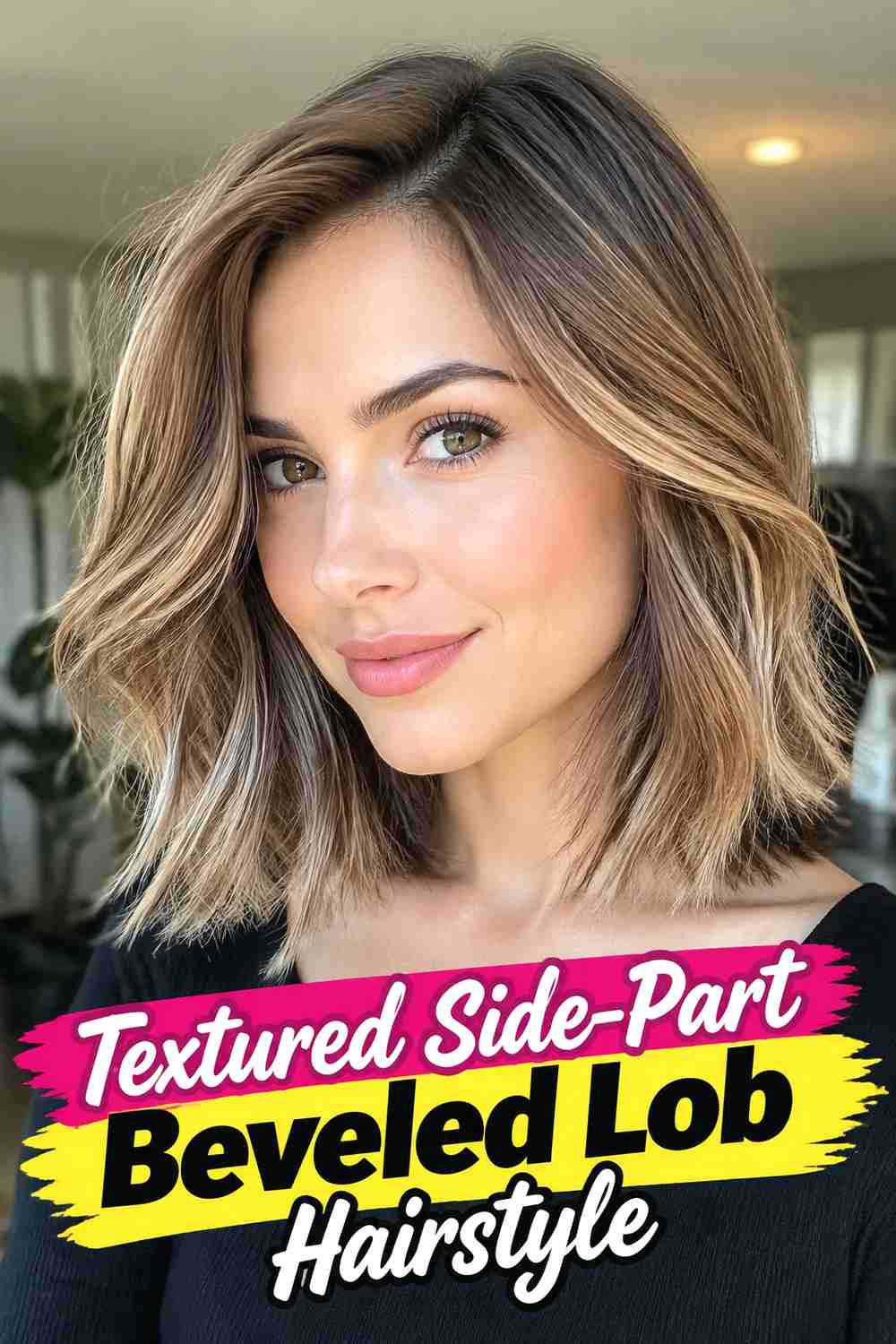
A textured version gives the beveled lob a more relaxed, modern appearance while preserving its distinctive rounded ends. Instead of keeping every strand sleek, subtle separation and light bends through the mid-lengths create movement above the controlled perimeter. The side part adds natural asymmetry and can provide a little extra volume on the heavier side. This balance between texture and structure is what keeps the haircut from looking overly casual. The bevel should remain visible at the bottom, even if the upper lengths are less polished. Lightweight texture spray or finger styling can enhance separation, but heavy products may interfere with the smooth turn of the ends.
Why It Works
The textured body adds dimension while the beveled perimeter gives the haircut enough structure to stay polished.
Styling Notes
Create movement through the middle sections first, then finish the lowest inches separately with a soft inward bend.
10. Wavy Side Part Beveled Lob Hairstyle
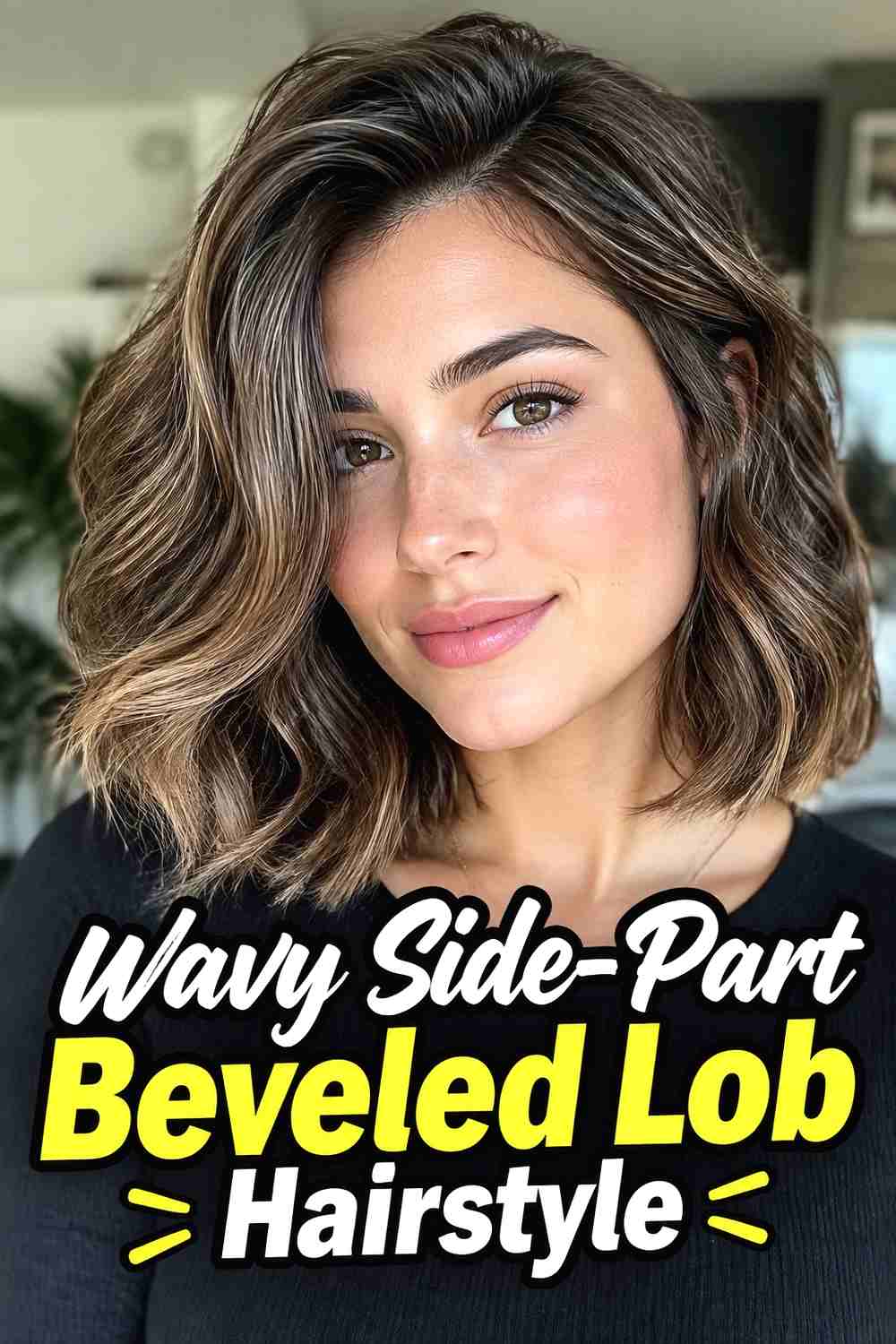
Loose waves can work beautifully with a beveled lob when they are kept broad enough to preserve the haircut’s rounded lower edge. The side part creates an easy sweep across the front, while gentle S-shaped movement through the lengths prevents the style from appearing overly straight or formal. Near the bottom, the waves become softer and turn inward slightly so the perimeter still looks controlled. This approach is especially useful when you want texture without abandoning the polished identity of the cut. Alternating wave directions can keep the finish natural, although the front section usually looks best swept away from the face. Avoid tight curls, which can hide both the lob length and the bevel.
Styling Notes
Use larger sections when curling and leave the lowest inch comparatively smooth before directing it gently inward.
Best For
This version is ideal when you want a softer, more casual finish while retaining the recognizable shape of a beveled lob.
11. Straight Side Part Beveled Lob Hairstyle
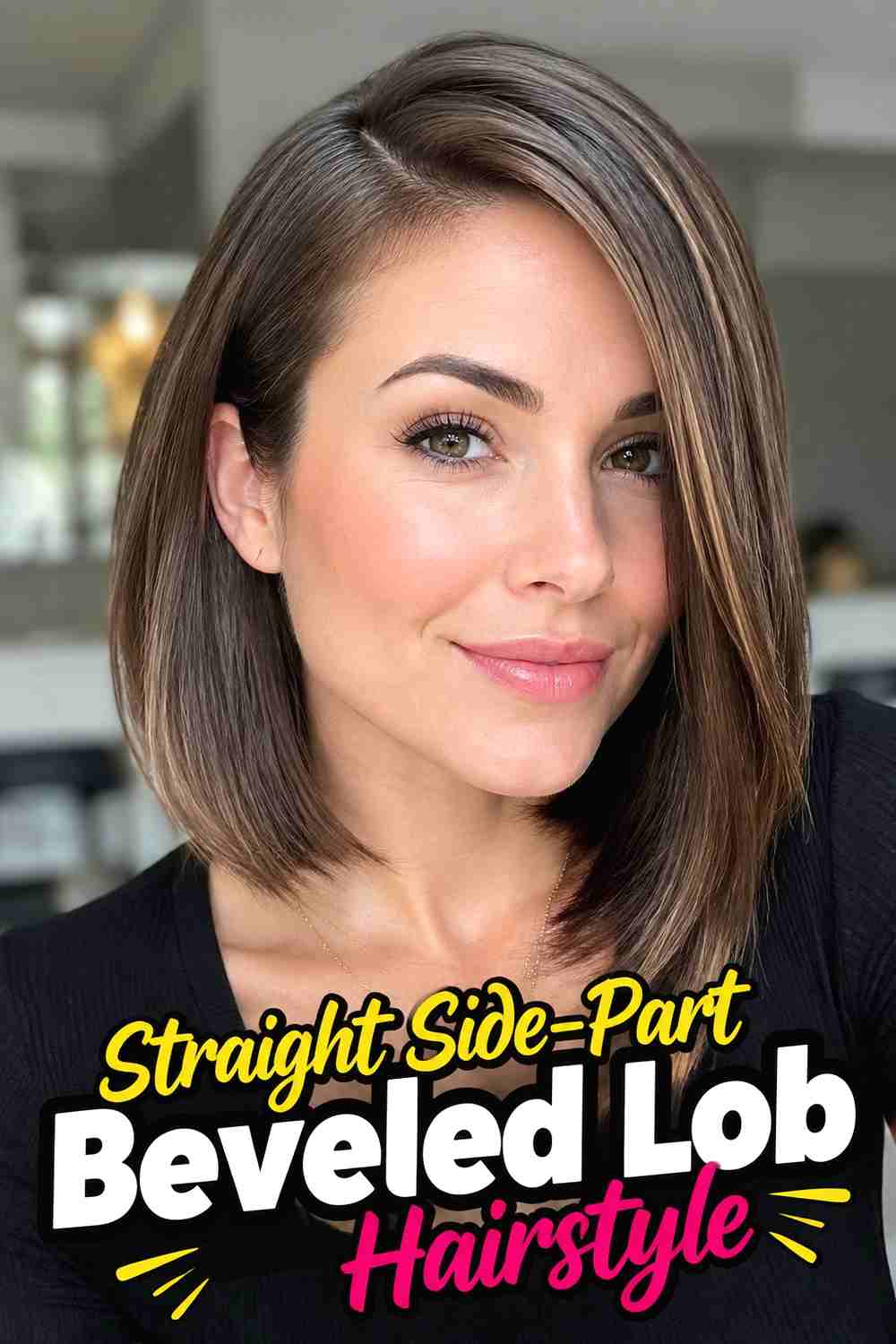
Straight styling puts maximum emphasis on the haircut’s shape, making the side part and beveled perimeter easy to see. The lengths fall smoothly with very little texture, while the final few inches curve inward enough to avoid a completely blunt appearance. That subtle turn can make a simple straight lob feel more finished without creating the roundness of a full blowout. The side part adds needed movement at the top and prevents the sleek silhouette from becoming visually static. This look benefits from precise cutting because uneven ends are more noticeable when the hair is straight. Light smoothing can enhance shine, but maintaining natural movement keeps the result modern and believable.
Hair Type & Length
Naturally straight or gently wavy hair usually achieves this finish most easily, though other textures can be styled smooth with appropriate tools.
Wear & Maintenance
Regular perimeter trims are useful because the straight finish makes changes in length and uneven ends more visible.
12. Rounded End Side Part Beveled Lob Hairstyle
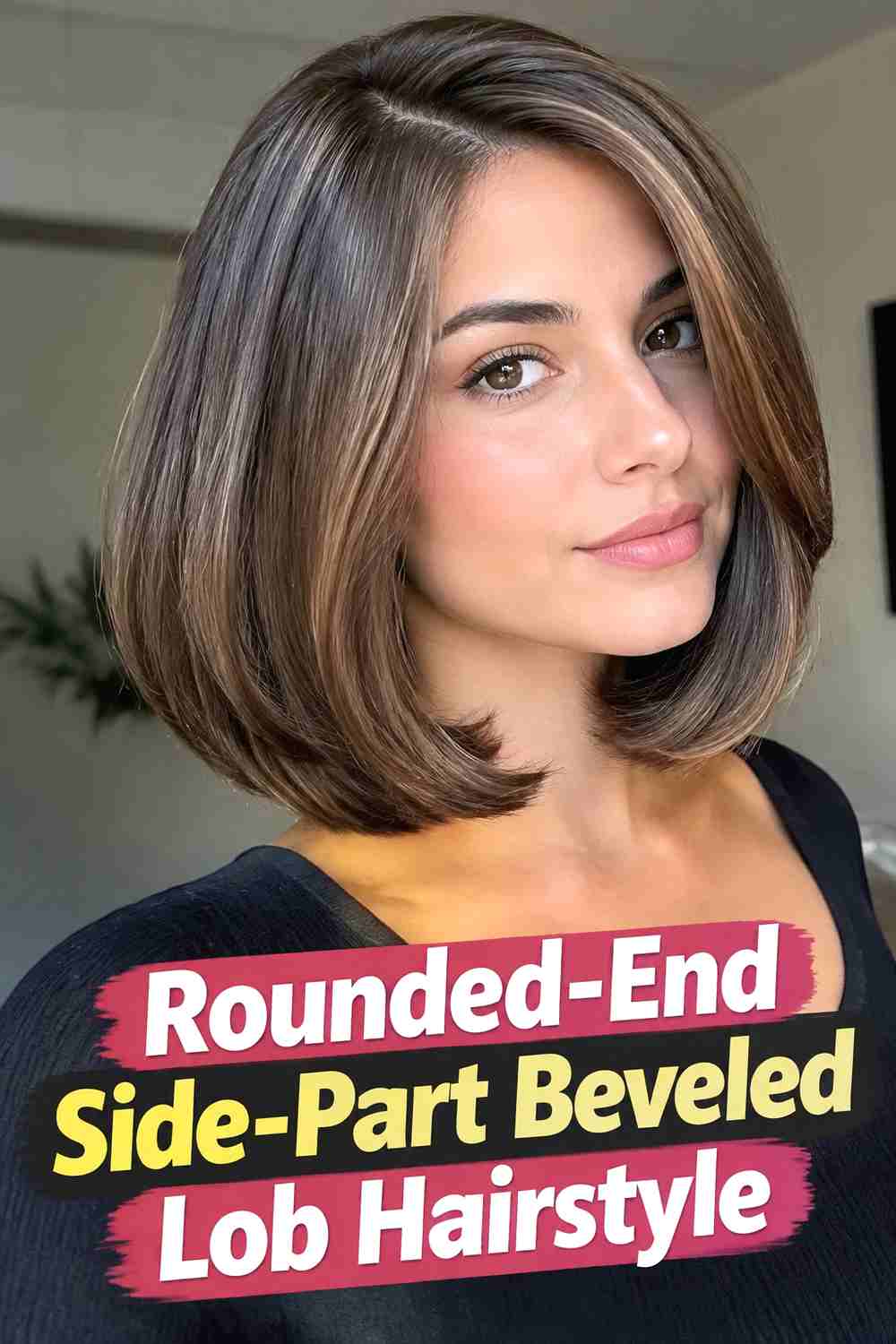
This variation exaggerates the most recognizable element of the beveled lob: the softly rounded ends. The bottom few inches curve inward more noticeably than in the classic version, creating a smooth, almost sculpted perimeter around the shoulders. A side part keeps the upper section from feeling too symmetrical and introduces enough root movement to balance the rounded lower shape. The style works best when the curve remains broad rather than tightly curled, allowing the hair to move naturally as you turn your head. A round brush is especially useful here because it can shape the ends while maintaining a smooth surface through the lengths. The result feels polished without looking stiff.
Styling Notes
Roll the brush gently underneath the final few inches and allow the section to cool briefly before releasing it for a longer-lasting curve.
Why It Works
The stronger bevel highlights the haircut’s defining feature while the side part prevents the rounded silhouette from feeling overly uniform.
13. Angled Side Part Beveled Lob Hairstyle
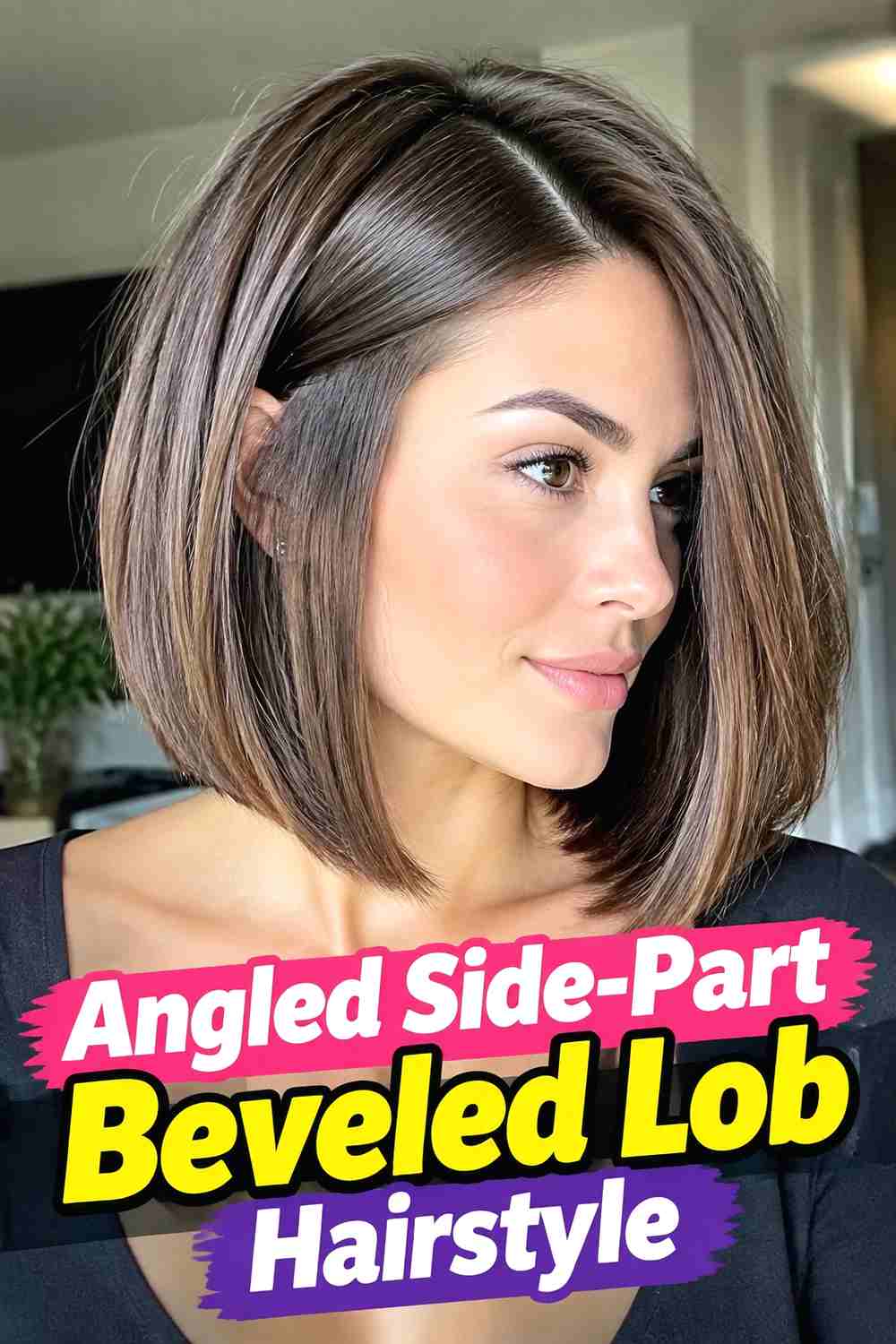
An angled lob introduces a subtle length difference from back to front, giving the side-parted style a sharper, more architectural outline. The back can sit slightly shorter while the front sections extend toward the collarbone, creating clean diagonal movement along the sides. Beveled ends soften that geometry by curving gently inward rather than finishing in a hard straight line. The side part reinforces the asymmetry and makes the longer front section on one side particularly noticeable. This variation works best when the angle remains controlled enough to preserve the feel of a lob rather than becoming a dramatic graduated bob. Smooth styling allows the shape to remain the main focus.
Best For
Choose this look if you want a more defined silhouette and noticeable front length without sacrificing the softness of beveled ends.
Pro Tip
Keep internal layering minimal if you want the angled perimeter to remain strong and easy to see.
14. Chin Grazing Side Part Beveled Lob Hairstyle
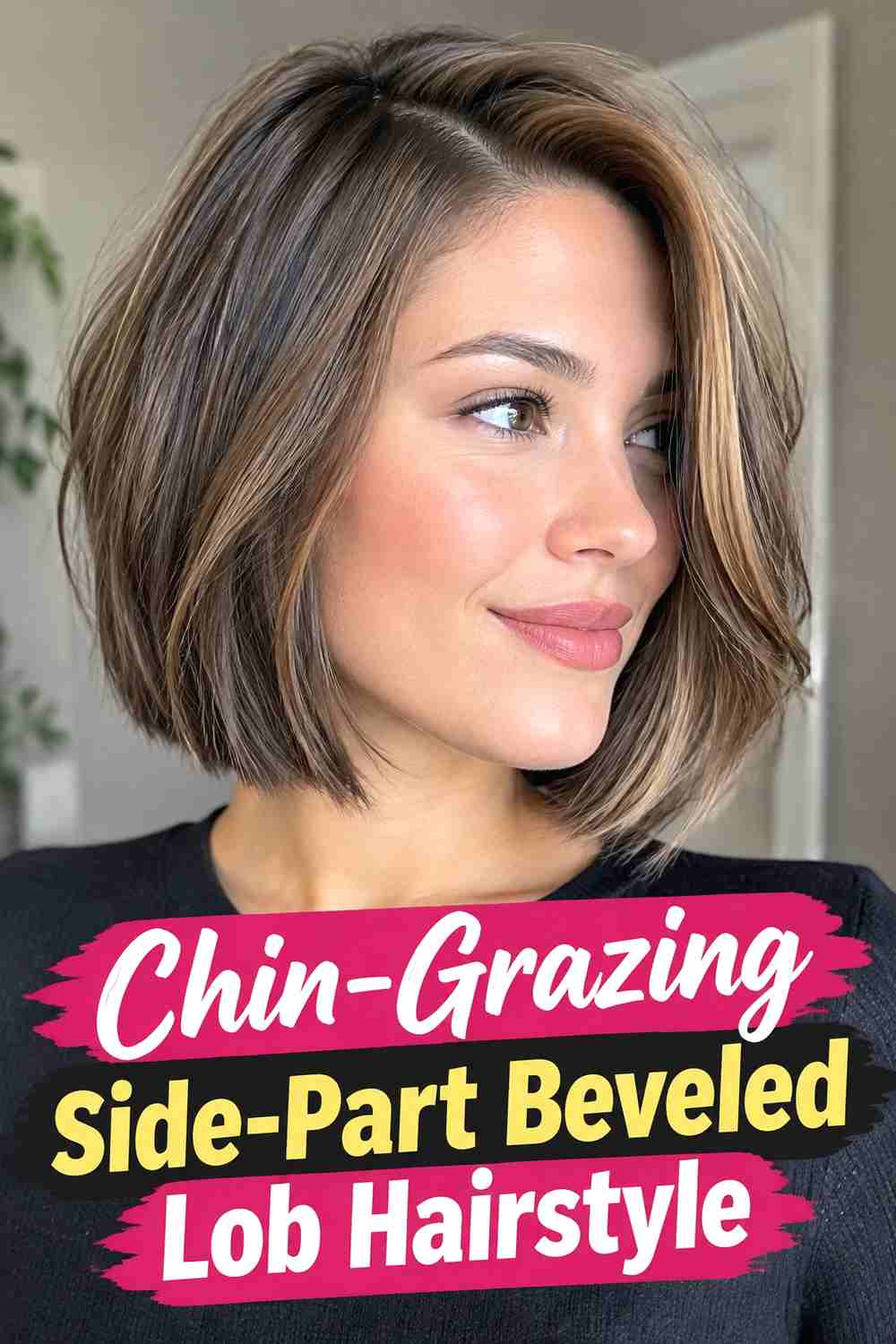
A shorter, chin-grazing interpretation brings the beveled lob closer to bob territory while still preserving enough length for a smooth, elongated shape. The side part creates lift through the front and keeps the shorter cut from appearing too round. At the perimeter, the ends curve inward just enough to follow the jaw and neck without forming a tight under-curl. This length can make the bevel particularly noticeable because the hair sits closer to the face and moves less heavily than a shoulder-length lob. Precision becomes important, since the shorter perimeter does not have much extra length to disguise unevenness. A polished blowout helps show the intended shape clearly.
Hair Type & Length
This shorter version works especially well on hair that can maintain a smooth outline without excessive bulk around the jaw.
Wear & Maintenance
Because the length changes quickly as it grows, more regular trims may be useful if you want to preserve the chin-grazing silhouette.
15. Collarbone Side Part Beveled Lob Hairstyle
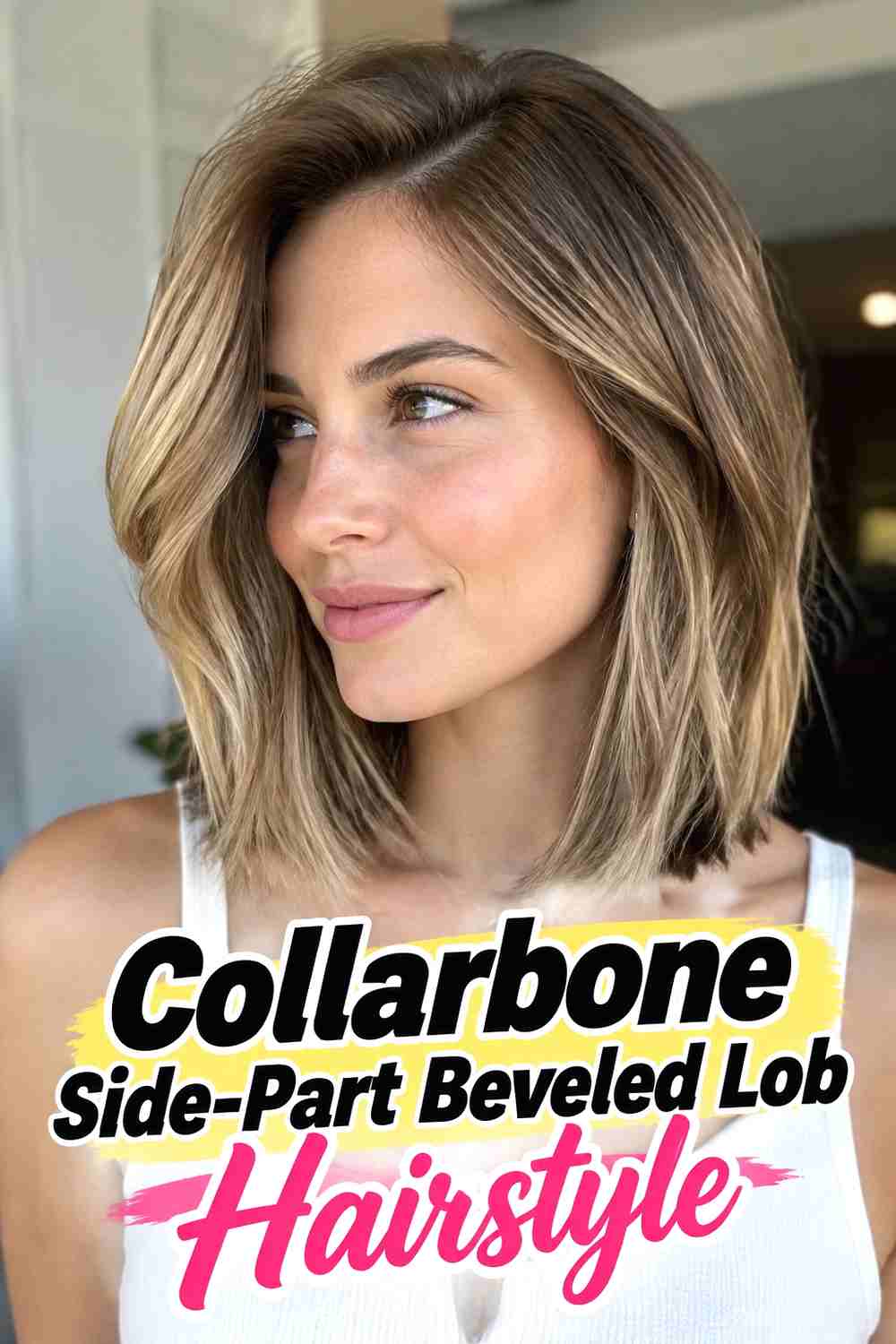
A collarbone-length lob offers the most length while still retaining the practical shape of a long bob. The side part creates movement through the top, while the extra length allows the beveled ends to form a broad, gentle inward curve rather than a compact rounded edge. This makes the hairstyle feel soft and versatile, especially if you occasionally prefer ponytails or half-up styling. The longer perimeter can also support subtle face-framing pieces without noticeably reducing fullness. A smooth blowout usually shows the bevel best, although light bends through the mid-lengths can add movement. Keeping the ends healthy is particularly important because the collarbone area can create friction against clothing.
Why It Works
The longer length offers styling flexibility while the curved perimeter prevents the lob from looking like an unshaped shoulder-length cut.
Styling Notes
Use a larger round brush for the ends so the curve remains broad and subtle rather than turning into a pronounced curl.
16. Polished Side Part Beveled Lob Hairstyle With Tucked Side
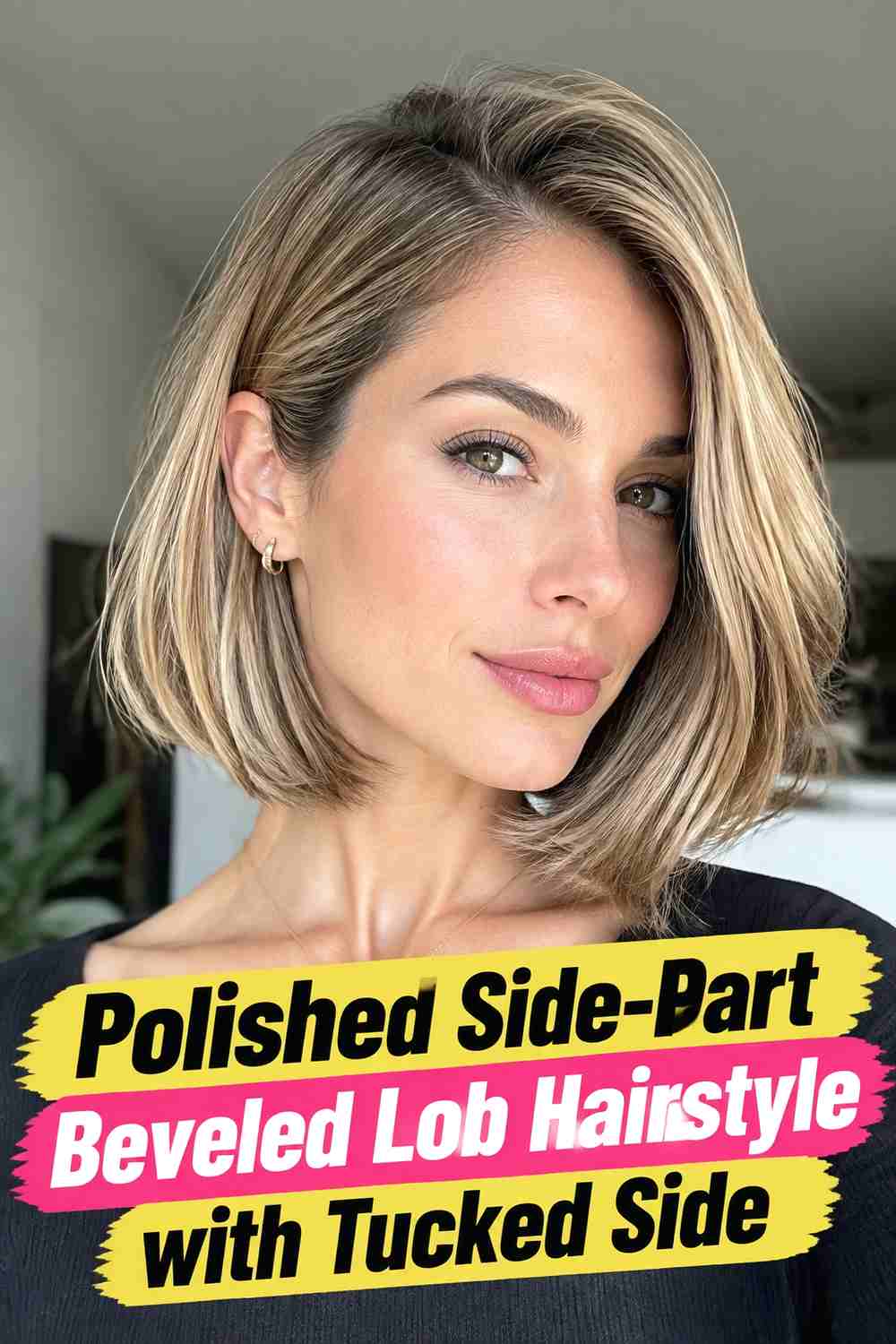
Tucking the lighter side behind the ear creates one of the simplest ways to emphasize the asymmetry of a side-parted beveled lob. The heavier side remains loose and softly sweeping, while the tucked section exposes the ear and creates a cleaner profile. The ends maintain their inward bevel throughout, so the style still feels cohesive even though the two sides are worn differently. This finish works particularly well with smooth or lightly textured hair because the clean tuck contrasts beautifully with the fuller opposite side. A discreet pin can help secure the shorter side if it tends to slip forward. Minimal accessories keep the haircut itself as the main focus.
Styling Notes
Shape the beveled perimeter before tucking the hair so the exposed side still curves neatly toward the neck.
Best For
This variation is ideal for polished everyday styling, work settings, dinners, or occasions when you want a simple change without altering the cut.
How to Choose the Right Look
Begin with length. A chin-grazing version feels sharper and requires more frequent shape maintenance, while a collarbone lob offers greater styling flexibility. Classic mid-length versions sit between the two and keep the beveled perimeter easy to see without feeling overly short.
Next, decide how polished you want the finish. Sleek and straight variations place the most emphasis on precision and shine. Textured or wavy versions feel softer and more casual, while a voluminous blowout creates a fuller salon-style silhouette. If your hair naturally has plenty of body, you may need less root styling and can focus mainly on shaping the ends.
Front details also matter. Face-framing layers create movement without committing to bangs, a swooping fringe reinforces the side part, and wispy bangs add softness across the forehead. For the easiest routine, keep the cut mostly one length and use the side part itself to create movement.
Finally, consider the strength of the bevel. A subtle inward turn looks natural and low-key, while pronounced rounded ends require more careful blow-drying. Choose the amount of curve that fits your normal styling time rather than relying on a finish you will rarely want to recreate.
Final Thoughts
A side-part beveled lob works because the cut combines clear structure with just enough softness. The side part adds movement at the top, while the inward-curving perimeter gives the ends a neat, finished shape. Whether you prefer sleek, textured, layered, angled, or voluminous styling, keeping the bevel proportionate to your hair length and density will make the look easier to maintain.
FAQs
1. What is a side-part beveled lob hairstyle?
It is a long bob worn with an off-center part and ends that are styled or cut to curve gently inward, creating a smooth, rounded perimeter.
2. How is a beveled lob different from a blunt lob?
A blunt lob usually finishes with a straighter, sharper edge, while a beveled lob has ends that turn inward slightly for a softer and more rounded silhouette.
3. Can a beveled lob be worn with waves?
Yes. Loose, broad waves work well as long as the bottom remains controlled enough for the softly curved perimeter to stay visible.
4. Does a side-part beveled lob require daily heat styling?
Not always. Hair that naturally dries fairly smooth may only need minor reshaping at the ends, while other textures may require a blow-dry or styling tool to create a stronger bevel.
5. Can layers be added to a beveled lob?
Yes. Face-framing or light internal layers can add movement, but keeping enough density through the perimeter helps preserve the rounded beveled shape.
Save your favorite side-part beveled lob hairstyle ideas and explore more polished long-bob inspiration for your next cut or styling refresh.