14 DNA Braid Hairstyle Ideas for a Striking Helix Look
Create an eye-catching twist with DNA braids that turn carefully woven strands into sculptural helix patterns full of texture, movement, and dimension.
DNA braids stand out because their twisting construction creates a spiral effect that resembles the familiar shape of a double helix. Depending on how tightly the strands are woven, the finished look can range from sleek and architectural to loose, textured, and romantic.
Before choosing a version, consider your hair length, density, texture, and patience for detailed braiding. Long hair gives the spiral pattern more room to develop, while half-up and accent styles can bring the same visual effect to shorter lengths. Ponytails, buns, ribbons, and delicate accessories can also change how polished or playful the braid feels.
Quick List
- Classic Dna Helix Braid Hairstyle
- Double Dna Braid Hairstyle
- Side Swept Dna Braid Hairstyle
- Half Up Dna Braid Hairstyle
- Dna Braid Ponytail Hairstyle
- Low Ponytail Dna Braid Hairstyle
- Crown Dna Braid Hairstyle
- Loose Boho Dna Braid Hairstyle
- Dna Braid Bun Hairstyle
- Chunky Dna Rope Braid Hairstyle
- Fishtail Dna Braid Hairstyle
- Ribbon Woven Dna Braid Hairstyle
- Pearl Accent Dna Braid Hairstyle
- Mini Accent Dna Braid Hairstyle
1. Classic Dna Helix Braid Hairstyle
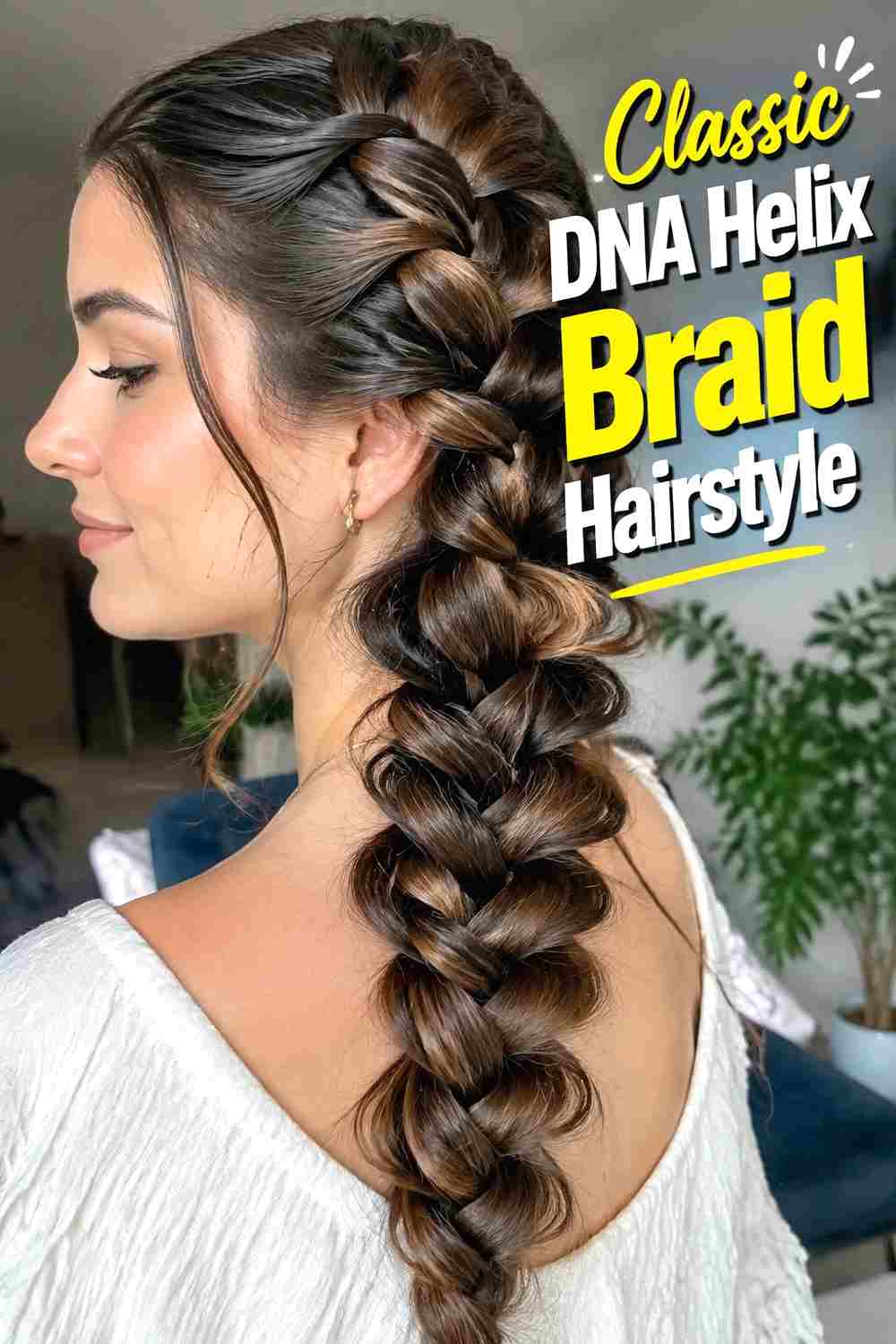
The Classic DNA Helix Braid Hairstyle puts the twisted spiral pattern front and center, usually beginning below the crown and continuing down the length. Carefully controlled sections create the recognizable helix effect, while a smooth but natural surface keeps the structure easy to see. This style looks especially striking on long hair because additional length allows several rotations to develop before the ends are secured. A light styling cream or flexible pomade can help keep shorter strands from escaping without removing natural movement. For a softer finish, gently loosen selected parts after the braid is complete rather than starting with overly relaxed tension.
Styling Notes
Keep the sections evenly sized and maintain consistent tension so the spiral turns at a steady rhythm instead of twisting unevenly.
Best For
This classic version is ideal when you want the DNA pattern itself to be the main feature without accessories or additional braided techniques.
2. Double Dna Braid Hairstyle
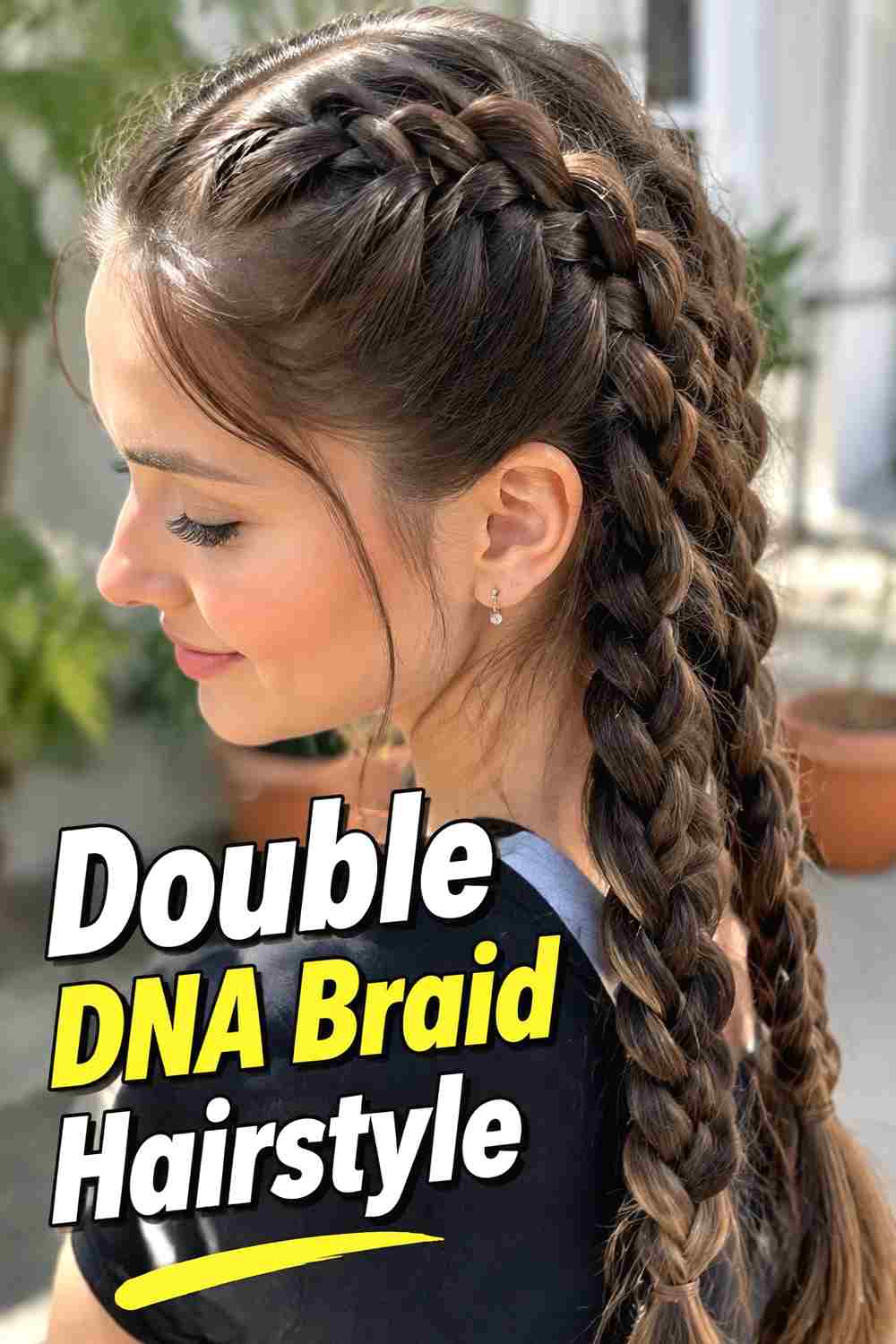
The Double DNA Braid Hairstyle divides the hair into two separate helix braids, creating a symmetrical style with plenty of texture from the back and sides. A neat center part gives the look a strong graphic quality, while slightly softened roots make it feel more wearable for everyday styling. Because the total hair density is divided between two braids, this variation tends to show best on medium-density to thick hair. Fine hair can still work with careful sectioning and a little lightweight texture spray for grip. Keep both braids similar in width and tension so the spiral patterns appear balanced rather than noticeably different from one side to the other.
Hair Type & Length
Medium-long and long hair provide enough length for the repeated twists to remain visible in both braids.
Wear & Maintenance
Avoid excessively tight tension near the part line. Secure each braid comfortably and use a flexible finishing spray if you need extra hold.
3. Side Swept Dna Braid Hairstyle
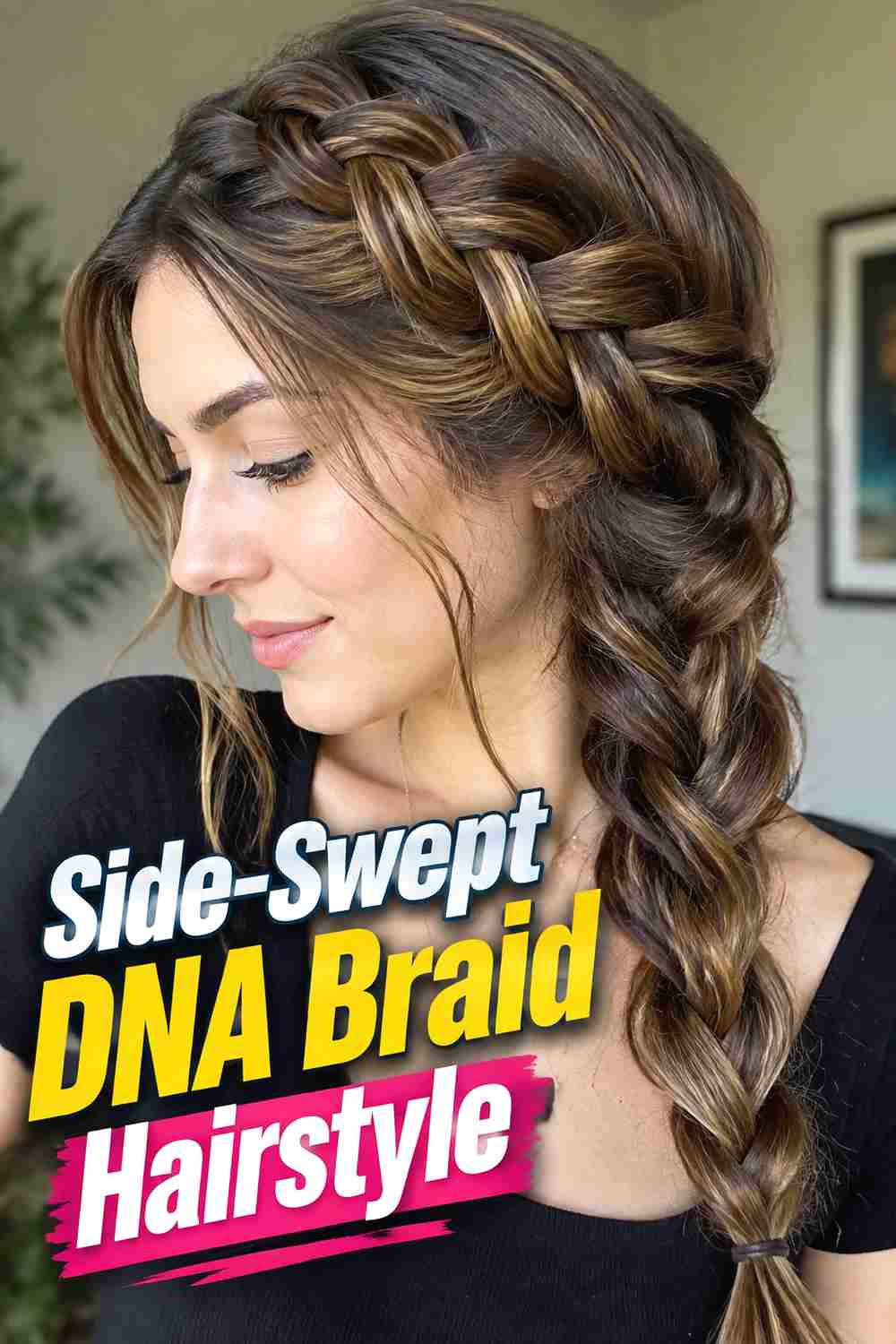
The Side-Swept DNA Braid Hairstyle brings the twisted helix over one shoulder, making the intricate structure visible from both the front and side. Starting the braid slightly behind one ear helps it fall naturally rather than pulling awkwardly across the neck. The asymmetric placement feels softer than a centered braid and pairs especially well with loose face-framing strands or gentle volume around the crown. Longer hair makes the sweeping shape more dramatic, although a medium-long length can still show several attractive spiral sections. Keep the upper part of the style relatively simple so the eye naturally travels toward the detailed braid resting over the shoulder.
Why It Works
Moving the DNA braid to one side puts its spiral detail where it can be seen easily while adding movement to the overall silhouette.
Pro Tip
Angle the first few sections toward the shoulder before building the main helix so the braid follows a comfortable natural path.
4. Half Up Dna Braid Hairstyle
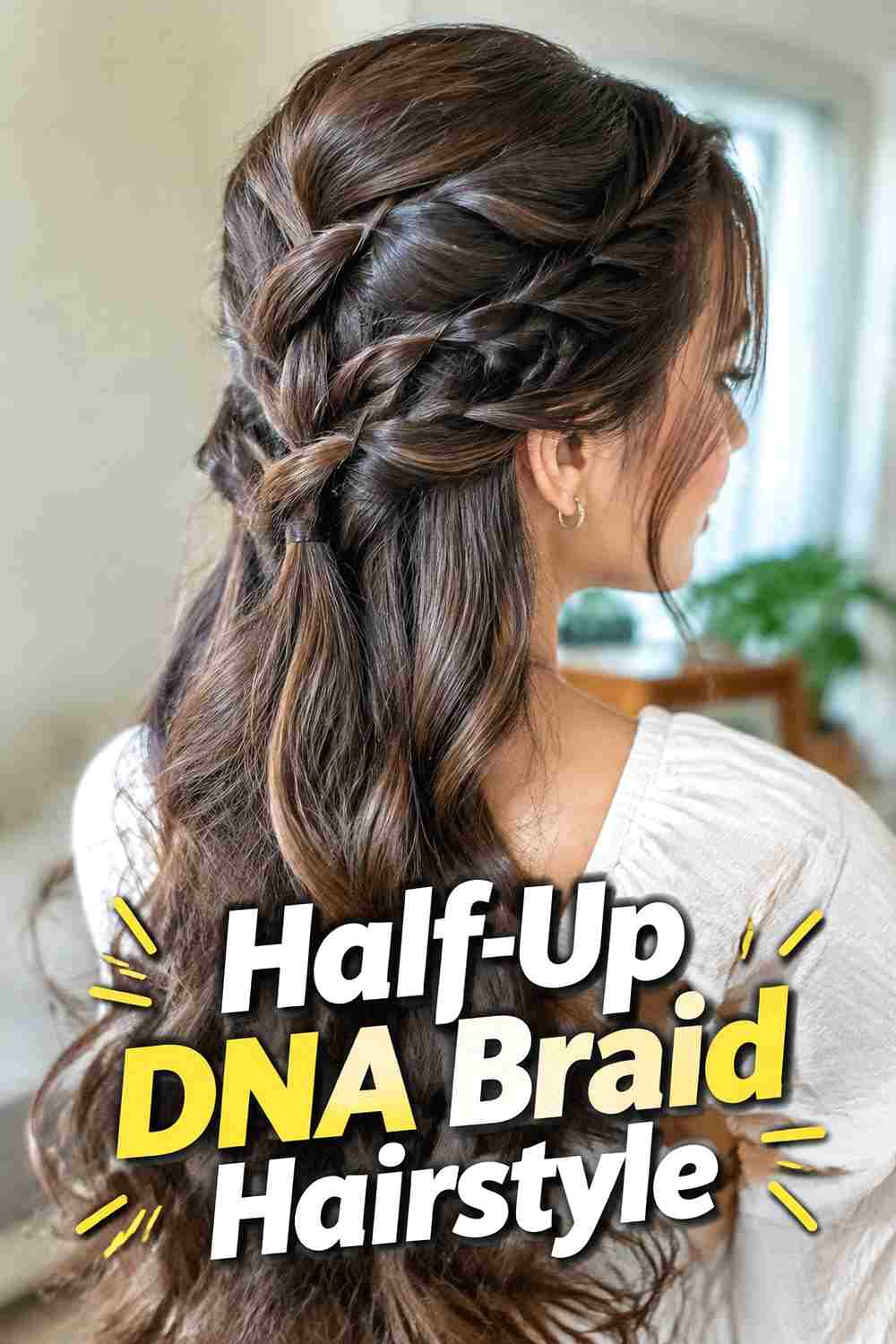
The Half-Up DNA Braid Hairstyle adds an intricate spiral through the upper section while allowing the remaining hair to stay loose. Sections taken from the temples or crown can be gathered toward the back before forming a compact helix braid that sits above straight, wavy, or naturally textured lengths. This arrangement keeps the DNA detail noticeable without making the hairstyle feel as structured as a full braid. It also leaves room to show movement and volume through the lower hair. Keeping a little lift around the crown can prevent the half-up portion from appearing flat, while a small clear elastic gives the end of the braid a discreet finish.
Best For
This option is useful for date nights, parties, casual celebrations, and events where you want decorative braid detail while still wearing most of your hair down.
Styling Notes
Use smaller sections for a delicate helix or slightly larger sections when you want the DNA braid to become a stronger focal point.
5. Dna Braid Ponytail Hairstyle
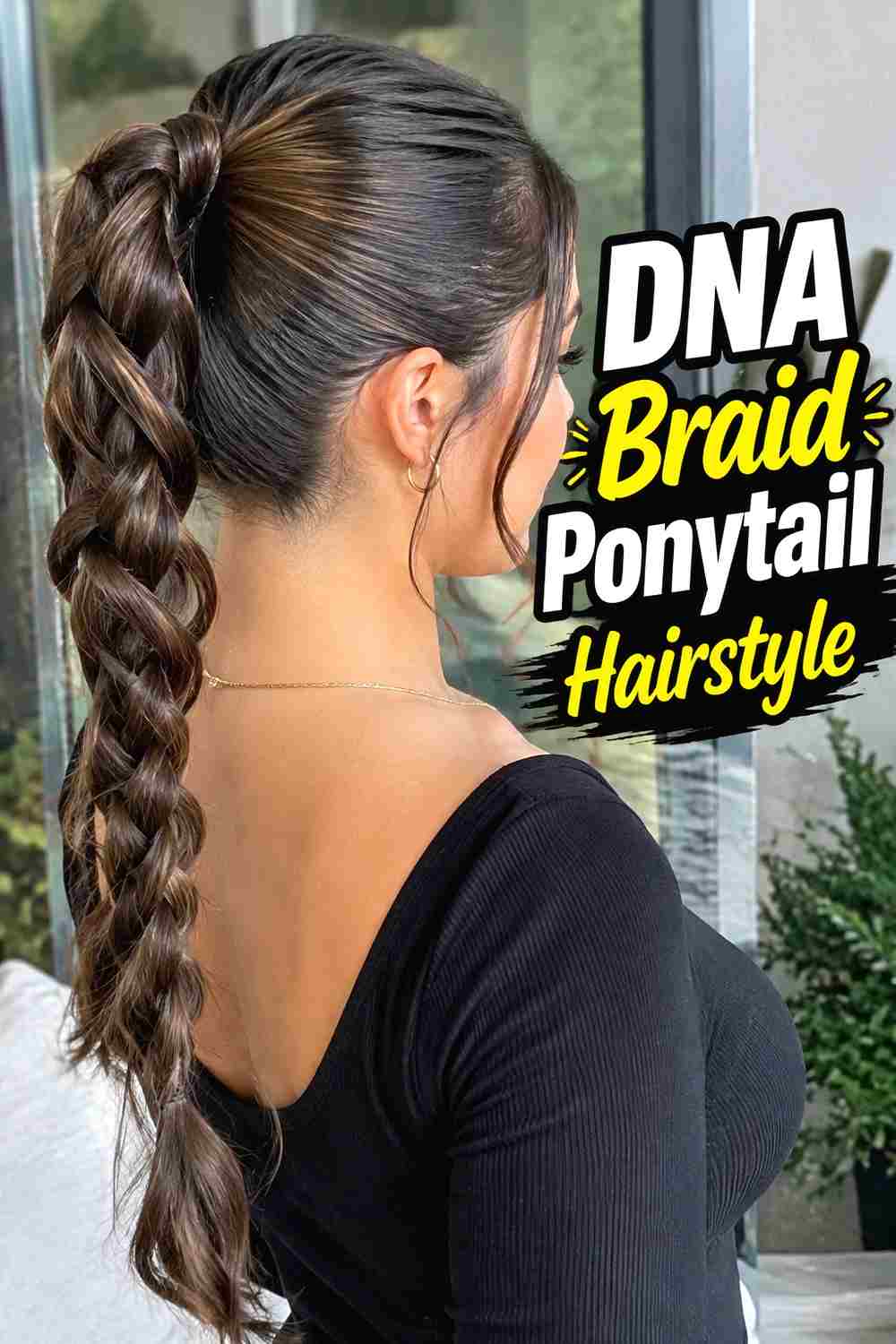
The DNA Braid Ponytail Hairstyle begins with a secure ponytail and transforms the length into a defined spiral braid. Starting from a stable base makes the sections easier to control and allows the helix effect to stay centered as it travels downward. A high or mid-height ponytail gives the hairstyle lift and lets the braid move freely behind the head. Wrapping a narrow section of hair around the elastic can make the base look more polished. Because the DNA structure is detailed, keeping the crown relatively smooth helps prevent the overall style from feeling too busy. Use comfortable tension so the ponytail remains wearable for several hours.
Wear & Maintenance
Check that the ponytail elastic is secure without pulling harshly at the scalp, then keep the braid tension even through the full length.
Why It Works
The elevated base separates the helix braid from surrounding hair, making every twist easier to see and giving the hairstyle a clean, sculptural shape.
6. Low Ponytail Dna Braid Hairstyle
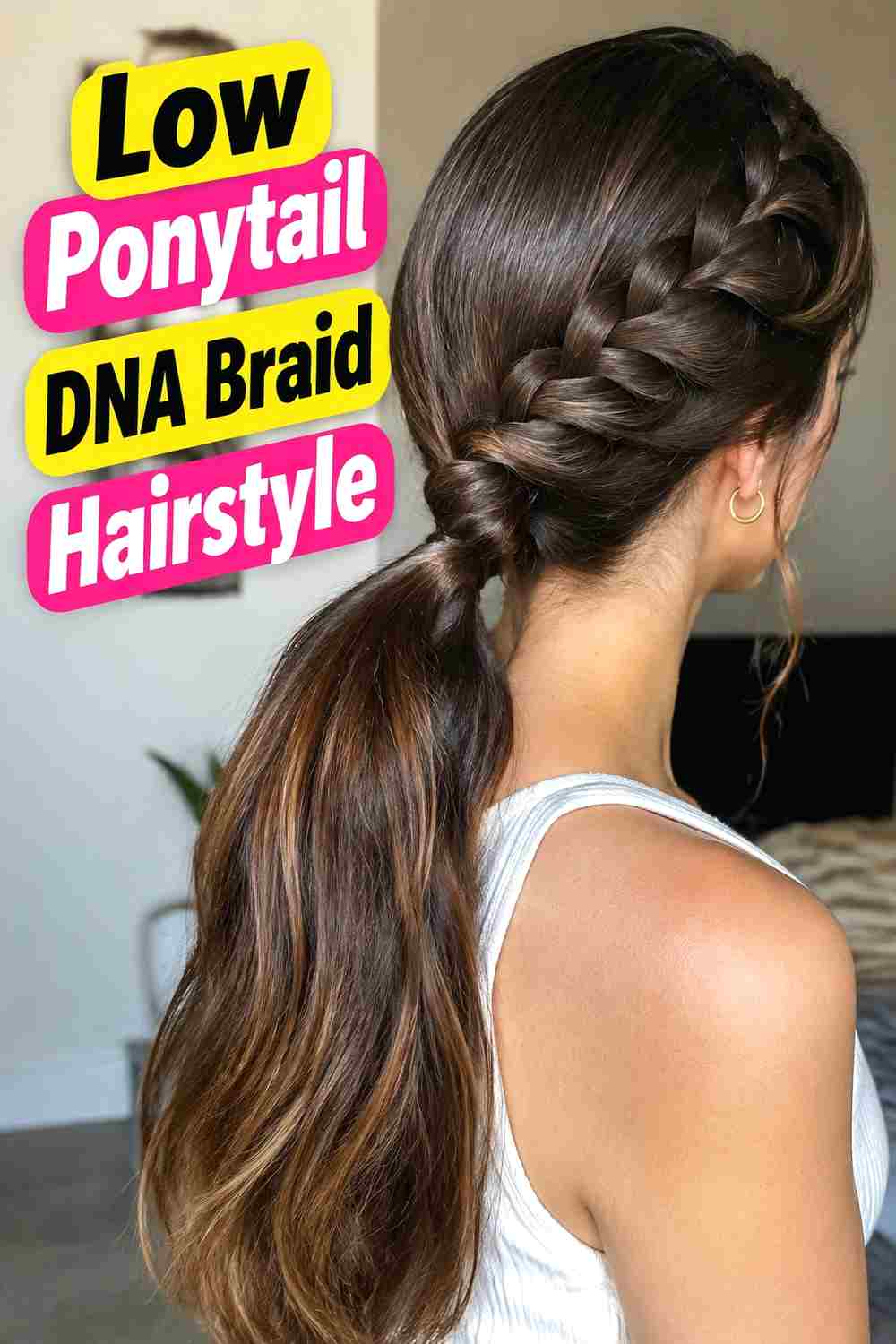
The Low Ponytail DNA Braid Hairstyle offers a softer interpretation of the helix braid by placing the base close to the nape. The lower position creates a sleek, understated silhouette before the detailed spiral begins, making this variation easy to pair with polished outfits or minimalist styling. A center part can emphasize symmetry, while a soft side part gives the look a more relaxed feeling. Long hair provides room for several complete turns in the braid, but the style can still be effective with medium-long lengths. Keep the base smooth without flattening every natural strand, then allow the braided section to provide most of the visual texture.
Best For
This lower placement suits dinners, formal events, work-friendly styling, and occasions where a high ponytail might feel too sporty or dramatic.
Pro Tip
Wrap a small section around the base elastic before starting the DNA braid for a cleaner transition from ponytail to helix.
7. Crown Dna Braid Hairstyle
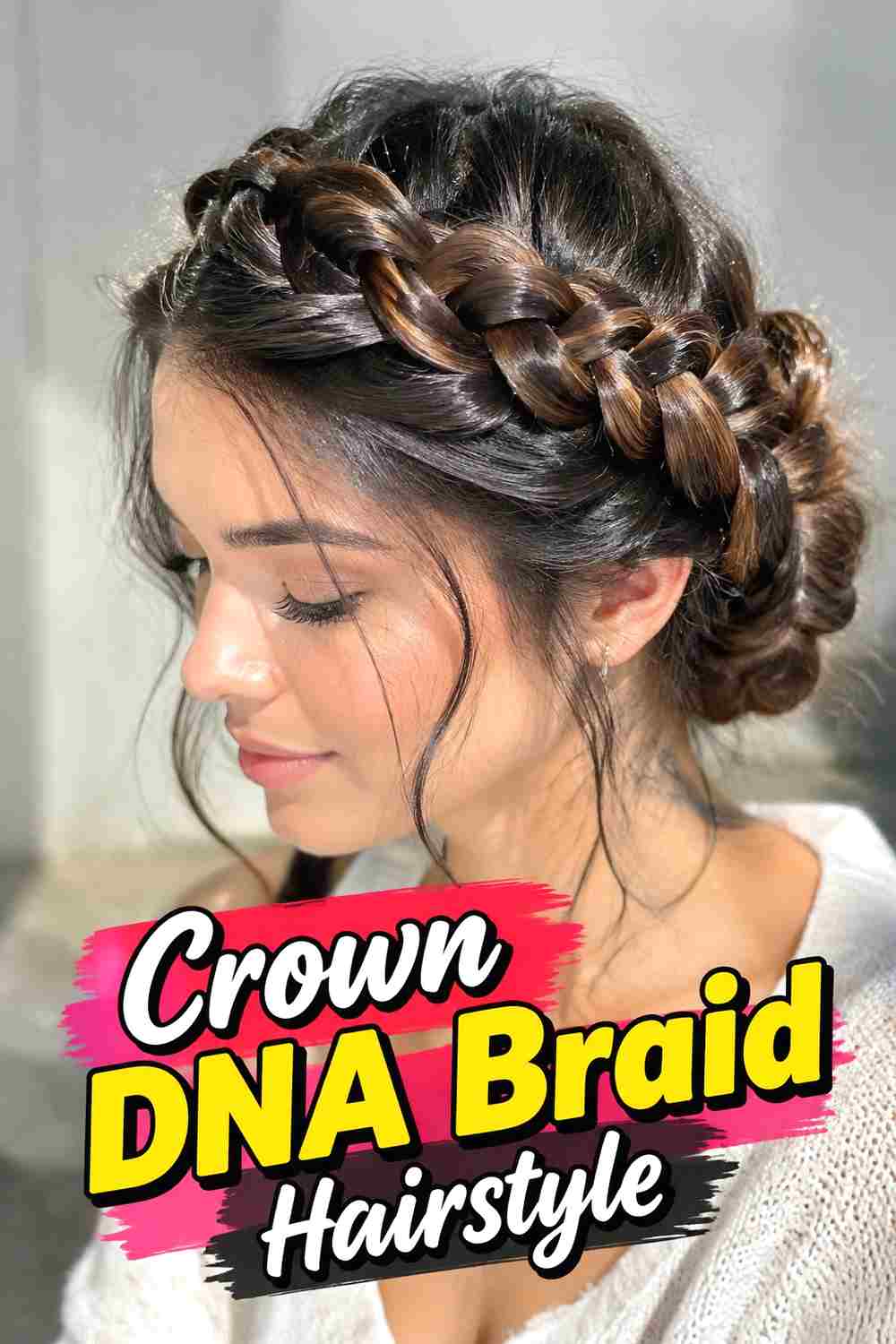
The Crown DNA Braid Hairstyle takes the distinctive spiral pattern around the head for a dramatic braided-halo effect. Rather than hanging vertically, the braid follows a curved route above or around the crown, creating interest from multiple viewing angles. The style can be kept close to the head for a refined finish or positioned slightly farther back for a softer appearance. Because the braid needs to curve smoothly, consistent section size is especially important. Long hair usually provides the easiest foundation, although joined sections can help create a similar result on medium-long hair. Soft wisps near the temples can balance the structured braid with a more natural frame.
Hair Type & Length
Medium-long to long hair offers the most flexibility for creating a continuous crown with a clearly visible helix pattern.
Wear & Maintenance
Use well-hidden pins along the underside of the braid so the crown stays stable without flattening the dimensional twists.
8. Loose Boho Dna Braid Hairstyle
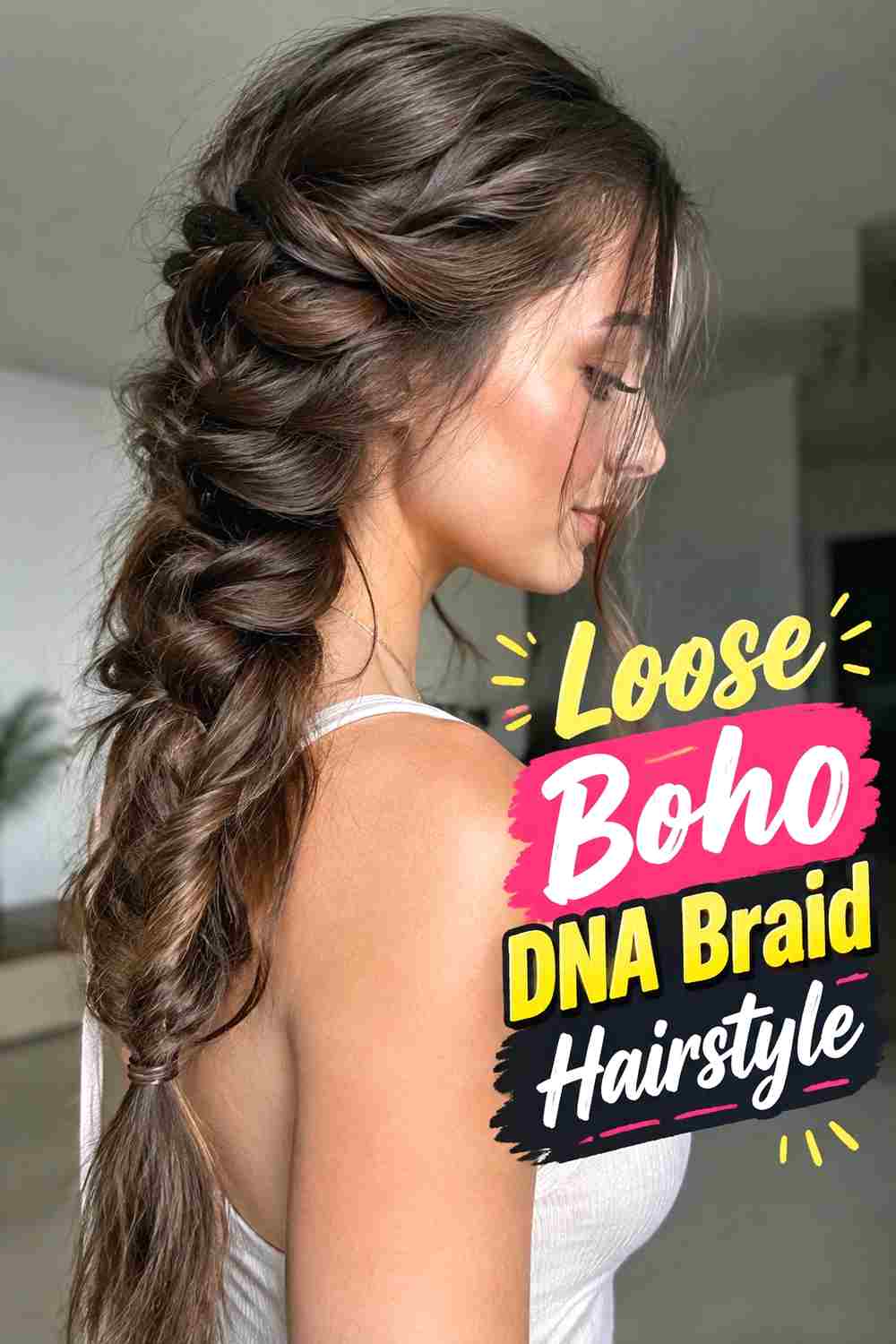
The Loose Boho DNA Braid Hairstyle keeps the recognizable spiral but softens it with airy texture, gentle volume, and a few deliberately relaxed strands. Starting with subtle waves can add body before braiding and help the finished sections look fuller. The DNA structure should first be built securely, then loosened gradually so the helix remains visible instead of collapsing into an undefined twist. Face-framing pieces and light flyaways complement the relaxed mood, particularly when the crown also has a small amount of natural lift. This version works well when you like intricate braid patterns but prefer a softer finish that feels less formal than a sharply polished style.
Styling Notes
Complete and secure the braid before widening selected sections. Loosening it too early can make the helix difficult to control.
Best For
The relaxed texture suits festivals, outdoor events, casual celebrations, vacations, and romantic everyday looks.
9. Dna Braid Bun Hairstyle
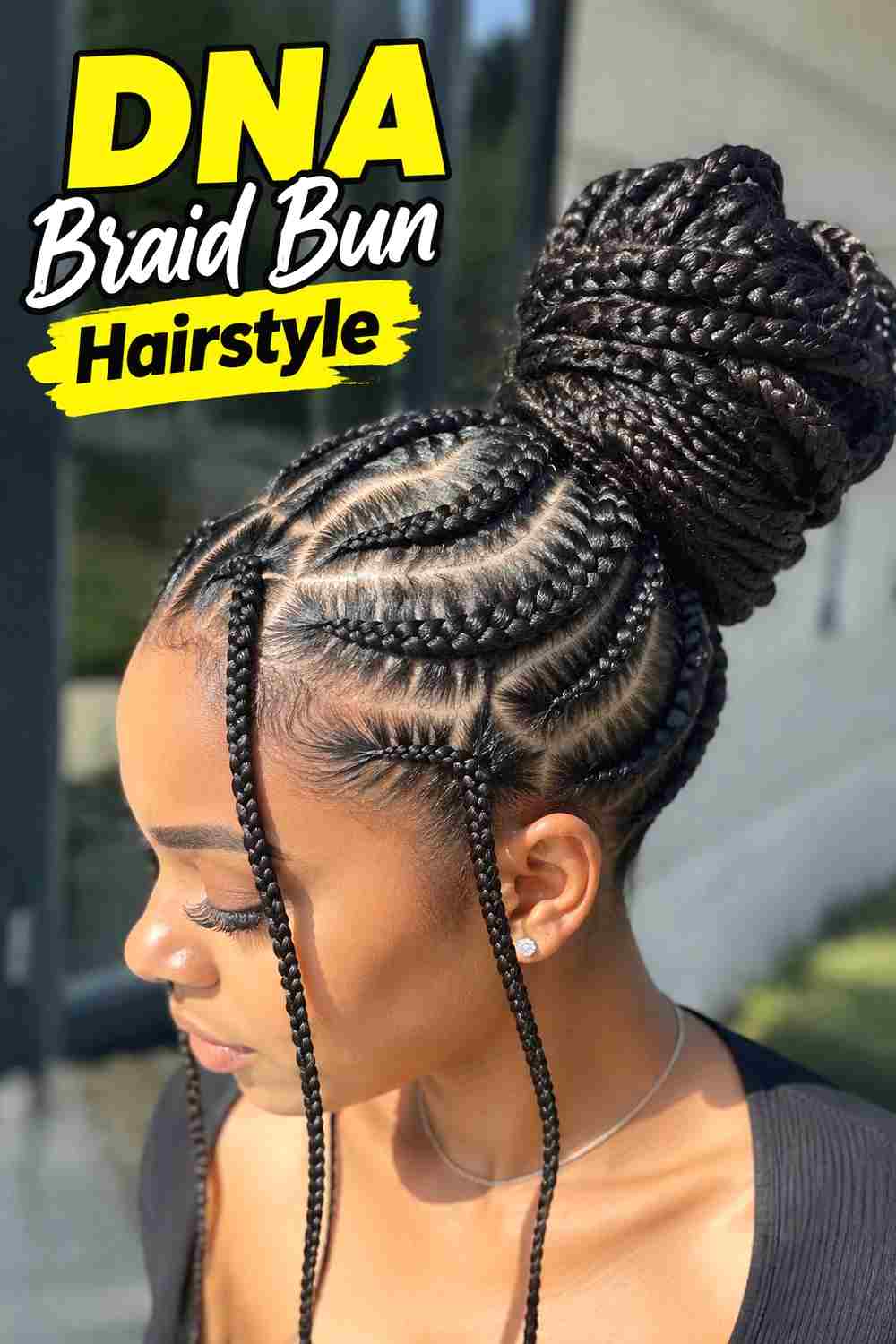
The DNA Braid Bun Hairstyle turns the helix pattern into a textured updo by wrapping or folding the completed braid around a secure base. The twisting structure gives the bun more dimension than a simple coil and creates subtle detail from different angles. A low bun feels elegant and understated, while a higher placement can make the style more playful and noticeable. For the clearest result, complete the DNA braid first and secure its end before shaping it into the bun. Position pins beneath the outer loops whenever possible so the spiral texture remains visible. Leaving a few soft strands around the hairline can prevent the finished updo from looking overly rigid.
Wear & Maintenance
Use several small pins rather than one or two large ones so the bun stays secure without crushing the braid pattern.
Best For
This contained style works especially well for weddings, dinners, formal events, and warm-weather occasions when you want the hair off your neck.
10. Chunky Dna Rope Braid Hairstyle
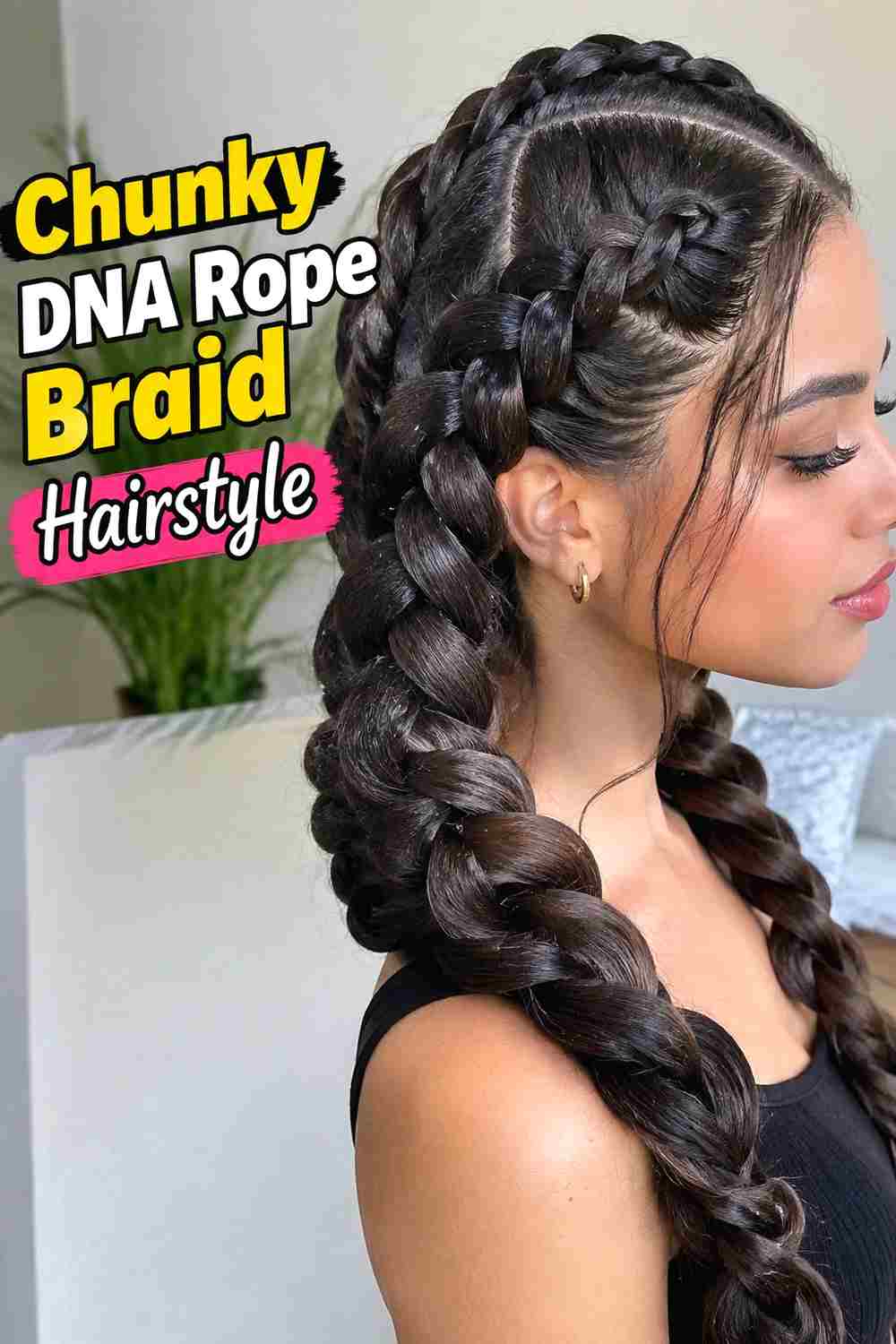
The Chunky DNA Rope Braid Hairstyle emphasizes width and bold separation between sections, giving the helix an oversized sculptural appearance. Larger strands make each rotation easier to see, particularly on long, dense hair where there is enough volume to maintain a substantial braid from top to bottom. The surface can be polished for a dramatic editorial look or lightly loosened for softer dimension. This version benefits from controlled tension because bulky sections can shift if they are formed too loosely. A little texture product before braiding can improve grip, while careful expansion afterward can make the braid appear fuller without disrupting the recognizable DNA-inspired twist.
Hair Type & Length
Thicker medium-long or long hair naturally supports the chunky structure. Fine hair may need texture and strategic sectioning to create a similarly full appearance.
Pro Tip
Increase the visual width after the braid is secured rather than using excessively loose sections during construction.
11. Fishtail Dna Braid Hairstyle
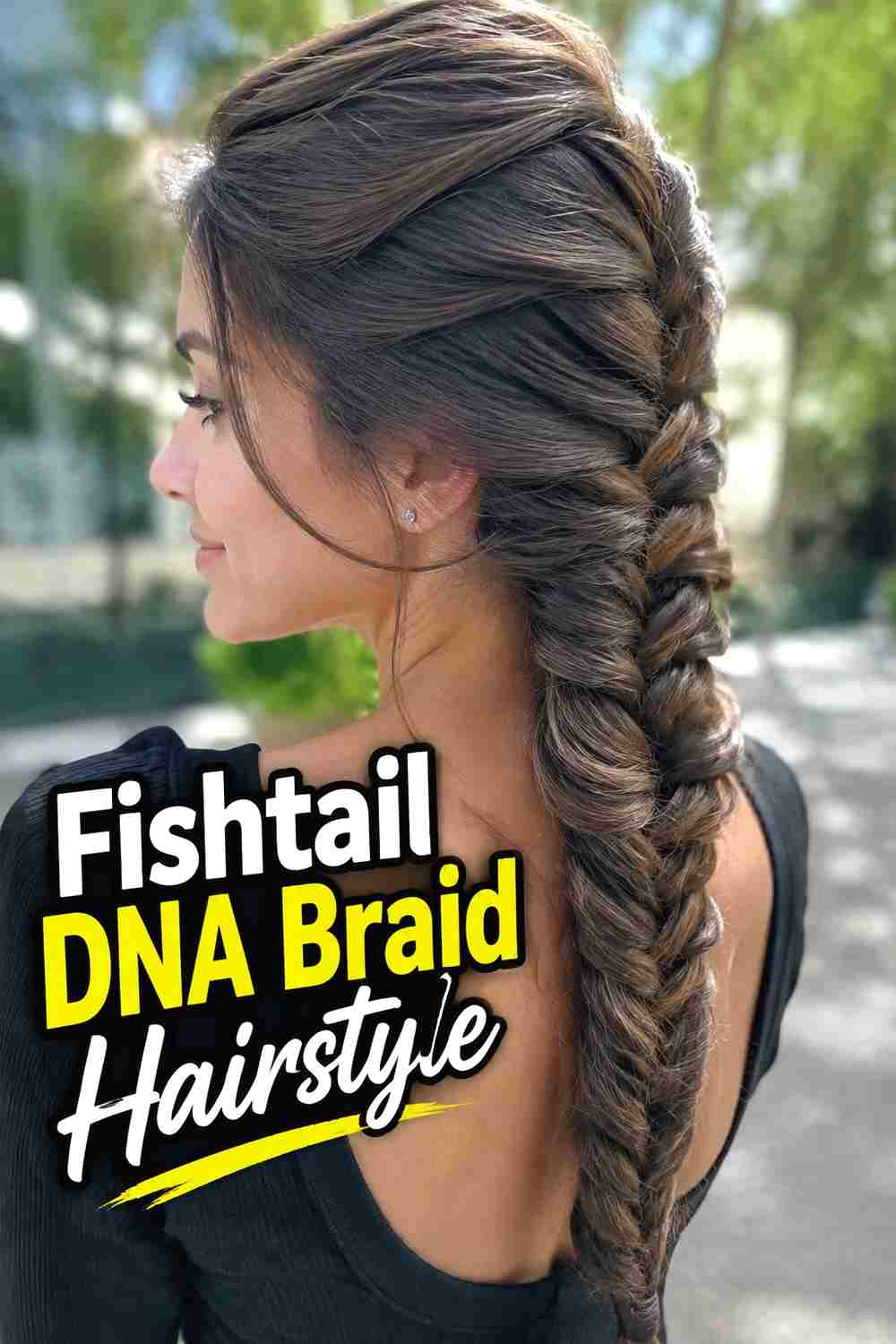
The Fishtail DNA Braid Hairstyle combines fine woven texture with the broader spiral movement of a DNA braid, creating an intricate hybrid design. Narrow sections from a fishtail technique can add delicate detail between the stronger helix turns, making the finished braid especially interesting from the back. Because two patterns are competing for attention, keeping the crown and sides relatively simple helps the braid remain readable. This style usually takes more time than a basic DNA braid, particularly if the sections are small and precise. Once finished, gently widening only selected areas can reveal the fishtail detail without making the larger spiral pattern lose its definition.
Styling Notes
Keep the fishtail weaving tighter than the main helix sections so the contrast between the two textures remains clear.
Best For
This detailed braid suits special occasions, creative styling sessions, photos, parties, and events where the hairstyle is intended to be a focal point.
12. Ribbon Woven Dna Braid Hairstyle
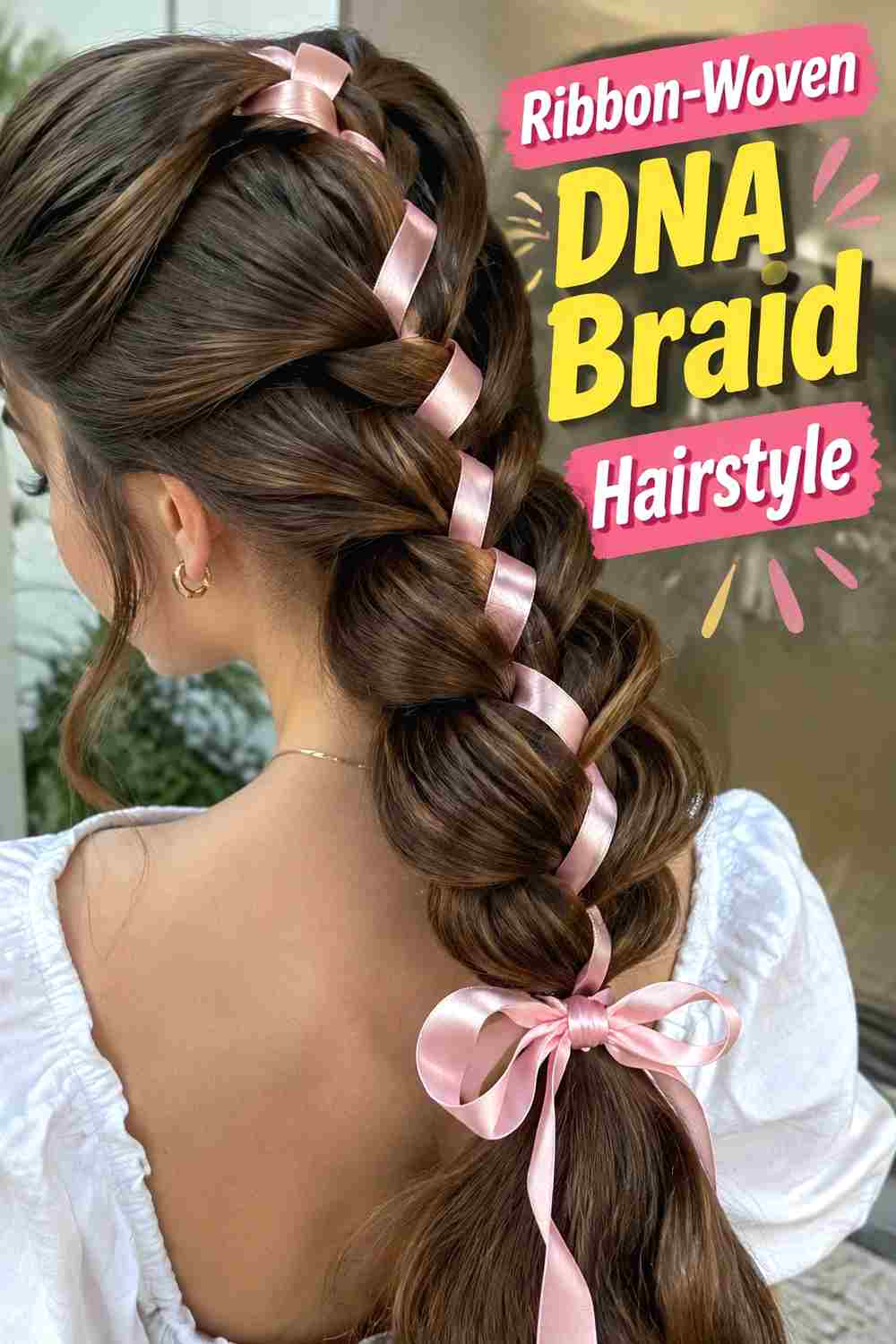
The Ribbon-Woven DNA Braid Hairstyle threads a slim ribbon through the spiral structure, highlighting the twists with a contrasting line of color or texture. Satin can create a polished finish, while velvet, grosgrain, or matte ribbon gives the braid a different mood. The ribbon should follow the shape of the braid rather than hide it, so weaving it through selected turns usually looks cleaner than wrapping every section. Choosing a shade that contrasts gently with the hair makes both the ribbon and helix pattern easier to see. Keep the accessory light enough to move naturally with the braid and avoid tying knots so tightly that they distort the woven structure.
Wear & Maintenance
Anchor the ribbon discreetly near the beginning and end of the braid so it stays secure without requiring bulky knots.
Pro Tip
A single continuous ribbon creates a more cohesive look than several short pieces and makes the spiral direction easier to follow visually.
13. Pearl Accent Dna Braid Hairstyle
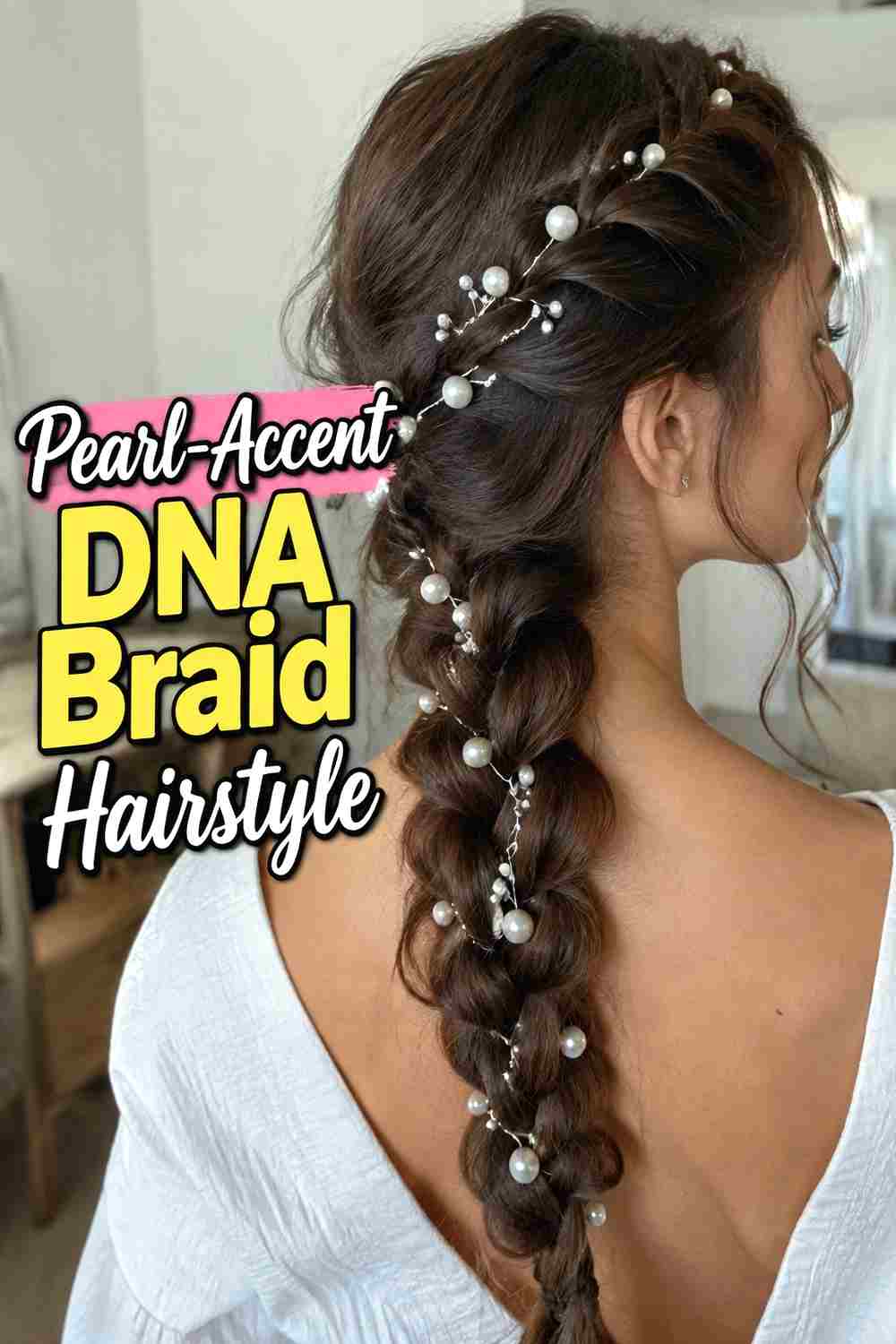
The Pearl-Accent DNA Braid Hairstyle combines the geometric helix shape with small pearl details for a softer, event-ready finish. Instead of filling every twist, place the accents selectively along a few visible sections so the braid remains the dominant feature. Pearl-tipped pins can be tucked between the spirals, while tiny clips can highlight specific turns without changing the braid itself. A smooth crown and gently polished strands work especially well with the delicate accessories. The overall effect can feel refined without becoming overly ornate, particularly when the pearls remain small and evenly spaced. Check that each accessory is secure and does not snag individual strands during movement.
Best For
This style fits weddings, engagement celebrations, formal dinners, bridal events, and other occasions where subtle decorative detail complements the outfit.
Wear & Maintenance
Choose lightweight accessories and position them after the braid is complete so they do not interfere with the tension or formation of the helix.
14. Mini Accent Dna Braid Hairstyle
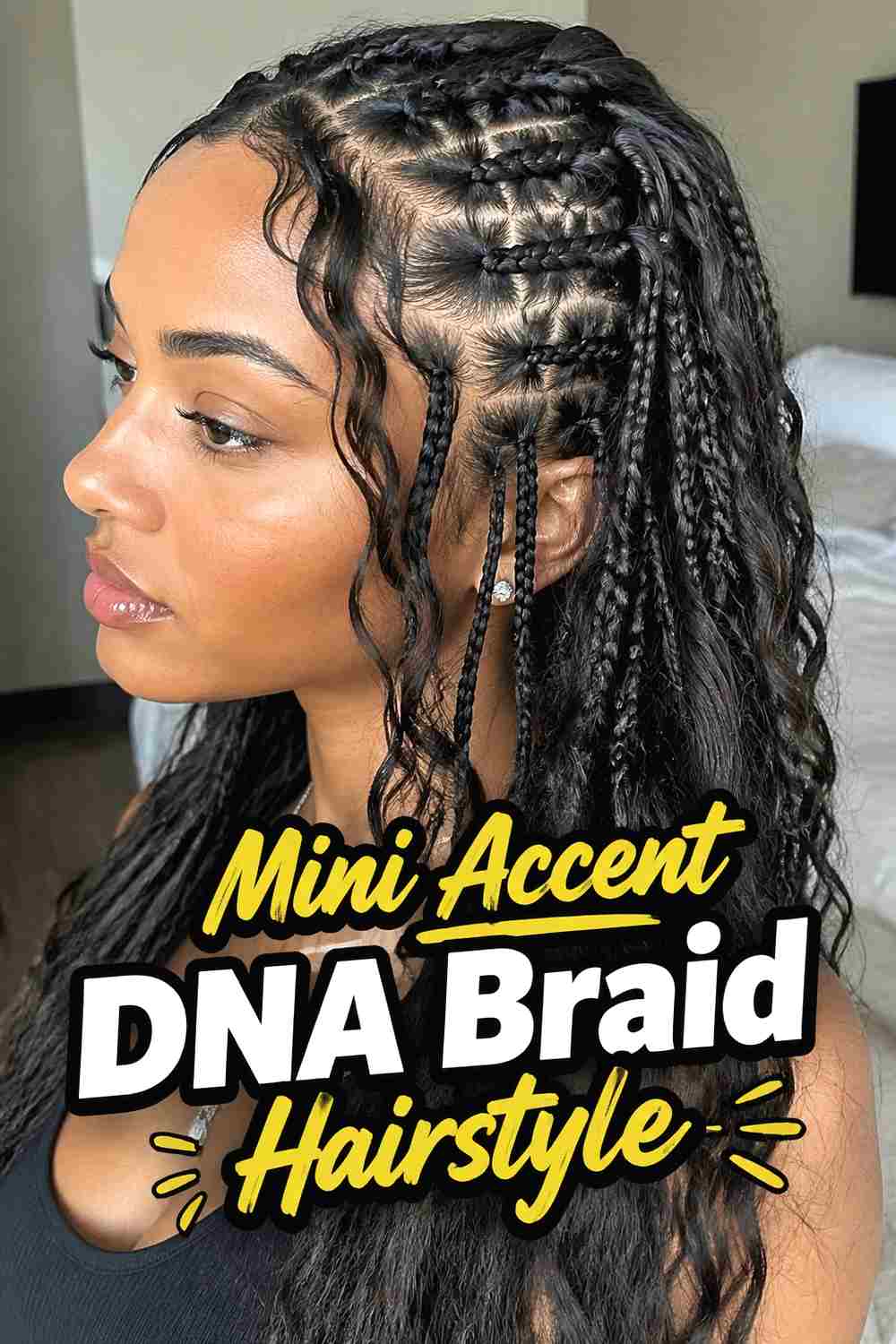
The Mini Accent DNA Braid Hairstyle uses a narrow section of hair to create a small helix detail while leaving most of the length loose. The braid can sit near one temple, behind the ear, along a part, or through a half-up section, making it an approachable way to wear the DNA technique without committing to a full braided look. Because the braid is smaller, clean sectioning matters even more if you want the spiral to remain visible. Pair it with straight hair for contrast or blend it into waves for a softer effect. A discreet elastic or hidden pin keeps the end neat without drawing attention away from the tiny woven detail.
Why It Works
The small scale adds an unexpected textured accent while allowing the rest of the hairstyle to stay simple and natural.
Hair Type & Length
This version can work on more hair lengths than a full DNA braid because only a small section needs enough length to form the spiral.
How to Choose the Right Look
Start by considering how much length and density you have available. Classic, chunky, ponytail, double, and fishtail DNA braids generally benefit from medium-long or long hair because the pattern becomes clearer as more spiral turns develop. If your hair is shorter or you want a lighter commitment, the half-up or mini accent versions may be easier to adapt.
Next, think about styling time. A straightforward ponytail or classic helix can be simpler than a crown, fishtail hybrid, or heavily accessorized braid. If you need the style to last through a long event, prioritize even tension and a secure base rather than making every section extremely loose.
Your preferred finish matters too. Smooth DNA braids look structured and graphic, while boho versions feel softer and more relaxed. A bun keeps the hair contained, a side braid creates movement, and ribbons or pearls add decorative detail. Choose accessories sparingly so the helix pattern remains visible.
Final Thoughts
DNA braids are a distinctive way to turn a traditional braided style into something more sculptural and dimensional. Whether you prefer a polished ponytail, loose boho braid, intricate crown, or subtle accent, the best version is one that works comfortably with your hair length, texture, and styling routine.
FAQs
1. What is a DNA braid hairstyle?
A DNA braid is a twisted or woven braid designed to create a spiral pattern that visually resembles a DNA double helix. The exact braiding technique can vary depending on the desired width and finish.
2. Is a DNA braid difficult to create?
It can require more coordination than a basic three-strand braid because consistent tension and section placement help create the spiral effect. Starting with a ponytail can make the technique easier to control.
3. What hair length works best for DNA braids?
Medium-long to long hair usually shows the spiral pattern most clearly. Smaller accent or half-up versions can be adapted to somewhat shorter hair.
4. How can I make a DNA braid look fuller?
Apply lightweight texture product before braiding, secure the finished style, and then gently widen selected sections. Work gradually so the helix shape does not lose definition.
5. Can accessories be added to a DNA braid?
Yes. Slim ribbons, pearl pins, decorative clips, and other lightweight accents can complement the spiral pattern. Use them selectively so they enhance rather than cover the braid.
Save your favorite DNA braid hairstyles, share the ideas you love, and explore more braided looks for your next styling inspiration.